Ayu Aulia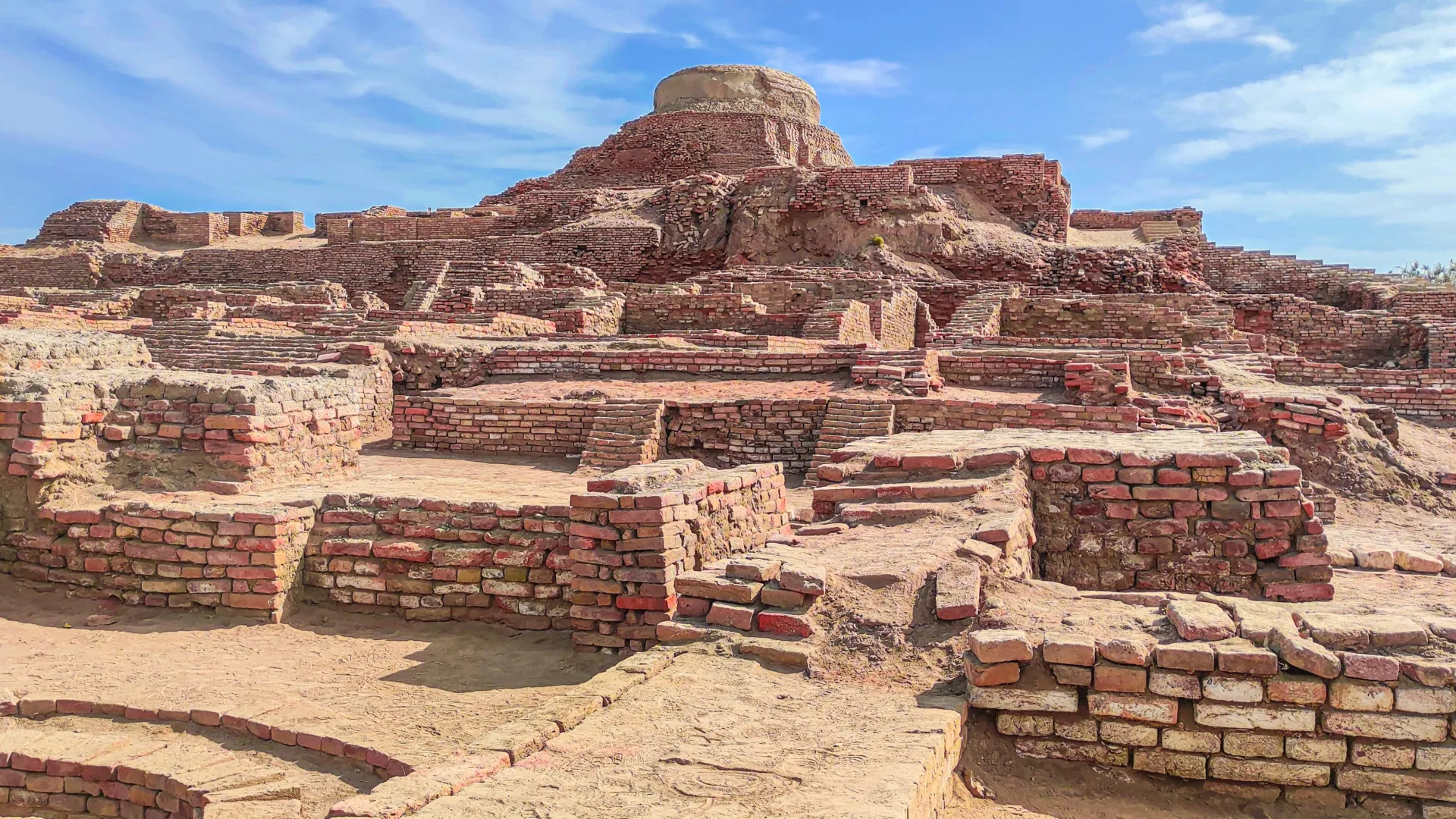
Recent archaeological investigations into the ancient city of Mohenjo-daro, a sprawling urban center of the Indus Valley Civilization, are challenging long-held paradigms concerning the development of early complex societies, revealing a remarkable trajectory where prosperity and growth correlated with an unprecedented increase in social equity rather than the typical stratification observed in contemporary civilizations. For millennia, historians and archaeologists have posited that the transition from nascent agricultural communities to sophisticated urban centers invariably precipitated a rise in social inequality, as emergent elites consolidated power, wealth, and resources, thereby widening the chasm between the privileged few and the general populace. This conventional model, often rooted in observations from Mesopotamian city-states and ancient Egyptian kingdoms, suggests an inherent link between societal advancement, economic surplus, and the concentration of authority. However, the unfolding narrative of Mohenjo-daro offers a compelling counter-example, urging a re-evaluation of the fundamental drivers and outcomes of early urbanization.
The Indus Valley Civilization, also known as the Harappan Civilization, flourished from approximately 2500 to 1900 BCE, spanning a vast geographical area encompassing parts of modern-day Pakistan, Afghanistan, and India. It was one of the three early civilizations of the Ancient Near East and South Asia, alongside Ancient Egypt and Mesopotamia, yet it presented a distinctly different cultural and societal blueprint. Unlike its contemporaries, the Indus civilization is conspicuously devoid of monumental palaces, elaborate royal tombs brimming with precious metals, or colossal statues of deified rulers. Instead, its hallmark lies in meticulously planned cities, sophisticated hydraulic engineering, standardized weights and measures, and a yet-undeciphered script. Mohenjo-daro, meaning "Mound of the Dead Men" in Sindhi, stands as its largest and most extensively studied city, providing an invaluable window into this enigmatic culture.
Traditional archaeological interpretations often align with what is sometimes called the "Urban Revolution" theory, popularized by V. Gordon Childe, which describes a set of transformative changes that led to the emergence of cities, including increased population density, specialized labor, monumental public works, and the rise of a ruling class. This framework implicitly or explicitly links urbanism with increasing social hierarchy. In Mesopotamia, for instance, ziggurats and temple complexes dominated the urban landscape, symbolizing the centralized power of priests and kings who controlled vast resources and agricultural output. Egyptian pharaohs commanded immense labor forces to construct pyramids and elaborate mortuary temples, testaments to their absolute divine and temporal authority. The wealth disparities in these societies are evident in the archaeological record, from differential burial practices to variations in housing and access to luxury goods.
A groundbreaking investigation conducted by researchers from the University of York, however, presents a starkly divergent picture for Mohenjo-daro. By meticulously analyzing the architectural footprint of residential structures across the ancient city, specifically focusing on variations in house sizes over different periods of its development, the study revealed an inverse correlation between urban growth and social stratification. As Mohenjo-daro expanded in size, population, and economic output, the disparity in house sizes—a critical proxy for wealth distribution and social standing in ancient societies—actually diminished. This suggests a progressive flattening of the socio-economic hierarchy, indicating that the benefits of increasing urban prosperity were more broadly shared among its inhabitants rather than being siphoned off by a select few.
This phenomenon becomes even more remarkable when placed in comparative context. While Mesopotamian and Minoan Greek cities were exhibiting increasingly dramatic architectural differences between elite residences and common dwellings, Mohenjo-daro witnessed a narrowing of this gap. In its later stages, the wealth disparity, as indicated by housing size, reportedly approached levels more characteristic of early, small-scale farming villages, where egalitarian structures were more common due to less pronounced surpluses and a greater necessity for communal cooperation. This challenges the deeply entrenched assumption that economic advancement and large-scale urbanism are inextricably linked with the concentration of power and wealth.
The architectural emphasis within Mohenjo-daro further underscores this distinctive societal structure. Instead of grand palaces for rulers or ostentatious temples dedicated to specific deities, the city’s monumental efforts were directed towards sophisticated public infrastructure designed to benefit the entire community. The city boasted an intricate network of meticulously planned streets, laid out in a grid pattern, alongside an advanced system of brick-lined drains that carried waste out of the city, providing unparalleled levels of sanitation for its time. This dedication to collective amenities—clean water access, waste management, and organized public spaces—suggests a governance model focused on widespread civic welfare rather than the glorification of individual leaders or a religious hierarchy. The resources and labor that might have been allocated to constructing pyramids or royal palaces in other civilizations were, in Mohenjo-daro, seemingly channeled into enhancing the quality of life for its general citizenry.
Further evidence supporting a more equitable and decentralized system comes from the distribution of Indus seals. These intricately carved steatite seals, often bearing animal motifs and inscriptions in the Indus script, are believed to have served crucial functions in trade, administration, and perhaps even personal identification. Unlike many other ancient societies where such tools of commerce and governance would be concentrated within elite residences, administrative buildings, or temples, archaeological finds at Mohenjo-daro consistently show these seals widely distributed across ordinary households. This suggests that access to economic agency and administrative processes was not monopolized by a tiny elite but was broadly accessible, indicating a more pervasive participation in trade and decision-making processes across the urban population. The conspicuous absence of any identifiable palace structure, royal quarter, or a dominant central temple complex further reinforces the hypothesis of a leadership model that diverged significantly from the hierarchical structures observed elsewhere.
The continuous investment in public services, such as the maintenance of drainage systems and roadways, throughout Mohenjo-daro’s long history also speaks to a collective ethos and a shared commitment to the city’s overall functionality. Such sustained communal efforts imply a robust system of cooperative governance, where decisions regarding resource allocation prioritized the common good. This contrasts sharply with systems where public works primarily serve to project the power of a ruler or to facilitate the activities of a privileged class.
Moreover, the Indus civilization developed a highly standardized system of weights and measures, which was employed across its vast geographical expanse. This uniformity in metrology would have played a pivotal role in ensuring fair and transparent trade practices, further contributing to economic equity. By providing a common, universally accepted standard for goods and commodities, this system would have reduced opportunities for fraud or manipulation, fostering trust and consistency in commercial exchanges for all participants, from itinerant merchants to local householders. This institutionalized fairness in economic transactions aligns perfectly with the broader picture of an egalitarian urban society emerging from the research.
The findings, published in the journal Antiquity, present a profound challenge to established archaeological and historical theories concerning urban development and the seemingly inevitable rise of social inequality. Mohenjo-daro demonstrates that technological sophistication, high productivity, and large-scale urbanism do not necessarily predicate the emergence of significant wealth disparities or centralized authoritarian rule. Instead, it offers a powerful historical precedent for a technologically advanced and highly productive society that managed to distribute its prosperity widely, ensuring that resources and power were shared equitably among its inhabitants.
This ancient city offers compelling lessons for contemporary societies grappling with issues of increasing wealth inequality and the concentration of power. The Mohenjo-daro model suggests that a focus on collective welfare, robust public infrastructure, and decentralized economic access may not only be conducive to social harmony but potentially essential for the long-term sustainability and prosperity of an urban civilization. The city’s longevity and sophisticated organization, despite the apparent absence of a powerful ruling class, compel us to reconsider the very definition of "success" in ancient civilizations. It posits that a society’s strength might reside not in its ability to construct monumental symbols of individual power, but in its capacity to foster widespread well-being and equitable access to resources for its entire population.
Future research will undoubtedly delve deeper into the mechanisms of Mohenjo-daro’s governance, perhaps through advanced analyses of settlement patterns, material culture distribution, and comparative studies with other Indus sites. Unlocking the secrets of the Indus script could provide invaluable direct insights into their administrative, social, and religious structures. Understanding how this society maintained such an unusual level of equity while simultaneously achieving remarkable urban and technological feats remains a critical frontier in archaeological inquiry, potentially offering blueprints for more sustainable and just societal models, both ancient and modern. The enduring legacy of Mohenjo-daro is not merely its ancient ruins, but its profound challenge to our preconceived notions of historical progress and human organization.




 Aura Kasih
 Safa Marwah