Aura Kasih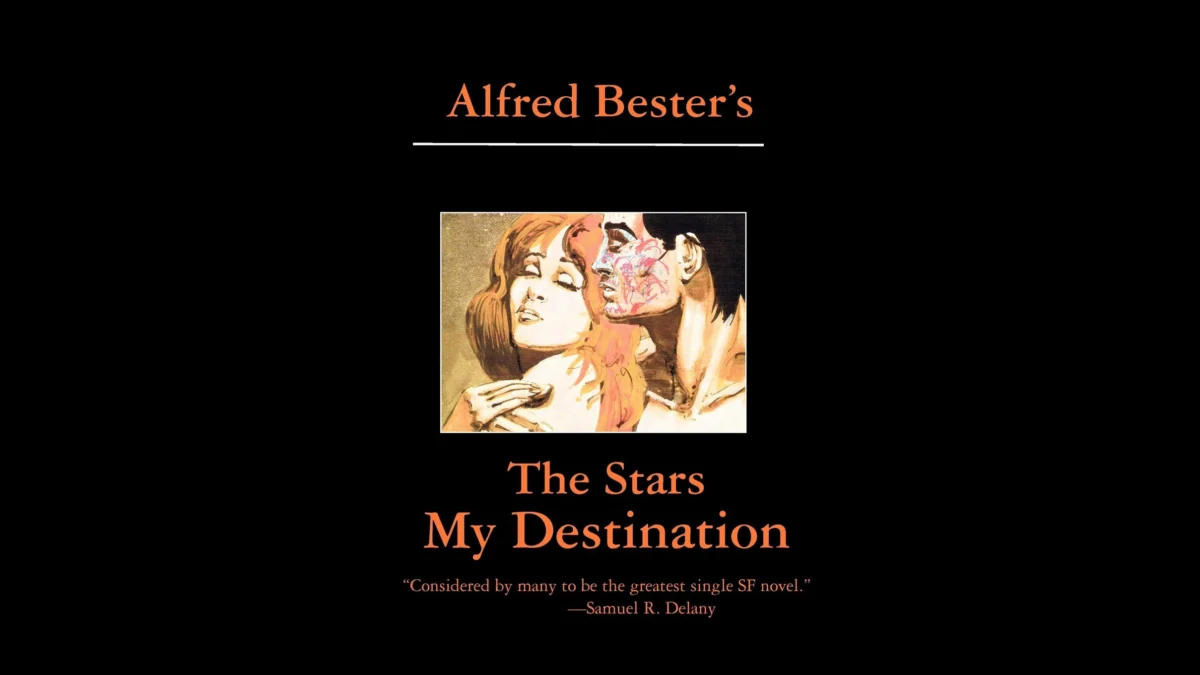
Alfred Bester’s seminal 1956 science fiction novel, The Stars My Destination, originally serialized as Tiger! Tiger! in the United Kingdom, stands as a pivotal, albeit often overlooked, antecedent to the cyberpunk genre. This analysis delves into the novel’s profound impact and enduring relevance, examining its prescient world-building, its visceral narrative drive, and its complex legacy within speculative fiction.
The narrative of The Stars My Destination unfolds with a ferocious, almost bewildering, velocity. At its core, it is the chronicle of Gully Foyle, a man abandoned to the void amidst the wreckage of the starship Nomad. Driven by an all-consuming thirst for vengeance against the indifferent vessel Vorga, Foyle embarks on a transformative odyssey. This initial premise, however, merely serves as a launchpad for a far grander exploration of societal collapse, corporate dominion, and the very essence of human potential. The sheer density of plot and character development packed into its relatively concise 250 pages can oscillate between a meticulously crafted, adrenaline-fueled spectacle and a bewildering torrent of events, a duality that continues to provoke debate among critics and readers alike.
Bester constructs a futurescape that is both wildly imaginative and eerily prophetic. The novel’s foundational concept is "jaunting," a form of instantaneous teleportation achieved through sheer mental exertion. This revolutionary ability has fundamentally fractured the existing socioeconomic strata. Interplanetary conflict is rampant, with the established inner planets locked in a perpetual cold war against their burgeoning outer satellite colonies. The global economy is effectively controlled by gargantuan, dynastic corporations whose sole allegiance lies with profit margins. These corporate titans, insulated by their immense wealth, actively cultivate an air of detachment and superiority. Their ostentatious displays of wealth often manifest as an embrace of anachronistic technologies – rotary telephones, steam-powered trains, and even horse-drawn carriages – serving as symbolic markers of their disdain for the evolving technological landscape and the masses who inhabit it. This portrayal of corporate power and its alienation of the populace resonates powerfully with the core tenets of cyberpunk, which frequently explores themes of unchecked capitalism and its societal consequences.
The character arc of Gully Foyle is central to the novel’s enduring power. Introduced as a man devoid of ambition, education, or discernible future, Foyle is a study in primal impulse. His initial existence is one of aimless drifting, a stark contrast to the driven individuals who populate the more technologically advanced sectors of society. However, the cataclysmic events that mar his early life ignite a ferocious transformation. Fueled by his burning desire for retribution, Foyle undergoes a profound metamorphosis. He evolves from a violent, instinct-driven brute into a calculating, almost messianic figure, augmented by sophisticated cybernetic enhancements. This personal journey mirrors the novel’s broader exploration of humanity’s capacity for adaptation and self-reinvention in the face of overwhelming technological and societal change.
The novel culminates in a breathtakingly vivid depiction of synesthesia, a neurological phenomenon where sensory input from one modality is perceived through another. Bester was a pioneer in bringing this complex psychological state into popular literature, illustrating how Foyle’s senses become interwoven, enabling him to perceive sounds as colors or smells as tactile sensations. This climactic sequence is not merely a stylistic flourish; it serves as a powerful metaphor for Foyle’s expanded consciousness and his ultimate transcendence of conventional human perception, a concept that has become a recurring motif in later cyberpunk narratives exploring altered states of mind and augmented reality. The ergodic nature of this climax, where the reader’s active engagement with the text is crucial to fully experiencing the sensory overload, is a testament to Bester’s innovative approach to narrative structure, a quality that is best appreciated through a physical reading experience that allows for a more immersive and tactile engagement with the text’s unique design.
Despite its groundbreaking achievements, The Stars My Destination is not without its limitations, many of which are rooted in its historical context. Published in 1956, the novel’s handling of race and its portrayal of women exhibit problematic elements that are jarring to contemporary readers. The casual depiction of sexual assault early in the narrative, framed as a minor transgression rather than a grave crime, is particularly egregious. Furthermore, a romantic subplot appended near the novel’s conclusion feels incongruous and underdeveloped, failing to integrate seamlessly with the overarching narrative thrust. These shortcomings, while undeniable, do not entirely diminish the novel’s overall impact but rather serve as a reminder of the evolving social consciousness and the continuous need for critical engagement with literary works across different eras.
The enduring influence of The Stars My Destination on the development of cyberpunk is undeniable. Authors like William Gibson, often hailed as the father of cyberpunk, have openly acknowledged Bester’s work as a significant inspiration. The novel’s depiction of a future dominated by powerful corporations, its exploration of technological augmentation, its portrayal of social stratification, and its emphasis on a gritty, often desperate, human struggle against overwhelming odds all laid crucial groundwork for the genre’s defining characteristics. The concept of "jaunting," for instance, prefigures the ubiquitous teleportation and instantaneous travel often depicted in cyberpunk, while Foyle’s cybernetic enhancements foreshadow the integration of technology into the human body that is central to the genre’s aesthetic.
The prescience of Bester’s vision extends beyond mere technological speculation. His critique of corporate power and its potential to erode individual autonomy and societal well-being remains remarkably relevant in the 21st century. The novel’s depiction of a society stratified by wealth and access to technology, where the privileged few operate in opulent isolation, mirrors many of the anxieties surrounding contemporary global inequalities. The "corporate feudalism" that Bester imagined has, in many respects, become a palpable reality, making The Stars My Destination a work that continues to offer profound insights into the trajectory of human civilization.
In an era where digital mediums dominate literary consumption, the recommendation to seek out a physical copy of The Stars My Destination is not merely a matter of preference but a nod to the novel’s structural and experiential design. The tactile engagement with a physical book, the ability to trace the printed word, and the immersive experience of holding the narrative in one’s hands are particularly valuable for works that, like Bester’s, leverage elements of ergodic literature. The novel’s complex, multi-layered climax, with its intricate sensory details and demanding narrative structure, benefits immensely from a format that allows for a more deliberate and focused engagement, a stark contrast to the often fragmented and less tactile experience of e-readers.
The legacy of The Stars My Destination is that of a foundational text, a blueprint for a genre that would later explode in popularity. It is a testament to Bester’s visionary talent that a novel written in the mid-20th century continues to feel so contemporary and so relevant. Its exploration of humanity’s resilience, its unflinching portrayal of societal decay, and its innovative narrative techniques solidify its position not just as a classic of science fiction, but as a crucial precursor to one of the genre’s most influential sub-movements. For anyone seeking to understand the origins of cyberpunk, or to appreciate a masterclass in speculative fiction storytelling, The Stars My Destination remains an essential and profoundly rewarding read. Its continued availability across various platforms ensures that new generations of readers can discover the raw power and enduring relevance of Alfred Bester’s remarkable achievement.




 Safa Marwah
 Ayu Aulia