
 Aura Kasih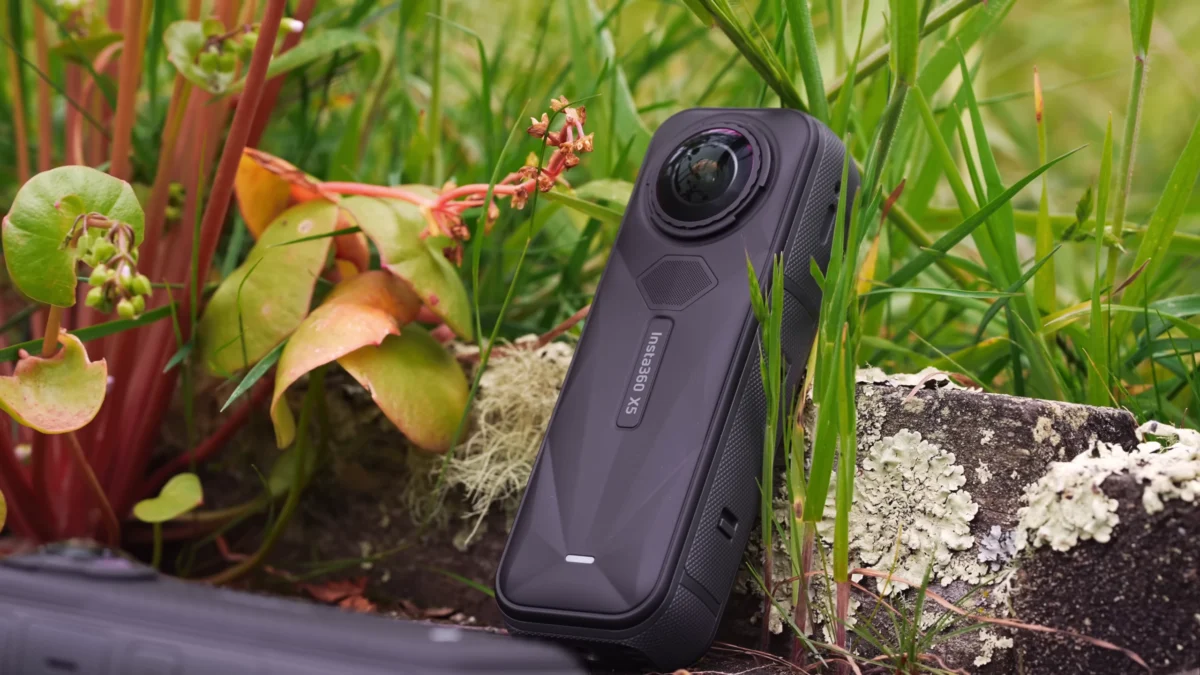
A groundbreaking partnership between Insta360, a leader in immersive camera technology, and Splatica, a nascent UK-based startup, is poised to democratize the creation of photorealistic 3D digital environments, allowing individuals and businesses to capture and explore real-world spaces with unprecedented ease and interactivity. This advancement leverages the power of Gaussian splatting, a sophisticated rendering technique previously discussed for its future potential, to transform ordinary consumer 360-degree cameras into powerful tools for DIY spatial data acquisition.
The technology at the heart of this revolution is Gaussian splatting, a method that represents 3D scenes as a collection of millions of semi-transparent, colored Gaussian blobs. Unlike traditional 3D scanning that relies on dense mesh generation or complex photogrammetry processing, Gaussian splatting excels at rendering highly detailed and visually convincing scenes from a sparse set of input data. This approach, while computationally intensive to generate, offers remarkably fast rendering speeds once the splatting process is complete, enabling interactive exploration akin to navigating a video game environment.
Previously, realizing such immersive digital recreations often required specialized, high-end equipment and significant technical expertise. Professional 3D scanning solutions were prohibitively expensive for many, and the processing pipelines were complex, demanding specialized software and considerable computational resources. The innovation brought forth by Splatica, in collaboration with Insta360, bypasses these traditional barriers. By integrating with readily available consumer 360-degree cameras, the process is streamlined to a level of accessibility previously unimaginable for creating detailed 3D digital twins of physical spaces.

Insta360, known for its innovative range of 360-degree cameras such as the X5 and the Antigravity A1, has long been a preferred choice for professionals in fields like real estate virtual tours, construction progress monitoring, and facility inspections. These applications already benefit from the panoramic perspective offered by 360-degree footage. However, the integration with Splatica’s technology elevates this utility exponentially, transforming static panoramic views into dynamic, explorable digital environments. This synergy allows for a far richer understanding and interaction with the captured space, moving beyond passive viewing to active immersion.
The operational simplicity of the Splatica platform is a key differentiator. Users can capture raw 360-degree video footage using their Insta360 camera. This footage is then uploaded to Splatica’s cloud-based service, where proprietary algorithms handle the complex process of converting the video data into a Gaussian splat representation. The outcome is a navigable 3D model that users can explore from various viewpoints, offering a tangible sense of presence within the digital replica. While the current iterations of Gaussian splats can sometimes exhibit an ethereal quality, appearing somewhat translucent or painterly, the fidelity is rapidly improving, making the technology increasingly viable for a wide array of practical applications.
The potential impact of this technology is far-reaching. For real estate professionals, the ability to offer interactive virtual tours that go beyond 360-degree panoramas could revolutionize property showcasing. Prospective buyers could virtually walk through a property, examine details, and gain a spatial understanding that static imagery cannot convey. In construction and architecture, detailed digital twins can serve as invaluable tools for site monitoring, progress tracking, and collaborative design reviews. Facility managers can use these immersive models for maintenance planning, remote inspections, and operational efficiency improvements.
The Splatica platform’s capabilities are demonstrated through various use cases. Capturing a large outdoor play structure in a local park, for instance, results in a digital model that allows users to virtually navigate the entire area. Similarly, a detailed scan of a basketball court in another park showcases the technology’s ability to reconstruct outdoor environments. A crucial aspect of achieving high-quality results lies in the capture methodology. Splatica emphasizes the need for comprehensive data acquisition, suggesting that users must film from every potential vantage point they wish to inhabit within the virtual space. A single pass around an object, for example, may not yield sufficient data for a detailed reconstruction.

The technology also holds promise for specialized industries. A simulated bridge inspection, focusing on a support pillar, highlights the potential for infrastructure assessment. While the current level of detail might not satisfy the stringent requirements of professional surveyors or safety inspectors without additional calibration, the foundation for such applications is being laid. The ability to capture complex, multi-faceted environments like a backyard with a high degree of detail, as demonstrated by an extensive capture session, underscores the scalability of the technology for personal or business use. The generated 3D point clouds, which represent the underlying structure of the splatted scene, provide a foundational data layer that can be further analyzed.
Downloaded scans are available in standard formats like PLY and USDZ, facilitating integration with other 3D software and platforms. Splatica reports a typical error margin of approximately one percent for every 100 centimeters of measurement, a level of accuracy deemed sufficient for general surveying and spatial exploration. This accuracy can be further enhanced by strategically placing physical markers within the capture area, providing fixed reference points for the algorithms. This marks a significant advancement from earlier attempts at DIY 3D scanning, which often involved costly proprietary software and hardware combinations.
Beyond immediate practical applications, Splatica and Insta360 are spearheading "Project Eternal," a global initiative aimed at preserving cultural heritage through digital replication. This ambitious project seeks to create high-fidelity Gaussian splat reconstructions of significant landmarks worldwide. The initiative includes offering incentives for outstanding Gaussian splat creations, providing complimentary Splatica uploads, and undertaking pilot projects to scan historically vital sites like Pompeii and Civita di Bagnoregio in Italy. This endeavor not only aims to safeguard cultural assets for future generations but also to foster a global community of digital archivists and explorers.
The technical underpinnings of Splatica’s solution involve a proprietary adaptation of Simultaneous Localization and Mapping (SLAM) algorithms. SLAM is a fundamental technology that enables robots, autonomous vehicles, and virtual reality systems to perceive their environment and determine their position within it. Splatica’s specialized SLAM implementation is optimized for extracting precise spatial data from 360-degree video streams, generating the detailed point clouds that form the basis of Gaussian splats. The integration of metadata embedded within video files captured by Insta360 and Antigravity cameras is crucial. This metadata includes lens distortion parameters, shutter speed, accelerometer and gyroscope data, and GPS information, all of which are streamed directly from the camera during capture. This rich data stream significantly enhances the accuracy and efficiency of the splatting process.

While the current generation of Gaussian splats offers impressive visual fidelity, it is important to acknowledge certain limitations. For applications where surface texture and fine details are paramount, traditional high-resolution photogrammetry might still provide superior results. The translucent nature of splats means that extremely fine textures might appear as slightly blurred color blobs rather than sharp, legible surfaces upon close inspection.
Despite these nuances, the momentum behind Gaussian splatting technology and its integration with accessible hardware is undeniable. Insta360 is actively exploring enterprise solutions, with companies piloting 3D reconstruction and digital twin workflows in construction and facilities management. The company aims to further enhance the data richness provided by its cameras, streamlining the process for 3D reconstruction services and making digital twin creation more seamless.
The primary barrier to entry for Splatica currently remains its pricing structure. The service operates on a per-second processing fee, ranging from 18 to 25 cents, in addition to a monthly subscription. The company is actively experimenting with pricing tiers, indicating a dynamic approach to market adoption. However, for early adopters, there is an opportunity to benefit from introductory offers, including waived subscription fees for the first 1,000 users, enabling them to process approximately ten minutes of 360-degree footage into interactive 3D worlds. Furthermore, Splatica’s public gallery offers access to over 100 existing splat scenes for exploration.
The evolution of 360-degree cameras from mere panoramic capture devices to powerful spatial data acquisition tools signifies a pivotal moment in digital content creation. The collaboration between Insta360 and Splatica is not merely an incremental improvement; it represents a paradigm shift, making immersive 3D digital recreation accessible to a broad audience and opening up a new frontier for how we capture, interact with, and preserve the world around us. The implications for industries ranging from real estate and construction to cultural heritage preservation and robotics are profound, heralding an era where the digital replica of our physical world becomes increasingly sophisticated and readily attainable.




 Lisa Mariana
 Ayu Aulia

 Safa Marwah