
 Aura Kasih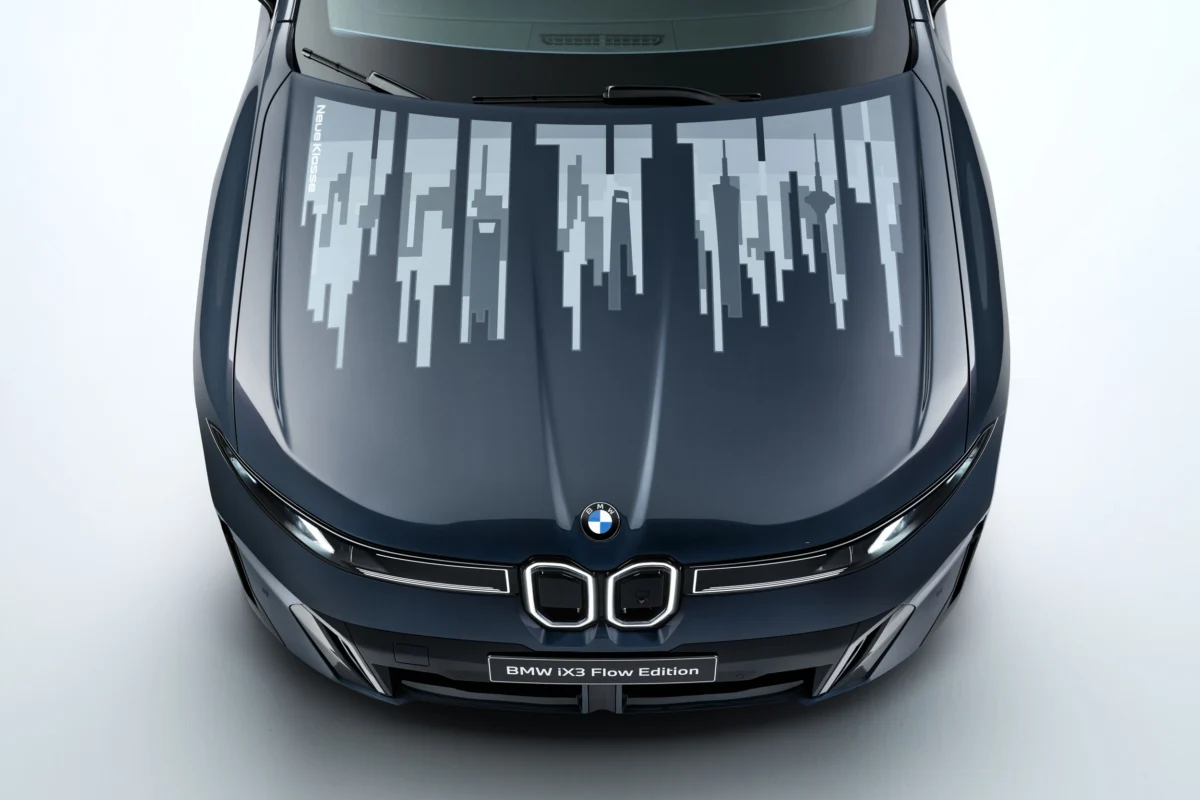
BMW is signaling a significant leap toward bringing vehicles with customizable exteriors to the mainstream market, with its latest concept integrating advanced E Ink panel technology into the car’s hood, a move that suggests the technology is nearing production-readiness.
The automotive industry has long been captivated by the notion of vehicles that can adapt their aesthetic on demand, a concept that has moved from the realm of science fiction to tangible prototypes. BMW, a pioneer in automotive innovation, has been at the forefront of this evolution, consistently pushing the boundaries of what’s possible in vehicle personalization. Their journey began with the striking BMW iX Flow concept unveiled at CES 2022, which showcased the transformative potential of E Ink technology by enabling a grayscale exterior to shift its hue. This initial demonstration, reminiscent of the familiar technology found in e-readers, offered a glimpse into a future where cars could dynamically alter their appearance.
Building on this foundational concept, BMW introduced the i Vision Dee concept and subsequently the i5 Flow Nostokana, each iteration refining the application of E Ink. These subsequent projects explored the integration of color E Ink panels, moving beyond the monochrome limitations of the initial prototype. While these advancements were visually impressive, they often involved wrapping the entire vehicle in a mosaic of custom-shaped E Ink panels. This bespoke approach, while demonstrating the technology’s capability, presented significant challenges for mass production, particularly concerning durability and cost-effectiveness in an automotive manufacturing environment.
The latest development, showcased in the BMW iX3 Flow Edition at the 2026 Beijing Auto Show, represents a more pragmatic and potentially scalable advancement. Instead of a comprehensive exterior wrap, this concept strategically embeds E Ink Prism technology directly into the structure of the vehicle’s hood. This integrated approach moves away from an applied surface treatment toward a more fundamental incorporation of the color-changing capability into the car’s very architecture. This subtle yet significant shift in methodology is crucial for bridging the gap between a concept car and a production-ready vehicle.
According to E Ink’s official release, this new iteration has undergone BMW’s rigorous quality assurance processes, meeting the stringent demands of automotive engineering and the rigors of everyday use. This validation suggests a maturation of the technology, addressing concerns about its resilience to environmental factors, wear and tear, and the operational demands placed upon vehicle components. The successful integration into a structural element like the hood signifies a substantial step forward in making this advanced aesthetic feature a viable option for consumers.

The BMW iX3 Flow Edition’s current manifestation offers eight distinct visual animations for its hood, controllable by the driver. While these animations are presently limited to a grayscale palette, their introduction signifies a tangible progression towards the broader vision BMW has articulated for customizable vehicle exteriors. The ability for a driver to alter their vehicle’s appearance with the press of a button, even within a constrained area and color spectrum, represents a significant move beyond the purely conceptual stage.
The implications of this technology, once fully realized and deployed across a wider range of exterior surfaces and color options, are profound. For consumers, it promises an unprecedented level of personalization. Imagine a car that can adapt its color to match a mood, an event, or even to optimize for thermal absorption – darker hues for cooler temperatures, lighter shades for hotter climates, potentially contributing to energy efficiency. This could also have significant implications for fleet management, allowing businesses to easily brand and rebrand their vehicles without costly repainting.
Furthermore, the ability to dynamically change a car’s color could influence resale values and ownership models. Vehicles might retain their appeal for longer as owners can update their aesthetic over time, reducing the obsolescence factor often associated with automotive design. It could also open avenues for subscription-based aesthetic packages, where users can access different color schemes or animations for a period.
The technological hurdles overcome are considerable. E Ink, traditionally known for its low power consumption and excellent readability in ambient light, presents unique advantages for automotive applications. Its bistable nature means it consumes power only when changing the displayed image, making it far more energy-efficient than traditional displays. However, adapting this technology for the harsh automotive environment – extreme temperatures, vibrations, UV exposure, and the need for rapid, seamless color transitions – has been a monumental engineering feat.
BMW’s strategic decision to focus on a specific panel, like the hood, for this advanced iteration is a testament to a phased rollout strategy. By proving the technology’s viability and durability on a single, prominent component, BMW can gather valuable real-world data and refine the manufacturing processes before attempting a full-vehicle application. This approach mitigates the risk associated with such a radical departure from traditional automotive manufacturing.

The partnership with E Ink is clearly central to this progress. The refinement of E Ink Prism technology, designed for larger-scale applications and structural integration, has been critical. The "Prism" designation suggests a modular approach, where individual cells or panels can be assembled to create larger, more complex surfaces, which is essential for automotive body panels. The successful completion of BMW’s stringent testing protocols indicates that E Ink has developed a solution that is not only visually appealing but also robust enough to withstand the rigors of automotive application.
Looking ahead, the widespread adoption of this technology will hinge on several factors. Cost will undoubtedly be a primary consideration. While E Ink is becoming more affordable, integrating it into mass-produced vehicles will require significant economies of scale to make it a compelling option for a broad consumer base. The complexity of the integration process, including the power supply, control systems, and the seamless integration with the vehicle’s overall electronics, will also need to be streamlined.
The regulatory landscape may also play a role. While changing a car’s color might seem benign, authorities may need to establish guidelines regarding the types of displays permitted on exterior surfaces, particularly concerning safety and potential distractions. However, the current implementation, focusing on static animations within a defined area, likely bypasses many of these initial concerns.
Ultimately, BMW’s latest concept represents more than just a cosmetic innovation; it signifies a fundamental shift in how we perceive and interact with our vehicles. It moves us closer to a future where a car’s exterior is not a static declaration of ownership but a dynamic canvas, capable of expressing individuality, adapting to its environment, and enhancing the overall ownership experience. The BMW iX3 Flow Edition, though currently a limited demonstration, serves as a powerful harbinger of this transformative era in automotive design and technology.




 Safa Marwah
 Ayu Aulia

