Lisa Mariana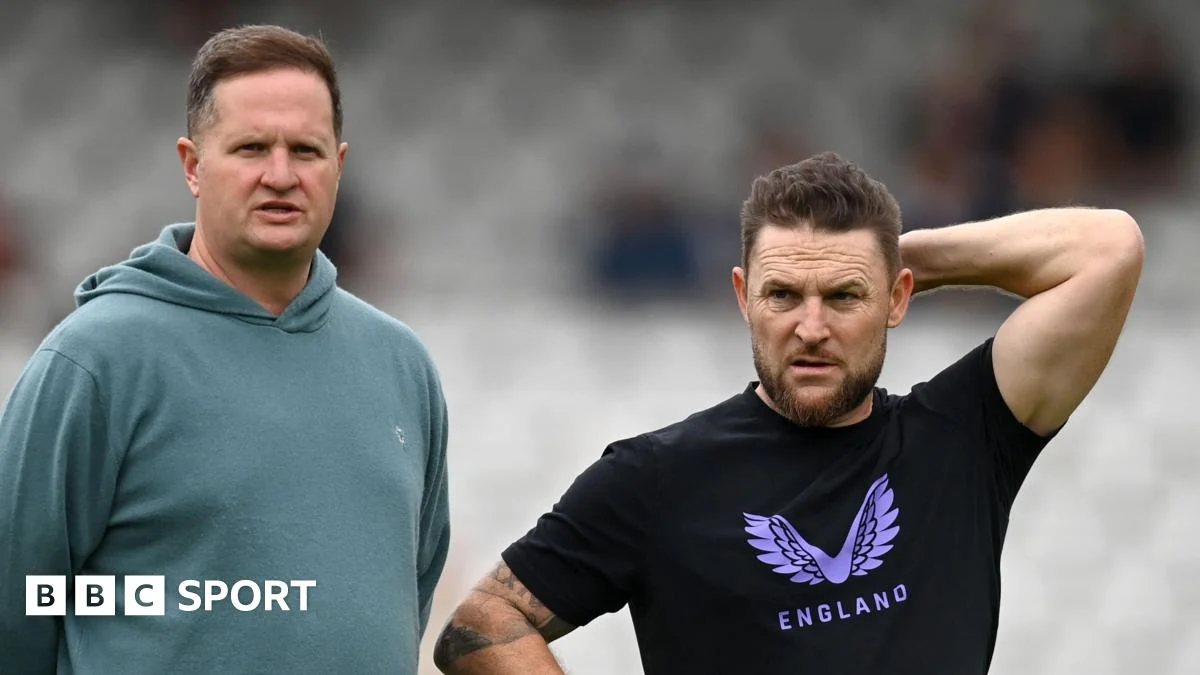
The strategic alignment between England’s international cricket setup and its domestic county system is undergoing a critical re-evaluation, following a recent high-level summit between the national team’s coaching and management staff and representatives from county cricket. This pivotal engagement, spearheaded by England Test head coach Brendon McCullum and England and Wales Cricket Board (ECB) managing director Rob Key, signals a concerted effort to bridge an increasingly apparent divide that has drawn significant scrutiny, particularly in the aftermath of England’s recent Ashes series defeat. The discussions aimed to foster greater clarity and collaboration, addressing growing concerns regarding player development pathways and selection philosophies that have, in recent years, been perceived as detached from the bedrock of English cricket.
The relationship between the apex of English cricket and its foundational county structure has experienced periods of both harmony and tension, but recent pronouncements from within the domestic game highlighted a burgeoning chasm. Critiques emerged following the appointment of McCullum and Key in 2022, with notable figures expressing apprehension. Gareth Batty, head coach for Surrey, articulated concerns last month that the established progression from county performance to national team selection had become "misted over," implying a lack of transparent criteria or consistent observation of domestic talent. Echoing this sentiment, Sussex head coach Paul Farbrace suggested a perceived "no interest" from Coach McCullum in the intricacies of the county game, underscoring a sentiment of disconnect that permeated certain segments of the domestic circuit. These candid observations served as a catalyst, prompting the ECB’s leadership to initiate direct dialogue.
The recently convened virtual meeting, which took place on a Wednesday, gathered a comprehensive contingent of key stakeholders. Representing the ECB were Brendon McCullum and Rob Key, underscoring the gravity with which the leadership viewed the discussions. They were joined by Ed Barney, the ECB’s performance director, who plays a crucial role in player development strategies; Troy Cooley, who has rejoined the ECB in a significant capacity as the men’s pace bowling lead, reflecting a renewed focus on fast bowling resources; and David Court, whose responsibilities encompass player identification across the ECB’s various programs. On the other side of the digital table were numerous county head coaches and directors of cricket, representing the very institutions tasked with nurturing the next generation of international cricketers.
A primary objective of the ECB’s presentation during this extensive call was to delineate, with greater precision, the specific attributes, skills, and performance metrics they are actively seeking in prospective England and England Lions players. This clarification is critical for county coaches, as it provides a tangible framework against which to develop their players and align their coaching methodologies with national team requirements. The feedback from the county representatives offered an initial gauge of the meeting’s efficacy. Mickey Arthur, the seasoned coach at Derbyshire, commented positively, indicating that counties "got some clarity" from the discussions. While refraining from divulging the specific details of the conversation, Arthur affirmed its constructive nature, stating, "We got some clarity on their aims and their ambitions, what their short-term goal is now and how they’re looking to achieve it." Another county coach, speaking anonymously, described the call as "positive" but critically appended that any genuine improvements would necessitate tangible "action" to support the verbal assurances. This underscores a cautious optimism, acknowledging the value of dialogue while emphasizing the imperative for subsequent implementation and consistency in policy.
England’s recent Test selection strategy has, to some extent, demonstrated a willingness to diverge from conventional wisdom, often prioritizing potential and specific skill sets over an extensive body of first-class statistics. This approach has yielded varied outcomes. Notable examples include the selection of batter Jacob Bethell for England Lions duty before he had registered a professional century, and the rapid ascent of spinner Shoaib Bashir into the Test squad in 2024 after having participated in only six first-class matches. While such selections have occasionally unearthed gems or offered innovative tactical advantages, they have also fueled the perception that traditional county performance might be de-emphasized.
The chastening 4-1 defeat against Australia in the recent Ashes series, however, appears to have served as a significant inflection point, prompting a re-evaluation of this approach. The national team management, including captain Ben Stokes, is now emphasizing the critical importance of players demonstrating their form and readiness within the domestic structure. Specifically, there is a strong encouragement for prospective England players to actively participate in the seven rounds of the County Championship that precede the inaugural Test of the summer against New Zealand, scheduled to commence on June 4. This strategic directive represents a subtle but significant pivot, signaling a renewed appreciation for the foundational role of the County Championship in preparing players for the rigors of international cricket. Captain Stokes articulated this sentiment earlier in the week, describing the Championship rounds as a "great opportunity for a lot of people around the country." He further expressed his hope that players would "give themselves the best chance of coming up for selection when we get together to do that," reinforcing the direct correlation between domestic performance and national team consideration.
This renewed emphasis on county form translates into immediate implications for several key players. Batter Ollie Pope and wicketkeeper Jamie Smith are slated to represent Surrey against Warwickshire as the Championship season commences on Friday. Similarly, Durham’s Matthew Potts, a promising pace bowler, and Kent’s Zak Crawley, an incumbent Test opener, are scheduled to face each other at Chester-le-Street, providing them with an early opportunity to demonstrate their red-ball prowess. Spinner Shoaib Bashir, whose rapid international ascent has been a topic of much discussion, is anticipated to make his debut for Derbyshire against Worcestershire, offering him crucial first-class match experience.
Beyond these immediate examples, a broader cohort of players across the country will be keenly aware of the heightened stakes. Pace bowlers such as Sam Cook of Essex and Ollie Robinson of Sussex, both with previous international experience, will be looking to solidify their claims. Spinners including Liam Dawson of Hampshire, Leicestershire’s Rehan Ahmed, and Somerset’s Jack Leach, returning from injury, will vie for contention. A diverse group of batters, including Glamorgan’s Asa Tribe, Nottinghamshire’s Haseeb Hameed, Surrey’s Dom Sibley, Sussex’s James Coles, and Somerset wicketkeeper James Rew, are all positioned to press their cases through compelling performances in the early rounds of the Championship. The quality and consistency of their performances in this crucial period will undoubtedly weigh heavily in the minds of the national selectors.
The ongoing process of appointing a new national selector to succeed Luke Wright, who departed earlier in the year, adds another layer of strategic importance to these developments. The individual ultimately entrusted with this role will be pivotal in translating the clarified player profiles and renewed emphasis on county form into cohesive and effective selection policies. Their mandate will extend beyond merely picking teams; it will involve harmonizing the insights from the county system with the strategic objectives of the national team, ensuring a seamless and meritocratic pathway for talent.
Adding a further layer of context, ECB chief executive Richard Gould recently offered his unequivocal backing to Brendon McCullum and Rob Key, despite a wave of criticism from several former England players directed at the current regime. This public endorsement signifies internal confidence in the strategic direction and leadership of McCullum and Key, even as external voices question certain aspects of their tenure, particularly in light of the Ashes result. The criticism from former players has often centered on a perceived overemphasis on the aggressive "Bazball" philosophy at the expense of developing fundamental red-ball skills and resilience, or a potential disconnect from the traditional feeder system of county cricket. Gould’s support suggests that the ECB leadership views the current approach as fundamentally sound, while acknowledging the need for continuous refinement and improved communication with the domestic game, as evidenced by the recent meeting.
The challenge ahead for the ECB and county cricket is to transform the positive sentiment from this initial dialogue into sustainable, actionable strategies. The "clarity" provided must translate into consistent selection criteria, where exceptional county performances are demonstrably rewarded, and the development pathways for young talent are clearly signposted. This will require an ongoing commitment to communication and collaboration, ensuring that the county system feels genuinely integrated into the national team’s ecosystem, rather than an auxiliary entity.
The future outlook for English cricket’s player pathway hinges on several critical factors. Firstly, the consistency with which the national selectors, once appointed, adhere to the outlined criteria and demonstrate a tangible appreciation for County Championship form. Secondly, the ability of the counties to adapt their coaching and player development programs to align with the refined requirements, ensuring a pipeline of well-rounded cricketers equipped for the international stage. Thirdly, the delicate balance that must be struck between maintaining England’s distinctive, aggressive Test philosophy and cultivating players with robust, fundamental red-ball techniques capable of excelling in diverse conditions. This initiative, therefore, represents more than a mere meeting; it is a crucial step towards re-establishing a cohesive and effective national player development framework, vital for the long-term health and success of English cricket. Its success will ultimately be measured not by the warmth of the initial call, but by the tangible improvements in player progression, the clarity of the pathway, and ultimately, the consistent performance of the England Test team on the global stage.



 Aura Kasih
 Safa Marwah
 Ayu Aulia