Lisa Mariana
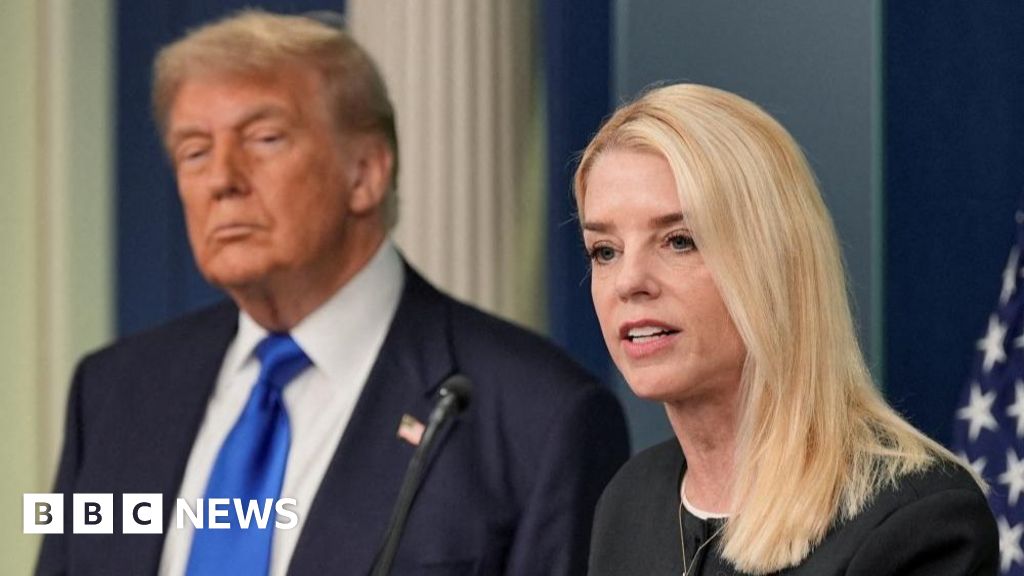
The Trump administration has announced a significant shift in its legal leadership, with Attorney General Pam Bondi departing her position as the nation’s chief law enforcement officer, making way for her former deputy, Todd Blanche, to assume the role. This high-profile transition, confirmed by President Donald Trump via a social media post, marks the latest in a series of cabinet changes within the current term and comes against a backdrop of intense congressional scrutiny, particularly concerning the Justice Department’s handling of files related to the late financier Jeffrey Epstein.
Pam Bondi, a stalwart ally and vocal advocate for President Trump, concluded her tenure at the Department of Justice following a period characterized by both staunch loyalty to the administration and escalating pressure from legislative bodies and the public. Appointed to the nation’s top legal post in February 2025, Bondi’s leadership was frequently defined by her robust defense of presidential policies and her assertive posture in political discourse. Her departure, described by President Trump as a move to the private sector where she will continue to support his agenda, signals a potential recalibration of the administration’s legal strategy.
Central to the challenges faced by Bondi’s department was the protracted controversy surrounding the release of documents pertinent to Jeffrey Epstein. The public, alongside a bipartisan coalition in Congress, had demanded transparency regarding the extensive network and activities of the convicted sex offender, who died in 2019 while awaiting trial. Upon her swearing-in, Bondi had pledged a commitment to openness, even vowing to release an alleged "client list." However, this promise faced considerable headwinds, with the department later stating no such comprehensive list existed. Ultimately, the release of millions of files occurred not merely through departmental initiative but under the direct compulsion of a bipartisan law enacted by Congress, underscoring the legislative branch’s dissatisfaction with the pace and scope of the Justice Department’s actions.
The handling of these sensitive files drew widespread criticism. Lawmakers from both sides of the aisle voiced concerns that the Department of Justice had failed adequately to redact identifying information for survivors, while simultaneously appearing to protect the identities of individuals not classified as victims. This dual failure created a significant public relations dilemma for the department and, by extension, for the administration. Survivors of Epstein’s abuses reportedly expressed profound frustration, citing a lack of engagement from Bondi or her office and perceiving the issue as having become a political liability for the President. Bondi, for her part, had publicly condemned Epstein as a "monster" and expressed empathy for the victims, yet these statements often failed to quell the growing dissent over the department’s operational transparency. The culmination of this discontent saw Bondi formally summoned by a congressional committee to provide testimony regarding her oversight of the Epstein investigation, an appearance anticipated to occur this month.
The pressure on Bondi intensified following a particularly acrimonious congressional hearing less than two months prior to her removal. During this combative session, Bondi endured a barrage of questions from lawmakers, with proceedings at times devolving into shouting matches. Her direct and confrontational style, including a notable instance where she reportedly labeled a Democratic representative a "washed-up loser," further strained relations between the Justice Department and Capitol Hill. This public display of friction, widely broadcast, offered a stark illustration of the deep partisan divisions and the fraught nature of oversight in Washington.
President Trump’s public statements regarding Bondi had presented a complex picture. Just hours before the announcement of her departure, he had publicly lauded her performance, stating, "She is a wonderful person and she is doing a good job." This public endorsement stood in stark contrast to internal reports suggesting the President had grown increasingly dissatisfied with her, particularly concerning the Epstein files. This disparity between public praise and private frustration is not uncommon within the Trump administration, often reflecting a strategic move to manage perception while simultaneously enacting behind-the-scenes personnel changes.
Todd Blanche, Bondi’s former deputy, now steps into the role of Acting Attorney General. Blanche’s ascension places him immediately in the crosshairs of the ongoing Epstein file controversy. Republican Congressman Thomas Massie, a consistent critic of the Justice Department’s handling of the files, articulated the expectations for the new leadership, stating on social media platform X, "I hope the next AG will release all the Epstein files according to the law and follow up with investigations, prosecutions and arrests." Similarly, California Democrat Ro Khanna, who co-sponsored the bipartisan legislation mandating the release of the files, issued a pointed challenge on BBC’s Newsnight, asserting that Congress should withhold confirmation of Blanche as a permanent Attorney General unless he commits to "investigating and prosecuting this Epstein class, this group of men who felt that they could write their own rules, play by their own roles, and treated the rest of us as dispensable." This immediate pressure highlights the critical and politically charged mandate Blanche inherits.
Beyond the Epstein controversy, Bondi’s tenure was also marked by the Justice Department’s aggressive pursuit of criminal investigations into perceived political opponents of the President. High-profile figures such as California Senator Adam Schiff, New York Attorney General Letitia James, and former FBI Director James Comey were among those targeted. President Trump had publicly urged Bondi to accelerate these investigations, notably in a September social media post where he directly addressed her, stating, "We can’t delay any longer, it’s killing our reputation and credibility." These directives raised questions among legal scholars and civil liberties advocates about the appropriate role of the Justice Department in political matters and the potential for partisan influence on federal law enforcement. Additionally, the department faced scrutiny for its handling of an investigation into federal immigration agents involved in fatal shootings in Minneapolis, Minnesota, an incident that ignited nationwide protests in January.
Bondi’s political allegiance to President Trump extended well beyond her role as Attorney General. She was a key member of his legal defense team during his first impeachment trial and a fervent supporter of his unsubstantiated claims of widespread voter fraud following the 2020 presidential election. More recently, she demonstrated her steadfast loyalty by attending his hush money trial in New York, which concluded with a conviction on 34 counts of fraud, a verdict currently under appeal. Her history underscores a deep personal and professional commitment to the President, making her removal particularly noteworthy, even amidst the stated praise.
This leadership change marks the third high-profile departure from President Trump’s cabinet within his current term, following the ousting of Kristi Noem as homeland security chief in March and the departure of National Security Adviser Mike Waltz last year, whose responsibilities were subsequently absorbed by US Secretary of State Marco Rubio. This pattern of executive reshuffling, while not as rapid or extensive as the "revolving door" phenomenon observed during his initial 2017-2021 term, suggests a growing dynamic of internal adjustments. Commentators and political strategists had initially noted a more disciplined and less chaotic approach in the early stages of this second term. However, these recent changes, particularly the removal of a deeply loyal figure like Bondi, could indicate evolving internal pressures or a strategic re-evaluation of personnel as the administration navigates its agenda and approaches potential future political contests. The transition at the Justice Department, therefore, is not merely a personnel change but a significant development with potential implications for the administration’s legal posture, its relationship with Congress, and the broader political landscape.




 Aura Kasih
 Safa Marwah
 Ayu Aulia