Lisa Mariana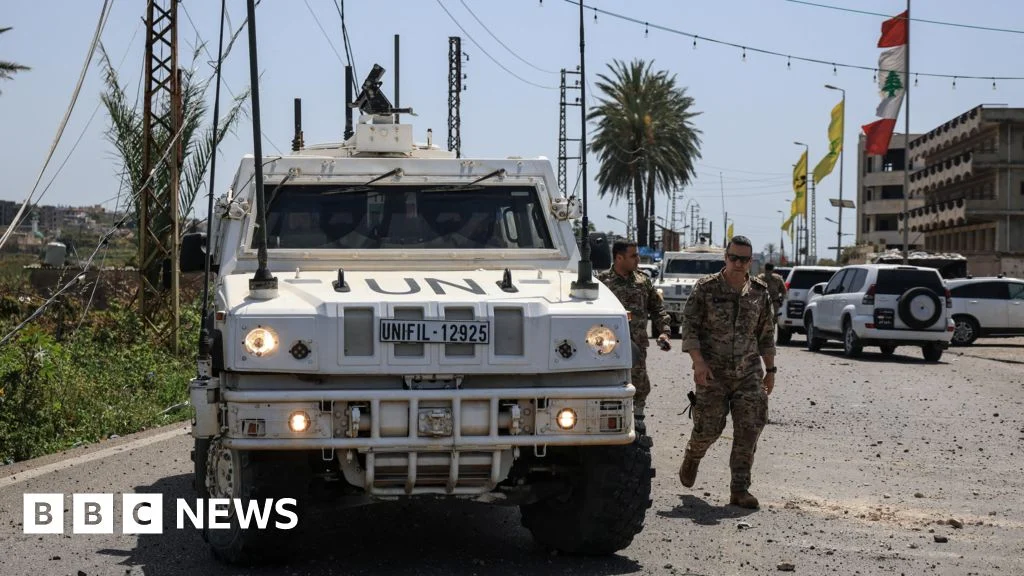
A United Nations patrol operating in the volatile southern region of Lebanon suffered a devastating assault, resulting in the death of a French peacekeeper and injuries to three others, two critically. This egregious act, which officials have characterized as a deliberate ambush, has ignited a fresh wave of diplomatic condemnation and heightened concerns over the already precarious security environment, particularly following renewed hostilities between Hezbollah and Israel.
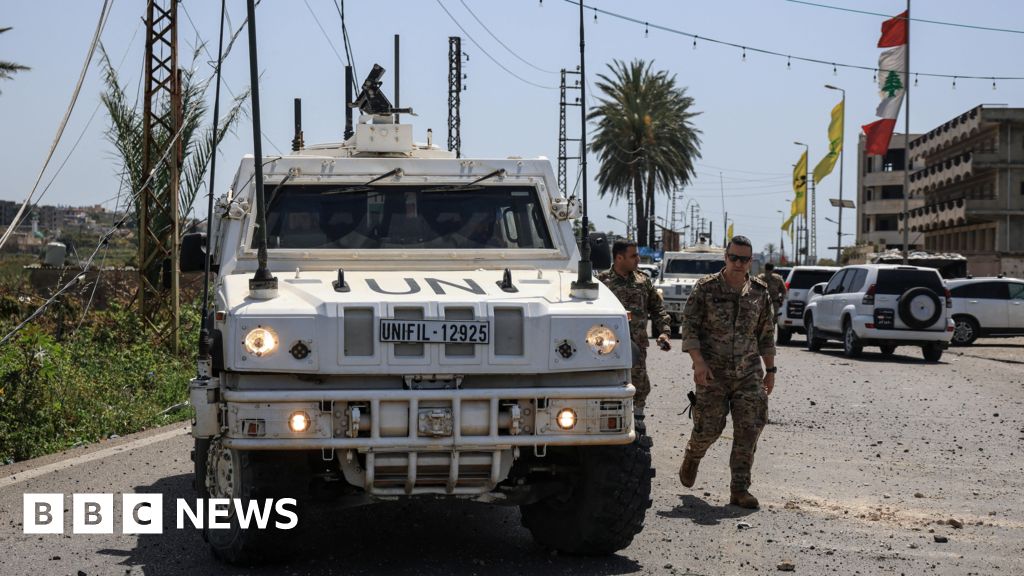
The tragic incident unfolded when a contingent of peacekeepers from the United Nations Interim Force in Lebanon (UNIFIL) found themselves under intense small-arms fire. The French soldier, whose identity has not yet been publicly released, succumbed to his wounds, marking a somber moment for the international peacekeeping mission. The three other injured personnel, also part of the French contingent, received immediate medical attention, with two reportedly in serious condition. UNIFIL confirmed the casualties, detailing that the patrol was engaged in a critical mission to clear explosive ordnance from a road in the village of Ghanduriyah, a task essential for reconnecting isolated UNIFIL positions that had been cut off due to recent conflict. This operation underscores the inherent dangers faced by UN personnel operating in a highly militarized and unpredictable zone.
Immediately following the attack, French President Emmanuel Macron swiftly attributed responsibility to Hezbollah, the powerful Iran-backed armed group that exerts significant influence across southern Lebanon. Macron’s unequivocal statement underscored the gravity with which Paris views the incident, demanding that Lebanese authorities promptly apprehend the perpetrators and collaborate fully with UNIFIL’s investigative efforts. In a stark contrast, Hezbollah vehemently denied any involvement, dismissing the accusations as "rushed" and "baseless." The group issued a statement urging caution in judgment and awaiting the findings of the Lebanese army’s investigation, while also emphasizing the importance of continued coordination between UNIFIL, the Lebanese army, and local communities during these "delicate circumstances."
The French Armed Forces Minister, Catherine Vautrin, provided further operational details, revealing that the peacekeeping unit was ambushed at "very close range" while attempting to re-establish access to a UNIFIL outpost. The fallen peacekeeper was reportedly "hit immediately by a direct shot from a small arms weapon" and, despite valiant efforts by fellow soldiers to revive him, could not be saved. This account paints a grim picture of a meticulously planned and executed attack, rather than a random act of violence, adding weight to the characterization of it as a deliberate act.
A spokesperson for UN Secretary-General António Guterres echoed the condemnation, noting that UNIFIL’s preliminary assessment suggested the perpetrators were "non-state actors," a term often used to refer to Hezbollah or aligned militias in the region. The spokesperson reiterated the UN’s urgent call for all parties to respect the recently established cessation of hostilities and to cease fire, highlighting the fragility of the current calm. The Lebanese Armed Forces acknowledged an exchange of fire with armed individuals preceding the incident and affirmed their close coordination with UNIFIL during what they described as a "sensitive phase" in the south. Lebanon’s President Joseph Aoun, in a phone call with President Macron, condemned the attack and pledged that those responsible would be brought to justice, while Prime Minister Nawaf Salam ordered an immediate investigation into the circumstances of the deadly ambush.
UNIFIL’s Enduring and Perilous Mandate
The United Nations Interim Force in Lebanon (UNIFIL) holds a critical, albeit often precarious, mandate in one of the world’s most enduring flashpoints. Established in 1978 by UN Security Council Resolution 425, its initial mission was to confirm Israel’s withdrawal from southern Lebanon, restore international peace and security, and assist the Lebanese government in reasserting its authority in the region following an Israeli invasion. Over the decades, UNIFIL has witnessed numerous cycles of conflict and has continually adapted its operations to a dynamic and hostile environment.
Its role was significantly expanded and strengthened following the devastating 2006 war between Israel and Hezbollah. UN Security Council Resolution 1701 augmented UNIFIL’s responsibilities, mandating it to monitor the ceasefire along the Blue Line – the de facto border between Lebanon and Israel – in close coordination with the Lebanese army. This expanded mandate also included preventing hostilities, ensuring humanitarian access, and supporting the Lebanese government’s efforts to establish a weapons-free zone south of the Litani River, a provision that has remained largely unfulfilled due to Hezbollah’s entrenched presence. UNIFIL’s multinational force, comprising thousands of peacekeepers from dozens of nations, operates in a complex terrain marked by deep-seated political divisions, sectarian tensions, and the omnipresent threat of renewed conflict. Since its inception, the mission has suffered immense losses, with more than 330 peacekeepers having been killed, underscoring the profound risks inherent in their commitment to regional stability.
The Volatile Landscape of Southern Lebanon and Hezbollah’s Hegemony
Southern Lebanon is a region of immense strategic importance, characterized by its rugged topography and its proximity to the Israeli border. Historically, it has served as a battleground and a launchpad for various armed groups, making it a constant source of tension in the wider Middle East. Hezbollah, founded in the early 1980s with Iranian backing, has emerged as the dominant political and military force in this area. It operates an extensive network of social, political, and military infrastructure, effectively acting as a state within a state. Its armed wing possesses a formidable arsenal, including an estimated 150,000 rockets and missiles, and maintains a highly trained and experienced fighting force.
Hezbollah’s deep roots in the local Shiite community, combined with its resistance narrative against Israel, afford it significant legitimacy and popular support in the south. This makes any attempt by external forces or even the Lebanese state to challenge its authority exceptionally difficult. The recent "renewed fighting" between Hezbollah and Israel, which reportedly commenced on March 2nd, has further exacerbated the already fragile security situation. While details on the exact nature and scale of these clashes remain somewhat obscured, they are understood to be part of a broader, low-intensity conflict, characterized by cross-border shelling, drone incursions, and targeted strikes. These skirmishes reflect the simmering animosity and the constant brinkmanship that defines the relationship between the two adversaries, consistently threatening to spiral into a larger conflagration.
A Fragile Truce and the Specter of Escalation
The attack on the French peacekeepers occurred despite a recently brokered 10-day ceasefire between Israel and Lebanon, which came into effect on April 16th. Announced by the United States, which played a crucial mediating role, this truce was intended to provide a much-needed pause in the hostilities and create a window for de-escalation. The US had explicitly urged Hezbollah to adhere to the terms of this agreement, recognizing the group’s capacity to either uphold or undermine any such arrangement.
The killing of a UNIFIL soldier, particularly during a period meant for calm, casts a long shadow over the efficacy and sincerity of this ceasefire. Such an incident not only threatens to derail nascent diplomatic efforts but also risks reigniting the very hostilities it was designed to quell. The deliberate targeting of peacekeepers, who are mandated to be impartial observers and facilitators of peace, represents a profound challenge to international norms and underscores the extreme volatility of the operational environment.
Analysis: Motives, Implications, and the Quest for Accountability
The motive behind the attack, particularly if Hezbollah is indeed responsible, remains a subject of intense speculation and analysis. One possible interpretation is that it constitutes a deliberate act of defiance or a signal to UNIFIL and the international community of Hezbollah’s unwavering control over southern Lebanon. It could also be a punitive measure for perceived UNIFIL activities that may have been seen as encroaching on Hezbollah’s operational space or intelligence gathering capabilities. Another possibility, though less likely given the precision of the ambush, is a miscalculation or an unauthorized action by a rogue element within Hezbollah or an affiliated militia. However, given Hezbollah’s hierarchical structure and strict command and control, particularly in such a sensitive area, such an explanation is often met with skepticism by intelligence analysts.
The implications of this attack are multifaceted and deeply concerning. For UNIFIL, it represents a significant blow to its operational security and morale. The deliberate targeting of peacekeepers is a grave violation of international humanitarian law and, as UNIFIL itself warned, could amount to war crimes. Such incidents invariably lead to a re-evaluation of security protocols, potentially restricting UNIFIL’s freedom of movement and effectiveness, which are already constrained by the political realities on the ground. The mission’s ability to fulfill its mandate, particularly in monitoring the Blue Line and supporting the Lebanese army, relies heavily on the cooperation and respect of all parties, something demonstrably absent in this instance.
Regionally, the attack significantly heightens the risk of a broader escalation. The assassination of a peacekeeper, especially one from a nation like France with significant diplomatic weight, can provoke strong international reactions and potentially complicate efforts to maintain the fragile ceasefire between Hezbollah and Israel. It also puts the Lebanese government in an unenviable position, caught between its international obligations to UNIFIL and the powerful domestic influence of Hezbollah. The capacity of the Lebanese authorities to genuinely investigate and prosecute the perpetrators will be seen as a critical test of their sovereignty and commitment to international law.
The Broader Geopolitical Landscape and the Path Forward
This incident cannot be viewed in isolation. It is intricately woven into the broader geopolitical tapestry of the Middle East, characterized by persistent Israeli-Iranian proxy conflicts, the unresolved Israeli-Palestinian issue, and the internal political fragility of Lebanon itself. Iran’s steadfast support for Hezbollah provides the group with significant operational autonomy and strategic depth, complicating any efforts to disarm or constrain it. The United States, while focused on de-escalation, finds its diplomatic efforts constantly challenged by such acts of violence.
The immediate imperative is a thorough, transparent, and impartial investigation into the attack. Accountability for those responsible is paramount, not only to deliver justice but also to deter future assaults on peacekeeping forces. All parties, particularly Hezbollah and the Lebanese authorities, are under immense international pressure to cooperate fully with UNIFIL and ensure the safety and security of UN personnel.
Looking ahead, the long-term viability of the UNIFIL mission remains a subject of ongoing debate. Operating in an environment where a major non-state actor effectively controls territory and possesses significant military capabilities, UNIFIL’s ability to fully implement Resolution 1701 faces inherent structural challenges. The incident serves as a stark reminder of the chronic instability plaguing southern Lebanon and the broader region. While diplomatic efforts will continue to focus on de-escalation and maintaining the ceasefire, the tragic death of a French peacekeeper underscores the brutal reality that peace in this volatile corner of the world remains an elusive and costly endeavor. The international community must redouble its efforts to support UNIFIL, hold perpetrators accountable, and address the root causes of conflict that continue to claim innocent lives.



 Aura Kasih
 Safa Marwah
 Ayu Aulia