Lisa Mariana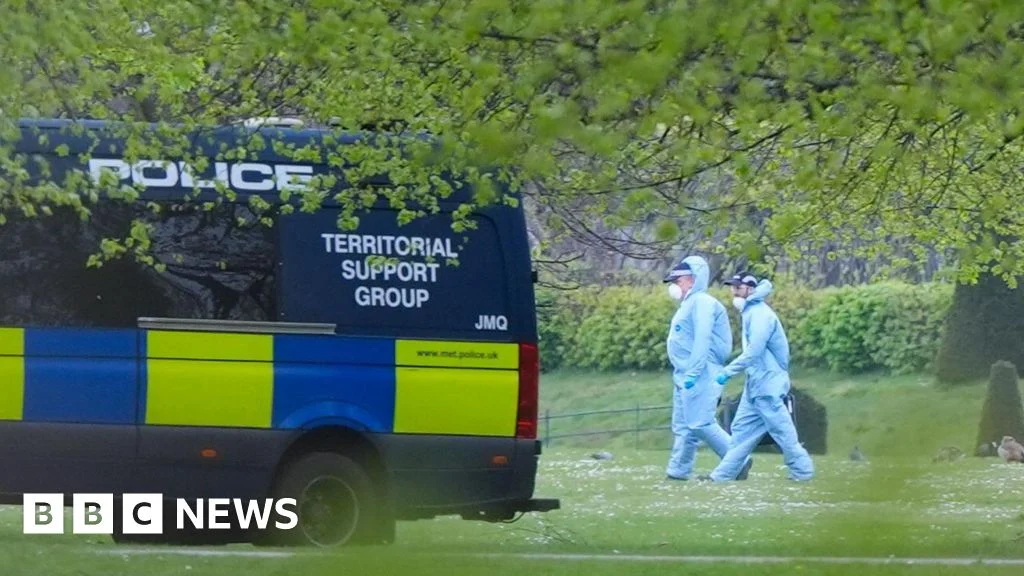
London’s security apparatus was activated following the identification of suspicious packages near the Israeli Embassy, triggering a substantial law enforcement and emergency services deployment that ultimately concluded with the determination that the items were non-hazardous, while an investigation into a preceding online threat remains active. The incident, unfolding across a critical diplomatic zone, underscored the heightened vigilance required in metropolitan centres for potential threats to foreign missions and the intricate coordination involved in evaluating their credibility.
The initial alarm was raised on Friday when a video circulated on social media platforms, purporting to originate from an Iran-linked Islamist group identified as Harakat Ashab al-Yamin al-Islamia. This video explicitly threatened an attack on the Israeli Embassy using drones equipped with "dangerous substances," immediately elevating the perceived threat level. Such online pronouncements are routinely scrutinised by intelligence agencies and counter-terrorism units, given their potential to incite or prefigure real-world actions, even if their ultimate execution capability varies. The very nature of the claim—a chemical or biological attack via unmanned aerial vehicles—demanded an immediate and robust response from British authorities, prioritising public safety and diplomatic security.
Responding to the explicit digital threat and the subsequent discovery of physical items in the vicinity of the embassy, located on the western edge of Kensington Gardens, the Metropolitan Police swiftly implemented extensive security protocols. These measures included the immediate closure of Kensington Gardens, a prominent public park, to facilitate a thorough search and assessment operation. This precautionary step, while disruptive to local residents and visitors, is standard procedure in situations where potential hazards cannot be immediately ruled out, ensuring the containment of any possible threat and the safety of the public. The Israeli Embassy, while confirming that it had not been directly attacked and all its staff were secure, remained a focal point of the security operation, highlighting the enduring sensitivities surrounding diplomatic premises in the current geopolitical climate.
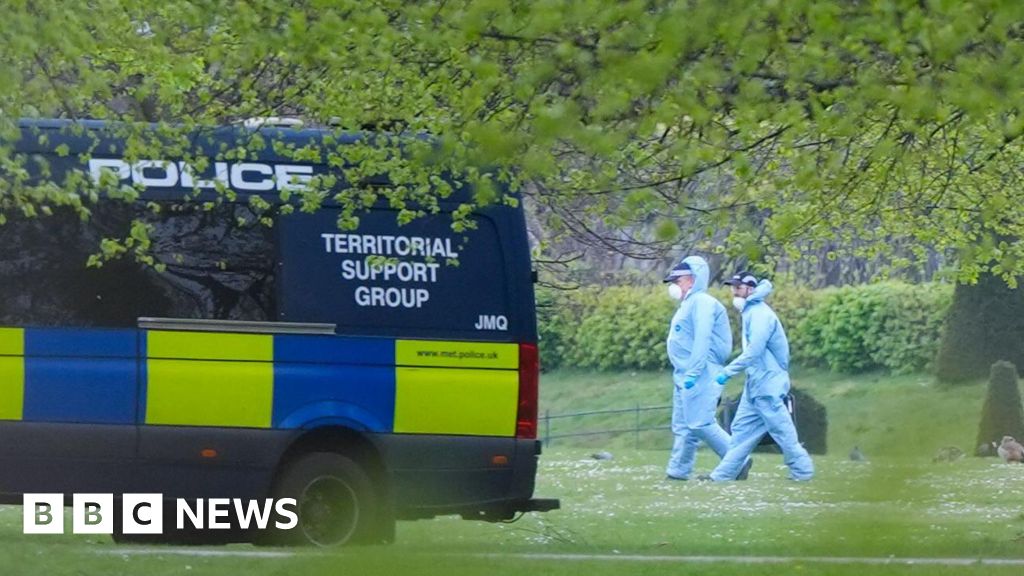
The investigation into the specific items found, which included two jars containing a powdered substance, involved a meticulous and highly specialised process. Counter-terrorism officers, in conjunction with a formidable array of emergency services, were deployed to ascertain the nature of these materials. The presence of a Metropolitan Police Chemical, Biological, Radiological, and Nuclear (CBRN) team at the scene near the park’s bandstand was a critical indicator of the potential severity initially perceived. CBRN units are specifically trained and equipped to deal with incidents involving hazardous substances, capable of identifying and mitigating risks associated with chemical agents, biological toxins, radioactive materials, or nuclear threats. Their deployment underscores the authorities’ commitment to preparing for and neutralising a wide spectrum of potential dangers.
Further demonstrating the comprehensive nature of the response, police divers were observed conducting searches in the Round Pond, an ornamental lake within Kensington Gardens. This action suggests that investigators were considering all possibilities, including the potential for items to have been disposed of in water bodies, either as part of the alleged threat or in an attempt to conceal evidence. The involvement of London Fire Brigade’s fire investigation dogs, trained to detect accelerants and other substances, along with the London Ambulance Service’s Hazardous Area Response Team (HART), which provides medical care in dangerous environments, further illustrated the multi-faceted, inter-agency approach adopted to manage the incident comprehensively. This integrated strategy is designed to ensure that every aspect of a potential threat, from its origin and composition to its medical implications, is addressed by specialist personnel.
Commander Helen Flanagan, representing Counter Terrorism Policing London, later acknowledged the public’s understanding and cooperation during what was undoubtedly a period of heightened concern. Her statement underlined the imperative for such extensive operations, even when the ultimate outcome is benign, emphasising the police’s dedication to maintaining public safety. The diligent efforts of all involved agencies allowed for the rapid assessment and subsequent reopening of Kensington Gardens by Saturday, mitigating prolonged disruption while ensuring a thorough investigation.
The finding that the items were "non-hazardous" provided a significant de-escalation, but it did not diminish the seriousness with which the initial threat was, and continues to be, treated. Even inert substances can be used to create alarm and disruption, serving as a form of psychological warfare or a test of security responses. The intent behind placing such items, particularly in conjunction with a publicised online threat, remains a central focus of the ongoing counter-terrorism investigation. Determining whether the act was a deliberate hoax designed to cause panic, a failed attempt at a more serious attack, or a preparatory reconnaissance by hostile actors is crucial for future threat assessment and mitigation strategies.
The group named in the social media video, Harakat Ashab al-Yamin al-Islamia, warrants deeper contextualisation. While details on this specific entity may be scarce in open sources, the descriptor "Iran-linked Islamist group" places it within a broader network of proxy forces and militias that have historical and operational ties to Iran. These groups often operate within complex regional geopolitical landscapes, engaging in various forms of asymmetric warfare, including propaganda, cyber operations, and, in some cases, direct attacks. Their motivations frequently align with Iranian foreign policy objectives, which often include opposition to Israel and Western interests. The use of social media to disseminate threats is a common tactic among such groups, leveraging the global reach of digital platforms to project power, recruit, and sow discord, thereby extending their influence beyond traditional battlefields. The challenge for intelligence agencies lies in distinguishing between performative threats designed for propaganda and those that represent genuine operational intent.
This incident also highlights the evolving nature of threats against diplomatic missions. Historically, such threats often involved physical assaults, bombings, or assassinations. However, the rise of drone technology and the proliferation of information warfare have introduced new dimensions. Drones, once primarily military tools, are increasingly accessible and can be weaponised or used for surveillance, presenting a significant challenge for urban security, especially in areas with high-value targets like embassies. The claims of "dangerous substances" further underscore the need for sophisticated CBRN readiness, a capability that has become increasingly vital in an era of potential non-conventional threats.
The UK’s counter-terrorism framework is robust, built upon a multi-layered approach that encompasses intelligence gathering, proactive policing, and strong inter-agency cooperation. Incidents like the one near the Israeli Embassy serve as real-world stress tests for these systems, demonstrating their effectiveness in rapid deployment, threat assessment, and public reassurance. The proximity of Kensington Palace, a royal residence, to the incident site further amplified the need for an impeccable security response, given its symbolic importance and the high-profile individuals associated with it.
Looking ahead, the counter-terrorism investigation will undoubtedly focus on tracing the origin of the social media video, identifying the individuals responsible for its creation and dissemination, and assessing any links to broader networks. Understanding the intent behind the incident, irrespective of the non-hazardous nature of the discovered items, is paramount. This includes determining whether the event was an isolated act of provocation or part of a wider pattern of hostile activity. Furthermore, such incidents inevitably lead to a review of existing security protocols for diplomatic premises, potentially leading to enhanced surveillance, stricter access controls, and improved threat intelligence sharing among international partners. The ongoing vigilance of both law enforcement and the public remains a cornerstone of national security in a complex and interconnected world where threats can emerge from multiple vectors, both digital and physical.




 Aura Kasih
 Safa Marwah
 Ayu Aulia