Ayu Aulia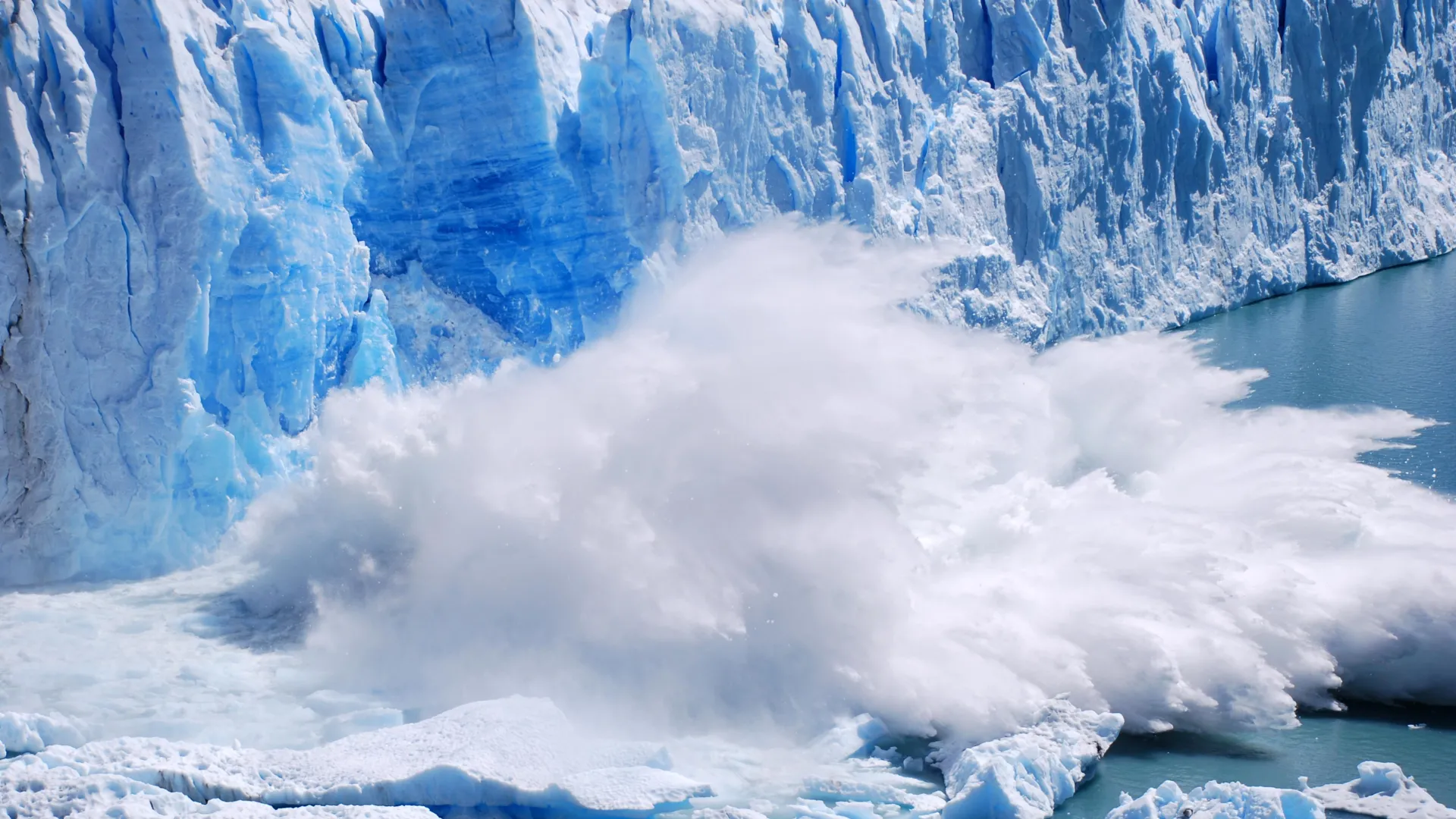
While global glaciers predominantly recede under the relentless pressure of a warming climate, a distinct and hazardous subset, known as surging glaciers, exhibits an anomalous and often catastrophic behavior, presenting unique challenges to vulnerable communities worldwide. An extensive international research endeavor, spearheaded by experts from the University of Portsmouth, has meticulously cataloged over 3,100 such glaciers, providing a critical global assessment of their operational mechanisms, geographical distribution, and the escalating risks they pose amidst environmental shifts.
The study, a landmark synthesis published in Nature Reviews Earth and Environment, delineates the intricate dynamics of these peculiar ice formations. Unlike their steadily retreating counterparts, surging glaciers undergo periodic phases of rapid acceleration, where vast quantities of ice are abruptly propelled forward, sometimes advancing several kilometers in a matter of months or years. These periods of accelerated flow, often lasting several years, are interspersed with protracted quiescent phases, during which ice accumulates and prepares for the next surge cycle. This cyclical behavior, while natural for these specific glaciers, creates a complex and often unpredictable hazard profile.
Unraveling the Mechanics of Glacier Surges
A glacier surge is fundamentally a consequence of internal instability within the ice mass, driven by a delicate interplay of thermal conditions, hydrological processes, and the glacier’s bedrock topography. During a quiescent phase, ice typically accumulates in a reservoir zone, often in the upper reaches of the glacier. This accumulation increases stress within the ice and, critically, can alter the subglacial hydrological system. Meltwater, whether from surface melt or geothermal heat, can accumulate at the glacier bed. When this meltwater is unable to drain efficiently, it builds up hydrostatic pressure, effectively lubricating the interface between the ice and the bedrock. This reduction in basal friction allows the overlying ice to slide much more rapidly than usual, initiating the surge.
Another contributing factor can be the internal deformation of the ice itself. Glaciers are viscous fluids, and under immense pressure, ice crystals can deform and slide past one another. In certain thermal regimes, particularly in polythermal glaciers (which have both warm and cold ice), changes in ice temperature can influence its viscosity, potentially triggering or facilitating a surge. Once initiated, the surge phase can dramatically reshape the glacier’s morphology, causing extensive crevassing, fracturing, and a rapid transfer of ice from the reservoir zone to the terminus. Understanding these complex, often non-linear processes is paramount to predicting future surge events.
A Global Anomaly with Concentrated Peril
The comprehensive dataset compiled by the research team reveals that these 3,100-plus surging glaciers are not uniformly distributed across the planet. Instead, they exhibit distinct regional concentrations. Nearly half are found in the Arctic and sub-Arctic regions, with another significant proportion located in High Mountain Asia, particularly within the Karakoram range. Smaller clusters are also identified in the Andes. This geographical clustering suggests that specific climatic and glaciological conditions are conducive to surge-type behavior. Regions with cold-based or polythermal glaciers, often characterized by periods of significant snowfall and fluctuating meltwater availability, appear to be prime candidates.
Dr. Harold Lovell, a senior lecturer and glaciologist from the University of Portsmouth and the lead author of the study, underscored the disproportionate impact of these seemingly rare glaciers. "Surge-type glaciers are an intriguing anomaly, capable of profound disruption," Dr. Lovell noted. "They accumulate ice reserves over long periods, akin to a savings account, before rapidly expending them in an accelerated burst of activity. While they constitute only about one percent of all glaciers globally, their influence extends to nearly one-fifth of the world’s total glacierized area, and their sudden, powerful movements are direct progenitors of severe and often catastrophic natural disasters that imperil thousands of lives." This statistic highlights that the relatively small number of surging glaciers belies their immense potential for regional devastation.
Climate Change: A Catalyst for Unforeseen Vulnerabilities
A critical finding of the study challenges the notion that surging glaciers might be insulated from the broader impacts of global warming. On the contrary, the research indicates that surging activity can paradoxically amplify their sensitivity to climatic shifts. During surge events, the rapid transfer of ice, coupled with increased fracturing and surface area exposure, can lead to substantial and accelerated ice loss. This phenomenon contributes significantly to regional ice mass depletion, counteracting any perception of these glaciers being somehow more resilient due to their dynamic nature. The very act of surging, therefore, can transform them into conduits for heightened ice discharge into the global hydrological system.
The Spectrum of Hazards: Six Critical Threats
The study meticulously identifies six principal categories of hazards directly associated with surging glaciers, particularly for communities situated in their vicinity or downstream in mountainous terrain:
- Glacial Lake Outburst Floods (GLOFs): Advancing glacier termini can block valleys, impounding meltwater and creating unstable glacial lakes. When these natural dams fail, they release enormous volumes of water and debris, causing devastating floods downstream.
- Massive Ice Avalanches: The rapid movement and structural destabilization inherent in a surge can trigger large-scale ice avalanches from steep glacier fronts or flanks, posing immediate and lethal threats to anyone in their path.
- River Damming and Diversion: Surging ice can directly encroach upon and block river channels, altering drainage patterns, creating new flood risks, and potentially disrupting critical water supplies and hydroelectric infrastructure.
- Direct Infrastructure Damage: The physical advance of a surging glacier can directly obliterate roads, bridges, pipelines, power lines, and settlements that lie in its path, leading to extensive economic loss and disruption.
- Enhanced Debris Flows and Landslides: The dynamic forces exerted by surging ice can destabilize adjacent valley slopes, increasing the likelihood of landslides and debris flows, which can compound the damage from direct ice movement or GLOFs.
- Community Displacement and Livelihood Disruption: The imminent or ongoing threat from surging glaciers often necessitates the evacuation and permanent relocation of communities, leading to profound social and economic dislocation, loss of cultural heritage, and long-term recovery challenges.
Based on this comprehensive hazard assessment, researchers pinpointed 81 specific glaciers that present the most formidable threats when they enter a surge phase. A significant concentration of these high-risk glaciers is located in the Karakoram Mountains within High Mountain Asia. This region is particularly vulnerable due to its densely populated valleys and the presence of vital infrastructure directly downstream from these large, repeatedly surging ice masses. The confluence of massive ice bodies, frequent surge cycles, and human proximity creates an acutely dangerous environment.
Climate Change: Rewriting the Rules of Prediction
Perhaps the most alarming conclusion derived from the research is the evolving impact of warming temperatures on glacier surge behavior. Climate change is demonstrably altering the predictability of these events, making accurate forecasting increasingly challenging precisely when it is most critically needed for risk mitigation.
"By meticulously synthesizing data from previous investigations, we have constructed a compelling body of evidence illustrating how climate change is reshaping the very fabric of glacier surges—their spatial distribution, temporal frequency, and the environmental triggers that initiate them," Dr. Lovell explained. "This includes documented instances where extreme weather phenomena, such as intense rainfall or exceptionally warm summers, have prematurely instigated surges, suggesting a disconcerting trend towards greater unpredictability in their operational cycles."
The overall picture is geographically nuanced and highly complex. In certain regions, surges are occurring with greater frequency than historically observed. Conversely, in other areas, the incidence of surges appears to be diminishing. Some glaciers, particularly those in rapidly warming environments, have experienced such significant thinning that they may no longer possess the requisite ice volume or thermal conditions to accumulate sufficient mass for future surges. This regional variability underscores the need for localized, granular analysis rather than broad generalizations.
Shifting Global Patterns and Emerging Threats
Currently, surging glaciers are predominantly concentrated in the Arctic and sub-Arctic regions (accounting for 48 percent of the total) and High Mountain Asia (50 percent). These areas provide the specific climatic and glaciological conditions—such as cold-based ice, abundant snowfall, and suitable valley geometries—that facilitate surge-type dynamics. However, the trajectory of continued global warming is projected to fundamentally reconfigure this distribution, potentially leading to new areas of surge activity and the cessation of surges in others.
In regions like Iceland, where glaciers are experiencing rapid and substantial mass loss due to warming, surges may eventually become a phenomenon of the past as the ice bodies become too depleted or thermally altered to sustain the necessary conditions for accumulation and rapid discharge. In stark contrast, parts of High Mountain Asia and the Canadian and Russian Arctic could witness an increase in the frequency of surges. Warmer conditions in these regions are likely to generate more meltwater, which, by lubricating the glacier bed, could trigger more frequent surge events. Alarmingly, the study also raises the possibility of surging glaciers emerging in entirely new geographical domains, such as the Antarctic Peninsula, where localized warming is progressively transforming the thermal regime of some ice masses.
Professor Gwenn Flowers, a co-author from Simon Fraser University in Canada, articulated the profound challenge posed by this evolving landscape: "The paradox we confront is that just as our scientific understanding of the underlying mechanisms driving glacier surges is becoming more sophisticated, climate change is simultaneously altering the very rules of their engagement. Extreme meteorological events, which were statistically rare even a half-century ago, are now capable of acting as unforeseen triggers for surges. Given the inherent hazards associated with these events in numerous settings, this escalating unpredictability significantly complicates our efforts to safeguard vulnerable communities."
The Imperative for Enhanced Monitoring and Predictive Capabilities
The profound implications of these findings underscore an urgent need for substantial advancements in monitoring and forecasting capabilities. Dr. Lovell emphasized the foundational importance of this research: "This comprehensive investigation is critically important because by identifying regions with high concentrations of surging glaciers, we can strategically focus our monitoring efforts and develop a more informed understanding of their future behavior. Pinpointing specific glaciers that present the most immediate and severe risks empowers us to implement targeted protective measures for the communities most susceptible to their impacts. However, the increasing unpredictability inherent in their dynamics necessitates a dramatic enhancement of our surveillance and predictive capacities."
To effectively mitigate these escalating risks, the researchers advocate for a multi-pronged approach encompassing continuous satellite monitoring, expanded field observations during active surge phases, and the development of more sophisticated glaciological models. Satellite technologies, such as Synthetic Aperture Radar (SAR) interferometry, can provide invaluable data on surface velocity changes and deformation, while high-resolution optical imagery allows for detailed mapping of frontal advances and crevassing. Field observations, though challenging and often hazardous, are indispensable for ground-truthing satellite data and gathering crucial information on subglacial hydrology and thermal conditions, which are often the primary drivers of surge initiation.
Furthermore, improved numerical modeling that integrates complex ice dynamics, thermal regimes, and subglacial water flow pathways is essential to simulate future surge scenarios under various climate projections. These enhanced models, coupled with more robust observational networks, will enable scientists to better anticipate how surging glaciers will respond to ongoing climate warming, ultimately providing decision-makers with the critical intelligence required to reduce the hazards they pose to populations across the globe. The future safety of mountain communities depends significantly on these proactive scientific and technological advancements.




 Aura Kasih
 Safa Marwah