Ayu Aulia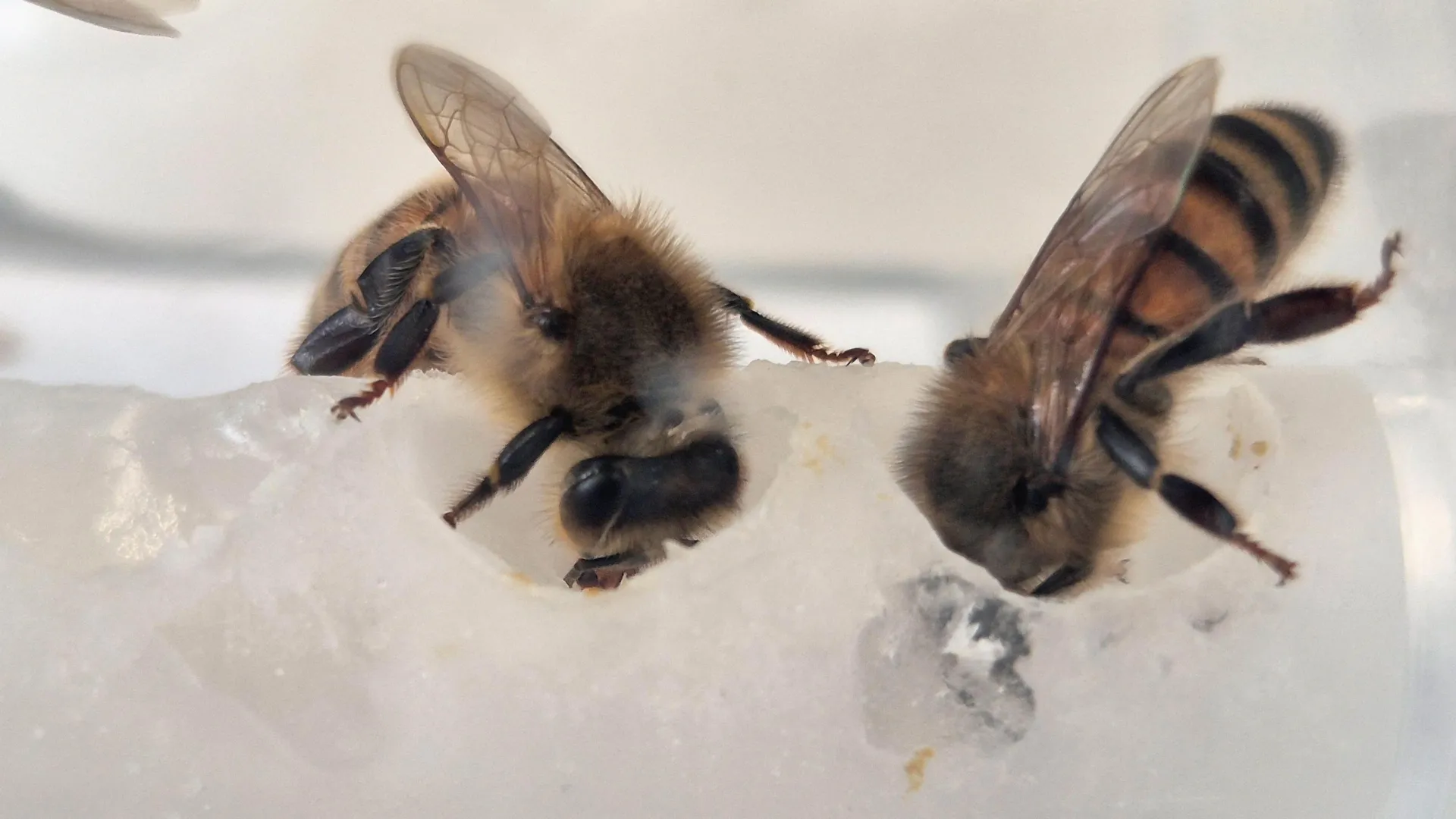
A groundbreaking scientific endeavor, spearheaded by researchers from the University of Oxford, has unveiled a revolutionary dietary supplement for honeybees, offering a potent new strategy to counteract the escalating global decline of these essential pollinators. This meticulously engineered nutritional solution, designed to precisely mimic the critical sterols naturally present in diverse pollen, has demonstrated an unprecedented capacity to invigorate bee colonies, triggering a staggering fifteen-fold increase in brood production and fostering robust, sustained vitality.
The persistent degradation of global bee populations represents an existential threat to both ecological stability and agricultural productivity. Honeybees, in particular, are indispensable bio-indicators and workforces, responsible for pollinating over 70% of the world’s major food crops, from almonds and apples to cherries and countless other staples. However, these vital insects are under siege from a complex array of stressors, including habitat destruction, pesticide exposure, novel pathogens, and the increasingly severe impacts of climate change. Among these, nutritional deficiency has emerged as a critical, yet often underestimated, factor in the widespread weakening and collapse of colonies.
The Silent Crisis: Nutritional Starvation in Bee Colonies
For decades, scientists and beekeepers have observed a troubling trend: even when seemingly abundant, modern agricultural landscapes often fail to provide bees with the full spectrum of nutrients they require. Pollen, the primary protein and lipid source for honeybees, is not a monolithic substance; its nutritional quality varies significantly depending on the floral species. Historically, bees would forage across diverse ecosystems, ensuring a balanced intake of essential micronutrients. However, the intensification of farming practices, characterized by vast monocultures and the eradication of wildflowers, has drastically reduced this floral diversity. This ecological simplification leaves bees with a diet that, while potentially calorically sufficient, is often fundamentally incomplete.
Central to this nutritional gap is the critical role of sterols – a class of lipids analogous to cholesterol in humans – which are indispensable for insect growth, development, and reproductive success. Bees cannot synthesize these complex organic molecules de novo; they must acquire them directly from pollen. Without an adequate supply of specific sterols, bees struggle to mature, their immune systems weaken, and, crucially, their capacity to rear healthy brood (larvae and pupae) is severely compromised. Conventional beekeeping practices often attempt to mitigate nutritional deficits using artificial pollen substitutes, typically composed of protein flours, sugars, and various oils. While these mixtures provide basic sustenance, they consistently fall short in delivering the precise sterol profiles essential for optimal bee health, rendering colonies nutritionally deficient despite caloric intake. This predicament mirrors a human diet rich in processed foods but lacking vital vitamins and minerals.
Precision Nutrition: Engineering a Solution from the Ground Up
Recognizing this profound nutritional imbalance, an interdisciplinary consortium of researchers, drawing expertise from the University of Oxford, Royal Botanic Gardens Kew, the University of Greenwich, and the Technical University of Denmark, embarked on an ambitious project. Their objective was not merely to provide more food but to deliver precision nutrition tailored to the molecular requirements of honeybees. The initial phase of their research involved painstaking analytical work to decode the specific sterol requirements of bees. Through meticulous dissection and biochemical analysis of bee tissues, particularly from developing pupae and adult nurse bees, the team identified six pivotal sterols that dominate bee biology and are crucial for their lifecycle: 24-methylenecholesterol, campesterol, isofucosterol, β-sitosterol, cholesterol, and desmosterol. This detailed biochemical blueprint provided the target for their innovative nutritional intervention.
With the precise sterol targets identified, the team turned to synthetic biology and precision fermentation to create a scalable solution. They selected Yarrowia lipolytica, a robust yeast species known for its natural ability to produce lipids and its well-established safety profile for food applications. Using advanced genetic engineering techniques, specifically CRISPR-Cas9, the researchers meticulously reprogrammed Yarrowia lipolytica to efficiently synthesize the precise cocktail of the six identified sterols. This engineered yeast became the core component of their novel food supplement.
The process involves growing these modified yeast strains in controlled bioreactors – a method known as precision fermentation. This industrial biotechnology approach allows for the highly efficient, consistent, and scalable production of complex molecules. Once cultivated, the sterol-rich yeast is harvested and dried into a powdered form, ready for incorporation into bee diets. This method offers distinct advantages over attempting to extract these rare sterols from natural sources, which would be commercially unviable due to limited natural availability and high extraction costs.
Transformative Outcomes: A Resurgence of Colony Vitality
To rigorously test the efficacy of their sterol-enriched supplement, the researchers conducted controlled experiments over a three-month period within glasshouse environments. This enclosed setup was critical, ensuring that the study colonies consumed only the experimental feed, eliminating any confounding variables from external foraging. The results were nothing short of remarkable and validated the profound impact of molecularly complete nutrition.
Colonies receiving the sterol-fortified diet exhibited an extraordinary surge in reproductive output, producing up to 15 times more larvae that successfully advanced to the pupal stage compared to control colonies fed standard, sterol-deficient diets. Furthermore, the enriched colonies maintained continuous brood production throughout the entire study duration. In stark contrast, control colonies, deprived of essential sterols, ceased brood rearing altogether after approximately 90 days, illustrating the critical role these lipids play in sustaining reproductive cycles.
Even more compelling were the analyses of the developing larvae. The nutrient profiles of larvae from the supplemented colonies precisely mirrored those of bees foraging naturally on diverse pollen, indicating that the engineered supplement was not merely a caloric boost but a true biochemical replication of natural, high-quality nutrition. This finding underscores the sophistication of the engineered solution and its capacity to genuinely restore nutritional completeness at a cellular level. As Professor Geraldine Wright, a senior author from the University of Oxford, articulated, this study exemplifies how synthetic biology can be harnessed to address pressing ecological challenges. Dr. Elynor Moore, lead author, drew a vivid analogy, stating that for bees, the difference between this sterol-enriched diet and conventional feeds is akin to the difference for humans between balanced, nutritionally complete meals and diets lacking essential fatty acids.
Broader Implications: Reshaping Agriculture and Conservation
The implications of this breakthrough extend far beyond the immediate health of individual bee colonies. The chronic decline in pollinator populations has profound economic ramifications, threatening global food security and the stability of agricultural industries. Annual colony losses in the U.S., for example, have consistently ranged from 40% to 50% in recent years, with projections for 2025 potentially reaching as high as 60% to 70%. Such unsustainable losses impose immense financial burdens on beekeepers and farmers, who often rely on costly migratory pollination services.
This engineered nutritional supplement presents a potent tool for strengthening bee resilience against the multitude of other stressors they face, including parasites like the Varroa mite, various diseases, and the lingering effects of pesticide exposure. A well-nourished bee population is inherently more capable of resisting disease, detoxifying environmental contaminants, and enduring challenging climatic conditions.
Moreover, the supplement offers a crucial benefit for wild pollinator species. Honeybees, particularly in large agricultural operations, are often present in vast numbers, creating significant competition for limited natural pollen resources with native bees and other wild pollinators. By providing a complete, lab-produced nutritional source for managed honeybee colonies, this supplement could alleviate pressure on wildflowers, thereby benefiting the broader pollinator ecosystem. Professor Phil Stevenson from RBG Kew highlighted this aspect, noting that reducing honeybee reliance on limited natural pollen supplies could be a boon for wild bee species.
Pathways to Commercialization and Future Horizons
The promising results from controlled glasshouse experiments pave the way for the next critical phase: large-scale field trials. These trials will be essential to validate the long-term benefits of the supplement under diverse environmental conditions, across various geographical locations, and with different honeybee subspecies. Key considerations will include assessing its impact on overwintering survival rates, disease resistance in real-world settings, and the overall productivity of honey-producing colonies.
If these field trials confirm the efficacy and practicality of the supplement, researchers anticipate that it could be available to beekeepers and farmers within approximately two years. The commercialization pathway would involve scaling up the precision fermentation process to meet industrial demand, ensuring consistent quality, and navigating regulatory approvals.
Beyond honeybees, the underlying technology holds immense potential for broader applications. The methodology of identifying specific nutritional requirements and engineering microbial platforms for precision synthesis could be adapted to support other critically important pollinators, such as bumblebees, or even farmed insects used for protein production. This represents a paradigm shift in how we approach insect nutrition and management, offering a pathway towards more sustainable agricultural practices and enhanced biodiversity conservation.
Danielle Downey, Executive Director of the honeybee research nonprofit Project Apis m., underscored the transformative potential, stating that this discovery of key phytonutrients capable of sustaining honeybee brood rearing has "immense potential to improve outcomes for colony survival, and in turn the beekeeping businesses we rely on for our food production." This breakthrough is not merely an incremental improvement; it signifies a fundamental advancement in understanding and addressing one of the most pressing challenges facing global ecosystems and food systems. By providing bees with the precise molecular building blocks they need, science is empowering these tiny architects of our planet to thrive once more, offering a beacon of hope for a more resilient and food-secure future.




 Aura Kasih
 Safa Marwah
 Lisa Mariana