Lisa Mariana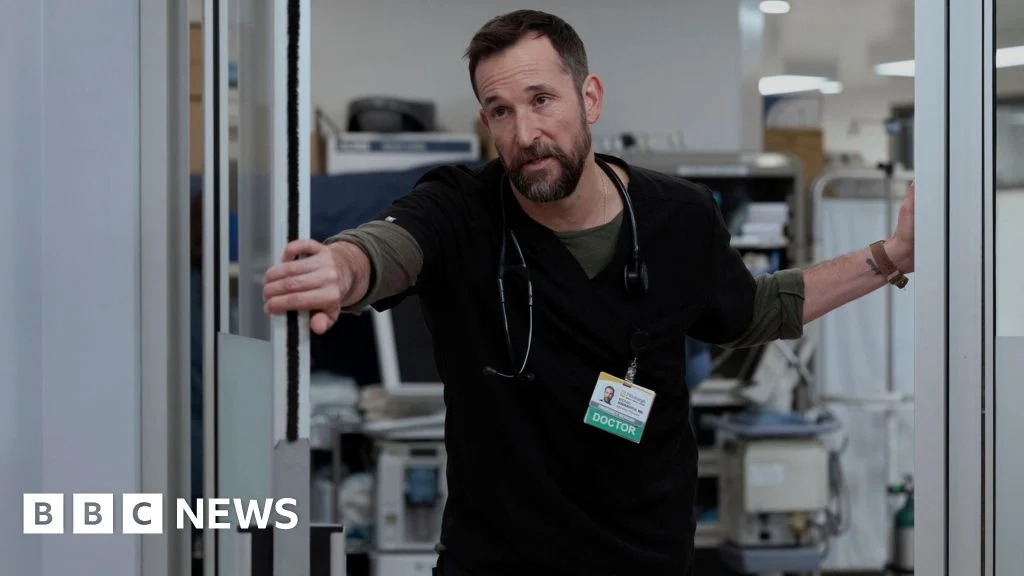
Veteran actor Noah Wyle, celebrated for his enduring portrayal of Dr. John Carter in the seminal medical drama "ER," embarks on a profound return to the demanding world of emergency medicine with "The Pitt." This compelling new series offers a stark, unflinching look at the contemporary American healthcare system, presenting the emergency room not merely as a medical facility but as a critical microcosm reflecting the broader challenges and systemic failures of society. Wyle, who also contributes as an executive producer and writer, emphasizes the show’s intent to cultivate empathy, describing the A&E department as the "catch-all of society’s bad choices," a sentiment that underpins the drama’s trenchant social commentary.
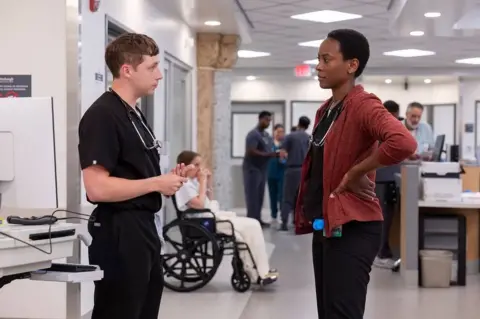
Set within the high-stakes environment of a Pittsburgh hospital’s emergency department—colloquially known as "the Pitt"—the drama plunges viewers into a relentless cycle of packed waiting rooms, beleaguered medical professionals, and acute mental health crises. The series has already garnered significant critical acclaim and awards in the United States, attesting to its powerful narrative and authentic portrayal of healthcare realities. Its recent arrival on international screens invites a comparative analysis, particularly for audiences accustomed to publicly funded universal healthcare systems, highlighting the fundamental divergences in medical provision and their profound societal implications.
One of the series’ most poignant storylines illustrates the critical disparities inherent in the American system: a construction worker, Orlando Diaz, faces severe diabetic complications due to rationing his insulin, a direct consequence of exorbitant costs and a staggering $100,000 medical debt. This narrative element serves as a stark illustration for international viewers, particularly those in the UK, where such a scenario is virtually unimaginable under the National Health Service. Wyle articulates the challenge this presents for non-American audiences, drawing parallels to the difficult choices European families often face between heating and food bills. He underscores that for many Americans, health insurance constitutes an additional, often insurmountable, financial burden, creating a complex web of frustration for both physicians, whose treatment options may be compromised, and patients, who face dire financial repercussions for seeking care. However, Wyle also acknowledges that perspectives on healthcare systems are relative, noting that Americans, in turn, may view other global systems with a sense of pity.
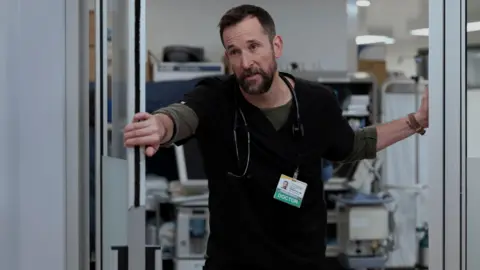
Wyle embodies Dr. Robby, a central figure in the A&E department whose character is defined by a blend of trauma, hard-nosed pragmatism, and profound empathy. Dr. Robby navigates the daily maelstrom of the ER while simultaneously grappling with his own unacknowledged mental health struggles, a journey rooted in the psychological toll of working through the global pandemic. This character arc positions Dr. Robby as an "avatar" for countless frontline workers who have endured immense pressure, experiencing what Wyle terms a "proverbial pit" from which they struggle to emerge. The show meticulously explores the nuanced impact of Post-Traumatic Stress Disorder (PTSD) on healthcare professionals, revealing how unaddressed trauma can manifest in challenging behaviors and emotional disequilibrium.
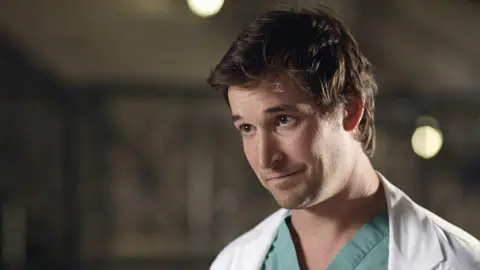
Wyle’s return to the medical drama genre carries particular significance given his iconic role as Dr. Carter in "ER." The actor reflects on the rarity of the camaraderie and shared commitment experienced during his "ER" tenure, admitting that he spent years seeking a similar creative synergy. He expresses profound gratitude for finding that elusive sense of unity within "The Pitt" production, emphasizing that the new series, while revisiting a familiar professional landscape, presents a distinctly different and more urgent narrative. The catalyst for "The Pitt" was the global pandemic, a period that profoundly impacted first responders, prompting them to reach out to Wyle, who they perceived as relevant to their experiences due to his past roles. This outpouring of shared experiences ignited Wyle’s desire to contribute meaningfully, leading him to collaborate with John Wells, the acclaimed showrunner of "ER," on a project that would offer a contemporary and incisive examination of the American healthcare system in a post-pandemic world.
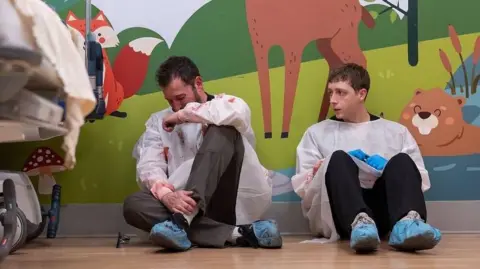
"The Pitt" delves into a broad spectrum of critical public health and social issues, including measles outbreaks, mass casualty events, the opioid crisis, complexities surrounding medical abortion, disparities in black maternal care, and the pervasive challenge of homelessness. These storylines collectively reinforce Wyle’s assertion that emergency rooms function as society’s ultimate safety net, absorbing the consequences of systemic failures and individual misfortunes. The series confronts the critical question of "who helps the helpers," spotlighting the immense psychological burden on those who routinely confront the worst days of people’s lives, often multiple times within a single shift.
Wyle’s personal connection to the healthcare profession runs deep; his mother was a nurse, a role she embraced with immense pride. He shares a poignant anecdote about his mother experiencing a PTSD trigger after watching an episode of "The Pitt," recalling long-dormant memories and experiences she had never before shared with her family. This personal revelation underscores the show’s profound resonance with real-world healthcare professionals, many of whom have expressed feeling "seen" and understood by the series. The drama provides a vital frame of reference, offering families of healthcare workers a deeper context for the immense challenges and emotional toll of their loved ones’ professions.
The overarching objective of "The Pitt," as articulated by Wyle, is to foster empathy among its global audience. He expresses hope that viewers, regardless of their national healthcare system, will approach the series with an open mind, using its narratives to gain a broader perspective on the vulnerabilities within their own systems. Wyle notes the surprising global appeal of "ER" in its day, attributing its success to universal themes of life, death, birth, illness, grief, heroism, and the pressures of professional life. These fundamental human experiences, he argues, transcend specific healthcare models, making the drama relatable even when the systemic specifics differ.
"The Pitt" thus transcends mere entertainment, positioning itself as a vital piece of social commentary. By presenting the emergency room as a crucible where societal failings converge, the series compels viewers to confront difficult questions about access to care, the mental well-being of frontline workers, and the collective responsibility to address systemic inequities. Its detailed exploration of complex issues, from financial barriers to care to the hidden psychological scars of medical service, serves as a powerful call for greater understanding, compassion, and potentially, for critical reflection on healthcare policies worldwide. The series, with its blend of intense medical drama and sharp social critique, offers a timely and essential contribution to the ongoing global discourse on health, humanity, and the infrastructure designed to protect both.
All episodes of The Pitt season one are available to stream exclusively on HBO Max in the UK and Ireland, with episodes from season two airing on a weekly basis.



 Aura Kasih
 Safa Marwah
 Ayu Aulia