Aura Kasih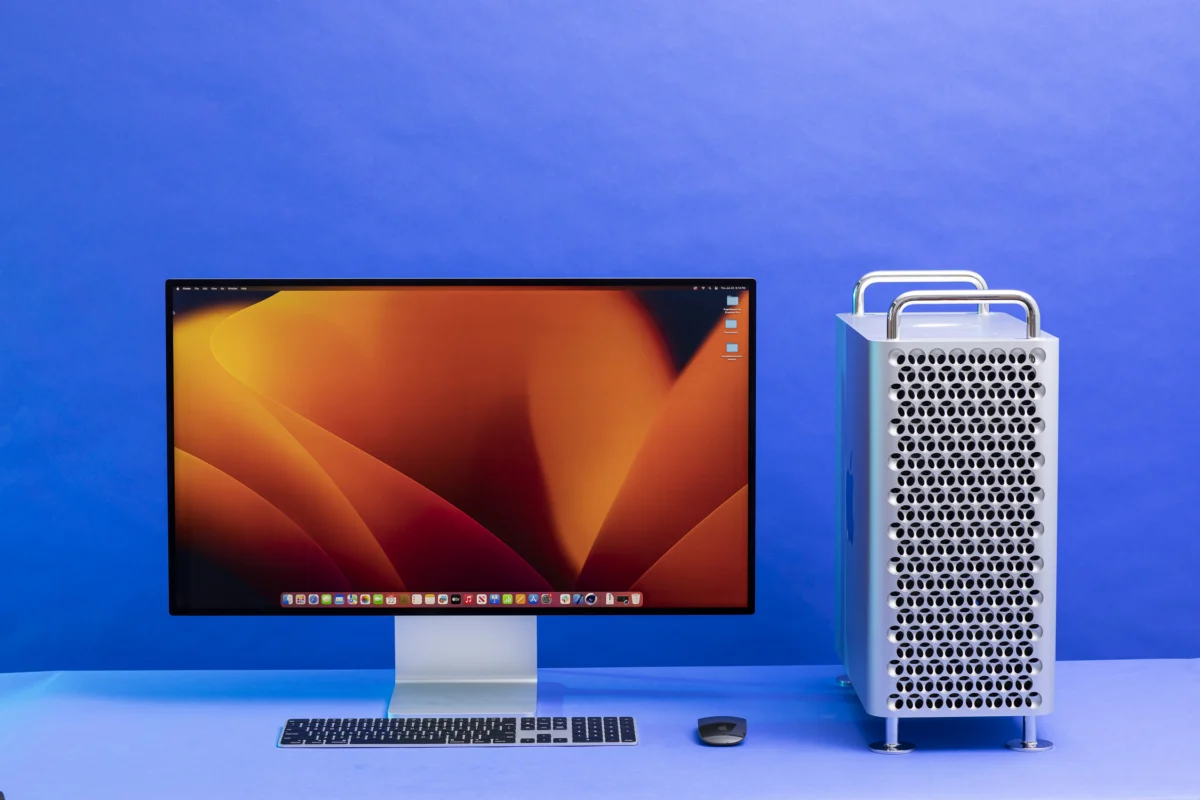
In a significant shift for high-end computing, Apple has officially discontinued the Mac Pro, marking the definitive end of an era for its once-flagship modular workstation. This move, signaled by the product’s removal from Apple’s official sales channels, signifies a strategic pivot away from the traditional, user-expandable desktop architecture that defined the Mac Pro for nearly two decades. The iconic "cheese grater" design, a symbol of raw power and customizability for creative professionals, has now been relegated to history, leaving a void in Apple’s professional hardware lineup.
The Mac Pro’s lineage traces back to 2006, a period when Apple embraced Intel processors and sought to offer a desktop solution that rivaled the expandability of traditional PC workstations. It represented a departure from the Power Mac G5, ushering in a new era of performance and upgradability. For years, it served as the go-to machine for demanding workflows in video editing, 3D rendering, scientific simulation, and audio production, allowing users to tailor their systems with specialized graphics cards, storage arrays, and other PCIe-based peripherals. The emphasis was on user choice and the ability to adapt the hardware to evolving technological landscapes and specific project requirements.
However, the winds of change began to blow with Apple’s ambitious transition to its own custom silicon, the M-series chips. While this architectural shift brought about unprecedented levels of power efficiency and performance gains for mainstream Macs, it created a significant challenge for the Mac Pro. The M2 Ultra-powered Mac Pro, launched just three years prior, attempted to bridge the gap by retaining PCIe slots while integrating Apple’s most potent processor. Apple’s hardware chief, John Ternus, highlighted this integration, stating that the Mac Pro "combines PCIe slots with our most powerful chip" for users who "need the versatility of internal expansion." This was presented as a concession to professionals who relied on the Mac Pro’s modularity.
Despite this effort, the M2 Ultra Mac Pro struggled to resonate with its intended audience. A critical limitation was the absence of support for adding discrete, next-generation GPUs, a feature many professionals deemed essential for their workflows. The shift in the professional graphics market towards larger, more powerful single-GPU solutions meant that the Mac Pro’s internal expansion options, while present, were not aligned with the cutting edge of GPU technology. Consequently, many professionals found the M2 Ultra Mac Pro to be a less compelling proposition than anticipated. Reviews and user feedback frequently pointed to a disconnect between the machine’s design philosophy and the practical needs of its target market.

The emergence of the Mac Studio, a compact yet powerful desktop computer, further complicated the Mac Pro’s position. Introduced with M1 Max and M1 Ultra chips, the Mac Studio offered a significant portion of the Mac Pro’s computational power at a considerably lower price point, albeit without the internal PCIe expansion slots. This created a tiered offering where users requiring extreme performance but not necessarily extensive internal hardware customization could opt for the more cost-effective Mac Studio. The current Mac Studio lineup, featuring M4 Max and M3 Ultra-powered configurations, and with anticipated M5 Ultra variants on the horizon, continues to solidify its role as Apple’s most potent offering for a broad spectrum of professional users.
The discontinuation of the Mac Pro also brings into sharp focus Apple’s evolving approach to its professional product strategy. The company has historically excelled at creating hardware that empowers creative industries. The original Mac Pro, with its distinctive aluminum chassis and accessible internal components, was a testament to this philosophy. Even the controversial "trash can" design of the 2013 Mac Pro, while facing criticism for its thermal limitations and lack of expandability, was an attempt to innovate within the desktop paradigm. However, that design proved to be a thermal bottleneck, particularly as the industry gravitated towards larger, single-GPU solutions.
Apple’s attempts to address these concerns with the redesigned Mac Pro in 2019, which returned to a tower form factor, were met with a degree of success. This iteration brought back the much-desired PCIe slots and a more robust thermal architecture. However, the subsequent shift to Apple Silicon fundamentally altered the hardware landscape. The Mac Pro, in its latest iteration, represented a hybrid approach, attempting to marry the advantages of Apple’s custom silicon with the legacy of user-configurable hardware. This proved to be a difficult balance to strike.
The decision to phase out the Mac Pro suggests that Apple believes its current lineup, particularly the Mac Studio and advanced MacBook Pro models, adequately addresses the needs of the vast majority of its professional clientele. For tasks requiring immense processing power, the M-series chips have demonstrated remarkable capabilities, often exceeding the performance of traditional x86 processors in specific benchmarks and workloads. The seamless integration of CPU, GPU, and Neural Engine within a single System on a Chip (SoC) offers a level of efficiency and performance that is difficult to replicate with discrete components.
Furthermore, Apple’s robust ecosystem of external connectivity, particularly Thunderbolt 4 and the emerging Thunderbolt 5 standard, provides ample bandwidth for external storage, high-speed networking, and multi-display setups. This allows users to augment their Mac Studio or MacBook Pro with powerful external graphics enclosures or other specialized peripherals, effectively replicating some of the expandability previously offered by the Mac Pro, albeit in a different form factor. The focus appears to have shifted from internal modularity to external connectivity and the integrated power of Apple’s silicon.

The implications of the Mac Pro’s discontinuation are multifaceted. For a niche segment of professionals who relied heavily on the specific internal expansion capabilities of the Mac Pro, particularly for specialized hardware not yet available in external form factors or requiring direct PCIe access, this represents a significant loss. The absence of readily available, user-installable GPUs will necessitate careful consideration of workflows and hardware choices. It may also spur greater adoption of external GPU solutions, further driving innovation in that space.
From a broader industry perspective, the Mac Pro’s exit underscores the ongoing trend of system integration in computing. As manufacturers like Apple continue to develop highly optimized SoCs, the traditional modular desktop architecture, once the bedrock of high-performance computing, is becoming increasingly specialized. While the PC market will undoubtedly continue to offer highly modular workstations, Apple’s decision suggests a belief that for its ecosystem, the future lies in highly integrated, power-efficient, and software-optimized systems.
The legacy of the Mac Pro is one of innovation, power, and a commitment to professional users. While its physical presence in Apple’s product catalog has ended, the principles it embodied—performance, expandability, and adaptability—continue to influence the development of high-end computing. The challenge for Apple now is to ensure that its current and future professional offerings continue to meet the evolving and diverse needs of its most demanding users, demonstrating that the spirit of the Mac Pro lives on, albeit in a new and integrated form. The future of Apple’s professional hardware will be defined by how effectively its unified silicon strategy can deliver the performance and flexibility that professionals have come to expect, even without the iconic cheese grater or the traditional tower.




 Lisa Mariana
 Safa Marwah
 Ayu Aulia