Aura Kasih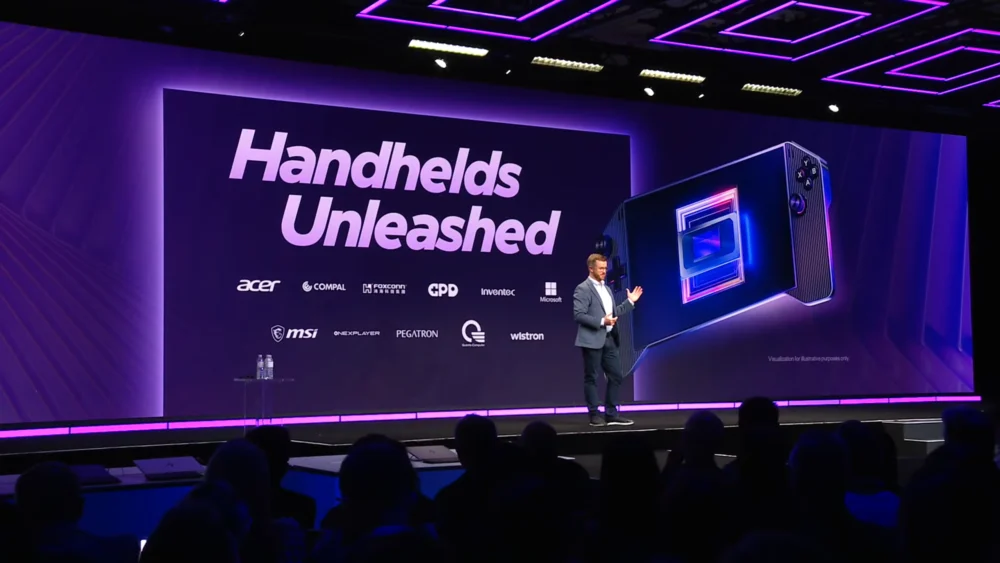
Intel is reportedly charting a new course in the burgeoning handheld gaming PC market, with strategic plans to develop a customized variant of its upcoming Panther Lake processor specifically engineered to enhance performance and efficiency in portable computing devices. This initiative signals a significant pivot for the semiconductor giant, aiming to carve out a more substantial niche against established competitors and emerging players in the increasingly competitive landscape of mobile gaming hardware.
The evolution of portable computing has seen a dramatic acceleration in recent years, driven by advancements in processing power and the growing demand for seamless, high-fidelity gaming experiences on the go. While dedicated handheld consoles like the Nintendo Switch have long dominated this segment, the emergence of Windows-based handheld PCs has opened new avenues for PC gamers seeking the flexibility of a full desktop experience in a compact form factor. Intel’s reported focus on a custom Panther Lake CPU for this specific market underscores a strategic recognition of the unique demands of handheld gaming, which often involve a delicate balance between raw performance, power consumption, thermal management, and overall user experience.
The current generation of Intel processors, while capable, have historically faced challenges in the ultra-mobile and power-constrained environments that define handheld devices. Early attempts to bring Intel silicon to this space, such as the MSI Claw, have shown promise but also highlighted areas where optimization for this unique use case is paramount. The transition to Lunar Lake processors for subsequent iterations of such devices has demonstrated tangible improvements, indicating that architectural tuning for handhelds can yield significant benefits. Intel’s reported commitment to developing a tailored "handheld gaming platform" suggests a more profound and integrated approach than simply adapting existing silicon.
At the heart of this strategy lies the purported "custom-designed version" of Intel’s next-generation Panther Lake architecture. While specific details remain under wraps, industry speculation points towards a significant redesign of certain silicon components to prioritize the demands of gaming. This could involve a more aggressive allocation of resources towards the graphics processing unit (GPU), potentially through enhanced integrated graphics capabilities or a specialized GPU core configuration. The recent advancements in Intel’s manufacturing processes, particularly the 18A node, offer the potential for greater flexibility in chip design. This allows for the creation of "die slices" – distinct functional blocks of the processor – that can be meticulously spec’d for optimal performance in specific applications. For handheld gaming, this could translate to a GPU that delivers superior frame rates and visual fidelity without unduly compromising battery life or generating excessive heat.
The competitive landscape for Windows handheld gaming PCs is rapidly intensifying. Qualcomm, a dominant force in mobile processors, has been increasingly vocal about its ambitions in the PC space, with hints of new Windows gaming handhelds potentially emerging around industry events like the Game Developers Conference. This suggests a multi-pronged assault on the market, with different architectural philosophies and manufacturing ecosystems vying for consumer attention. Furthermore, AMD’s recent unveiling of its Strix Halo chips, a family of processors explicitly designed for high-performance handheld gaming, further underscores the growing interest and investment in this sector. These chips are touted to offer significant integrated graphics power, posing a direct challenge to Intel’s established position in integrated graphics.

Intel’s move to create a bespoke Panther Lake variant for handhelds can be interpreted as a strategic countermeasure to these emerging threats. By focusing on a highly optimized solution, Intel aims to offer a compelling alternative that addresses the specific pain points of handheld gaming. This could involve not only raw performance gains but also improved power efficiency, leading to longer playtimes on a single charge – a critical factor for any portable device. The potential for enhanced thermal management is also a key consideration. Handheld PCs are notoriously difficult to cool due to their compact form factors, and a processor designed with this constraint in mind could lead to more stable performance and a more comfortable user experience.
The announcement of a dedicated "handheld gaming platform" by Intel suggests a broader vision that extends beyond the processor itself. This could encompass integrated software optimizations, driver enhancements, and potentially even hardware-level features designed to improve the handheld gaming experience. Collaboration with device manufacturers and game developers will be crucial in realizing the full potential of this initiative. Intel’s commitment to sharing further details with hardware and software partners later this year indicates a phased rollout strategy, allowing for thorough testing and integration before a wider consumer release.
The implications of Intel’s custom Panther Lake initiative are far-reaching. For consumers, it promises a new wave of more powerful and efficient handheld gaming PCs, potentially offering a wider range of performance tiers and price points. This increased competition could drive innovation across the entire market, benefiting gamers with more choices and better-performing devices. For Intel, this represents an opportunity to regain significant ground in the mobile computing space, a sector where it has faced stiff competition from ARM-based architectures in recent years. By demonstrating its ability to innovate and tailor its silicon to specific market demands, Intel can solidify its position as a key player in the future of portable computing.
The success of this endeavor will hinge on Intel’s ability to execute its vision effectively. The technical challenges of designing and manufacturing a high-performance, power-efficient processor for handhelds are substantial. Furthermore, the company will need to build strong partnerships with OEMs to ensure that the custom silicon is integrated into well-designed and compelling hardware. The software ecosystem also plays a vital role; seamless compatibility with existing PC games and the development of new optimizations will be critical for widespread adoption.
Looking ahead, the development of custom silicon for niche markets like handheld gaming PCs is likely to become an increasingly important strategy for semiconductor manufacturers. As the lines between different computing form factors continue to blur, the ability to create highly specialized processors that cater to specific user needs will be a key differentiator. Intel’s bold move with Panther Lake suggests a forward-thinking approach that could redefine expectations for what is possible in portable PC gaming. The coming months will be crucial in observing how this strategy unfolds and what impact it will have on the future of handheld computing. The prospect of more powerful, efficient, and user-friendly Intel-powered handheld gaming devices is a tantalizing one, signaling a new era of mobile PC gaming.


 Lisa Mariana
 Safa Marwah
 Ayu Aulia