 Ayu Aulia
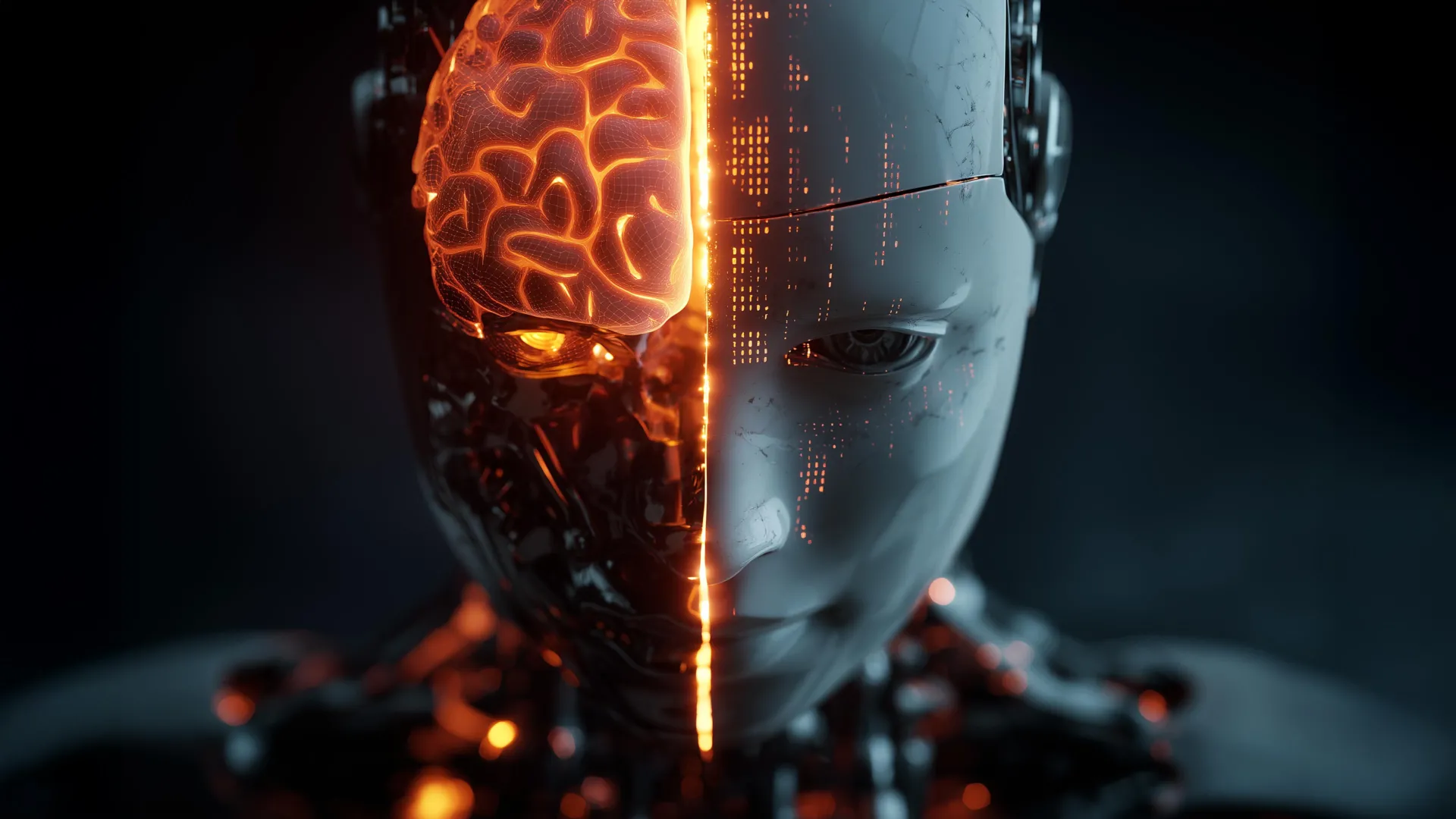
A recent landmark investigation challenges long-held assumptions regarding the operational parallels between artificial intelligence systems and the human brain, revealing that widely utilized computational models may process information through mechanisms fundamentally distinct from biological cognition, despite exhibiting similar outcomes. For decades, the scientific community has increasingly embraced artificial neural networks (ANNs) as proxies for deciphering the intricate workings of the brain, particularly in the domain of visual perception. These sophisticated algorithms, engineered to emulate the layered structure of biological neurons, have demonstrated remarkable prowess in tasks such as object recognition and pattern detection, leading many neuroscientists to consider them indispensable tools for modeling brain activity. However, groundbreaking research emanating from York University now introduces a critical caveat, suggesting that the mere ability of AI to predict neural responses does not inherently signify a shared underlying computational strategy. This discovery necessitates a re-evaluation of how these models are developed, validated, and subsequently leveraged to inform our understanding of human cognition and neurological processes.
The reliance on artificial neural networks within neuroscience gained significant momentum over the past decade, largely due to their capacity to mirror specific patterns of brain activation when exposed to various stimuli. This predictive power led to their widespread adoption as a principal instrument for elucidating the brain’s visual system. Researchers found that ANNs could effectively simulate the responses observed in areas of the brain responsible for visual processing, offering what appeared to be compelling computational analogs to biological intelligence. The prevailing scientific paradigm posited that if an AI model could accurately forecast the activity of neuronal ensembles, it likely employed similar representational and processing strategies. This perspective fueled an era of rapid advancement in computational neuroscience, where ANNs became a cornerstone for hypothesis generation and experimental design, promising to unlock the enigmatic principles governing biological perception.
However, the validity of this unidirectional correlation has now been called into question. The central challenge posed by the York University study revolves around a fundamental epistemological inquiry: does the successful imitation of brain activity necessarily imply a congruent method of information processing? Assistant Professor Kohitij Kar, a distinguished figure in visual neuroscience and senior author of the pivotal study, articulated this critical distinction. He noted that the established methodology primarily focused on whether AI models could anticipate brain activity. This approach, while yielding impressive predictive capabilities, inadvertently overlooked the possibility of alternative internal mechanisms driving those predictions. The "black box" nature of many advanced AI models, where their internal workings are not readily interpretable, further compounded this challenge, making it difficult to ascertain true mechanistic alignment.
To address this critical oversight, the research team at York University pioneered an innovative methodology termed "reverse predictivity testing." This novel approach represents a significant departure from conventional validation techniques. Instead of merely assessing the AI’s ability to forecast brain activity, the scientists ingeniously inverted the investigative lens. Their objective was to ascertain whether recorded brain activity could, in turn, reliably predict the internal features and computational states of the AI models. The underlying rationale for this bidirectional testing is profoundly logical: if an artificial system genuinely operates on principles analogous to the brain, then the explanatory power should flow symmetrically. A robust, biologically faithful model should exhibit a reciprocal relationship, where both biological and artificial signals can effectively inform and predict the state of the other. This methodological innovation aimed to uncover hidden dissimilarities that conventional, unidirectional tests might invariably miss.
The meticulous experimental design underpinning this research ensured a comprehensive evaluation. The team, including Postdoctoral Fellow Sabine Muzellec, meticulously examined the responses of both biological neurons and AI models to an extensive array of visual stimuli. This included a diverse set of 1,320 natural photographs and sophisticated synthetic images, featuring 10 universally recognizable subjects such as a bear, an elephant, a human face, an apple, a car, a dog, a chair, a plane, a bird, and a zebra. These objects were presented against a variety of natural scenes, encompassing both indoor and outdoor environments, to ensure ecological validity. To further probe the models’ representational capacities, an additional 300 images were introduced, showcasing these same subjects rendered in distinct visual styles, including simplified outlines, stylized drawings, basic representations, and various artistic interpretations. This expansive and varied dataset was crucial for thoroughly interrogating the models’ internal representations across different levels of abstraction and visual complexity.
The results of this rigorous investigation were indeed striking and revealed a profound dichotomy between artificial intelligence and biological vision. While the AI models demonstrated commendable success in predicting the responses of recorded neurons – the specialized cells fundamental to information transmission within the brain – the inverse relationship proved significantly less robust. When the researchers attempted to use these same neuronal responses to predict the internal features of the AI models, their effectiveness diminished considerably. This asymmetry in predictive power underscores a critical disconnect: AI can produce outputs that closely mimic biological responses, yet achieve these results through internal computations that do not correspond in a symmetrical fashion to the neural processes.
Crucially, this observed disparity was not present when comparing neuronal activity between different biological brains. Kar highlighted this pivotal observation, stating that while AI models could predict neurons in one brain fairly well, the brain could not equally predict many of the model’s internal features. This was distinctly not the case when comparing neuronal activity across two different biological brains, where a higher degree of reciprocal predictability is typically observed. This comparative analysis strengthens the conclusion that the divergence is specific to the AI-brain interaction, rather than a general limitation of the reverse predictivity method itself. It strongly suggests that current AI systems, despite their superficial resemblance to brain function, employ distinct internal strategies to accomplish visual tasks.
This finding carries substantial implications for the field of neuroscience. It signals that an AI system might successfully emulate the brain’s output without necessarily replicating its underlying mechanisms. In essence, achieving a functional outcome similar to the brain does not automatically imply a shared foundational process. Professor Kar issued a cautionary note regarding the potential ramifications of this distinction as AI continues its rapid evolution. Should researchers persist in refining AI models solely based on their accuracy in predicting neural activity, without scrutinizing their internal consistency with biological processes, the inherent differences between these models and actual primate brains could progressively accumulate. This divergence would fundamentally undermine one of the primary motivations for employing these systems in neuroscience: to furnish realistic and mechanistically accurate explanations of how the brain operates. The study also pointed out a silver lining: those specific components within AI models that do align more closely with biological brain activity are also demonstrably superior at predicting actual human behavior. This suggests a pathway for refining AI models to be not just performant, but also biologically plausible and behaviorally accurate.
The ramifications of this discovery extend far beyond the realm of computer vision, touching upon numerous facets of scientific inquiry and clinical application. Artificial intelligence is increasingly deployed as a foundational tool to assist researchers in designing experiments, analyzing human behavior, and investigating complex neurological and psychological conditions. Many of these applications are predicated on the implicit assumption that AI models process information in ways that mirror the human brain. If this assumption proves to be inaccurate, researchers risk drawing erroneous conclusions from models that, while superficially accurate in their predictions, operate on fundamentally different principles beneath the surface. For instance, in fields studying conditions like post-traumatic stress disorder (PTSD) or autism spectrum disorder, where AI models are used to understand perceptual or cognitive differences, an inaccurate foundational model could lead to misinterpretations of pathological mechanisms or ineffective therapeutic strategies.
Dr. Muzellec emphasized the diagnostic value of their findings, stating that their research "challenges how similar current AI systems really are with the primate brain," and provides a "well-vetted diagnostic metric for the field." This highlights the critical need for more robust validation methodologies in AI-driven neuroscience. The concern is not confined to visual processing; similar artificial intelligence architectures are already being applied to explore other complex sensory and cognitive domains, including auditory processing, language comprehension, and motor control. If these systems also rely on internal computational processes that diverge significantly from their biological counterparts, neuroscientists may need to undertake a comprehensive reassessment of the extent to which these models can truly illuminate the intricacies of the nervous system. The accurate modeling of a "neurotypical brain," one exhibiting typical patterns of neurological development and function, is particularly vital as a baseline for understanding how perception and information processing might differ in conditions such as autism.
Crucially, the findings do not advocate for the abandonment of artificial neural networks. Rather, they offer a constructive pathway for enhancing their scientific utility and reliability. By precisely identifying which internal features of an AI model genuinely correspond to real neural activity, researchers can strategically focus their developmental efforts on constructing systems that more accurately reflect the biological mechanisms underpinning perception and cognition. Professor Kar articulated this proactive approach, explaining that their methodology "helps identify which parts of an ANN truly match brain activity, allowing us to build more reliable models for understanding how people see and interpret the world." This targeted refinement is particularly pertinent to research programs, such as those focusing on autism, which depend heavily on accurate models of neurotypical brain function as a comparative reference.
To facilitate the broader adoption of their rigorous evaluation framework, the research team has generously released a publicly accessible testing toolkit. This resource empowers AI developers across the scientific community to evaluate their own models against these new standards, identifying opportunities for improvement and ensuring greater biological fidelity. The study, formally published in the esteemed journal Nature Machine Intelligence, introduces a paradigm-shifting approach to artificial intelligence evaluation that transcends mere task performance metrics. It firmly posits that comprehending how AI arrives at its conclusions, and whether those internal processes genuinely align with biological cognition, is as critical as the accuracy of the outcome itself. This profound discovery is poised to catalyze the development of a new generation of AI models that not only exhibit impressive accuracy in navigating the world but also offer a more verisimilar and scientifically rigorous representation of how the human brain constructs meaning from its sensory experiences.



 Safa Marwah

 Lisa Mariana