
 Lisa Mariana
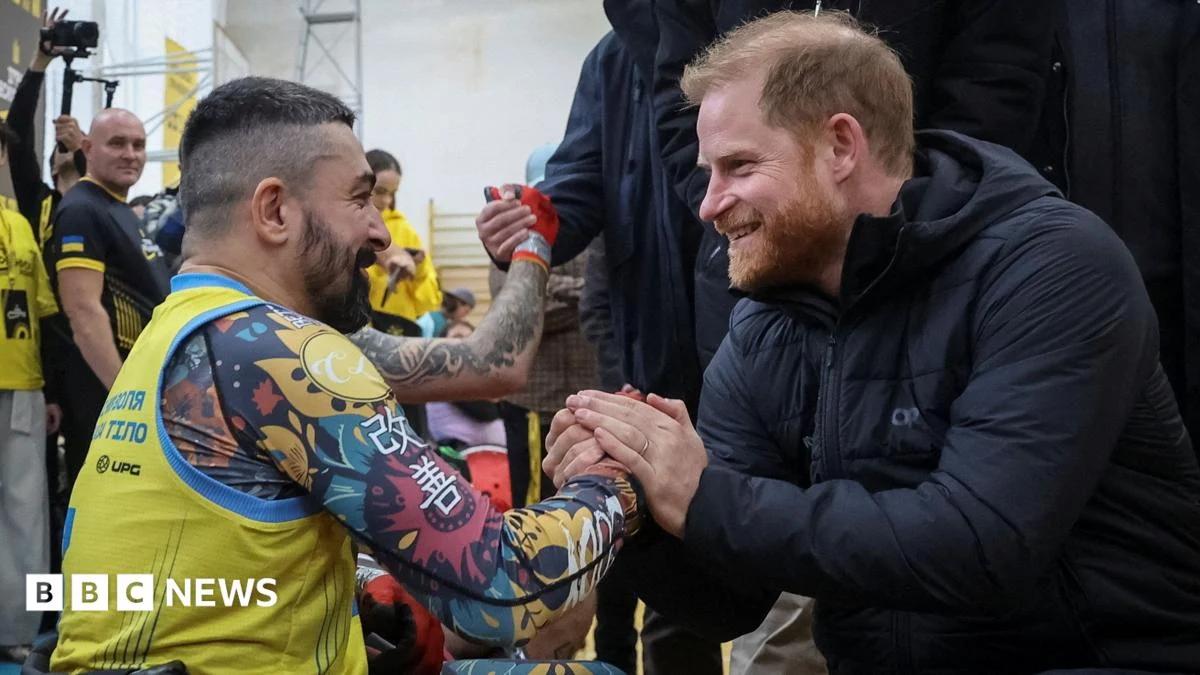
Following a clandestine visit to Ukraine, Prince Harry, the Duke of Sussex, has issued a stark warning regarding the persistent and evolving threat posed by Russia, concurrently signaling his readiness to return to military service should the need arise. His recent pronouncements, made in interviews following his engagement with Ukrainian veterans, underscore a profound concern for international stability and a call for intensified, unified support for Kyiv amidst ongoing hostilities. These statements, delivered with a directness unusual for figures traditionally associated with the British monarchy, also touched upon the critical dynamics of American foreign policy concerning the conflict.
The Duke’s surprise visit to Lviv, a city in western Ukraine, was executed under stringent security protocols, necessitated by the ongoing conflict. This covert operation highlighted the inherent risks and the profound commitment underlying his engagement. During his time in Ukraine, Prince Harry met with competitors preparing for his Invictus Games, an international multi-sport event for wounded, injured, and sick service personnel and veterans. The encounters were described as deeply moving, with the Duke receiving an enthusiastic welcome from Ukrainian service members, many of whom bore visible scars from the conflict. These individuals represent a fraction of the estimated 150,000 seriously wounded veterans in the country, a testament to the brutal toll of the protracted struggle against Russian aggression. The visit itself was not without incident; air raid warnings forced his planning team into shelters the night before journalists arrived, serving as a visceral reminder of the constant danger under which Ukrainians live and operate. This direct exposure to the realities of war provided a powerful backdrop to his subsequent public statements, lending them an undeniable gravitas.
Prince Harry’s declaration that he would "100% be there to serve my country alongside my fellow veterans and service personnel" if asked to sign up again, resonated deeply. This commitment is rooted in his own distinguished military career, which included two tours of duty in Afghanistan as an Apache helicopter pilot. His willingness to re-engage militarily, even after stepping back from his role as a working royal, signifies a potent sense of duty and solidarity with service personnel globally. Such a public assertion from a member of the Royal Family, particularly one with combat experience, carries significant symbolic weight, potentially galvanizing public sentiment and reinforcing the perception of a shared responsibility in confronting global security challenges. It transcends mere rhetoric, offering a tangible example of personal sacrifice in the face of perceived threats.
The Duke’s assessment of the Russian threat extended beyond the immediate conflict in Ukraine, portraying it as a long-standing and pervasive danger to European security. He posited that the threat has been discernible for the past 15 years, asserting that Europe has effectively been "at war" for a decade, even in the absence of overt military engagement across the continent. "Just because there’s not drones, bullets, and rockets flying at us, it doesn’t mean that we’re not at war," he stated. This perspective broadens the conventional definition of warfare to encompass hybrid tactics, cyber warfare, disinformation campaigns, economic coercion, and geopolitical destabilization efforts, all of which Russia has demonstrably employed against Western interests. This analytical framework suggests a more profound and insidious conflict that transcends traditional battlefield dynamics, demanding a commensurate strategic response from allied nations. His words serve as a call for heightened vigilance and a recognition that peace is not merely the absence of kinetic conflict, but a state that requires constant defense against multifaceted aggression.
Central to Prince Harry’s post-visit commentary was an urgent appeal for sustained and increased international support for Ukraine. He articulated a fervent hope that "the rest of the world will continue to support" Ukraine, expressing confidence in Ukraine’s ultimate victory over Russia despite the conflict’s prolonged duration, now extending beyond four years. His plea for greater unity, particularly within Europe, highlighted a concern that the continent could become divided and "turn on itself," thereby weakening its collective resolve against external threats. This emphasis on unity reflects a deep understanding of historical precedents where internal divisions have often been exploited by adversaries, underscoring the imperative for a cohesive European front. The call to "double our support" for Ukraine is not merely an emotional appeal but a strategic imperative, recognizing that Kyiv’s resilience directly impacts the broader security architecture of the continent.
Perhaps the most politically charged aspect of Prince Harry’s statements involved his oblique, yet unmistakable, commentary on US foreign policy, particularly concerning the administration of President Trump. In a manner highly uncharacteristic for a royal figure, he drew a distinction between the robust support for Ukraine observed within American society and the perceived divergent attitude of "a certain group, or in, in this case, an administration that was perhaps thinking about it differently." This observation points to the internal political divisions within the United States regarding its commitment to international alliances and its role in global conflicts. The Duke expressed optimism for a shift in this dynamic, stating, "As of January, things are going to change, so I think we should all be looking forward to that," a clear reference to the US mid-term elections and the potential for a realignment of political power and policy direction. Such commentary from a figure of his standing, even one no longer bound by the strictures of working royalty, is highly unusual and suggests a profound concern for the stability of the transatlantic alliance and its implications for Ukraine.
The significance of Prince Harry’s ability to speak more freely than working royals cannot be overstated. Having stepped back from frontline royal duties, he operates outside the direct diplomatic constraints typically imposed on the monarchy. This unique position grants him a platform to voice opinions on geopolitical matters that would be impossible for his relatives, whose public statements are carefully curated to maintain political neutrality. His candid observations, therefore, carry a different kind of weight – less as official state pronouncements and more as the informed perspective of a public figure with direct military experience and a commitment to humanitarian causes. This freedom allows him to engage with complex global issues in a way that resonates with broader public sentiment, bypassing traditional diplomatic channels.
The backdrop to these royal pronouncements is a global security landscape increasingly defined by volatility and revisionist powers. The full-scale invasion of Ukraine by Russia in February 2022 fundamentally altered the post-Cold War order, challenging principles of territorial integrity and national sovereignty. The conflict has exposed fault lines within international alliances, tested the resolve of democratic nations, and highlighted the critical importance of sustained military and economic aid. Ukraine’s resistance, bolstered by Western support, has prevented a swift Russian victory, but the humanitarian and economic costs have been immense. The ongoing struggle for resources, particularly ammunition and air defense systems, underscores the precarious balance on the front lines and the urgent need for consistent international backing. Prince Harry’s call for increased support is therefore not an isolated sentiment but reflects a broad consensus among security analysts regarding the imperative of bolstering Ukraine’s capabilities.
The implications of Prince Harry’s statements are multi-faceted. Domestically in the UK, his willingness to serve again could boost morale among veterans and service personnel, reinforcing the nation’s commitment to defense. Internationally, his outspokenness could serve to keep the Ukrainian conflict in the public consciousness, countering potential "Ukraine fatigue" in donor nations. His commentary on US political dynamics, while unofficial, might also subtly influence public discourse in America, drawing attention to the perceived divergence between public opinion and certain political factions regarding foreign aid. For Europe, his warnings about division are a salient reminder of the need for internal cohesion in the face of external threats, particularly as various member states navigate their own political and economic challenges.
In conclusion, Prince Harry’s recent visit to Ukraine and subsequent forthright pronouncements represent a significant moment of royal intervention in geopolitical discourse. His personal commitment to service, his direct observations from the conflict zone, and his analytical assessment of Russia’s long-term threat converge to create a compelling narrative. His unique position, unburdened by the usual royal protocols, has enabled him to articulate a clear vision for renewed international unity and unwavering support for Ukraine. As the conflict continues to reshape global security paradigms, the Duke of Sussex’s voice adds a distinctive and impactful dimension to the urgent call for sustained vigilance and collective action against forces threatening international stability. His analysis underscores that the current global landscape demands not just military readiness, but also a robust and unified political will to defend democratic values and sovereign nations.


 Safa Marwah
 Ayu Aulia
 Aura Kasih