
 Safa Marwah
A groundbreaking study has unveiled a critical vulnerability within the modern software supply chain: sensitive cloud access credentials, inadvertently embedded within publicly accessible container images, are systematically discovered and exploited by automated threat actors in alarmingly rapid timescales, often within mere seconds of publication. This sophisticated, automated credential harvesting operation poses a severe and pervasive risk to organizations leveraging containerization technologies, underscoring a pressing need for enhanced security protocols across development pipelines and container registry platforms.
The ubiquitous adoption of containerization, spearheaded by technologies like Docker, has revolutionized software development and deployment. Containers encapsulate applications and their dependencies, ensuring consistency across various environments, from a developer’s local machine to production cloud infrastructure. Docker Hub, as the world’s largest repository of container images, serves as a central clearinghouse where developers share and retrieve these encapsulated applications. While offering immense benefits in agility and scalability, this shared ecosystem also introduces potential security exposures, particularly when sensitive information, such as cloud keys, API tokens, and database credentials, is inadvertently baked into public images. These credentials, designed to grant programmatic access to critical cloud resources, become high-value targets for malicious entities.
Researchers Billy Tsouvalas and Nick Nikiforakis from Stony Brook University undertook a comprehensive four-month investigation to quantify the speed and scale of this exploitation. Their methodology involved deploying a network of "honeypot" container images across eight prominent public container registries, including Docker Hub and Harbor. A honeypot, in cybersecurity parlance, is a decoy system designed to attract and observe attacker behavior without exposing real assets. By embedding carefully crafted, non-production cloud keys and credentials into these decoy images, the researchers created a controlled environment to monitor how rapidly and effectively threat actors could discover and leverage them.
The array of exposed secrets within these honeypot images was diverse, encompassing highly sought-after credentials such as AWS (Amazon Web Services), OpenAI, and Anthropic API keys, alongside simulated SSH (Secure Shell) and database access details. Each honeypot was meticulously instrumented with monitoring tools designed to detect various interactions: when an image was pulled, built, run, or when a shell session was initiated within the container. Crucially, the system also tracked any API calls made using the embedded cloud keys, providing real-time insight into their exploitation. The findings, recently presented at the prestigious ACM Conference on Computer and Communications Security (CCS), paint a stark picture of the current threat landscape.
The sheer volume of interactions with the honeypot images was staggering. Over the study period, these decoy images were pulled more than 75,000 times. More alarmingly, the planted AWS keys alone registered over 140,000 API calls originating from more than 5,000 unique IP addresses. This activity revealed a clear and systematic pattern of exploitation. Initially, attackers would validate the functionality of the discovered keys, often by attempting benign operations like checking the identity of the key holder. Subsequently, they would proceed to enumerate available cloud resources, such as listing storage buckets, virtual machines, or databases. In numerous instances, this reconnaissance phase quickly escalated to active resource consumption, including the depletion of test account balances for OpenAI and Anthropic API keys, or attempts to provision new cloud resources and exfiltrate data using the AWS credentials.
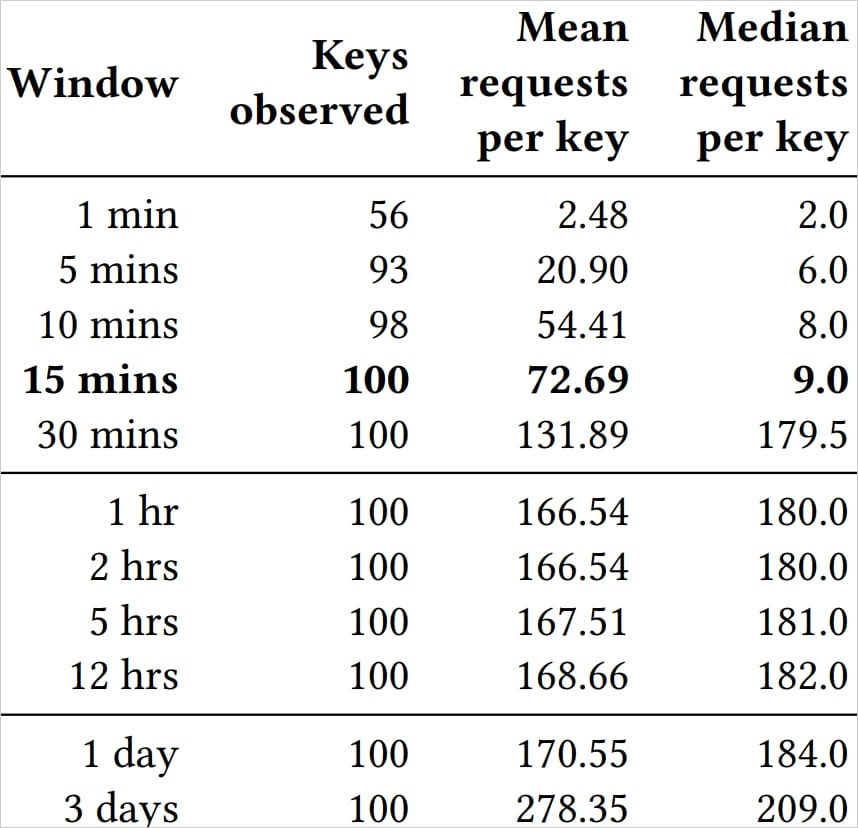
The speed of compromise proved to be a particularly alarming revelation. The fastest recorded instance of an AWS key being utilized occurred a mere 7.86 seconds after the corresponding image was published on Docker Hub. While this represents an extreme case, the median time for the first API call across all compromised AWS keys was a brisk 51.19 seconds. Furthermore, all 100 AWS keys deployed in the experiment were actively exploited within a staggering 15-minute window. This rapid response unequivocally demonstrates the presence of highly automated, sophisticated scanning infrastructures dedicated to continuously monitoring public container registries for newly exposed secrets.
The study identified Docker Hub as the predominant source of malicious activity targeting the AWS keys, though other registries like Harbor also exhibited signs of similar abuse. The researchers coined the term "ContainerBots" to describe the automated scanners responsible for these interactions. While this term serves as a collective identifier, the analysis suggested that these scanning operations were not centrally coordinated by a single entity but rather represented a disparate collection of automated tools operated by various threat actors.
A critical finding of the research was the method by which these ContainerBots extracted credentials. The monitoring tools rarely detected instances where the honeypot images were actually instantiated and run as live containers. Instead, the overwhelming evidence pointed to a preference for static analysis. This technique involves inspecting the image layers directly, often by unpacking the image filesystem or querying the registry’s API to extract file contents, without ever executing the containerized application. Static analysis is significantly faster and stealthier than dynamic execution, allowing attackers to rapidly scan vast numbers of images and harvest credentials without leaving a trace of container runtime activity. This approach highlights a profound operational efficiency on the part of the attackers, optimizing for speed and minimizing detection risk.
The implications of these findings extend far beyond the immediate compromise of a few test keys. The inadvertent exposure of secrets within container images represents a systemic security flaw with profound ramifications for organizations globally.
Cloud Security Posture: Compromised cloud keys grant direct, unfettered access to an organization’s cloud infrastructure, bypassing traditional network perimeter defenses. This can lead to unauthorized access to sensitive data, modification or deletion of critical resources, and the creation of backdoors for future exploitation. The principle of least privilege is often violated when general-purpose keys are exposed, granting broad access.
Supply Chain Security: Embedding secrets into container images introduces a critical vulnerability into the software supply chain. Developers, often under pressure to meet deadlines, may accidentally hardcode credentials during development or testing, forgetting to remove them before pushing images to public repositories. This transforms a seemingly innocuous development practice into a catastrophic security breach point. The integrity of the entire software delivery pipeline is jeopardized.
Financial and Reputational Damage: The financial repercussions can be substantial. Exhausted API credits, unauthorized compute resource usage, and data exfiltration can lead to significant operational costs. Furthermore, data breaches resulting from compromised keys can incur hefty regulatory fines (e.g., GDPR, HIPAA), legal expenses, and severe reputational damage, eroding customer trust and stakeholder confidence. Incident response efforts alone can be incredibly costly and resource-intensive.

Difficulty of Remediation: Identifying and revoking all leaked keys is an arduous task. Organizations often lack comprehensive visibility into where their credentials might be exposed, making discovery challenging. The manual process of revoking thousands of potentially compromised keys across multiple cloud providers and services is prone to error and can lead to operational disruptions if not managed meticulously. The need for coordinated revocation efforts across different cloud services and potentially different teams within an organization adds further complexity.
Addressing this pervasive vulnerability requires a multi-pronged approach involving both platform providers and development organizations.
Recommendations for Container Registry Platforms (e.g., Docker Hub):
The researchers strongly advocate for platform providers to implement proactive security measures.
- Automated Secret Scanning: Registries should integrate robust, real-time secret scanning capabilities into their image upload pipelines. Before an image is made public, it should be automatically analyzed for embedded credentials. If secrets are detected, the publisher should be immediately warned, and ideally, the publication process should be halted until the secrets are removed or explicitly acknowledged. This preventative measure could significantly reduce the attack surface.
- Access Restrictions and Rate Limiting: To thwart mass-scanning tools, registries should consider implementing intelligent rate-limiting mechanisms or restricting access to their public feed of recently published or updated images for suspicious, high-volume requests. This could involve IP-based throttling, CAPTCHAs for excessive programmatic access, or more sophisticated behavioral analytics to identify and block automated harvesting attempts.
Recommendations for Developers and Organizations:
While platform-level solutions are crucial, organizations must also adopt stringent internal security practices.
- Adopt Secure Secret Management Solutions: Never hardcode credentials directly into source code or container images. Instead, utilize dedicated secret management solutions such as AWS Secrets Manager, Azure Key Vault, HashiCorp Vault, or Kubernetes Secrets. These tools inject secrets securely at runtime, preventing them from ever residing within the image itself.
- Leverage Environment Variables for Runtime Secrets: For less sensitive data or development environments, injecting secrets via environment variables at container runtime is a more secure alternative to embedding them in images.
- Integrate Secret Scanning into CI/CD Pipelines: Implement automated secret scanning tools (e.g., GitGuardian, TruffleHog, Gitleaks) directly into Continuous Integration/Continuous Delivery (CI/CD) pipelines. This ensures that any accidental inclusion of secrets is caught before the image is built and pushed to a registry.
- Enforce Least Privilege: Ensure that any cloud keys or API tokens have only the absolute minimum permissions required for their intended function. This limits the damage an attacker can inflict if a key is compromised.
- Implement Automated Key Rotation: Regularly rotate cloud keys and credentials. Automated rotation mechanisms reduce the window of opportunity for attackers to exploit a leaked key.
- Developer Education and Awareness: Foster a strong security culture through continuous education and training for developers on secure coding practices, the dangers of hardcoding secrets, and the proper use of secret management tools.
The researchers reported their findings to Docker in May, providing a comprehensive paper detailing their experiment and conclusions. However, beyond an initial acknowledgment, they received no further follow-up or indication of planned remedial action. A small-scale re-test conducted in August confirmed that no defensive changes had been implemented on the platform. This lack of responsiveness from a major registry provider highlights a critical disconnect between identified vulnerabilities and their mitigation, leaving users exposed to ongoing, automated attacks.
The threat posed by "ContainerBots" and the rapid exploitation of leaked credentials is not a theoretical exercise but a present and evolving danger. The speed at which these secrets are harvested means that human intervention is almost always too late. As organizations increasingly rely on containerized applications and cloud infrastructure, the imperative for proactive security measures becomes paramount. A collaborative effort between cloud platform providers, container registry operators, and development teams is essential to build a more resilient and secure software ecosystem, safeguarding against the silent and swift theft of critical cloud keys. Without decisive action, the digital supply chain will remain a fertile ground for automated exploitation, continually exposing valuable organizational assets to sophisticated, relentless attackers.


 Aura Kasih

 Lisa Mariana