
 Lisa Mariana
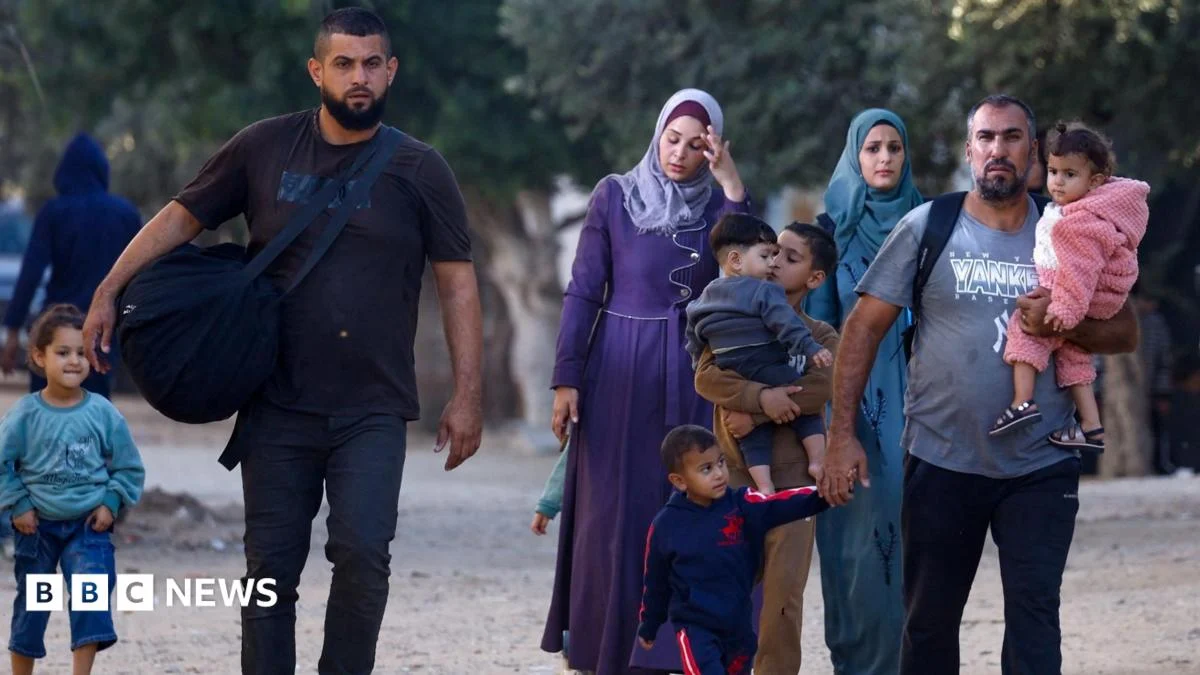
A significant development unfolded in the central Gaza Strip this week as Israeli ground forces initiated an uncharacteristic incursion into territory generally understood to be beyond their direct operational control, precipitating a new wave of displacement and drawing sharp international scrutiny.
The operation, which commenced early Wednesday, saw Israeli tanks and armored vehicles advance eastward from the vicinity of the Nuseirat refugee camp, pushing onto Salah al-Din Road, the primary north-south artery traversing the Gaza Strip. This movement was reportedly conducted under the protective cover of sustained artillery fire, indicating a high-intensity engagement profile. The Israeli military articulated the objective of this "targeted" intervention as the neutralization of a subterranean "terror tunnel" located to the west of the so-called Yellow Line, asserting that the structure posed an immediate and direct threat to Israeli military personnel stationed in the region. This particular demarcation, the Yellow Line, delineates a substantial portion of Gaza’s territory—estimated at over 60%—which has been under Israeli occupation following the cessation of major hostilities.
The Yellow Line: A Contested Frontier
The concept of the Yellow Line itself is central to understanding the strategic implications of this recent operation. While not a universally recognized international border, the Yellow Line has emerged as a de facto operational boundary within Gaza, signifying the extent of Israeli military presence and control established during and after the intense conflict of 2023. Its existence reflects a fragmented reality within the Gaza Strip, where large swathes of territory, particularly in the north and east, have been brought under Israeli military administration. Operating "beyond" this line, as was the case in the Nuseirat area, signifies a tactical expansion of Israeli ground operations into zones previously considered outside the immediate and actively controlled perimeter, even within the broader context of occupation. This move fundamentally challenges the prevailing understanding of territorial control and the implicit, if fragile, operational boundaries that have largely dictated military movements since the October 2025 ceasefire.
The strategic rationale behind targeting a tunnel in this specific location underscores the enduring threat perception held by Israeli security forces regarding Hamas’s subterranean infrastructure. Tunnels, often deeply embedded and intricately networked, serve multiple purposes for armed groups: facilitating the movement of fighters and weaponry, providing concealed command and control centers, and enabling surprise attacks or infiltrations. The Israeli assertion that this particular tunnel represented an "immediate and direct threat" suggests a perceived imminent operational capability that necessitated pre-emptive action. This perspective frames the incursion not merely as an act of territorial assertion, but as a critical defensive measure aimed at mitigating specific security risks.
Ceasefire Under Strain: Hamas’s Condemnation
The Palestinian armed group Hamas, which retains administrative control over the remaining areas of Gaza not under direct Israeli occupation, swiftly condemned the Israeli military’s advance. In an official statement, Hamas characterized the operation as a "flagrant violation" of the October 2025 ceasefire agreement. This accusation highlights the deeply precarious nature of the existing truce, which, despite its formal establishment, has been consistently tested by intermittent violence over the past thirteen months. The ceasefire, intended to usher in a period of de-escalation and stability, has instead been punctuated by near-daily Israeli aerial strikes and sporadic retaliatory actions, contributing to an environment of persistent insecurity for Gaza’s 2.1 million inhabitants.
The specific terms of the October 2025 ceasefire, while not fully public, are understood to include provisions related to maintaining existing lines of control and limiting offensive ground operations. Hamas’s immediate and strong reaction indicates that they interpret the incursion beyond the Yellow Line as a direct breach of these agreed-upon parameters, potentially setting a precedent for further Israeli military maneuvers into previously unentered zones. Such actions complicate any future diplomatic efforts to solidify the ceasefire or move towards a more durable peace arrangement, as they erode trust and heighten tensions between the warring parties.
Humanitarian Crisis Deepens Amidst Renewed Displacements
The humanitarian consequences of this latest military action were immediate and severe. Early on Wednesday afternoon, Cogat, the Israeli military body responsible for coordinating government activities in the Palestinian territories, issued evacuation orders. Its Arabic spokesperson specifically warned residents in areas north of the Nuseirat and Bureij refugee camps to vacate for their safety and announced the closure of a section of the vital Salah al-Din Road to all traffic. This directive triggered a rapid and chaotic exodus, with numerous families seen fleeing their homes and temporary shelters.
Eyewitness accounts corroborated by Palestinian media and social media footage painted a harrowing picture of the unfolding crisis. Videos verified by independent media outlets showed individuals ducking from artillery fire and desperately running along Salah al-Din Road, approximately 1.5 kilometers west of the Yellow Line, while narrating the indiscriminate nature of the Israeli shelling. Residents forced to abandon their homes spoke of the extreme urgency of their flight, unable to retrieve even basic necessities like blankets, pillows, or clothing. One Nuseirat resident recounted to a BBC Arabic program the "indiscriminate firing at areas where displaced people have sought shelter" and reported "numerous casualties, including fatalities," painting a grim picture of the immediate human cost.
These latest displacements compound an already catastrophic humanitarian situation in Gaza. Over 1.9 million people, representing approximately 90% of Gaza’s entire population, remain internally displaced. A staggering 1.4 million of these individuals are living in precarious conditions, inhabiting tents or makeshift shelters that offer minimal protection from the elements or ongoing conflict. The repeated cycles of displacement, coupled with the widespread destruction of infrastructure, have created an intractable crisis that has overwhelmed aid agencies and pushed the civilian population to the brink of survival.
Casualties and the Lingering Toll of Conflict
The human toll of the conflict, even under the supposed ceasefire, continues to mount. Gaza’s Hamas-run Civil Defence agency reported three fatalities resulting from separate Israeli drone strikes on Wednesday: one man killed in Nuseirat, another in Gaza City to the north, and a third in the central town of Deir al-Balah. The Israel Defense Forces (IDF), when questioned about these reports, issued a general statement acknowledging that it had "struck several military operatives," without providing specific details regarding the reported civilian casualties or the circumstances of the drone strikes.
These recent deaths add to an already devastating tally since the October 2025 ceasefire. According to figures from Gaza’s Hamas-run health ministry, which are widely considered reliable by United Nations agencies, at least 1,658 individuals have been killed in Israeli attacks during this period. On the Israeli side, the military has reported the deaths of six of its soldiers over the same timeframe. These statistics underscore the persistent low-intensity conflict that continues to plague Gaza, far removed from any semblance of lasting peace. The overarching shadow of the initial conflict, triggered by the Hamas-led attack on southern Israel on October 7, 2023, remains stark. That assault resulted in the deaths of approximately 1,200 people and the abduction of 251 others. Since then, the Gaza health ministry reports that more than 74,700 people have been killed in the ensuing Israeli military response, painting a picture of unparalleled devastation.
Stalled Reconstruction and Political Impasse
Beyond the immediate human cost, the longer-term prospects for Gaza remain bleak. Reconstruction efforts, crucial for restoring any semblance of normalcy, have yet to commence on a meaningful scale. An estimated 82% of all structures across the Gaza Strip have been either destroyed or severely damaged during the war, leaving behind vast expanses of rubble and a profound housing crisis. The stalled reconstruction is intrinsically linked to the broader political stalemate, particularly the faltering US President Donald Trump’s peace plan.
A primary sticking point in any progress towards a durable resolution is the disarmament of Hamas. Israel has consistently maintained that the full and verifiable disarmament of the armed group is a prerequisite for any significant political or territorial concessions. From the Israeli perspective, allowing Hamas to retain its military capabilities, including its extensive tunnel network and rocket arsenal, would perpetuate an unacceptable security threat. Hamas, conversely, has offered a conditional agreement to relinquish its weapons, contingent upon a phased withdrawal of Israeli troops from the 60% of Gaza they currently occupy. This fundamental disagreement over sequencing and terms highlights the deep chasm of distrust and competing priorities that continues to derail any comprehensive peace initiative.
The geopolitical landscape further complicates matters. International donors and reconstruction agencies face immense logistical and political hurdles. The movement of materials, the allocation of funds, and the establishment of oversight mechanisms are all subject to stringent security controls and political maneuvering, often resulting in delays and inefficiencies. Without a robust and internationally backed political framework that addresses both Israeli security concerns and Palestinian aspirations for self-determination and recovery, the cycle of destruction and humanitarian crisis in Gaza is likely to persist.
Future Outlook: A Fragile Equilibrium
The recent Israeli ground operation beyond the Yellow Line serves as a potent reminder of the inherent fragility of the current equilibrium in Gaza. While described as a "targeted" action, its implications extend far beyond the immediate objective of neutralizing a single tunnel. It tests the boundaries of the existing ceasefire, exacerbates humanitarian suffering, and further entrenches the deep-seated political divisions that prevent any meaningful progress towards peace.
The coming weeks will likely reveal whether this incursion represents an isolated incident aimed at a specific threat or signals a more assertive shift in Israeli operational policy within Gaza. The reaction from regional and international actors will be critical in shaping the immediate aftermath. Continued diplomatic engagement, particularly from key mediators, will be essential to de-escalate tensions and prevent a wider resurgence of conflict. However, without a fundamental breakthrough on core issues such as Hamas’s disarmament and the full scope of Israeli withdrawal from occupied territories, Gaza appears destined to remain a flashpoint, perpetually teetering on the precipice of renewed large-scale hostilities, with its civilian population bearing the brunt of an unending crisis. The prospects for long-term stability and development remain contingent upon political will and a sustained commitment to addressing the root causes of the conflict, a commitment that has, thus far, remained elusive.




 Ayu Aulia

 Safa Marwah


 Aura Kasih
