
 Aura Kasih
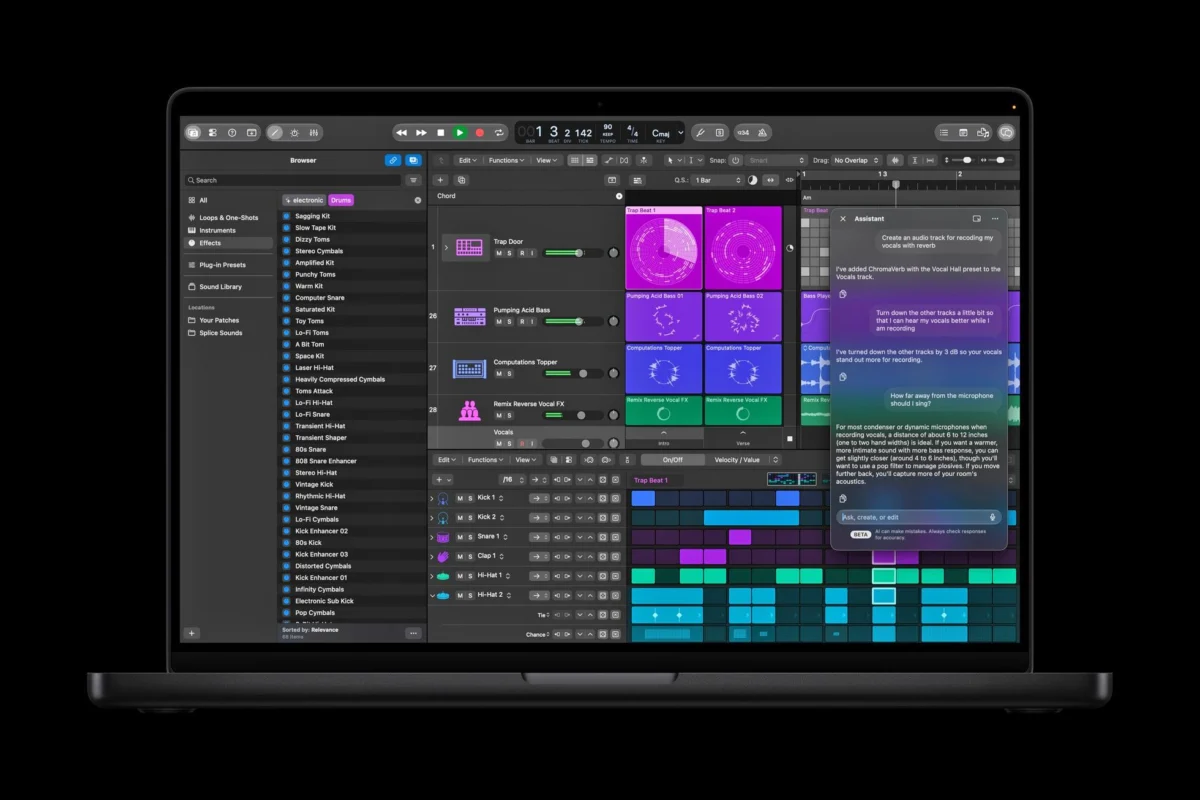
In a strategic move to monetize advanced artificial intelligence capabilities, Apple has begun offering supplemental "Intelligence Usage Packs" for select professional creative applications, allowing users to extend their access to cloud-powered AI features beyond initial allocation limits. This initiative, initially highlighted in a support document and now manifesting as a purchasable option within applications like Logic Pro, signifies Apple’s evolving approach to integrating AI into its ecosystem, balancing on-device processing with the power of external AI models.
The introduction of these Intelligence Usage Packs, priced at $49.99 for a one-time purchase, addresses a burgeoning concern for power users of Apple’s sophisticated software. These packs are designed to replenish usage quotas for features that leverage sophisticated, cloud-based AI engines, such as those provided by OpenAI and Google Gemini. This strategy acknowledges that while Apple is heavily investing in on-device AI processing, certain computationally intensive tasks and access to the most cutting-edge AI functionalities necessitate an external infrastructure. The initial rollout focuses on professional creative suites, indicating a clear target demographic for these premium AI services.
The implications of this pricing model extend beyond mere feature access. It suggests a tiered approach to artificial intelligence, where basic functionalities might remain free or limited, while more advanced or intensive AI operations require an additional investment. This is particularly relevant for applications like Logic Pro, a professional digital audio workstation. Within Logic Pro, AI assistants are being integrated to streamline complex workflows, offering capabilities such as initiating new song compositions from text prompts, configuring vocal tracks with single commands, or intelligently refining existing project elements. The usage limits are reportedly tied to the "complexity of conversations" with these AI assistants, implying that more intricate requests or longer interactions will consume a greater portion of the allocated AI processing power.
Apple’s support documentation clarifies that these Intelligence Usage Packs are tied to the purchasing Apple Account and are not shareable via Family Sharing. This ensures a direct revenue stream for each individual user accessing these premium AI services. Furthermore, any unused AI processing capacity purchased through these packs will roll over to subsequent months, providing a degree of flexibility. However, this accumulated usage will eventually expire 12 months after the initial purchase, encouraging ongoing engagement and potential repeat purchases. This expiration policy aims to prevent indefinite stockpiling of AI processing power and to maintain a consistent revenue flow for Apple.
The current implementation sees Logic Pro as the primary platform for purchasing these additional AI usage credits. However, Apple has indicated an expansion of this model to other applications within its Creator Studio suite. This includes anticipated additions to Pixelmator Pro, a powerful image editing application, and Final Cut Pro and Motion, professional video editing and motion graphics software. Furthermore, productivity applications such as Pages, Keynote, and Numbers, which are also receiving AI chatbot functionalities, are expected to integrate this purchasing option. This broad rollout across Apple’s professional and productivity software portfolio underscores the company’s commitment to embedding AI capabilities as a core, and potentially monetizable, component of its operating system and application ecosystem.
The strategic rationale behind this tiered AI access model is multifaceted. Firstly, it allows Apple to recoup the substantial investment required for developing and maintaining advanced AI models, whether developed in-house or licensed from third-party providers like OpenAI and Google. By offering these AI features as optional add-ons, Apple can cater to a wider range of users, from those with basic needs to professionals who require extensive AI support for their demanding workflows. This approach also helps to manage the infrastructure costs associated with cloud-based AI processing, ensuring that the service remains viable and scalable.

Secondly, this move aligns with broader industry trends. As AI becomes increasingly integrated into software, companies are exploring various monetization strategies. Subscription models, pay-as-you-go services, and premium feature unlocks are becoming commonplace. Apple’s decision to offer one-time purchase packs, rather than a recurring subscription, might appeal to users who prefer not to commit to ongoing monthly fees, especially for applications they may not use intensively every month. The flexibility of rollover usage further enhances this appeal.
The development also signifies a potential shift in how Apple views the value proposition of its software. While historically known for offering robust functionality without explicit feature-based paywalls within its core applications, the increasing reliance on cloud-based AI necessitates a re-evaluation. The cloud infrastructure required to run sophisticated AI models incurs significant operational costs. By introducing usage packs, Apple can ensure that the users who benefit most from these computationally intensive AI features contribute directly to their ongoing operational costs.
From an analytical perspective, the success of this model will depend on several factors. The perceived value of the AI features being offered is paramount. If users find that the AI assistants significantly improve their productivity, creativity, or efficiency, the $49.99 price point may be seen as a worthwhile investment. Conversely, if the AI capabilities are perceived as marginal or easily replicated by existing manual processes, adoption rates could be limited. The "complexity of conversations" metric for Logic Pro is an interesting one; its transparency and fairness in limiting usage will be closely scrutinized by professional users.
Furthermore, the competitive landscape plays a crucial role. As other software providers integrate AI into their offerings, Apple’s pricing and feature sets will be benchmarked against alternatives. The ability for Apple to continuously innovate and enhance these AI features will be essential to maintain a competitive edge and justify the premium pricing. The integration with OpenAI and Google Gemini also introduces a dynamic where Apple’s pricing may be influenced by the underlying costs of these partnerships.
The long-term implications of this strategy could extend to other areas of Apple’s ecosystem. If successful, similar usage-based models could be implemented for AI features in consumer-facing applications or even for expanded capabilities within the operating system itself. This would represent a significant evolution in Apple’s software monetization strategy, moving beyond a single purchase price for software to a more dynamic, usage-dependent revenue model for advanced functionalities.
The current limited rollout to professional creative applications suggests a deliberate, phased approach. This allows Apple to gather user feedback, refine the technology, and optimize the pricing and usage metrics before a wider deployment. The focus on creative professionals is logical, as these users often have the most demanding computational needs and a greater willingness to invest in tools that enhance their workflow and output quality.
In conclusion, Apple’s introduction of Intelligence Usage Packs represents a strategic pivot in its approach to AI monetization. By offering supplemental access to cloud-powered AI features, the company aims to balance the cost of advanced AI development and deployment with user demand, particularly within its professional software suites. This move signals a future where sophisticated AI capabilities may increasingly be offered through tiered access models, reflecting the evolving economics of artificial intelligence and its integration into the digital landscape. The success of this initiative will hinge on the perceived value of the AI features, the transparency of usage limits, and Apple’s ability to continually innovate and deliver compelling AI-driven enhancements across its product lines.




 Safa Marwah

 Lisa Mariana