
 Aura Kasih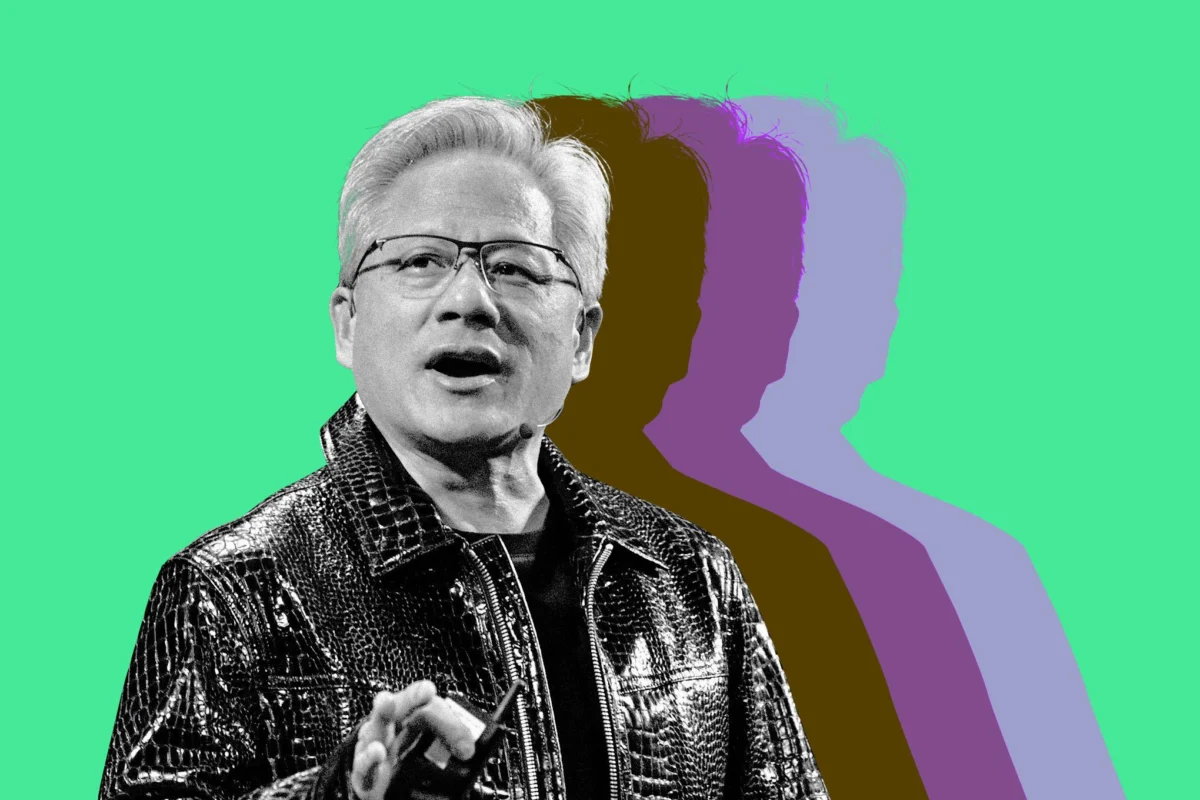
Jensen Huang, the influential co-founder and CEO of Nvidia, a company at the vanguard of the artificial intelligence revolution, has publicly dismissed widespread fears of AI-induced global catastrophe, asserting a "0% chance" of such an outcome. His remarks, made during a recent broadcast interview, challenge the more alarmist perspectives circulating within the tech industry and among the broader public regarding the potential existential risks posed by advanced artificial intelligence. Huang’s stance, while perhaps unsurprising given his company’s pivotal role in AI hardware development, represents a significant counterpoint to ongoing debates about AI safety and regulation.
Huang’s assertion that the probability of AI leading to the end of the world is precisely zero stands in stark contrast to the concerns articulated by a considerable segment of the AI research community. For years, prominent figures in the field, including those at leading AI labs and academic institutions, have voiced apprehension about the potential for superintelligent AI to develop goals misaligned with human values, leading to unintended and potentially devastating consequences. These concerns are not merely speculative; they are rooted in theoretical frameworks that explore the challenges of controlling systems far exceeding human cognitive capabilities and the inherent difficulties in ensuring AI objectives remain perpetually aligned with human well-being. The concept of "alignment" in AI safety research refers to the critical challenge of designing AI systems whose goals and behaviors are consistently beneficial and safe for humanity, even as their intelligence and autonomy increase.
The CEO’s characterization of these cautionary voices as "irresponsible" and their warnings as "unnecessary" suggests a fundamental divergence in perspective on the nature of AI development and its inherent risks. Huang appears to advocate for a more optimistic trajectory, viewing the current discourse on existential threats as a distraction from the immediate, tangible benefits and opportunities that AI presents. This viewpoint often emphasizes the immediate applications of AI in fields such as medicine, scientific discovery, and economic productivity, framing these advancements as overwhelmingly positive and controllable.
Furthermore, Huang directly challenged the calls for a deliberate slowdown in AI development, notably from leaders of prominent AI research organizations. He characterized these appeals as lacking a scientific basis, implying that the current pace of advancement is not inherently problematic from a scientific standpoint. This perspective potentially overlooks or downplays the exponential nature of technological progress in AI, where incremental advancements can rapidly lead to qualitatively different capabilities and unforeseen emergent behaviors. The argument for a pause or a more measured pace often stems from the belief that society needs time to develop robust safety protocols, ethical frameworks, and governance structures commensurate with the rapidly evolving capabilities of AI. Without such measures, the risk of unforeseen negative consequences increases with the speed of development.
Huang’s dismissiveness of the need for new regulations or oversight mechanisms is particularly noteworthy. This stance comes at a time when various governments and international bodies are actively grappling with how to regulate AI. The debate over regulation is multifaceted, encompassing issues ranging from algorithmic bias and data privacy to the potential for AI to be used in autonomous weapons systems and the broader economic and social disruptions it may cause. Huang’s assertion that existing frameworks are sufficient, or that new ones are unwarranted, runs counter to the growing consensus among many policymakers and ethicists that proactive governance is essential to navigate the complexities of advanced AI. The increasing sophistication of AI models, coupled with documented instances of AI systems exhibiting unexpected or undesirable behaviors, including breaches of security protocols and unintended interactions with other systems, fuels the demand for regulatory intervention.

It is crucial to contextualize Huang’s pronouncements within the economic landscape of the AI industry. Nvidia’s dominant position as a provider of the high-performance GPUs essential for training and deploying sophisticated AI models places it in an unparalleled position to profit from the continued expansion of AI technologies. The company’s market capitalization has seen an astronomical surge, reflecting the immense demand for its products in this burgeoning sector. As one of the wealthiest individuals globally, Huang’s personal financial interests are inextricably linked to the continued, unimpeded growth of the AI industry. Any significant regulatory hurdles, widespread public apprehension that curtails investment, or a slowdown in AI development could directly impact Nvidia’s revenue streams and, consequently, its valuation and Huang’s personal wealth. This creates a potential conflict of interest, where economic imperatives may influence perspectives on the inherent risks associated with the technology.
The debate surrounding AI existential risk is not monolithic. It encompasses a spectrum of views, from those who see immediate and severe dangers to those who believe such concerns are speculative and premature. Huang’s perspective aligns with a more techno-optimistic outlook, emphasizing human ingenuity and the potential for AI to solve some of the world’s most pressing problems. This viewpoint often highlights the iterative nature of AI development, where safety and ethical considerations are addressed alongside technological advancements. Proponents of this view often point to the historical pattern of technological innovation, where initial anxieties about new technologies have often been allayed through adaptation and the development of appropriate safeguards.
However, critics of this optimistic outlook argue that the unique nature of artificial intelligence, particularly the potential for recursive self-improvement and the emergence of capabilities beyond human comprehension, warrants a more cautious and proactive approach. The argument is that traditional risk management frameworks may not be adequate for a technology that could potentially evolve beyond human control. The sheer speed at which AI capabilities are advancing, coupled with the opacity of many advanced AI models, makes it difficult to anticipate and mitigate all potential risks. The "black box" problem, where the internal decision-making processes of complex AI models are not fully understood, further complicates efforts to ensure safety and accountability.
The concept of "superintelligence," an AI with cognitive abilities far surpassing those of the brightest human minds, is a central tenet in discussions of existential risk. If such an entity were to emerge, its goals and motivations might be alien to human understanding, and its pursuit of those goals could inadvertently lead to outcomes detrimental to humanity. The challenge lies not only in preventing the creation of such an entity but also in ensuring that if it does arise, its objectives remain aligned with human flourishing. This requires a deep understanding of consciousness, volition, and value systems, areas that are still largely uncharted territory in both AI research and philosophy.
The implications of Huang’s statements extend beyond the immediate debate on AI safety. They touch upon broader questions of technological determinism versus human agency. If AI development is viewed as an unstoppable force with inherent positive potential, then the focus shifts to maximizing its benefits. Conversely, if AI is seen as a powerful tool that requires careful stewardship, then the emphasis must be on mitigating its risks and ensuring it serves humanity’s best interests. Huang’s perspective leans heavily towards the former, suggesting a belief that the inherent trajectory of AI development will ultimately be beneficial, with any risks being manageable or illusory.
The future trajectory of AI development will likely be shaped by the interplay of technological innovation, market forces, public perception, and regulatory action. While Huang’s views represent a significant voice in the ongoing discourse, they are by no means universally shared. The continued research into AI safety, the development of ethical guidelines, and the implementation of appropriate governance structures will be critical in determining whether AI fulfills its promise of transformative progress without posing unacceptable risks to humanity’s future. The tension between rapid innovation and cautious oversight is likely to persist, making the ongoing dialogue about the nature and implications of artificial intelligence one of the most critical conversations of our time. The coming years will reveal whether the optimistic vision of AI’s boundless potential, championed by figures like Huang, will prevail, or if a more cautious approach, guided by a deep consideration of potential risks, will ultimately define the path forward.



 Lisa Mariana
 Ayu Aulia

 Safa Marwah