 Safa Marwah

A novel strain of Android malware, identified as RatHat, has emerged as a significant threat, distinguishing itself through an innovative AI-driven subsystem that facilitates autonomous remote navigation and comprehensive control over compromised devices, thereby escalating the sophistication of mobile device attacks. This sophisticated digital weapon represents a critical evolution in mobile threats, enabling threat actors to bypass traditional detection mechanisms and execute complex operations with minimal direct intervention. Analysis by cybersecurity researchers has unveiled a meticulously engineered framework that leverages artificial intelligence to automate user interface interaction, posing a profound challenge to mobile security paradigms.
The discovery of RatHat underscores a concerning trend where malicious actors increasingly integrate advanced technologies, such as artificial intelligence, into their attack methodologies. Researchers at Zimperium zLabs, who meticulously dissected the malware’s functionalities, posit a connection to Chinese threat groups, citing the presence of Large Language Model (LLM) prompts embedded within the malware’s code written in Chinese characters. This attribution provides valuable insight into the potential origins and strategic objectives behind the development of such a sophisticated tool. The primary vector for RatHat’s dissemination involves deceptive tactics such as malvertising campaigns, targeted SMS messages, and phishing websites that masquerade as legitimate platforms, enticing users to download malicious Android Package (APK) files from sources external to the official Google Play Store.

Upon successful installation, RatHat initiates its infiltration by exploiting Android’s Accessibility permissions—a common yet highly potent tactic among mobile malware families. These permissions, originally designed to assist users with disabilities in interacting with their devices, are maliciously repurposed to grant RatHat extensive privileges. This allows the malware to perform a wide array of actions typically reserved for legitimate system operations, effectively handing over the reins of the device to the attackers. The gravity of this exploitation lies in its ability to circumvent standard security protocols, allowing the malware to operate with a degree of access that can mimic legitimate user actions, making it exceptionally difficult for both users and automated security systems to detect anomalies.
A particularly alarming feature of RatHat is its capacity to activate Developer Options and enable Wireless Debugging on the compromised device. This strategic maneuver is critical, as it grants the malware a local shell-level execution context without the necessity of an external computer—a significant advancement in stealth and operational efficiency. This mechanism mirrors sophisticated techniques observed in other prominent Android malware families, such as ToxicPanda and RedHook, which have previously demonstrated the use of Wireless ADB for deep system access. By establishing ADB (Android Debug Bridge) access, RatHat can then deploy a secondary Go-based agent, identified as liblocal-service.so. This agent is instrumental in executing commands with elevated ADB shell privileges, bypassing battery optimization restrictions to ensure continuous operation, and establishing robust persistence mechanisms that are resilient against removal attempts.
The design of RatHat incorporates a bidirectional resilience strategy between its primary component and the Go-based agent. Should the core malware be detected and removed or halted, the liblocal-service.so agent is programmed to restore it, ensuring its continued presence on the device. Conversely, if the agent itself is compromised or uninstalled, the primary malware component is equipped to reinstate it, creating a self-healing ecosystem that significantly enhances the malware’s longevity and operational uptime on an infected device. This intricate interplay underscores the meticulous planning involved in RatHat’s architecture, aimed at maximizing its operational lifespan and effectiveness.
Beyond its primary persistence mechanisms, RatHat deploys another critical agent, libmedia_codec.so, which functions as an FRP (Fast Reverse Proxy) reverse-proxy client. This agent is responsible for establishing and maintaining a persistent, covert communication tunnel back to the attacker’s command-and-control (C2) infrastructure. This secure and resilient communication channel is vital for data exfiltration, receiving new instructions, and maintaining remote control without raising immediate suspicion.
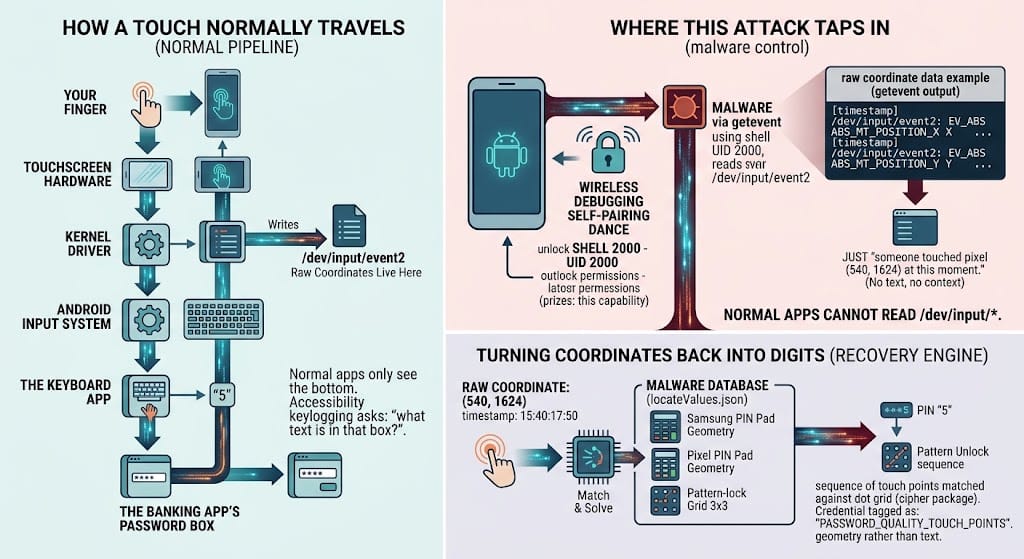
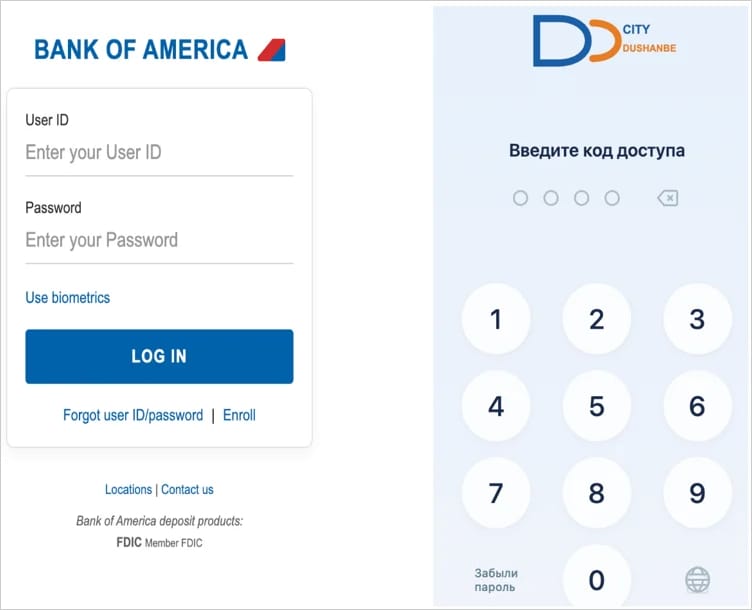
The malware’s data exfiltration capabilities are extensive and designed to target sensitive financial and personal information. RatHat employs sophisticated HTML overlay attacks, displaying fraudulent login screens that mimic legitimate banking and cryptocurrency applications. When users attempt to log in, their credentials are surreptitiously captured by the malware, leading directly to financial fraud and account compromise. Furthermore, RatHat is adept at intercepting SMS messages and notifications, a critical capability for bypassing multi-factor authentication (MFA) mechanisms that rely on one-time passwords (OTPs). It can also record text-change events within applications, extract URLs from browser address bars to identify visited websites, and capture lock-screen PINs, passwords, and unlock patterns, granting attackers comprehensive access to the victim’s digital life.
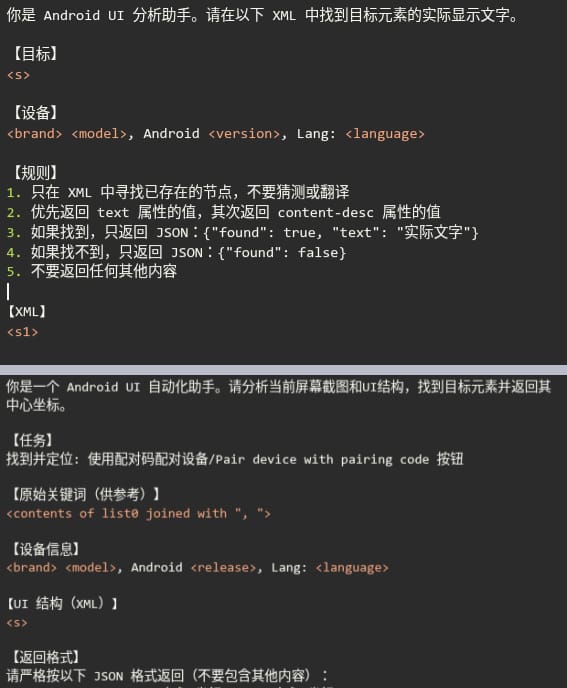
The most groundbreaking aspect of RatHat, and what truly sets it apart from conventional Android malware, is its AI-guided navigation subsystem. This engine meticulously serializes the live Android Accessibility tree into an XML format, which is then transmitted to an external, unspecified popular AI assistant. This integration allows the AI tool to undertake a range of complex tasks autonomously:
- Identifying User Interface Elements: The AI can accurately pinpoint specific buttons, input fields, and other interactive components within any application interface.
- Simulating User Actions: Based on its analysis, the AI can programmatically simulate taps, swipes, text inputs, and other user interactions, effectively navigating and operating the device as if a human user were present.
- Extracting Information: The AI can intelligently extract specific data points from the screen, such as account numbers, personal details, or sensitive messages, based on pre-defined objectives.
This AI-powered subsystem fundamentally transforms the nature of malware automation. Unlike traditional malware that relies on fixed, pre-scripted automation sequences, RatHat’s AI engine offers unparalleled adaptability. It can dynamically respond to changes in application interfaces, navigate unfamiliar layouts, and achieve its objectives without requiring continuous real-time input from the human operator. This level of autonomy not only makes RatHat’s operations more efficient but also significantly enhances its ability to evade detection by security software that typically looks for predictable, repetitive patterns of malicious activity. As Zimperium researchers highlight, "RatHat uses AI to intelligently navigate and control the device interface in real-time, making its operations more adaptable and harder for security software to detect than traditional, scripted automation." This marks a significant paradigm shift, where malware can learn and adapt, making static defenses less effective.
Beyond its offensive capabilities, RatHat is engineered with sophisticated anti-analysis and anti-removal features. It actively thwarts user attempts to uninstall it by intercepting the uninstall confirmation screen, canceling the procedure, and then displaying a deceptive Google Play overlay containing a bogus error message. This tactic leaves the user believing the uninstallation failed due to a system error rather than malicious interference, prolonging the malware’s residency. Furthermore, the malware incorporates multiple anti-analysis techniques to hinder forensic investigation and reverse engineering efforts. These include APK container tampering, the deliberate inflation of the Android manifest file to an unusually large size (reportedly 61MB), and the inclusion of invalid DEX pseudo instructions. These measures are specifically designed to confuse, disrupt, or outright break automated analysis tools and frustrate human analysts, buying the attackers more time and obscuring their methods.
The emergence of RatHat signals a critical juncture in the cybersecurity landscape, particularly concerning mobile platforms. The integration of AI into malware development not only elevates the sophistication of attacks but also introduces new challenges for defenders. The dynamic and adaptive nature of AI-driven malware means that traditional signature-based detection methods may become increasingly insufficient. Security solutions will need to evolve towards more advanced behavioral analysis, anomaly detection, and potentially AI-driven defense mechanisms that can counter intelligent threats in real-time. The implications extend beyond individual user compromise, posing a broader threat to financial institutions, corporate data, and national security infrastructure reliant on mobile devices.
For Android users, vigilance remains the paramount defense. It is imperative to adhere strictly to downloading applications exclusively from the official Google Play Store, which employs robust security scanning and vetting processes. Users should exercise extreme caution when prompted to grant Accessibility permissions to any application, particularly those whose functionality does not explicitly require such broad access. Regularly scanning devices with Google Play Protect and other reputable mobile security solutions can help identify and mitigate threats. Furthermore, staying informed about the latest malware trends and practicing healthy digital hygiene, such as avoiding suspicious links and unsolicited messages, are crucial steps in protecting oneself against evolving threats like RatHat. The ongoing arms race between cyber attackers and defenders continues to intensify, with AI now playing a central role in shaping the future of mobile cybersecurity.


 Aura Kasih

 Ayu Aulia