Lisa Mariana
The unexpected pronouncement by former U.S. President Donald Trump regarding his desire for a unified Ireland during a high-profile visit sparked immediate international commentary, prompting a deeper analytical inquiry into whether such statements reflect a nascent shift in American foreign policy or were strategically calibrated for domestic political consumption across the Atlantic.
During what was anticipated to be a routine diplomatic engagement, President Trump’s assertion that he would "love" to see Ireland united, delivered amidst a press conference and subsequently reiterated in a speech, sent ripples of speculation through Dublin, London, and beyond. The spontaneity and directness of the remarks immediately raised questions about their underlying intent: were these the impromptu musings of a leader known for his unscripted commentary, or a deliberate signal aimed at a particular demographic ahead of critical political contests? This ambiguity necessitated a careful examination of both the immediate context of the visit and the broader landscape of U.S. domestic politics.
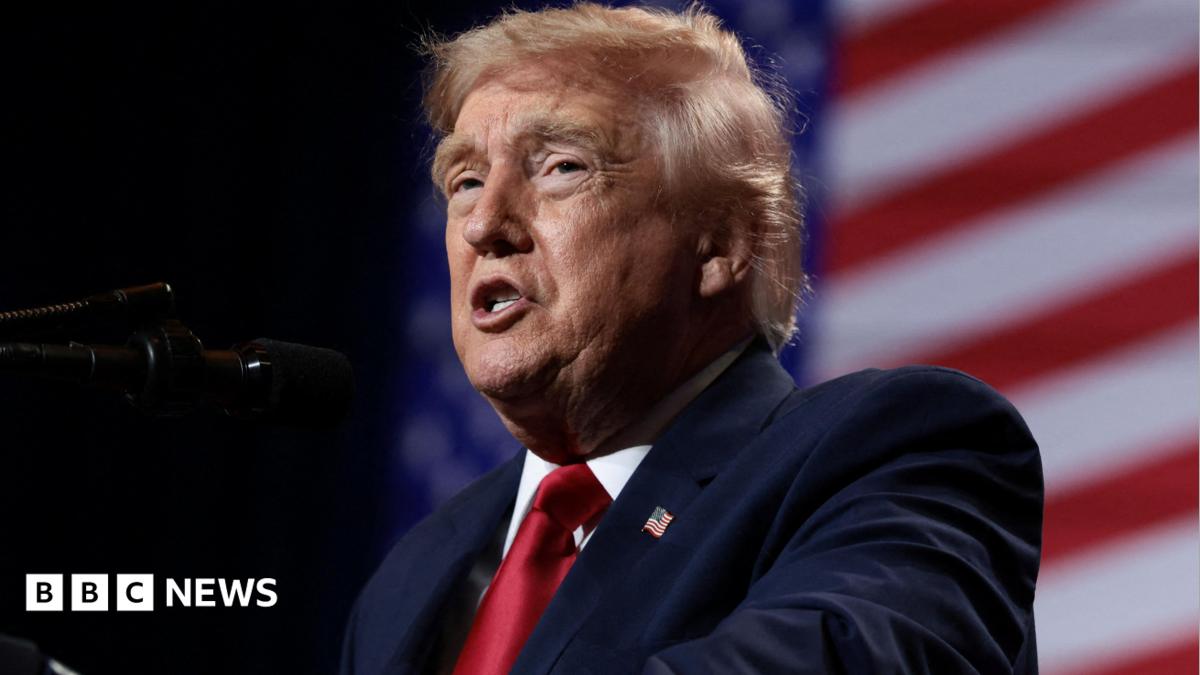
Seasoned observers of U.S. foreign policy and figures intimately familiar with the Trump administration were quick to temper the burgeoning speculation. Former Republican Congressman Mick Mulvaney, who served as Trump’s special envoy to Northern Ireland, offered a swift clarification, asserting that the remarks did not signify a fundamental alteration in U.S. foreign policy. He underscored the enduring American commitment to the Good Friday Agreement (also known as the Belfast Agreement), a landmark accord foundational to peace and stability in Northern Ireland. Democratic Congressman Brendan Boyle echoed this sentiment, emphasizing the bipartisan consensus in Washington regarding the sanctity of the agreement, suggesting that such a deeply entrenched position would not be easily swayed by a single presidential utterance. Both figures conceded that, from a historical perspective, the eventual unification of Ireland might be a long-term inevitability, but they firmly distinguished this probabilistic view from an active U.S. policy initiative to accelerate the process. The historical role of the United States, particularly under President Bill Clinton, in facilitating the peace process and securing the Good Friday Agreement, is a testament to a nuanced diplomatic engagement that prioritizes stability and consensus over unilateral pronouncements. Any perceived deviation from this established framework would demand substantial strategic re-evaluation and public articulation, neither of which accompanied Trump’s remarks.
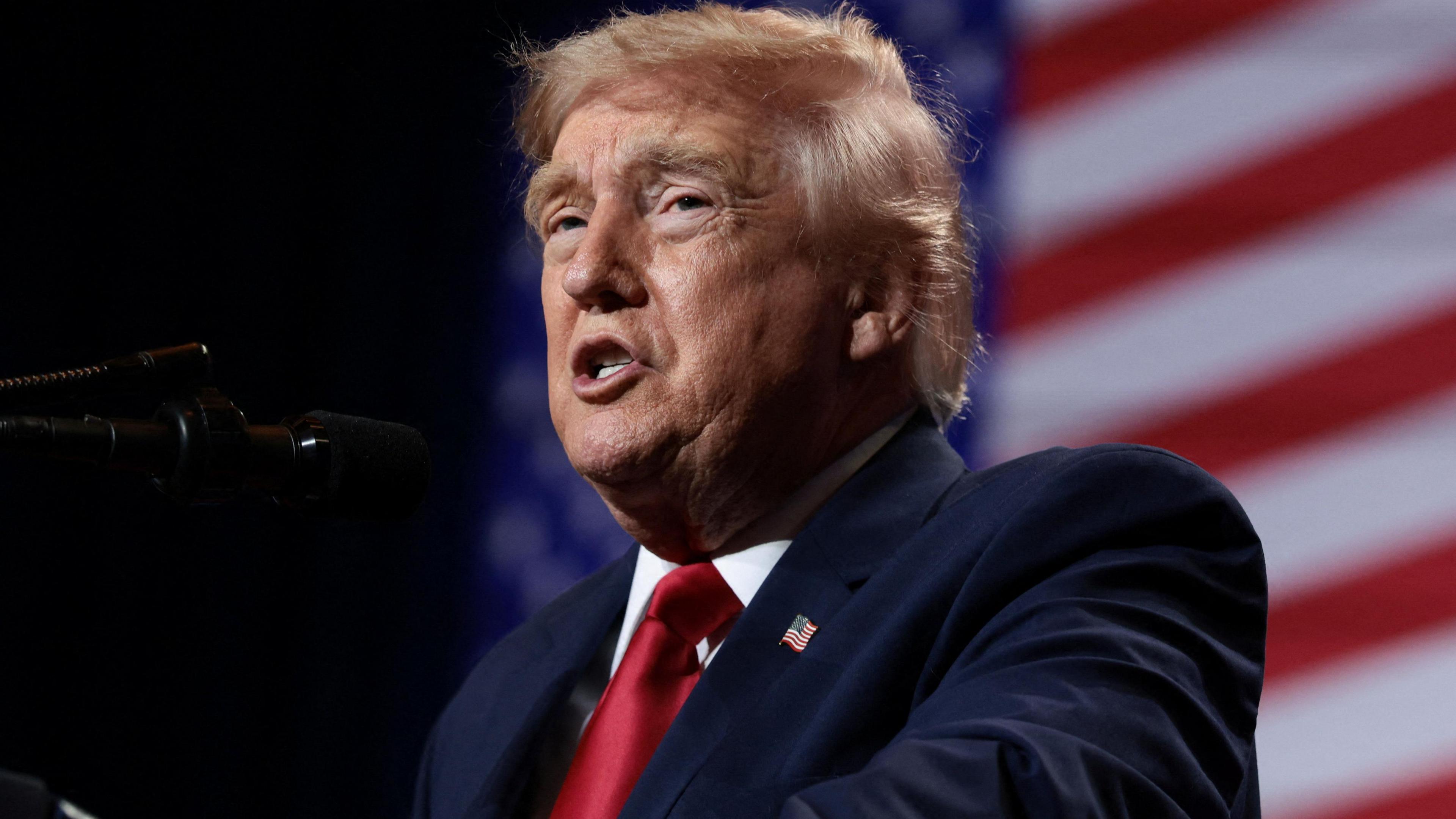
A significant element in deciphering Trump’s statements lies in understanding his distinctive communication methodology, which he famously described as "the weave." This style is characterized by a fluid, often tangential discourse, where he frequently diverges from prepared remarks to interject personal observations, laud perceived achievements, or levy criticisms, before sometimes returning to the ostensible subject. This approach allows him considerable flexibility in addressing multiple audiences simultaneously, often prioritizing a domestic political narrative over conventional diplomatic protocol. The speech delivered at the U.S. Ambassador’s residence, ostensibly for Irish and Irish-American business leaders, exemplified this pattern. While billed as a targeted address, it extended well beyond its allocated time and delved extensively into U.S. domestic issues, including immigration policies, trade negotiations, and defense spending, alongside his familiar criticisms of allies’ contributions to military operations, such as the UK’s stance on Iran. The curious composition of this address strongly suggested that the immediate physical audience in Dublin was perhaps secondary to a more distant, yet critically important, viewership.
The prevailing analytical consensus points towards a strategic targeting of a specific demographic within the United States: Irish-American voters. With crunch midterm elections looming in November, the Republican party faced significant pressure, with projections suggesting potential losses in one or both houses of Congress. In such a high-stakes electoral environment, every potential voting bloc becomes a target for mobilization. Approximately one-tenth of the U.S. population claims Irish heritage, a significant demographic, albeit one that is not monolithic in its political allegiances. Historically, Irish-Americans have been a crucial swing vote in various elections, capable of shifting between Republican and Democratic affiliations. Many within this community retain a profound historical and emotional connection to the issue of a united Ireland, often influenced by ancestral narratives of emigration, struggle, and national identity.
The precedent set by President Bill Clinton’s administration serves as a powerful illustration of the political capital to be gained from engaging with the Irish-American community on the issue of Northern Ireland. Clinton’s proactive involvement in the peace process, including granting a visa to Gerry Adams in 1994 against the advice of British officials, resonated deeply with Irish-American voters, contributing to his electoral success and solidifying his image as a leader responsive to their concerns. His subsequent efforts were instrumental in laying the groundwork for the Good Friday Agreement, a legacy that earned him enduring goodwill within the community. Trump’s comments, therefore, could be interpreted as an attempt to replicate, albeit superficially, this historical engagement, seeking to tap into a similar wellspring of sentiment among Irish-American independent or swing voters who might be swayed by a perceived alignment with their aspirations for Irish unification.
However, the political landscape of "Irish America" in the contemporary era is markedly different from the 1990s. The community has become more diverse in its political leanings and socio-economic composition, and the issues that animate it are broader than solely the question of Irish unity. While the sentiment for unification persists, it is often nuanced and tempered by an understanding of the complexities of the Good Friday Agreement and the delicate balance of power-sharing in Northern Ireland. Nevertheless, in an electoral climate as polarized as modern America, even a symbolic gesture or a rhetorical nod to a historically significant issue can be leveraged to energize a base or sway undecided voters in tightly contested districts. The early morning timing of the broadcasts of Trump’s remarks in the United States further supports the hypothesis that the intended audience was primarily domestic, ensuring that his message resonated with U.S. voters before the working day fully commenced.
Beyond the immediate electoral considerations, Trump’s comments also offer a glimpse into his broader approach to international relations. His "America First" doctrine often prioritizes domestic political gain and transactional outcomes over traditional diplomatic norms or long-term strategic alliances. His willingness to make pronouncements that could be seen as unsettling to a close ally like the United Kingdom, particularly concerning the delicate constitutional status of Northern Ireland, underscores this characteristic. Such comments, while lacking formal policy weight, can introduce an element of unpredictability into international relations, forcing allies to react and interpret statements that might otherwise be dismissed as mere rhetoric.

For political leaders in Ireland and the United Kingdom, navigating such presidential pronouncements requires a delicate balance of diplomatic caution and strategic communication. While acknowledging the historical significance of U.S. involvement in the peace process, they must also ensure that the stability enshrined in the Good Friday Agreement is not inadvertently undermined by speculative commentary. The consensus among serious political actors remains that any future move towards a united Ireland must be predicated on democratic consent, as outlined in the Agreement, and not driven by external, potentially politically motivated, pronouncements.
In conclusion, President Trump’s remarks on a united Ireland, while sparking initial surprise and debate, are most accurately understood not as a dramatic shift in U.S. foreign policy, but rather as a calculated maneuver within the intricate tapestry of American domestic politics. Leveraging his distinctive communication style, Trump likely aimed to resonate with a segment of the Irish-American electorate, seeking to bolster support for the Republican party in the lead-up to challenging midterm elections. This incident serves as a salient reminder of how domestic political imperatives can intersect with, and occasionally overshadow, the more conventional tenets of international diplomacy, particularly when articulated by a leader known for his unconventional approach to global engagement. The enduring hope for stability in Ireland, however, rests on the continued bipartisan commitment to the principles of the Good Friday Agreement, irrespective of transient political rhetoric.

 Aura Kasih
 Safa Marwah
 Ayu Aulia