Lisa Mariana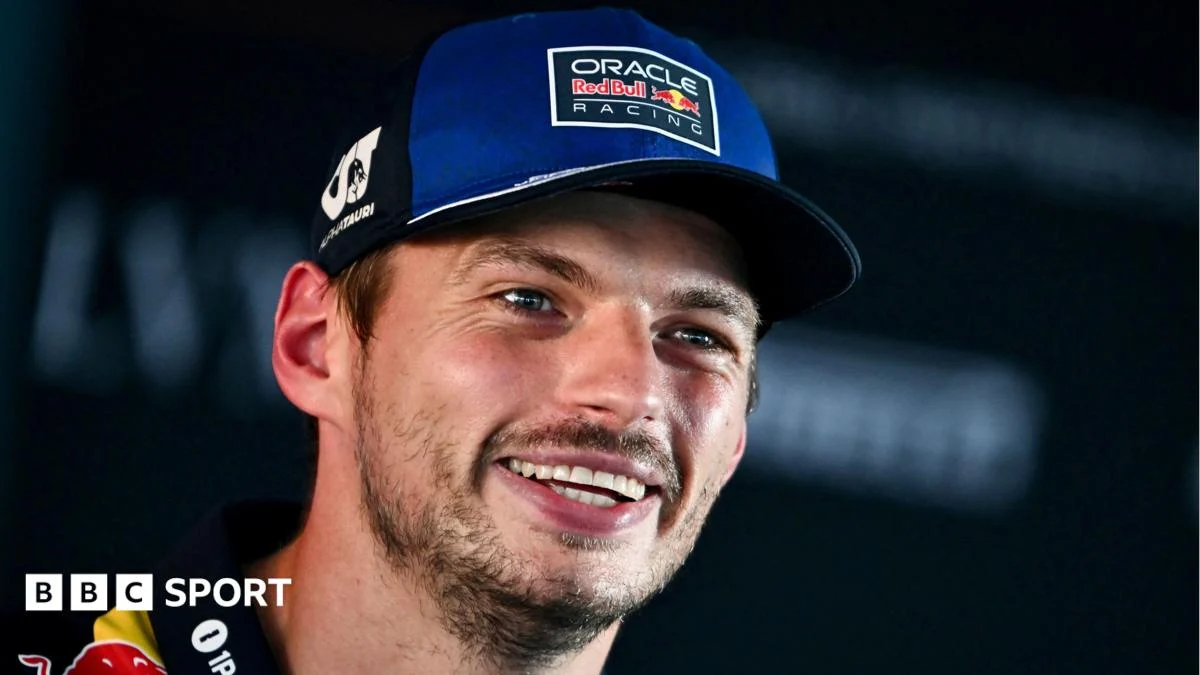
In a recent candid exchange, Max Verstappen, the formidable Red Bull Racing driver, offered an uncompromising perspective on his current Formula 1 campaign, his long-term contractual commitments, exploratory discussions with rival teams, and a pointed critique of the sport’s technical trajectory. His insights reveal a driver deeply invested in competition and authenticity, even as he grapples with the evolving demands of modern motorsport.
Verstappen’s directness, a hallmark of his public persona, was particularly evident during the discussion held ahead of the Italian Grand Prix. Despite challenging environmental conditions, his customary candour remained unwavering, providing a rare glimpse into the mindset of a reigning champion confronting unforeseen performance hurdles. This forthrightness underscores a profound commitment to transparency, distinguishing him in a sport often characterized by guarded pronouncements.
Navigating Performance Challenges and Contractual Realities
The 2026 Formula 1 season has presented Red Bull with an unexpected degree of difficulty, a stark contrast to their recent dominant periods. Verstappen articulated the team’s current predicament with characteristic clarity, acknowledging that the car’s performance falls short of his expectations. His analysis pinpointed a fundamental issue with the car’s through-corner balance, describing it as inconsistently oscillating between entry, mid, and exit phases. This inconsistency, he suggested, indicates a deeper, inherent characteristic within the vehicle’s design philosophy that cannot be rectified within the current season but requires substantial redesign for future iterations.
The implications of these performance struggles extend beyond immediate race results, influencing strategic decisions and internal dynamics. Verstappen’s observations about personnel changes—some departures, some new arrivals—within Red Bull hint at an ongoing organizational evolution. Such shifts often accompany periods of introspection and re-evaluation in high-performance environments, as teams seek to inject fresh perspectives or address perceived weaknesses. For a top-tier outfit like Red Bull, these internal adjustments are critical for maintaining a competitive edge and adapting to new technical challenges.
Against this backdrop, Verstappen’s recent two-year contract extension with Red Bull, theoretically binding him until the end of 2030, carries significant weight. While it secures his future with the team and reportedly enhances his remuneration, the driver candidly admitted that the agreement contains performance clauses. This structural detail is crucial, as it provides a potential avenue for reassessment should Red Bull fail to deliver a competitive package in the coming years. This nuanced contractual arrangement highlights the pragmatic realities of elite sports, where loyalty is often intertwined with the pursuit of success. For Verstappen, the decision to remain was deeply rooted in a sense of belonging, describing Red Bull as a "second family" and expressing a belief in the team’s capacity for resurgence. His willingness to embrace the challenge of rebuilding, rather than seeking immediate refuge in a faster car, illustrates a profound sense of commitment and a desire to see projects through. This philosophy, he explained, is central to his identity as a "captain of the ship" who refuses to abandon it at the first sign of trouble.
Strategic Engagements and the Driver Market
Verstappen’s revelation of serious discussions with rival teams, including Mercedes last year and McLaren this year, offers a rare glimpse into the highly competitive and often secretive world of Formula 1 driver negotiations. Such exploratory talks are not uncommon for elite athletes, serving both as due diligence and as a means of assessing market value and future opportunities. For a driver of Verstappen’s calibre, these conversations underscore his strategic importance within the sport and the intense interest he garners from other top-tier constructors.
His decision to ultimately remain with Red Bull, despite these overtures, was framed as a choice to "follow his heart" and exercise patience, a virtue he credits for his past successes within the Red Bull ecosystem. This perspective suggests a preference for continuity and a belief in the existing infrastructure, even when faced with temporary performance dips. The mere existence of these high-level discussions, however, sends clear signals across the paddock—to Red Bull about the value of their star driver, and to competitors about the ongoing fluidity of the driver market. It also highlights the constant pressure on teams to deliver performance, knowing that their key assets are always being observed by rivals.
The Critique of Modern F1 Engine Regulations: "Numb" Cars and Lost Emotion
Perhaps the most pointed aspect of Verstappen’s interview was his scathing critique of Formula 1’s current engine regulations and their impact on the driving experience. He expressed a profound dissatisfaction with the 2026 engine formula, questioning its overall merit and admitting that the "love for the sport," rather than the driving itself, currently sustains his passion. This sentiment reflects a growing concern among some drivers about the increasing complexity and energy management requirements of the hybrid power units.
Verstappen elaborated on how the need to constantly manage energy recovery and deployment fundamentally alters the driving approach. Drivers are forced to make unnatural concessions—braking earlier, lifting off the throttle, or holding back in corners—not to optimize lap time through pure driving skill, but to achieve specific energy targets for later straight-line speed. This tactical constraint, he argued, diminishes the traditional rewards for commitment and precision, creating a "numb" driving experience that limits a driver’s ability to truly influence the car’s performance. He cited the immediate competitiveness of reserve drivers like Yuki Tsunoda and Liam Lawson in different cars as evidence that the current generation of F1 machinery is less responsive to individual driver inputs, effectively "choke-holding" their full potential.
This critique extends beyond the technical aspects to the very essence of motorsport. Verstappen advocated for a return to simpler, lighter V8 engines, ideally without turbos, for future engine formulas (post-2030). He highlighted the stark contrast in drivability and engine response between contemporary hybrid units and older V8s, describing the former as "terrible" in comparison. His longing for the "emotion of the V8, of the V10," the "goosebumps" generated by their raw sound and vibration, underscores a desire to rekindle a more visceral connection with the sport, arguing that pure speed alone does not compensate for a loss of sensory engagement. This perspective challenges F1’s current trajectory towards increasingly complex and environmentally relevant technologies, igniting a debate about balancing technological innovation with the sport’s entertainment value and traditional appeal.
Ambitions Beyond F1: The Lure of Endurance Racing
Away from the F1 grid, Verstappen finds renewed enthusiasm in endurance racing, a domain he describes as "pure motorsport." His recent participation in the Nurburgring 24 Hours served as a compelling example of this passion. Despite the car’s eventual retirement, his impressive first stint, navigating treacherous conditions from tenth to first, showcased his adaptability and skill in a different racing discipline. He dismissed any notion of being out of his depth, attributing his comfort to extensive simulator training, which he considers a direct and highly effective preparation tool.
His aspirations extend to competing in all major endurance races, including the prestigious Le Mans 24 Hours, ultimately aiming for a competitive Hypercar entry. Crucially, these ventures must be "on his terms" and with a genuine prospect of victory. The idea of partnering with Fernando Alonso for Le Mans, a prospect they have discussed, further illustrates his strategic approach to these challenges, seeking experienced and highly capable teammates to maximize winning chances. This pursuit of "pure motorsport" offers a potential avenue for Verstappen to satisfy his competitive drive in an environment that, for now, seems to offer a different kind of engagement than contemporary F1.
The Ethos of Unfiltered Honesty
Verstappen’s consistent insistence on speaking his mind is not merely a personality trait; it is a core tenet of his professional and personal philosophy. He views directness and honesty as essential for extracting the best from himself and those around him. In a sport often characterized by political maneuvering and carefully curated public statements, his unfiltered approach stands out. He acknowledges the inherent politics within Formula 1, particularly in discussions surrounding engines and chassis, but firmly believes in vocalizing his convictions, whether positive or negative. This commitment to authenticity, he argues, is vital for transparent operations and for fostering an environment where improvement can genuinely occur. It defines his leadership style, both within Red Bull and his own GT3 team, where a "no holding back" attitude is paramount.
In conclusion, Max Verstappen presents a complex figure: a winning machine driven by an insatiable competitive fire, yet deeply reflective about the integrity and direction of his primary sport. His candid assessment of Red Bull’s performance challenges, his strategic navigation of the driver market, and his profound critique of F1’s engine regulations paint a picture of a driver who demands excellence and authenticity, not just from himself, but from the entire ecosystem of Formula 1. His continued presence at the pinnacle of motorsport, coupled with his willingness to voice uncomfortable truths, ensures that the debate around F1’s future will remain as dynamic and uncompromising as the man himself.


 Aura Kasih
 Safa Marwah
 Ayu Aulia