Aura Kasih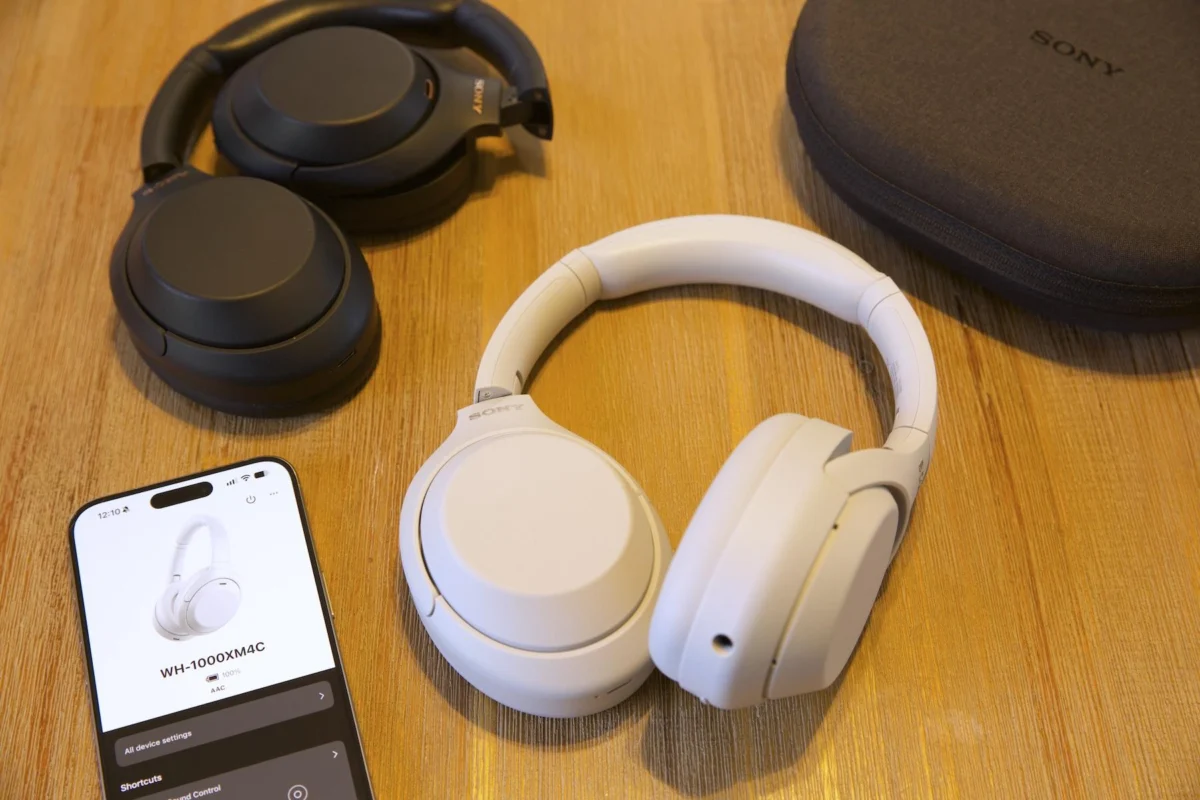
In a surprising move that harkens back to a golden era of personal audio, Sony is reintroducing its highly acclaimed WH-1000XM4 noise-canceling headphones, now designated as the WH-1000XM4C. This strategic revival of a model that once dominated the premium headphone market six years ago signifies a fascinating shift in Sony’s product lifecycle, offering consumers a familiar yet subtly refined auditory experience.
The landscape of active noise cancellation (ANC) technology was a fiercely contested arena approximately six years ago, with both Sony and Bose consistently pushing the boundaries of sonic immersion with each successive release. Amidst this competitive fervor, Sony unveiled the WH-1000XM4 in the autumn of 2020, a product that swiftly garnered widespread adoration and established itself as a benchmark in high-fidelity audio. For an extended period, these headphones consistently graced the pinnacle of "best of" lists, lauded for their exceptional sound reproduction, robust ANC capabilities, and a remarkably portable design. Their reign was so dominant that they eventually became unavailable due to stock depletion, a testament to their enduring appeal. Now, Sony has chosen to resurrect this legendary model, equipping it with minor enhancements and rebranding it as the WH-1000XM4C, signaling a strategic decision to capitalize on its established reputation.

Visually, the WH-1000XM4C are indistinguishable from their original predecessors. Sony has retained the iconic hinge mechanism and the celebrated foldable design, which contributed significantly to the XM4’s portability and convenience. This compact form factor represented a departure from Sony’s subsequent design philosophy, notably with the introduction of the WH-1000XM5 in 2022, which adopted a more streamlined yet less compact aesthetic. While the most recent iteration, the WH-1000XM6, has partially reintroduced some degree of compactness, the XM4C’s design remains a distinct advantage for travelers and those prioritizing stowability.
However, the return of the XM4C is not merely a cosmetic exercise. Internally, these headphones continue to leverage the sophisticated QN1 processing chip and the quartet of microphones that were instrumental in delivering the XM4’s class-leading noise cancellation. While this architecture proved highly effective, it is now six years old. In contrast, the WH-1000XM5, while still employing the QN1 chip, was augmented with eight microphones, enhancing its ability to discern and counteract ambient noise. The subsequent WH-1000XM6 model further advances this by incorporating twelve microphones and the newer QN3 chip, underscoring the rapid evolution of ANC technology. This makes the XM4C’s re-entry a study in balancing proven performance with the incremental advancements of newer generations.
Sony has, however, made some notable adjustments to the WH-1000XM4C’s audio profile, aligning it more closely with the sonic signatures of its current flagship models. A significant upgrade is the inclusion of a more granular 10-band equalizer within the Sony Headphones Connect app, a substantial improvement over the 5-band EQ found in the original XM4. This expanded equalization capability offers users greater control over their listening experience, allowing for more precise fine-tuning of audio frequencies. Furthermore, the addition of a dedicated gaming preset caters to a growing segment of users who prioritize low latency and immersive audio for their gaming sessions. In terms of wireless connectivity, the XM4C have been updated to support Bluetooth 6, an advancement over the Bluetooth 5 standard of the original model, promising improved stability and potentially enhanced audio codec support.

Intriguingly, the battery performance on the re-released XM4C has seen a slight decrement. Sony now claims up to 27 hours of continuous playback with active noise cancellation engaged, a reduction from the original 30 hours. While this is a minor dip, it remains more than sufficient for extended journeys, including cross-country flights, ensuring that battery life will not be a significant concern for most users.
The WH-1000XM4C are slated for release later this fall with a retail price of $300. This positions them $50 below the original launch price of the XM4 and a considerable $100 less than the current flagship WH-1000XM6. This pricing strategy is particularly noteworthy, as it offers a premium noise-canceling experience at a more accessible price point than the latest models, while still commanding a higher price than their clearance prices before discontinuation.
The reappearance of the XM4C raises pertinent questions about Sony’s strategic intentions in the competitive headphone market. For enthusiasts who have cherished the XM4’s signature sound and form factor, this re-release likely evokes a sense of nostalgia. However, from a broader market perspective, the move prompts an analysis of consumer demand and the evolving technological landscape. While the headphones industry has undoubtedly progressed significantly in the past six years, the enduring appeal of the XM4 suggests that established performance and design can still hold considerable sway. The availability of the WH-1000XM5 for a reduced price of $200, potentially as an effort to clear existing inventory, further complicates this market dynamic, offering a compelling alternative that benefits from a more recent design and updated ANC technology.

In conjunction with the WH-1000XM4C, Sony has also refreshed two of its more budget-friendly headphone lines: the WH-CH730N and WH-CH530. These mid-range and entry-level offerings have also received the enhanced 10-band EQ and gaming EQ preset, mirroring the upgrades found in the XM4C. A particularly welcome enhancement for the WH-CH730N is the redesign that allows for a more compact folding mechanism, addressing a common preference for portability in this segment.
The WH-CH530, an on-ear model, benefits from an extended battery life, with Sony claiming up to 55 hours of playback without active noise cancellation (as this model does not feature ANC). The WH-CH730N, a more feature-rich over-ear option, boasts an impressive battery life of up to 50 hours with ANC engaged. Both models now incorporate a new "safe mode" within the Sony Headphones Connect app, which allows users to limit the maximum volume output. This feature is a commendable addition, particularly for parents seeking to protect their children’s hearing, although its utility is somewhat diminished by the absence of a lock mechanism to prevent volume adjustments once the limit is set. The WH-CH530 is available in a wide array of colors, including black, cobalt, mint green, white, pink, and coral, with a retail price of $70. The WH-CH730N, offered in black, blue, oat, white, and pink, is priced at $180. Both of these models are available for purchase immediately.
Beyond these strategic product updates, Sony is also venturing into a unique collaborative effort with the iconic Hello Kitty brand. This partnership will result in limited-edition bundles, featuring select headphone models – the WH-1000XM6, WH-CH730N, or WH-CH530 – available in either classic black or a signature pink. These bundles will also include a custom-designed Hello Kitty-shaped carrying pouch and a Hello Kitty-branded bag. These highly collectible bundles are expected to be available in limited quantities later this year exclusively through Sony’s official website, catering to a niche market of fans and collectors. This cross-promotional initiative highlights Sony’s willingness to explore unconventional avenues to engage consumers and leverage the broad appeal of popular cultural icons.




 Safa Marwah
 Ayu Aulia