Safa Marwah
OpenAI has commenced the phased deployment of its highly anticipated generative AI model, Astra, making it available to subscribers of its premium ChatGPT Plus service, which entails a monthly fee of $20. This strategic release represents a significant advancement in the capabilities offered to paying users, with no immediate indication regarding potential access for the broader free user base.
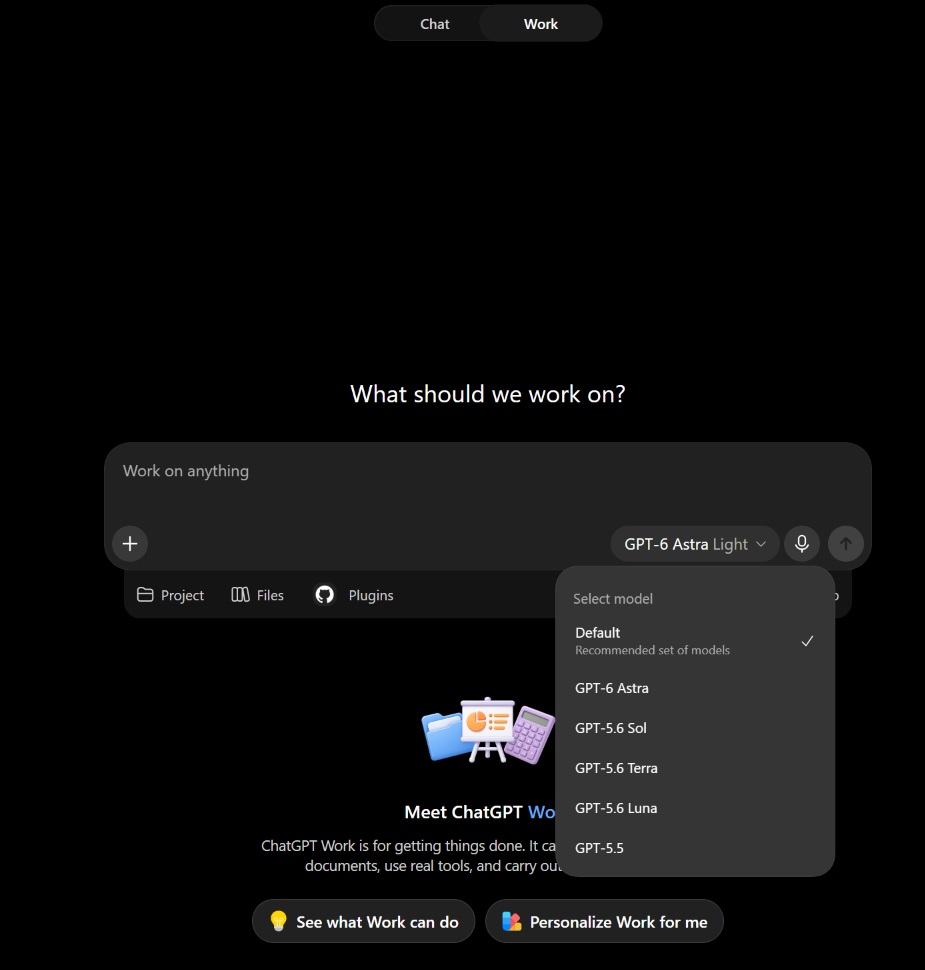
The introduction of Astra marks a pivotal moment in the evolution of OpenAI’s large language models, promising enhanced performance and a more sophisticated user experience for those invested in the Plus subscription tier. This rollout is not instantaneous across all eligible accounts but rather a gradual implementation, observed initially within specific operational contexts before broader integration. Early reports suggest that Astra is becoming accessible first within the "Work" environment of ChatGPT, preceding its availability in the general chat interface. This structured deployment strategy suggests a deliberate approach to testing and integration, potentially catering to professional users and specific enterprise functionalities before a wider release.
Observations from active ChatGPT Plus accounts corroborate this phased approach. In numerous instances, the advanced Astra model is already selectable within the dedicated "Work" section, while the standard model selection menu for regular chat interactions continues to offer prior iterations of the AI. This nuanced availability underscores OpenAI’s methodical rollout plan, urging premium subscribers to explore the "Work" segment of their ChatGPT interface if Astra has not yet appeared in their primary chat settings.
OpenAI had previously confirmed its intentions to distribute Astra to its Plus user base, acknowledging that the full deployment process would span several days or even weeks. Official communications, disseminated via platforms such as X, detailed that "GPT-6 Astra is now available to all Pro, Enterprise, and Business Premium users in ChatGPT Work and Codex. It’s also live in the API." The announcement further clarified that the rollout to Plus and Business users might extend over a "few days." This communication highlights a multi-tiered approach, initially prioritizing higher-tier business and enterprise clients, followed closely by the individual premium subscribers.
Inclusion Within Existing Subscription Framework
A critical aspect of Astra’s introduction is its seamless integration into the current ChatGPT Plus subscription model. OpenAI has explicitly stated that usage of the Astra model is fully encompassed within the existing subscription limits, eliminating the need for Plus subscribers to acquire a separate, additional plan to leverage its advanced capabilities. This decision reinforces the value proposition of the Plus subscription, positioning it as a comprehensive gateway to OpenAI’s latest technological innovations. For users requiring usage beyond the standard subscription limits, an option to purchase supplementary credits will be made available, offering flexibility for intensive or specialized applications.
Defining Astra’s Capabilities and Strategic Purpose

Astra is positioned as OpenAI’s new flagship model, meticulously engineered to excel in a diverse array of demanding professional and technical domains. Its design specifications emphasize proficiency in critical areas such as computer science applications, advanced web browsing, intricate coding tasks, scientific research, cybersecurity analysis, and the execution of complex, extended professional workflows. This broad spectrum of intended applications underscores Astra’s ambition to be a versatile and indispensable tool for a wide range of expert users.
A key differentiator highlighted by OpenAI is Astra’s significantly improved ability to maintain context during complex and prolonged interactions, surpassing the performance of its predecessor, GPT-5.6 Sol. In professional environments, where tasks often involve multi-stage problem-solving, extensive data analysis, or iterative development, the capacity of an AI model to retain and accurately apply context across numerous turns of conversation or instruction is paramount. This enhanced contextual understanding translates directly into greater efficiency, fewer misunderstandings, and a more coherent, productive interaction, ultimately reducing the need for users to repeatedly re-explain or re-contextualize their queries.
The Strategic Imperative of Premium Access
The decision to initially restrict Astra’s access to paid subscribers is a multi-faceted strategic move for OpenAI. Firstly, it reinforces the value proposition of the ChatGPT Plus subscription, providing a tangible and immediate benefit to those who financially support the platform. In an increasingly competitive AI landscape, offering cutting-edge models exclusively to premium tiers serves as a powerful incentive for conversion and retention of paying customers. Secondly, this approach allows OpenAI to manage the computational demands associated with deploying a more powerful and resource-intensive model. Advanced AI models require substantial computational resources for inference, and a controlled rollout to a paying subset of users helps mitigate potential overload and ensures a smoother user experience.
Furthermore, prioritizing professional and enterprise users, as suggested by the initial availability in "Work" sections and for Business Premium users, aligns with a broader industry trend of monetizing AI through specialized, high-value applications. Businesses and professionals are often willing to invest in tools that significantly enhance productivity, streamline workflows, or provide a competitive edge. Astra’s stated capabilities in coding, cybersecurity, and scientific tasks directly address these needs, positioning it as a premium utility rather than merely a general-purpose chatbot.
The Landscape for Free Users
While ChatGPT Astra is progressively rolling out to its paid user base, OpenAI has maintained silence regarding any plans for its potential availability to free users. This lack of information leaves the free tier in a state of uncertainty regarding access to the latest advancements. Currently, free users retain access to older, albeit still capable, models such as GPT-5.6 Sol and GPT-5. This tiered access strategy is common in the software-as-a-service industry, where a free tier often serves as an entry point, offering basic functionalities to attract a broad user base, while advanced features are reserved for premium subscriptions.
The implications for free users are clear: to leverage the most powerful and up-to-date generative AI capabilities from OpenAI, a financial commitment to the Plus subscription or a higher-tier business plan is currently required. This divergence in access creates a clear delineation between the capabilities available to casual users and those leveraging AI for more demanding, professional applications.
Broader Industry Context and Competitive Dynamics
The release of Astra occurs within an intensely competitive and rapidly evolving artificial intelligence landscape. Major players, including Google with its Gemini models, Anthropic with Claude, and a host of other innovative startups, are all vying for dominance in the generative AI space. Each new model release, such as Astra, is not merely a technological upgrade but a strategic maneuver to demonstrate leadership, attract talent, and capture market share.
Astra’s focus on enhanced context maintenance and specialized professional tasks directly addresses some of the most pressing challenges and opportunities in enterprise AI adoption. Businesses are increasingly seeking AI solutions that can handle complex, multi-modal inputs, generate accurate and coherent outputs over extended periods, and integrate seamlessly into existing workflows. By delivering a model designed for these specific requirements, OpenAI aims to solidify its position as a leading provider of enterprise-grade AI. The competitive pressure from other models, which also boast impressive capabilities in these areas, underscores the continuous innovation required to stay at the forefront of the AI revolution.
Future Implications and Outlook
The phased deployment of ChatGPT Astra to premium subscribers sets a precedent for how OpenAI might introduce future advancements. It highlights a strategic emphasis on monetizing cutting-edge research through a tiered subscription model, while simultaneously gathering valuable feedback from a dedicated user base. For Plus subscribers, Astra promises a significant leap in productivity and creative potential, enabling more complex tasks to be tackled with greater efficiency and accuracy. This could translate into accelerated research, more sophisticated code development, deeper analytical insights, and improved content generation across various professional fields.
Looking ahead, the success of Astra’s rollout will likely influence OpenAI’s future product development and pricing strategies. Should the model prove to be a compelling upgrade, it could further entrench the value of premium AI subscriptions and potentially pave the way for even more specialized or powerful models in subsequent tiers. For free users, the long-term outlook remains speculative; while direct access to Astra might be delayed indefinitely, the continued development of such powerful models could eventually lead to trickle-down benefits, with older but still highly capable models becoming more widely accessible over time, or even a less powerful, feature-limited version of Astra being introduced to the free tier at a later date.
Ultimately, Astra’s debut represents more than just a new version number; it signifies OpenAI’s ongoing commitment to pushing the boundaries of artificial intelligence, strategically deploying its most advanced capabilities to those who stand to benefit most in professional and enterprise contexts, and solidifying its leadership in a rapidly expanding global market. The continued evolution of these models will undoubtedly shape the future of work, creativity, and problem-solving across industries.




 Aura Kasih
 Ayu Aulia