
 Aura Kasih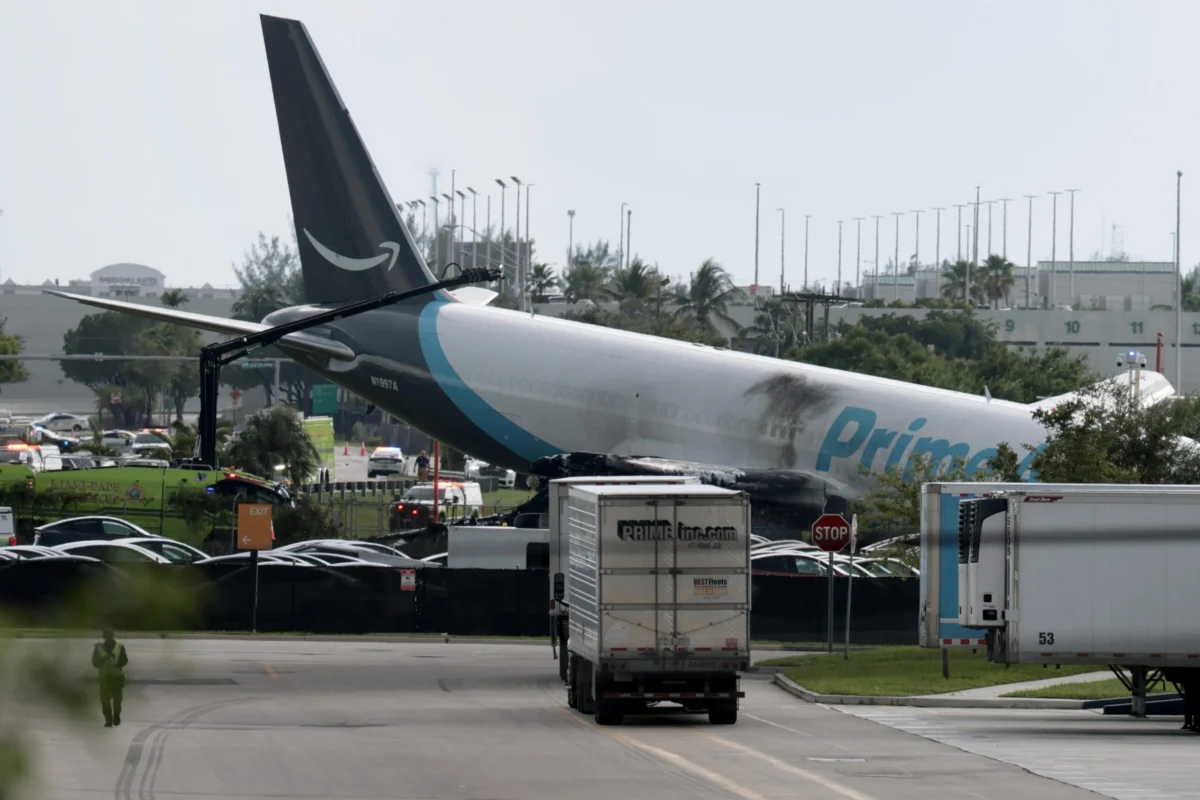
A significant aviation incident unfolded at Miami International Airport (MIA) on Sunday, September 6th, 2026, when a Boeing 767-300 cargo aircraft operated by 21 Air, and chartered by Amazon, experienced a severe runway excursion during its landing sequence. The large freighter, identified as 21 Air Flight 7598, departed from Luis Muñoz Marín International Airport in San Juan, Puerto Rico, before veering off the designated runway, initiating a chain of events that led to substantial operational disruptions and prompted a large-scale emergency response.
The initial reports confirmed that the aircraft, a widely utilized wide-body jet for cargo operations, failed to remain on the runway centerline upon touchdown. The exact circumstances leading to the overrun are currently under rigorous investigation by aviation authorities, including the Federal Aviation Administration (FAA) and the National Transportation Safety Board (NTSB). Preliminary information suggests that the aircraft’s trajectory carried it beyond the paved surface of the runway, impacting surrounding infrastructure and vehicles. The gravity of the situation necessitated an immediate and comprehensive mobilization of emergency services, with over 60 units from Miami-Dade Fire Rescue (MDFR) converging on the scene. Upon arrival, first responders encountered a challenging scenario, with reports indicating the aircraft was engulfed in flames and emitting dense plumes of smoke, underscoring the severity of the incident.
The immediate aftermath of the runway excursion led to a swift and decisive response from airport and regulatory bodies. All flight operations at Miami International Airport were temporarily suspended to facilitate the emergency response, ensure the safety of personnel, and allow investigators unfettered access to the accident site. This grounding of air traffic had immediate and cascading effects on passenger and cargo movements, not only at MIA but also impacting interconnected global logistics networks. The visual evidence emerging from the scene, including widely disseminated video footage, starkly illustrated the scale of the event. The distinctive Amazon Prime Air livery was clearly visible on the aircraft’s tail, highlighting the direct association with the e-commerce giant’s rapidly expanding air cargo division. The aircraft’s final resting position, off the paved runway and in close proximity to the airport’s perimeter, underscored the potential for significant damage to both the aircraft and airport facilities.
In response to the unfolding crisis, Amazon, through its spokesperson Kelly Nantel, issued a statement acknowledging the incident. The company affirmed its close collaboration with local authorities and investigative agencies, emphasizing that its primary focus was the well-being and safety of all individuals involved. This commitment extended to providing necessary support to those affected by the event. The operational reliance on air cargo for time-sensitive deliveries, particularly by major e-commerce players like Amazon, amplifies the significance of such incidents. The Boeing 767-300, a workhorse in the freight industry, is known for its reliability and capacity, making its diversion from service a notable disruption.
The investigation into the runway excursion will undoubtedly delve into a multitude of potential contributing factors. These typically include, but are not limited to, environmental conditions such as wind, precipitation, and runway surface condition; aircraft performance parameters, including speed, braking effectiveness, and tire integrity; pilot decision-making and adherence to standard operating procedures; and potential mechanical malfunctions or system failures. The data recorders from the aircraft, commonly referred to as the "black boxes" (flight data recorder and cockpit voice recorder), will be crucial in reconstructing the events leading up to the accident. Their analysis will provide invaluable insights into the aircraft’s performance and the crew’s actions during the critical landing phase.

The strategic importance of Miami International Airport as a major hub for both domestic and international air traffic, particularly for cargo operations serving the Americas, means that the prolonged disruption will have tangible economic repercussions. The airport serves as a critical gateway for goods moving between North America, Latin America, and the Caribbean. The grounding of operations not only affects airlines and logistics companies but also impacts businesses that rely on timely delivery of imported and exported goods. The recovery of operations will depend on the extent of damage to the runway, surrounding infrastructure, and the efficient removal of the wreckage.
The incident also brings renewed attention to the safety protocols and operational integrity of Amazon’s rapidly expanding air cargo network. As e-commerce continues its exponential growth, the demand for efficient and reliable air freight services has surged. Amazon has invested heavily in its own fleet and logistics infrastructure, including a dedicated air cargo division, to meet this demand. While air cargo remains one of the safest modes of transportation, any incident involving a major operator like Amazon underscores the inherent risks associated with aviation and the paramount importance of continuous safety vigilance. The findings of the investigation will likely inform future safety recommendations and potentially lead to adjustments in operational procedures for Amazon Air and its contracted carriers.
Beyond the immediate operational and safety concerns, the incident raises broader questions about the resilience of global supply chains. The interconnectedness of modern commerce means that disruptions at key logistical nodes, such as major airports, can have far-reaching consequences. The ability of businesses and consumers to adapt to such unforeseen events is increasingly being tested. This particular incident, occurring at a significant cargo gateway, will undoubtedly prompt a review of contingency plans and alternative routing strategies by many stakeholders within the logistics industry.
The long-term implications of this runway excursion will unfold as the investigation progresses and the full scope of the damage is assessed. The economic impact, the potential for regulatory changes, and the ongoing commitment to safety within the air cargo sector will all be key areas to monitor. For Amazon, the incident represents a significant challenge to its operational efficiency and its public image as a reliable logistics provider. The company’s response and its proactive engagement in addressing the aftermath will be closely scrutinized.
In conclusion, the runway excursion of the Amazon cargo plane at Miami International Airport represents a serious aviation event with immediate and potential long-term ramifications. The incident underscores the critical importance of aviation safety, the complexities of air cargo operations, and the interconnectedness of global supply chains. As the investigation unfolds, detailed analysis will be crucial in understanding the root causes and implementing measures to prevent similar occurrences in the future, thereby reinforcing confidence in the safety and reliability of air transport.




 Safa Marwah
 Ayu Aulia

