Ayu Aulia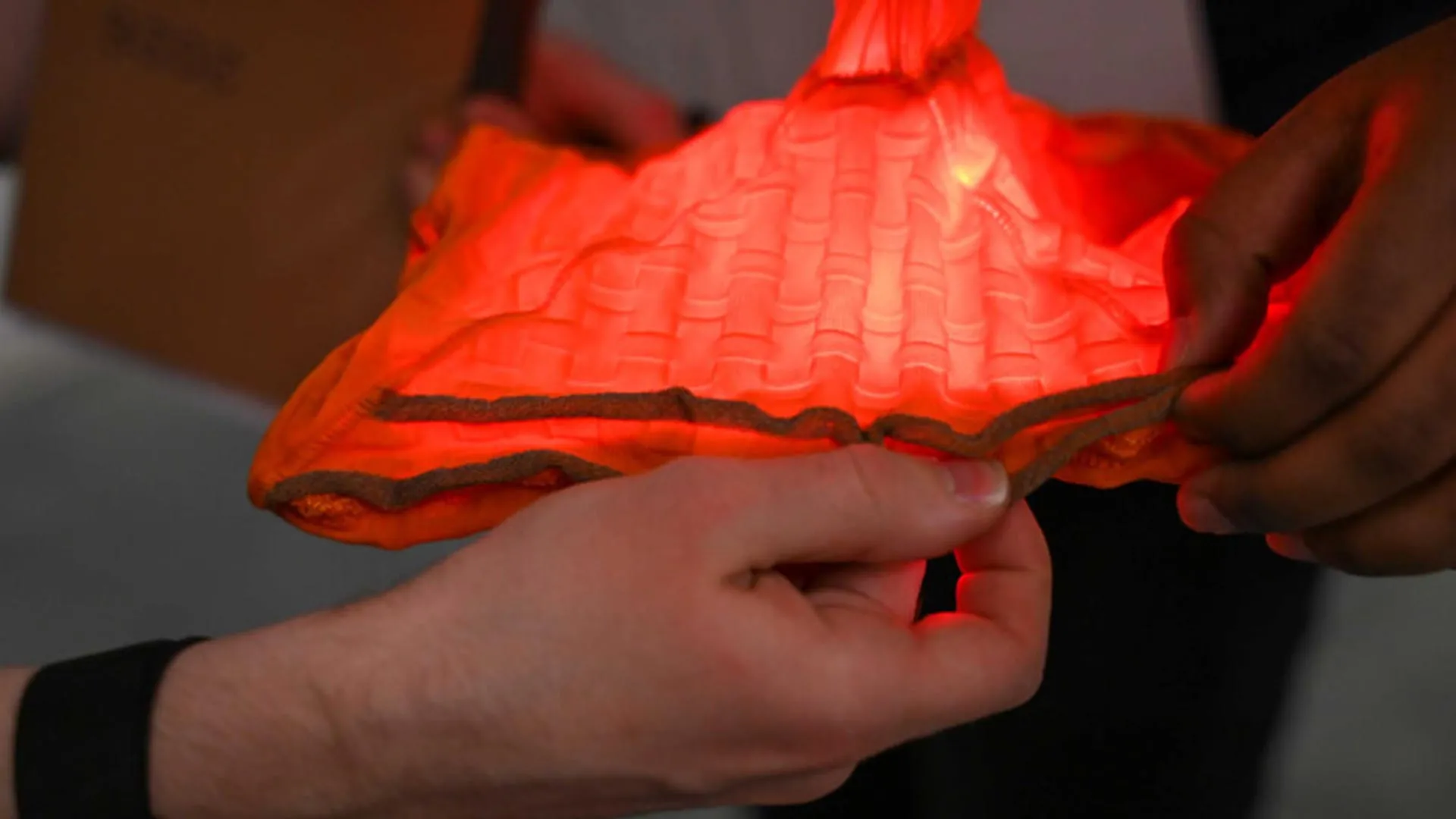
The conventional understanding of textiles is undergoing a profound redefinition as researchers demonstrate the capacity of established knitting methodologies to produce advanced, functional fabrics capable of dynamic shape alteration, integrated sensing, and active switching. This breakthrough, emerging from sophisticated materials science research, heralds a new era for programmable textiles, moving beyond passive apparel to interactive and adaptive material systems. This innovation fundamentally challenges the static nature of traditional woven and knitted goods, projecting a future where fabrics actively respond to their environment and user input, thereby offering unprecedented functionalities across diverse applications.
At the core of this transformative development is the exploration of multistability within textile structures. Multistability, a concept traditionally explored in rigid mechanical systems and advanced metamaterials, refers to a material’s inherent ability to maintain multiple distinct, stable physical configurations without continuous external energy input. Instead of merely deforming and returning to a single equilibrium state, these specially engineered fabrics can "snap" from one stable shape to another, much like a toggle switch remaining definitively "on" or "off." This mechanical memory is critical for creating autonomous, energy-efficient responsive materials. The pioneering work in this domain was spearheaded by Dr. Kausalya Mahadevan, then a doctoral candidate, under the guidance of Professor Katia Bertoldi, an eminent figure in applied mechanics whose laboratory has extensively investigated the nonlinear mechanics of solids. Their findings, published in a leading journal, illuminate a novel pathway for embedding complex physical behaviors directly into textile architectures.
The inspiration for this research bridged the seemingly disparate fields of textile artistry and advanced mechanics. Dr. Mahadevan’s background and passion for fabrics, combined with Professor Bertoldi’s expertise in designing materials with intricate mechanical responses, provided a fertile ground for interdisciplinary innovation. Traditional approaches to creating pre-curved or shape-retaining materials often involve intricate polymer molding processes or the careful manipulation of internal residual stresses within synthetic materials. These methods, while effective, can be complex, energy-intensive, and limit the material’s inherent flexibility and drape. The Harvard team, however, sought to harness the intrinsic mechanical properties of yarns and the versatile nature of knitting to achieve similar, or even superior, control over material form and function.
A crucial aspect of their methodology involved the strategic application of weft knitting, a widely adopted industrial process responsible for manufacturing everyday items such as socks, sweaters, and gloves. Unlike more rigid fabrication techniques, weft knitting allows for significant flexibility in material design and inherent stretchability. The researchers augmented this technique by employing "plating," a specific knitting method where two different yarns are fed simultaneously into the knitting machine, resulting in one yarn appearing predominantly on the front face of the fabric and the other on the back. By carefully selecting highly elastic yarns for this plating technique, the team was able to create dense, robust fabrics that exhibited a natural tendency to curl into distinct three-dimensional forms. This phenomenon, which can be observed in the simple curling of a cut T-shirt hem, arises from the differential tension and elasticity between the platted yarns, generating internal stresses that drive the fabric into a curved equilibrium. The precision in yarn selection and machine parameters was paramount, enabling the fabrication of textiles with optimal "snappiness" – a measure of how crisply and reliably the fabric transitions between its stable states.
The innovation extended beyond mere curling. By systematically arranging these specially engineered yarns into horizontal and vertical stripe patterns, the researchers gained precise control over the fabric’s global geometry and local mechanical response. This geometric patterning proved instrumental in enabling the textiles to exhibit true multistability, allowing them to snap between two or more distinct configurations and reliably hold each form. This capability is analogous to a digital switch, possessing discrete "on" and "off" states, rather than a continuous analog dimmer. The team meticulously analyzed how variations in fabric geometry and constituent material properties influenced this snap-through behavior, thereby elucidating the fundamental physical conditions necessary for achieving multistability in knitted structures. This analytical rigor also extended to computational modeling: instead of attempting to simulate the complex interactions of every individual yarn strand, the researchers successfully modeled the textile as a continuous material. This simplified, yet accurate, approach significantly reduces computational overhead, making it feasible to predict and design complex multistable textile behaviors efficiently, accelerating future research and development.
The potential for practical applications was immediately evident through the integration of functionality. By incorporating thin, conductive yarns into the knitted structures, the researchers transformed these passive shape-shifters into active, soft, and stretchable electrical switches. When the fabric transitioned between its stable configurations, the conductive pathways within it would either connect or disconnect, altering its electrical state. This direct coupling of mechanical shape change with electrical functionality opens doors for a myriad of intelligent textile applications that eschew rigid electronics in favor of seamless, fabric-integrated components.
Several compelling demonstrations underscored the versatility and potential impact of this technology. One prototype involved a multistable knitted shell that functioned as an intuitive on/off switch for an LED light. As the textile was manually snapped from one stable configuration to another, the LED would correspondingly illuminate or extinguish. Another demonstration focused on wearable technology: a multistable switch designed to be worn over a joint, such as a knee or elbow. The snapping movement generated by the joint’s flexion and extension was accurately detected by a microcontroller, effectively transforming the fabric into a passive, yet precise, step counter or motion tracker. Perhaps one of the most visually striking applications was a reconfigurable lamp shade, featuring three distinct multistable switches. Each switch, when manipulated, controlled a different color of light, allowing the user to dynamically change the ambiance of a space simply by interacting with the fabric. These tangible prototypes, showcased in various installations, served to illustrate the profound potential of these smart textiles.
A critical advantage of this research lies in its inherent scalability. The knitting machines utilized in this pioneering work are structurally and functionally similar to the industrial-grade equipment already widely employed in garment manufacturing facilities worldwide. This direct compatibility with existing industrial infrastructure is a significant differentiator from many other advanced material fabrication techniques that require specialized, bespoke, and often prohibitively expensive machinery. The implication is profound: devices and products based on this knitting technique could potentially transition from laboratory prototypes to mass production relatively quickly and cost-effectively, bypassing the substantial hurdles associated with developing entirely new manufacturing pipelines. This accelerates the path to commercialization and broader market adoption.
From a scientific vantage point, this work represents a pivotal convergence, bringing the field of textiles into closer alignment with the burgeoning domain of nonlinear mechanical metamaterials. Metamaterials are engineered structures designed to possess properties not found in naturally occurring materials, often exhibiting counter-intuitive responses. Nonlinear mechanical metamaterials, specifically, are crafted to exhibit controlled bending, buckling, and snapping behaviors, which can be harnessed for a wide array of useful functions, from shock absorption to adaptive camouflage. By demonstrating that knitted fabrics can be designed to exhibit predictable, multistable nonlinear mechanical responses, the Harvard team has effectively positioned textiles as a new class of soft, reconfigurable metamaterials. This opens up entirely new avenues for fundamental research into the mechanics of soft matter, programmable deformation, and the design principles for materials that actively interact with their environment.
Looking forward, the researchers envision a future where these multistable fabrics are seamlessly integrated into our daily lives, offering functionalities that are currently the exclusive domain of rigid electronics or complex electromechanical systems. The potential applications are vast and transformative. Imagine clothing that could quietly and unobtrusively track body movement for fitness monitoring, rehabilitation, or augmented reality interfaces, providing continuous, granular data without the need for bulky sensors. Consider tactile feedback systems embedded directly into fabrics, enabling intuitive human-computer interaction, enhancing virtual reality experiences, or providing critical sensory information for individuals with disabilities. Furthermore, the capacity for textiles to dynamically change their physical shape on demand could revolutionize adaptive apparel, responsive architectural elements, and a new generation of soft robotics capable of graceful, organic motion. This research not only pushes the boundaries of textile engineering but also lays a robust foundation for a future where the fabrics that surround us are not merely passive coverings, but intelligent, interactive, and integral components of an increasingly smart world.



 Aura Kasih
 Safa Marwah