Lisa Mariana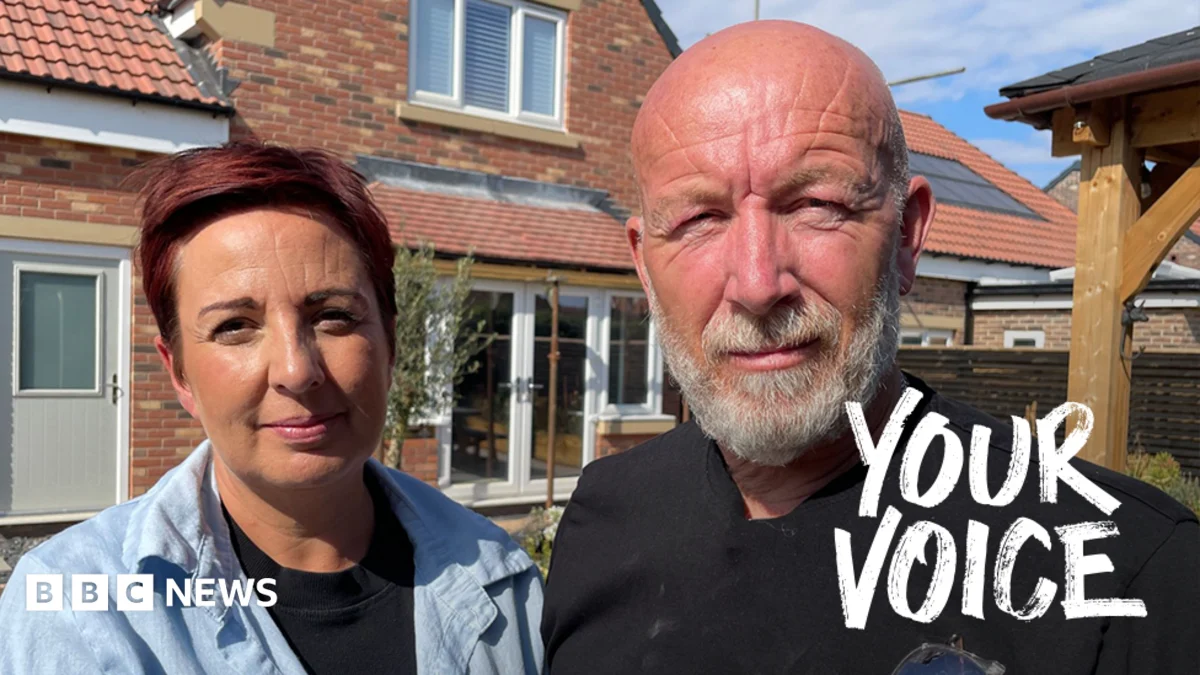
Across the United Kingdom, the aspiration of owning a newly constructed home is increasingly dissolving into a pervasive narrative of despair, as a growing number of families contend with properties marred by significant structural flaws, pervasive damp, and hazardous mould, underscoring systemic vulnerabilities within the residential construction sector. This widespread issue is manifesting in severe financial burdens, profound emotional distress, and even tangible health impacts for thousands of individuals who had invested their life savings in what they believed would be their enduring sanctuary.
The plight of Elissa and Johnnie, a couple from North Lincolnshire, epitomises this escalating national predicament. What they envisioned as their "forever home," a meticulously chosen four-bedroom property acquired just 20 months ago, has devolved into a protracted ordeal. Their residence now stands encased in scaffolding, its outer layers painstakingly peeled back to expose bare breeze block, a stark monument to the deep-seated construction deficiencies that have rendered it uninhabitable. Forced to vacate their property, they are navigating their second temporary rental accommodation within the current year, while extensive remedial work, necessitated by the initial inadequate build quality, is undertaken.
Upon their initial occupancy shortly before Christmas 2024, the initial excitement of moving into a brand-new dwelling quickly gave way to a burgeoning catalogue of imperfections. The couple prudently commissioned an independent "snagger," a specialist surveyor tasked with identifying defects in new constructions. The resulting report was alarming, detailing approximately 150 distinct faults, ranging from visibly misaligned walls and conspicuously bowed window frames to a poorly installed kitchen. These are not mere aesthetic blemishes but indicators of fundamental lapses in construction standards. The emotional and psychological toll on Elissa, who manages a long-term health condition, has been particularly severe, with the relentless stress contributing to multiple hospital admissions for acute chest pains.
The developer, Stonebridge Homes, initially agreed to dispatch contractors to address the identified issues, prompting Elissa and Johnnie to move out for the first time in the new year. However, this intervention proved counterproductive. Johnnie recounted the experience as "absolutely shocking," lamenting that the remedial efforts exacerbated the existing problems. An independent surveyor’s assessment, commissioned by Stonebridge Homes itself and reviewed by external parties, substantiated these concerns, describing the mortar work as of "low standard," thereby increasing the susceptibility to cracking. More critically, the report noted an "inward lean" in the home’s outer walls, deviating by as much as 50mm – a stark contrast to the maximum permissible deviation of 8mm over a three-metre span stipulated by structural warranty providers. The cumulative impact of these profound structural and finishing issues has compelled the couple to dedicate hundreds of hours to managing the crisis, a testament to the immense personal cost beyond the financial.
Elissa and Johnnie’s experience is far from isolated. Their narrative resonates with dozens of individuals across the United Kingdom who have reached out to various media outlets, including the BBC, detailing similar tribulations with their new-build properties. The breadth of affected demographics is striking, encompassing those who purchased their homes outright with substantial mortgages, individuals participating in shared-ownership schemes, renters residing in newly constructed apartment blocks, and even tenants in new social housing developments. A common thread uniting these disparate accounts is the profound sense of stress, desperation, and disillusionment experienced by homeowners and tenants alike.
Specific examples underscore the severity and diversity of these issues: a new homeowner in Somerset discovered pervasive black mould throughout her property mere days after moving in; a tenant in London reported the alarming collapse of ceilings within her apartment block; and a social housing resident in Essex found his property already afflicted by extensive mould and damp at the point of occupancy. These anecdotes coalesce into a troubling pattern that is increasingly reflected in official statistics.
The New Homes Ombudsman Service (NHOS), a crucial, albeit voluntary, industry-backed body established to mediate disputes between homeowners and developers, has reported a dramatic surge in complaints. Its latest annual report reveals that the service received just over 1,800 complaints in the 2025-26 period, representing a more than threefold increase from fewer than 600 in the preceding year. Defects and "snagging" – the identification and rectification of minor faults – constitute the predominant categories of issues raised. The NHOS attributes this significant rise partly to an expanded eligibility criterion for homeowners and a heightened public awareness of the service’s existence.
Despite this increased engagement, the voluntary nature of the NHOS presents a significant systemic flaw. While registrations for the service increased by 26% in the last financial year, approximately one-third of all new homes constructed in the UK still fall outside its protective remit, including, critically, the property belonging to Elissa and Johnnie. Furthermore, the NHOS’s jurisdiction is limited to new properties purchased outright, explicitly excluding those acquired through shared-ownership schemes, leaving a substantial segment of the market vulnerable. This regulatory lacuna has drawn sharp criticism from Members of Parliament and from Nigel Cates, the Chief Ombudsman himself, who emphatically states that this situation requires urgent legislative reform.
Responding to these pressing concerns, Housing Secretary Angela Rayner affirmed the government’s commitment to establishing a mandatory ombudsman service as soon as parliamentary time permits. Rayner underscored the fundamental expectation that homes should be "safe" and "built to last." This commitment echoes an earlier pledge made by the Conservative government in 2022, outlined within the Building Safety Act, a legislative response aimed at fortifying safety and regulatory standards in the wake of the Grenfell Tower tragedy. However, the recurring deferral due to "parliamentary time" raises questions about the political will and legislative urgency accorded to this critical issue.
Beyond the immediate defects, Chief Ombudsman Cates highlights that one of the most significant frustrations for homebuyers is not merely the discovery of faults, but the often-unresponsive and dismissive manner in which developers handle complaints. For most individuals, purchasing a home represents the single largest financial transaction of their lives. When fundamental problems arise, the expectation is for developers to act swiftly, take concerns seriously, demonstrate empathy, and effect timely and comprehensive rectifications. The failure to do so significantly compounds the distress.
The current regulatory framework for new home construction involves multiple inspection points. Homes are typically inspected several times during the construction phase by either local council building inspectors or registered building control approvers, ensuring compliance with legal national building regulations. Additionally, most developers engage insurance providers who conduct their own checks and offer 10-year structural warranties. Yet, the persistent prevalence of severe defects suggests that these existing safeguards are either insufficient, inadequately enforced, or both.
The government’s ambitious target of constructing 1.5 million homes in England by 2029 adds another layer of complexity to this crisis. Industry experts caution that such accelerated building targets, if not meticulously managed with stringent quality controls, could precipitate an even more profound systemic failure. John Cooper, Director of New Home Quality Control, a leading snagging company, frequently encounters breaches of building regulations, including critical issues with insulation, brickwork, and carpentry. He grimly states, "We see some horrors," asserting that the current pre-handover checks on new homes are fundamentally inadequate.
A panel of experts, including Ombudsman Cates, recently conveyed to MPs on the Housing, Communities and Local Government Committee that segments of the building industry operate akin to a "wild west," necessitating a more robust and uniformly applied regulatory system. Cates elaborated that residents not covered by the NHOS are left navigating a "patchwork of [building] codes" that are not primarily designed to serve the interests of homeowners. He emphasized the critical distinction between general building codes and specific standards tailored to the unique complexities of modern home sales and the associated issues. "It’s critical for the whole industry… that everyone has the same protections, access to an ombudsman service and an impartial investigation," he asserted.
The Home Builders Federation (HBF), the principal representative body for major developers, publicly supports the establishment of a statutory ombudsman, advocating for universal coverage for all new-build buyers. However, the HBF simultaneously calls for the government to alleviate what it terms the "regulatory burden," encompassing additional taxes and policy costs, which it contends have rendered numerous potential development sites and businesses economically unviable. This position highlights a fundamental tension: the imperative for enhanced quality and consumer protection often conflicts with industry demands for reduced operational costs, posing a significant policy challenge.
The fragmented nature of consumer protection is starkly illustrated by cases like that of Jess and her partner Darryl from Somerset. As purchasers of a shared-ownership property, they found themselves ineligible for assistance from the NHOS when black mould manifested throughout their home a mere ten days after moving in. Having invested all their life savings into what they hoped would be their dream home, Jess articulated their profound despair, stating, "We feel like we’re living in a nightmare." Their predicament underscores the urgent need for an ombudsman service with comprehensive jurisdictional reach, covering all forms of new-build acquisition.
In contrast, Luke Weaver from Essex, a social housing tenant, encountered a different path to resolution for the damp and mould in his new home, which he suspected was adversely affecting his two-year-old son’s health. Unlike outright or shared-ownership buyers outside the NHOS, Luke was able to access support from a separate ombudsman service, specifically the Housing Ombudsman, which social housing providers in England are mandated to join. This service, while effective for social tenants, focuses on housing providers rather than directly addressing developers, highlighting another aspect of the fragmented oversight.
A surveyor commissioned by Clarion, Luke’s housing association, confirmed the presence of wet insulation within a wall and elevated moisture levels throughout the property. The Housing Ombudsman subsequently found that Clarion had failed to handle the damp, mould, and snagging issues appropriately, even though the primary responsibility for defects during the warranty period typically rests with the builder, Dandara. Following the ombudsman’s ruling, Clarion issued an apology to Luke, committed to complying with the ombudsman’s directives, including a payment of £1,150 in compensation, and arranged for a further comprehensive inspection of his home.
Dandara, the developer, stated its commitment to addressing reports of damp and mould seriously and to collaborating with Clarion and the resident to resolve any concerns. They noted that an "End of Defects" inspection in August had identified a small number of minor items slated for completion this month, and confirmed they had requested the Housing Ombudsman’s conclusions from Clarion. Luke expressed a sense of vindication and immense relief following the findings, firmly believing that without the intervention of the Housing Ombudsman, he would not have received the necessary support or redress.
The confluence of individual tragedies and systemic failures paints a bleak picture for the UK’s new-build sector. The current regulatory environment, characterized by a voluntary ombudsman with limited scope and a patchwork of inadequate building codes, is demonstrably failing to protect consumers. The imperative to meet ambitious housing targets must not come at the expense of fundamental quality and safety standards. A truly comprehensive, mandatory ombudsman service, encompassing all forms of homeownership and tenancy, with robust powers to compel developers to rectify defects and compensate affected individuals, is no longer merely desirable but an urgent necessity. Furthermore, a thorough re-evaluation of building control mechanisms, coupled with stricter enforcement of existing regulations and heightened accountability for developers, is crucial to restore public trust and ensure that the dream of a new home does not continue to descend into a nightmare for countless families across the nation. The future stability of the housing market and the well-being of its occupants depend on immediate and decisive action.




 Aura Kasih
 Safa Marwah
 Ayu Aulia