
 Aura Kasih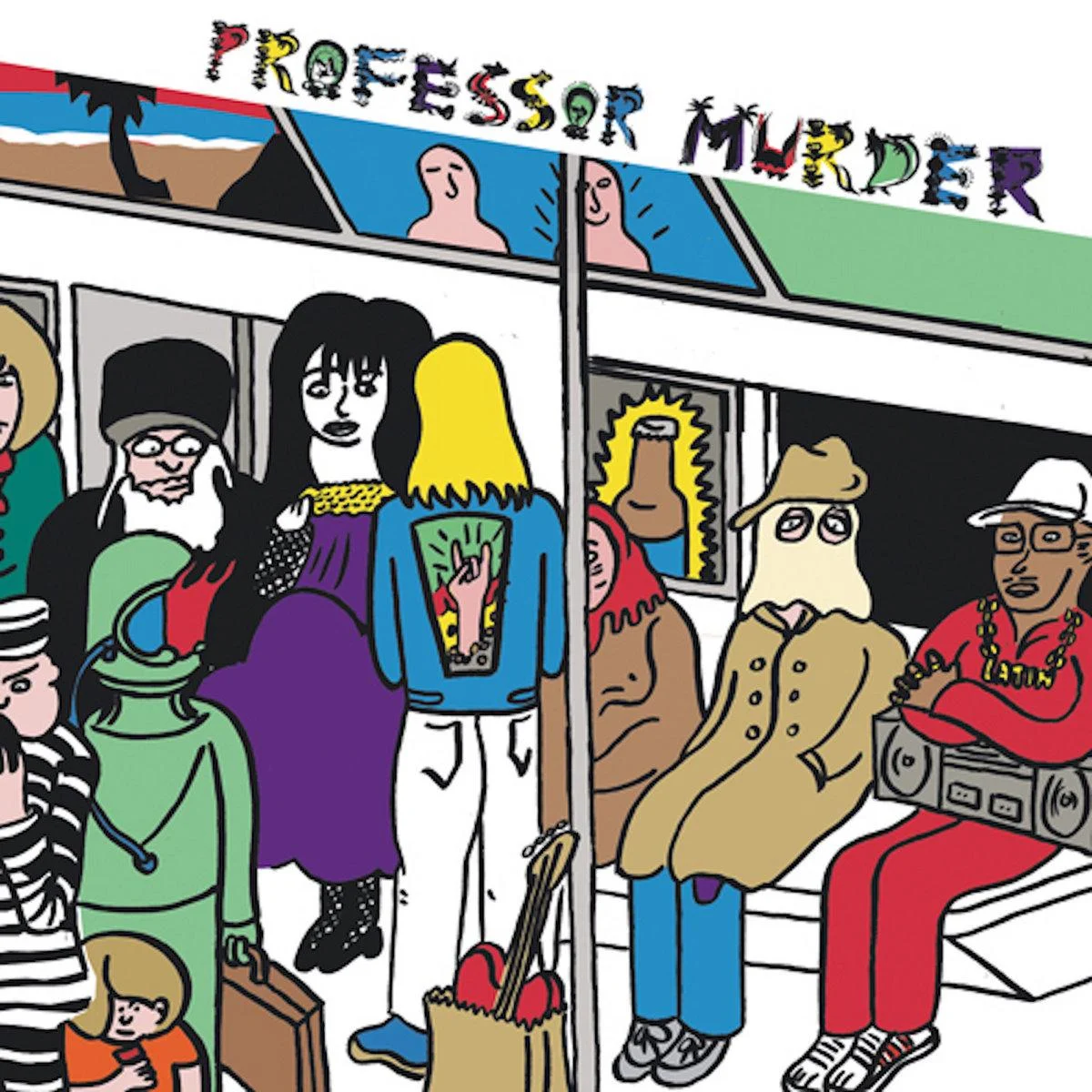
In the pulsating heart of New York City’s mid-aughts indie music scene, a vibrant and often overlooked subgenre of dance-punk experienced a flourishing period, characterized by an insistent call to uninhibited movement and unadulterated revelry. Among the myriad of acts contributing to this energetic zeitgeist, the band Professor Murder carved out a distinct and enduring niche, particularly with their critically acclaimed EP, Professor Murder Rides the Subway. This collection of tracks, though perhaps overshadowed by larger names, represents a distilled essence of the era’s sonic identity, offering a potent blend of raw energy and infectious rhythm that continues to resonate with discerning listeners.
The mid-2000s in New York City served as a fertile ground for a particular brand of music that fused the raw aggression of punk with the irresistible pulse of electronic dance. This dance-punk revival, spearheaded by internationally recognized acts like LCD Soundsystem and The Rapture, ignited a city-wide phenomenon. Beyond these titans, a rich tapestry of emerging artists populated the city’s venues, including Rahim, Liars, and Dan Deacon, many of whom found a home on the influential DFA Records label. This period was defined by an ethos of liberation through sound, encouraging audiences to shed inhibitions and embrace communal dancing. For those immersed in this scene, the experience was not merely about passive consumption of music but an active participation in a shared, visceral celebration.
Professor Murder, a New York-based ensemble, emerged as a particularly potent embodiment of this movement. Their signature sound, as exemplified on the Professor Murder Rides the Subway EP, was a meticulously crafted alchemy of cheap, searing synthesizer stabs, urgent, chanted vocals, intricate, syncopated percussion, and a deeply resonant, throbbing bassline. This sonic architecture wasn’t merely an aesthetic choice; it was a deliberate construction designed to encapsulate the dynamic and often chaotic spirit of the New York City music landscape around 2006. The EP, clocking in at a concise sixteen minutes, is fundamentally anchored by a primal disco stomp, a rhythmic foundation that pervades most of its tracks. Even the brief, a cappella interlude of "Pedigree" serves to punctuate rather than disrupt the prevailing groove. The band masterfully incorporated elements like cowbell and other tuned percussion, not to introduce complexity that would derail the momentum, but rather to add layers of texture and sophistication that enhanced, rather than detracted from, the inherent danceability.
In contrast to some of their more commercially successful contemporaries, who explored broader, more melodically expansive sonic territories, Professor Murder championed a philosophy of stripped-back arrangements. Their approach prioritized a rawness where the percussion, particularly the drums, often assumed the role of the lead instrument. While melodic hooks and memorable phrases were certainly present, such as the fuzzy, insistent bassline on "Camron’s New Color (Part 3)," these elements were consistently relegated to a more subdued position within the overall mix, allowing the rhythmic drive to remain paramount. This deliberate sonic hierarchy underscored their commitment to an unvarnished, high-energy delivery.
The EP’s strength is particularly evident in its framing: the opening track, "Champion," and the closing track, "Free Stress Test," serve as definitive exemplars of 2000s dance-punk at its absolute finest. "Champion" immediately immerses the listener in a relentless, driving rhythm, characterized by sharp, percussive bursts and a vocal delivery that is both urgent and anthemic. It’s a track that demands physical engagement, its structure built for the sweaty confines of a packed club. The production, while seemingly raw, possesses a clarity that allows each element to cut through, contributing to the overall intensity. The synth lines are not overly complex but are deployed with surgical precision, creating moments of sonic punctuation that amplify the track’s visceral impact.
Following "Champion," the EP delves into a series of tracks that further explore the band’s unique sonic palette. "Camron’s New Color (Part 3)," as noted, features a standout fuzzy bassline that anchors the track with a palpable swagger. The rhythmic interplay between the drums and bass is particularly compelling here, creating a hypnotic groove that is both propulsive and subtly intricate. The vocals, delivered in a characteristic chant, add a layer of raw, almost primal energy, urging the listener forward. The track’s structure, while adhering to the EP’s overall dance-punk framework, demonstrates a nuanced understanding of dynamics, building and releasing tension effectively.
"Pedigree," the EP’s brief a cappella interlude, serves as a stark and effective contrast to the surrounding sonic intensity. Its inclusion is a testament to the band’s willingness to experiment and to play with listener expectations. This moment of vocal vulnerability and starkness, devoid of instrumentation, highlights the power of the human voice as a percussive and rhythmic tool in itself. It’s a bold artistic statement that, rather than detracting from the EP’s momentum, provides a moment of reflection and emphasizes the raw, unadorned quality that defines Professor Murder’s approach.
The EP culminates with "Free Stress Test," a track that arguably represents the pinnacle of Professor Murder’s artistry on this release. Its infectious beat and insistent energy are undeniable. The track possesses a driving force that, if given broader exposure, could have propelled the band to a level of recognition comparable to that of The Rapture. The opening moments of "Free Stress Test" immediately establish an irresistible rhythmic momentum. The drums lay down a complex yet accessible beat, punctuated by sharp snare hits and a driving kick drum. Synthesizers weave in and out, providing bursts of melodic texture without ever becoming overly dominant. The bassline is a relentless, throbbing presence, locking in with the drums to create an unshakable groove. The vocals are delivered with an almost desperate urgency, a chant that is both anthemic and raw, encouraging a collective release of energy. The song’s structure is a masterclass in dance-punk efficiency: it builds, it surges, and it delivers a cathartic release, all within a framework that feels both familiar and exhilaratingly fresh. The production on "Free Stress Test" is a key factor in its success. Despite the inherent rawness of the genre, the EP exhibits a remarkable clarity. Each instrument is well-defined in the mix, allowing the listener to appreciate the intricate interplay between the drums, bass, and synthesizers. The overall effect is one of controlled chaos, a sonic landscape that is both exhilarating and deeply satisfying.
The enduring appeal of Professor Murder Rides the Subway lies not only in its immediate sonic impact but also in its ability to encapsulate a specific cultural moment. The mid-2000s were a period of significant transition in urban centers like New York, marked by a burgeoning digital landscape alongside a continued hunger for authentic, live musical experiences. Dance-punk, with its blend of analogue grit and digital sheen, its DIY ethos and its embrace of communal celebration, perfectly mirrored this duality. Professor Murder, by focusing on the essential elements of rhythm, energy, and raw vocal delivery, managed to distill this complex cultural moment into a potent and exhilarating musical statement. Their music offered an escape, a temporary suspension of everyday anxieties, and a vibrant affirmation of shared experience through the power of dance.
The impact of Professor Murder’s Professor Murder Rides the Subway can be further understood by examining its place within the broader context of the dance-punk revival. While bands like LCD Soundsystem achieved widespread critical acclaim and commercial success by incorporating a wider array of influences and more polished production techniques, Professor Murder occupied a more purist, albeit less commercially visible, space. Their commitment to a stripped-down, high-energy sound, prioritizing the raw, unadulterated pulse of the music, positioned them as inheritors of a more primal, punk-inflected lineage within the dance-punk movement. This approach, while perhaps less accessible to a mainstream audience, fostered a dedicated following among those who appreciated the genre’s rawest manifestations. The EP’s sonic identity is deeply rooted in the live music venues of the era, where the immediacy and visceral impact of the performance were paramount. The recording captures this live energy, translating the sweat, the strobe lights, and the collective euphoria of a packed dance floor into an auditory experience.
The lasting legacy of Professor Murder Rides the Subway is a testament to the power of uncompromising artistic vision. In an era where sonic trends can shift rapidly, the EP’s directness and unwavering focus on its core strengths have allowed it to transcend its initial release. It serves as a valuable artifact for understanding the nuances of the mid-2000s dance-punk scene, offering a counterpoint to the more widely celebrated acts and highlighting the diversity and depth of talent that characterized the period. For contemporary listeners seeking to explore the roots of modern electronic-infused indie music or simply looking for a potent dose of unadulterated sonic exhilaration, Professor Murder’s Professor Murder Rides the Subway EP remains an essential and profoundly rewarding discovery. Its concise yet impactful presentation of the dance-punk ethos solidifies its status as a forgotten, yet undeniable, slice of perfection. The EP is readily accessible on platforms such as Bandcamp, Apple Music, YouTube Music, Spotify, Deezer, and Qobuz, ensuring that its potent blend of energy and rhythm can continue to inspire and energize new generations of listeners.




 Lisa Mariana
 Ayu Aulia

 Safa Marwah