
 Aura Kasih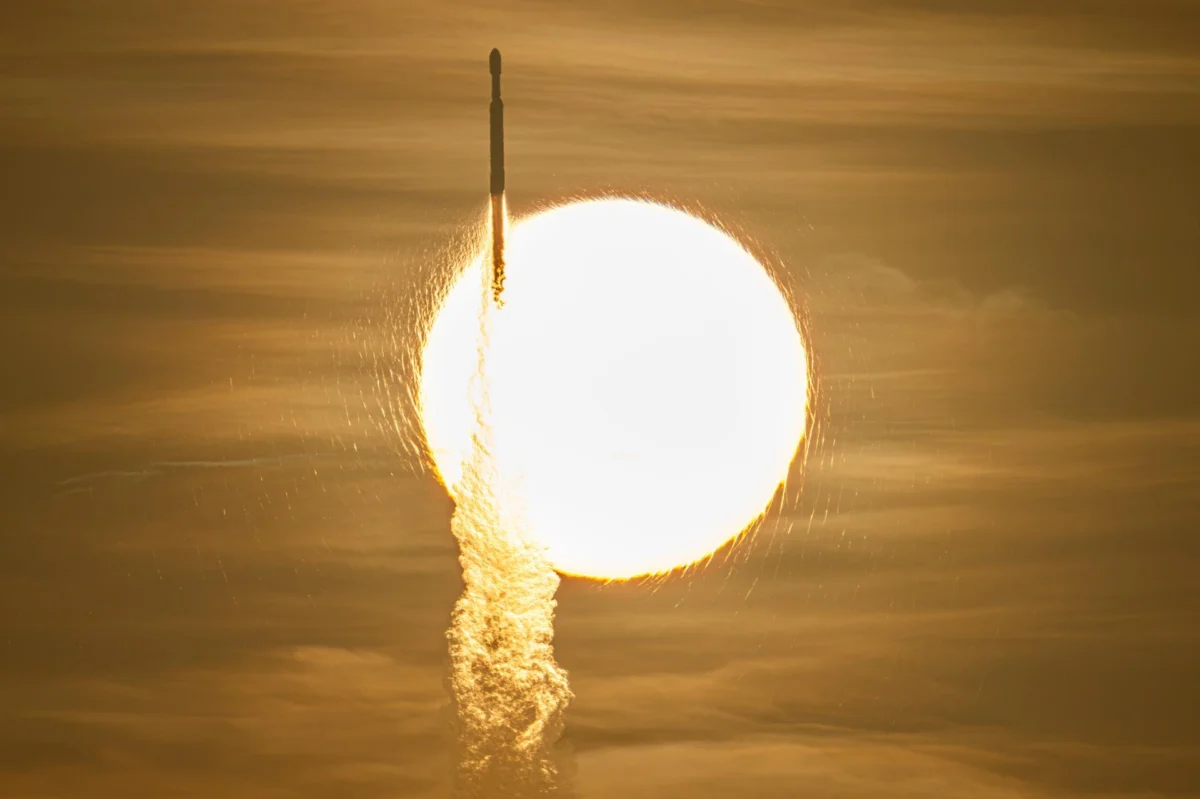
The Nancy Grace Roman Space Telescope, a revolutionary observatory poised to redefine our understanding of the universe, has successfully commenced its journey, marking a pivotal moment in astronomical exploration. This ambitious mission, after navigating periods of funding uncertainty and undergoing a significant renaming, is now en route to its operational orbit, promising to unravel some of the most profound mysteries of the cosmos, particularly the enigmatic nature of dark matter and dark energy.
Following its successful launch, the Roman Space Telescope is undertaking a critical three-month transit spanning approximately one million miles to reach its designated observation point at the second Sun-Earth Lagrange point, known as L2. This strategic location, situated beyond the Moon’s orbit, offers a stable platform with an unobstructed view of the universe, free from the interference of Earth’s atmosphere and light pollution. From this celestial vantage point, Roman is equipped to conduct scientific surveys of unparalleled scope and efficiency.
A key feature distinguishing Roman from its predecessors, including the venerable Hubble Space Telescope, is its extraordinary field of view. Roman’s primary infrared camera boasts a remarkable 300-megapixel resolution and an impressive field of view that is a staggering 100 times larger than that of Hubble. This expanded perspective allows the telescope to capture vast swathes of the sky simultaneously, enabling it to survey the cosmos at a pace estimated to be 1,000 times faster than Hubble. This enhanced observational capacity is crucial for the telescope’s ambitious survey goals, which aim to collect an unprecedented volume of data on distant galaxies, stars, and other celestial phenomena.
Beyond its wide-field imaging capabilities, the Roman Space Telescope is also equipped with a sophisticated Coronagraph instrument. This advanced technology is designed to effectively block the intense glare emitted by stars, a common challenge that has historically hindered the direct observation of exoplanets. By masking starlight, the Coronagraph will enable Roman to directly image exoplanets, including those that are smaller, older, and possess cooler temperatures, orbiting in close proximity to their parent stars. This capability opens up new avenues for the discovery and characterization of potentially habitable worlds beyond our solar system, offering invaluable insights into the diversity of planetary systems and the conditions that might support life.
The primary scientific objectives of the Nancy Grace Roman Space Telescope are deeply rooted in addressing fundamental questions about the composition and evolution of the universe. A significant portion of its mission will be dedicated to the study of dark matter, the invisible substance that constitutes an estimated 27% of the universe’s total mass-energy content. By conducting detailed three-dimensional scans of the cosmos, Roman will meticulously map the distribution of dark matter across vast cosmic structures. This comprehensive mapping will allow scientists to analyze the gravitational influence of dark matter on visible matter and to refine theoretical models that attempt to explain its enigmatic nature. Understanding dark matter is paramount, as its gravitational effects are crucial for the formation and structure of galaxies and galaxy clusters.

Furthermore, Roman’s mission will delve into the mysteries of dark energy, the even more elusive force believed to be responsible for the accelerating expansion of the universe, comprising approximately 68% of its total mass-energy. The telescope will leverage its advanced imaging and gravitational lensing measurement capabilities to create detailed three-dimensional maps that chart the universe’s expansion history. Gravitational lensing, the bending of light by massive objects, provides a unique tool for astronomers to probe the distribution of matter and the effects of dark energy. By observing how light from distant galaxies is distorted as it passes through intervening cosmic structures, scientists can infer the presence and influence of dark matter and dark energy. Roman’s ability to conduct these measurements with unprecedented precision and scale will be instrumental in narrowing down the potential candidates for the composition and behavior of dark energy, a force that continues to baffle physicists and cosmologists alike.
The scientific community has expressed immense anticipation for the discoveries Roman is poised to make. Nicky Fox, associate administrator for NASA’s Science Mission Directorate, articulated this sentiment in a recent press release, stating, "Roman will be a discovery machine that will bring us closer than ever before to answering humanity’s most profound questions about our cosmic history." This statement underscores the transformative potential of the Roman Space Telescope, highlighting its role in pushing the boundaries of human knowledge and deepening our comprehension of our place in the universe.
The legacy of Nancy Grace Roman, a pioneering astrophysicist and the first woman to hold a leadership position at NASA, is honored by this groundbreaking mission. Her visionary work laid the groundwork for many of the astronomical pursuits that Roman will now undertake, making the telescope a fitting tribute to her enduring contributions to science. The successful launch and deployment of Roman represent the culmination of decades of planning, technological innovation, and international collaboration.
The implications of Roman’s findings extend far beyond the realm of theoretical physics. A more complete understanding of dark matter and dark energy could revolutionize our models of cosmology, potentially leading to new theories that unify gravity with quantum mechanics or provide insights into the ultimate fate of the universe. The direct imaging of exoplanets could also have profound implications for the search for extraterrestrial life, expanding the scope of our inquiries into the possibility of life beyond Earth.
Looking ahead, the Nancy Grace Roman Space Telescope is poised to become an indispensable tool in the ongoing quest to unravel the universe’s deepest secrets. Its unique combination of a wide field of view, high-resolution infrared imaging, and advanced coronagraphy will empower astronomers to conduct a diverse range of scientific investigations. Beyond its primary focus on dark matter and dark energy, Roman will also contribute to studies of galaxy evolution, the formation of stars and planetary systems, and the composition of the interstellar medium. The data collected by Roman will undoubtedly fuel scientific research for decades to come, inspiring new generations of astronomers and cosmologists to continue exploring the cosmos. The mission’s success marks not an endpoint, but rather the beginning of a new era of cosmic discovery, promising a wealth of knowledge that will reshape our understanding of the universe and our place within it.




 Lisa Mariana
 Ayu Aulia

 Safa Marwah