
 Aura Kasih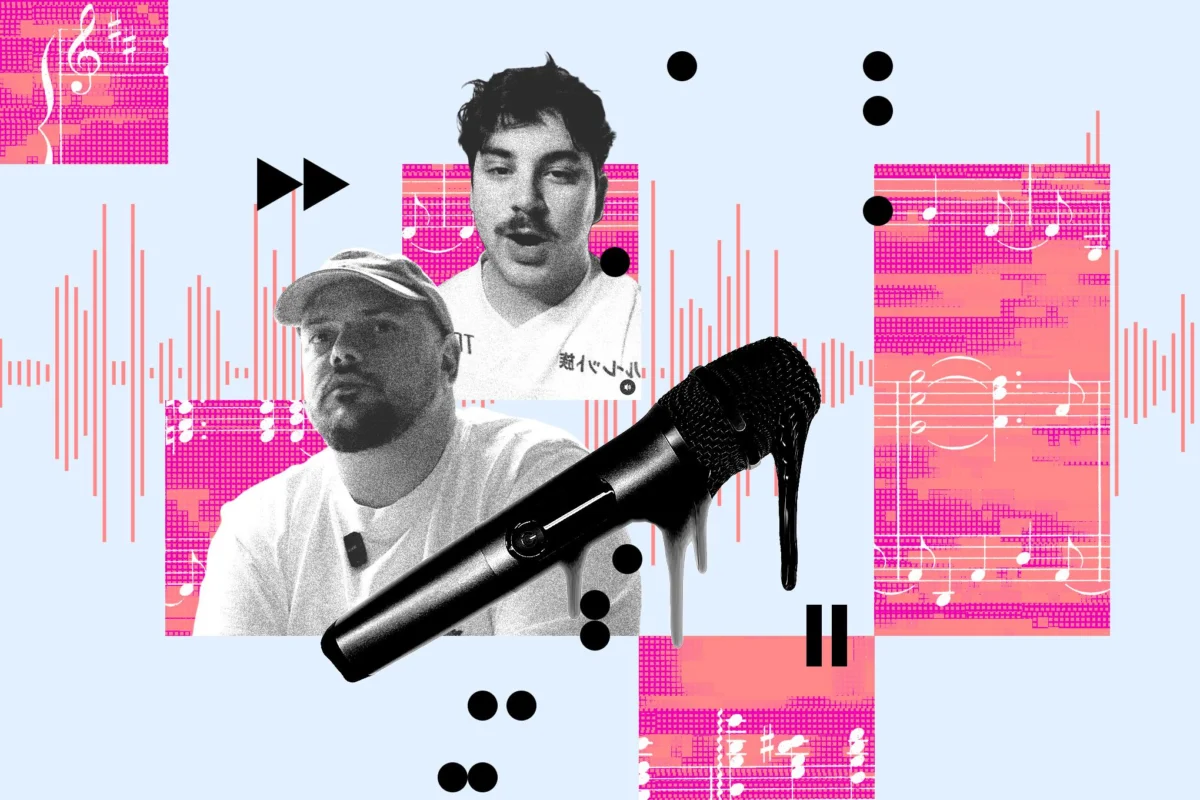
As the capabilities of artificial intelligence in music creation reach unprecedented levels of sophistication, a new frontier of digital deception has emerged, with human artists increasingly finding themselves at the forefront of an effort to identify and expose AI-generated content masquerading as authentic human artistry. This surge of algorithmically derived music, often indistinguishable to the casual listener, presents a complex challenge to the creative ecosystem, prompting a dedicated cadre of musicians to adopt the mantle of digital detectives in their quest to safeguard artistic integrity and prevent financial exploitation.
The proliferation of generative AI tools, particularly those focused on audio synthesis, has democratized music creation to an extent previously unimaginable. Platforms capable of producing intricate melodies, nuanced vocal performances, and full instrumental arrangements from simple text prompts are now readily accessible. While some creators openly acknowledge their use of these powerful tools, a significant and growing number are opting for obfuscation, leading to a surge in AI-generated tracks that are presented without disclosure. This practice raises profound ethical questions about authorship, intellectual property, and the very definition of artistry in the digital age. For many musicians, especially those operating within technologically progressive genres like electronic dance music (EDM), the blurring lines between human and machine creation are not merely an abstract concern but a tangible threat to their livelihoods and the cultural value of their craft.
The pressure to be transparent about AI usage is mounting, yet the landscape remains ambiguous. While audiences can often express skepticism or call out suspected AI-generated content, the act of a peer, another artist, raising such concerns carries a different weight. It signifies a direct confrontation with potential deception within the creative community. Enter individuals like Max "H4RRIS" Harris, a 26-year-old EDM producer who has taken a proactive stance, utilizing social media platforms to critically analyze and publicly identify what he perceives as AI-generated music being deceptively presented as original human work.
Harris articulates a fundamental critique of AI-generated music, viewing it as a "decoy art form" devoid of genuine creative intent or emotional depth. He posits that authentic art is born from a desire to express feelings and convey messages, a process he believes is inherently absent in AI-generated content. For Harris and others who share his perspective, the primary motivation behind the creation and dissemination of such music is not artistic expression but rather the pursuit of rapid financial gain. This perspective underscores a core tension: the perceived utilitarian nature of AI in producing content versus the deeply personal and expressive drive that fuels human artistic endeavor.
"I do not consider AI-generated material to be art, and I do not believe this technology is truly advancing art in any meaningful way," Harris states, emphasizing his belief that generative AI represents a method for misappropriating existing artistic creations. "It’s a technological advancement that’s giving people a way to steal real art and pass it off as their own." This sentiment reflects a broader concern about the potential for AI to devalue human creativity by enabling the effortless replication and repurposing of existing works, without acknowledging the original creators or their labor.
Harris’s own production methodology provides a stark contrast to the perceived superficiality of AI-generated music. He describes his creative process as organic and iterative, akin to other traditional art forms. It begins with a foundational concept, followed by an extensive period of experimentation and refinement. His complex studio setup, incorporating industry-standard software like Ableton Live and a suite of hardware controllers and synthesizers, is a testament to the dedication and skill involved in crafting his unique sound. However, he emphasizes that despite the technical sophistication of his tools, the essence of his workflow remains intensely personal, driven by a continuous stream of creative decisions.
"Each of those decisions – and there are hundreds of them to go into each song – brings me closer to evoking a specific kind of idea or emotion," Harris explains. "And then once I have a song mapped out, I have to start making even more choices about how to mix it in a way that makes it sound good and presentable." This meticulous attention to detail and the subjective nature of artistic choice are elements that Harris argues are fundamentally absent in the automated processes of AI generation.
The ability to make informed, experimental, and intentional creative decisions is, in Harris’s view, the hallmark of a true artist. He expresses dismay not only at how AI tools can bypass the need for critical thinking in the creative process but also at the resultant dilution of listeners’ understanding of authentic human-made EDM. The sonic characteristics of AI-generated tracks, he notes, often betray their artificial origins.
"Aside from the similar vocals, you can usually hear a sharp hissing throughout the track," Harris observes. "I think that comes from the way that these models often work by starting with a big white noise block and then making guesses about waveforms by referencing data taken from real songs." This technical detail points to the underlying mechanisms of AI audio generation, which often involve synthesizing sounds from vast datasets, leading to recognizable artifacts that can distinguish them from human-created music.
Harris points to specific tracks, such as MANSA’s "Midnight on My Mind" and Danny and Ian Asher’s "Take Me (To The Moon)," as examples he believes exemplify the "AI revolution" that he contends is polluting the EDM landscape. While the artists of these tracks have not publicly confirmed the use of AI, the perceived sonic similarities to known AI outputs have fueled speculation among listeners and critics. The case of "Take Me (To The Moon)" is particularly notable, with fans on online forums identifying a strong resemblance to an existing AI-generated track. Although definitive proof of AI generation for these specific songs remains elusive, the persistent suspicion highlights a pervasive climate of distrust that has taken root in response to the expanding presence of AI-generated content across the internet.
The production company Suno has been identified by Harris and others as a significant catalyst for the recent surge in AI-generated music uploads. The platform’s specific functionalities, while facilitating rapid content creation, also inadvertently provide clues that allow discerning listeners to identify AI-produced tracks.
"Something I’ve noticed with a lot of Suno-generated tracks is that a lot of the time, you’ll hear the vocals and other melodic elements will start stuttering at the same exact time," Harris explains. "These models still have a hard time fully separating different parts of the songs they’re trained on, and they treat these elements like one big instrument. As a music producer, all of these things come across like choices that a human just wouldn’t make with their compositions because it just doesn’t make sense." These recurring glitches and unnatural repetitions serve as telltale signs of algorithmic composition, revealing the limitations of current AI models in achieving the fluid and nuanced expressiveness of human performance.
In some instances, the visual components accompanying AI-generated music further reinforce suspicions of artificial creation. The evangelical Christian AI persona Lionsaddle, for example, presents music where the accompanying videos feature demonstrably unnatural visual anomalies, such as fingers phasing in and out of existence. Similarly, the overtly polished and often surreal visual aesthetic of content produced by Christian house musician Midnite Manna aligns with characteristics commonly associated with AI-generated visual media, often colloquially referred to as "AI slop."
The concerns surrounding Suno are echoed by 39-year-old Italian turntablist and producer Nihil Young. Young’s vocal critiques of Suno users on social media platforms were instrumental in inspiring Harris’s own public callouts. Over the past several months, Young has observed a pattern of newcomers rapidly ascending in the EDM scene by releasing music that he strongly suspects was created using AI tools like Suno. Despite his general inclination to avoid online controversies, Young felt compelled to speak out against what he perceives as an influx of AI-generated tracks diluting the music scene.
"These songs are the sound of Suno, which to me means that the people behind the songs are just straight up uploading original, copyrighted tracks of artists like Madonna and asking the platform to remix them," Young asserts, referencing a recent controversy involving a cover of Madonna’s "Like a Prayer" by Josh Fawaz, which now includes AI credits after significant public backlash. "If they can do it with major artists like her, they can do it with you, me, and everyone else, which just isn’t cool. They can take your entire catalog, feed it to Suno, and generate ‘new’ songs from that stolen work." This highlights a critical concern regarding the potential for AI platforms to facilitate large-scale copyright infringement and the unauthorized appropriation of an artist’s entire body of work.
Young reports facing significant repercussions for his public stance, including multiple hacking attempts and a barrage of online harassment from AI proponents. He also suspects that coordinated efforts were made to artificially inflate his Spotify listener numbers with fake followers, an attempt he believes was designed to undermine his credibility. These experiences, coupled with the responsibilities of raising a young daughter and releasing his own new album, have led Young to temporarily pause his public callouts. Nevertheless, he maintains the importance of raising awareness about the detrimental impact of AI music on human artists.
"Music production is where most of my income comes from, and almost as soon as AI began rolling out, I started losing many of my clients," says Young, who has previously provided audio mixing and mastering services for major labels such as Sony Music, Warner, and Universal. "I can only imagine what it’s been like for singers, graphics artists, and people working in other creative fields. Whether you realize it or not, this stuff is impacting everyone." This testimony underscores the direct economic consequences faced by creative professionals as AI tools become more prevalent and capable.
Young emphasizes the alarming ease with which entire songs can now be generated using platforms like Suno. He contends that many individuals utilizing AI for music creation lack a genuine creative process or artistic intent, particularly when generative tools offer simplified modes of operation. He notes that Suno’s "Simple Mode," for instance, allows users to generate songs with minimal input, requiring only the selection of a genre and a single click—a process that bypasses any meaningful creative engagement.
Despite the fervent opposition from traditional artists, AI-generated music is undeniably making inroads into the mainstream. In 2024, producer Metro Boomin released a track, "BBL Drizzy," that sampled an AI-generated song by comedian King Willonius. The vocals, melodies, and instrumental elements of "BBL Drizzy" were created by the AI music startup Udio. The track gained significant traction after Metro Boomin posted it to SoundCloud, inviting other artists to rap over the beat. Rapper Drake himself subsequently incorporated the beat into his collaboration with Sexyy Red, "U My Everything," which achieved a peak position of 44 on the Billboard Hot 100. This instance demonstrates how AI-generated elements can be integrated into popular music, even being embraced by established artists.
The success of entirely AI-generated entities is also becoming increasingly apparent. Last summer, Vinih Pray’s Suno-created song "A Million Colors" reached number 44 on TikTok’s Viral 50 chart. Furthermore, AI artists Breaking Rust and Cain Walker managed to chart on Billboard’s Country Digital Song Sales chart, a less prominent chart focused on individual song downloads. Meanwhile, Hallwood Media, a label founded by former Geffen Records president Neil Jacobson, signed an AI avatar named Xania Monet to a multi-million dollar recording contract. These developments indicate a clear industry movement towards normalizing and commercializing AI-generated music, with significant financial returns being realized by creators and platforms utilizing machine-generated content. Kapwing estimates that the top 10 most followed and streamed AI music creators on Spotify and YouTube collectively earned over $6 million in 2025. With platforms like Deezer reporting that AI songs now constitute over 50 percent of daily uploads, the pervasive presence of such music is becoming increasingly difficult for listeners to avoid, even if they struggle to distinguish it from human-created content. While streaming services are beginning to implement more explicit AI labeling, many listeners report an inability to discern the difference between generative and human-made music.
The critical challenge remains the definitive identification of AI-generated tracks. While AI music detection tools represent a potential solution, their widespread adoption and efficacy in everyday listening habits are yet to be fully determined. The current data, though potentially manipulated by artificial streams, suggests a segment of the audience is receptive to the sounds produced by AI tools like Suno. Nihil Young acknowledges that most listeners may not possess the refined auditory acuity to identify sonic imperfections, but he urges music enthusiasts to make a concerted effort to seek out and support authentic human artists.
"In my opinion, it becomes obvious that you’re listening to AI-generated music when you put on a good pair of headphones," Young advises. "But I also think that a lot of people these days are consuming music like fast food and listening to it through the speakers on their phone. Or they just have it on as background noise, and they don’t necessarily care what it sounds like." This observation highlights a broader cultural shift in music consumption, where convenience and passive listening may be overshadowing a critical appreciation for the nuances of human artistry. The continued evolution of AI technology, coupled with the increasing sophistication of its output, necessitates a vigilant and informed approach from both creators and consumers to navigate this rapidly changing creative landscape.




 Lisa Mariana
 Ayu Aulia

 Safa Marwah