Aura Kasih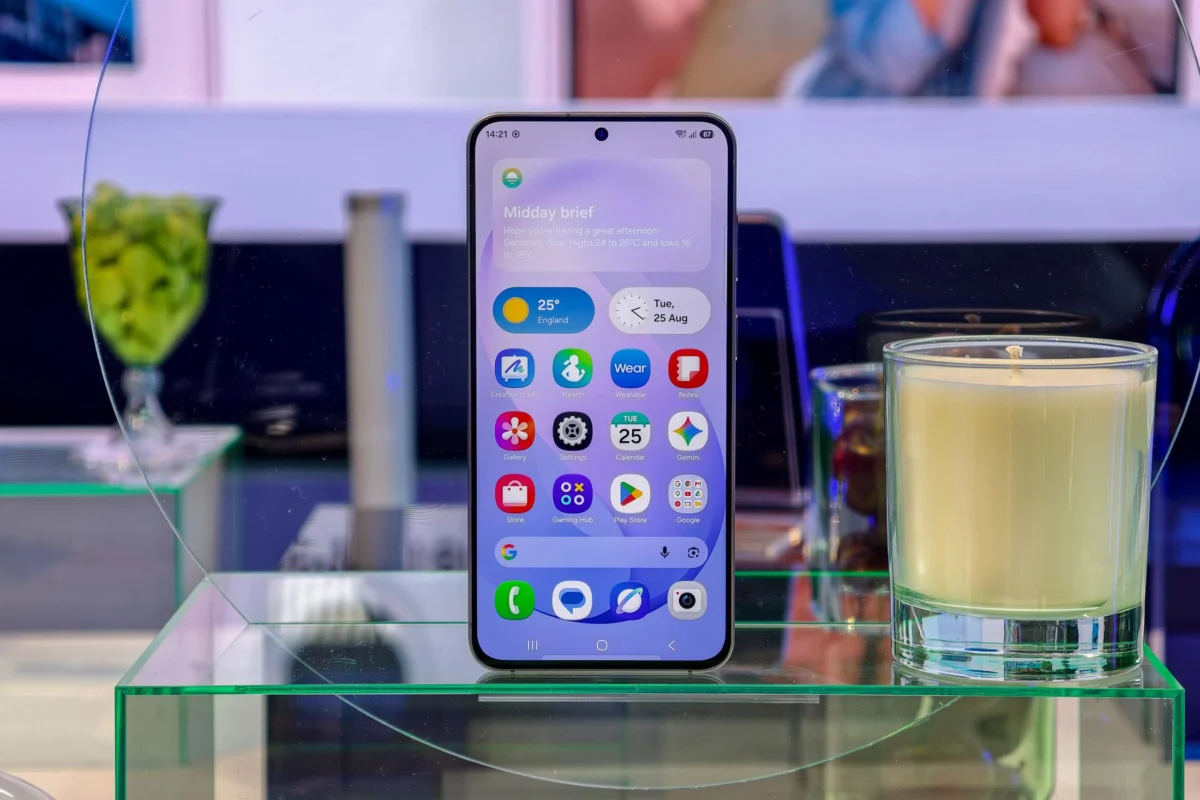
Samsung’s latest iteration of its Fan Edition smartphone, the Galaxy S26 FE, emerges not as a groundbreaking leap but as a carefully considered consolidation of established technology, effectively marrying last year’s robust hardware architecture with the most recent advancements in software functionality. This approach, while perhaps less immediately exhilarating than a complete overhaul, strategically leverages existing strengths while incorporating cutting-edge user experience enhancements, aiming to provide a compelling value proposition in a competitive market.

The Fan Edition series has historically occupied a unique niche within Samsung’s smartphone portfolio, serving as a bridge between the flagship experience and more budget-conscious offerings. The Galaxy S25 FE, launched approximately twelve months prior, established a solid foundation that the S26 FE largely inherits. This continuity in hardware design and core components suggests a deliberate strategy to optimize manufacturing processes and capitalize on the proven performance of its predecessor. The primary locus of innovation for the S26 FE lies not in a wholesale reimagining of its physical form or internal architecture, but rather in the sophisticated integration of software features that have recently debuted on Samsung’s higher-tier devices.
At the heart of the Galaxy S26 FE remains a familiar yet highly capable ensemble of specifications. The expansive 6.7-inch OLED display continues to offer a vibrant and immersive visual experience, a hallmark of Samsung’s display technology. Similarly, the 4,900mAh battery capacity is carried over, promising sustained usage and reliable power delivery throughout the day. The triple rear camera system, a versatile array for various photographic scenarios, also remains unchanged, indicating a confidence in its established imaging capabilities. The most notable hardware adjustments are evolutionary rather than revolutionary. The processor receives its annual upgrade, now featuring the Exynos 2500 chipset, which promises incremental improvements in performance and power efficiency. The front-facing selfie camera has also seen a minor enhancement, boasting a slightly wider 85-degree field of view compared to the S25 FE’s 80 degrees, allowing for more inclusive group selfies and expanded framing options.

The aesthetic design of the S26 FE has undergone subtle refinements to align it more closely with the current S26 lineup. This includes a shift towards glossier finishes, imbuing the device with a more premium feel. The camera island has been redesigned with a raised profile, a design cue that harmonizes with the visual language of the flagship S26 series. Color options have been refreshed to reflect contemporary trends, introducing "graphite" (a sophisticated gray), "blueberry" (a deeper, richer blue), and the continuation of the "pistachio" green. This particular shade of green has already garnered significant popularity on other recent Samsung releases, such as the Galaxy Z Fold 8, suggesting a calculated move to leverage successful design elements across product lines. While not as drastically conservative as some industry refreshes, this approach positions the S26 FE as a refined iteration rather than a paradigm shift.
The pricing strategy for the Galaxy S26 FE introduces a point of contention, particularly in the context of global supply chain challenges. The ongoing "RAMageddon," a period of significant strain on RAM availability, has contributed to a notable price increase for the S26 FE compared to its predecessor. The base model, equipped with 8GB of RAM and 128GB of internal storage, is now priced at $699.99, representing a $50 increase over the S25 FE. This upward adjustment extends to the 256GB storage variant, which commands a price of $799.99. This price point places the S26 FE in a competitive landscape, requiring a clear articulation of its value proposition against both other Samsung devices and offerings from rival manufacturers.

A compelling comparison arises when considering the Galaxy S26 Plus, a device that, despite its higher initial launch price of $1,099.99, can now be acquired for $899.99 with 256GB of storage. This price differential of only $100 between the top-tier S26 FE and the S26 Plus warrants careful consideration from consumers. Both devices share similar physical dimensions and weight, and while the S26 FE’s display is comparable in size, the S26 Plus offers a higher resolution. Battery capacity and charging speeds are also largely mirrored, with the S26 FE exhibiting only a marginal reduction in wireless charging speeds (15W). The divergence becomes more apparent when examining the core performance, RAM allocation, and camera capabilities. The mainline S26 series typically features more generous RAM configurations and faster processors, alongside superior build materials and more advanced telephoto and ultrawide camera sensors. This highlights the strategic positioning of the S26 FE as a device that offers a near-flagship aesthetic and core functionality at a more accessible, albeit now slightly elevated, price point.
The most significant enhancements to the Galaxy S26 FE reside within its software ecosystem, drawing heavily from the feature sets introduced on Samsung’s recent foldable devices and the S26 flagship models. The "My FanCam" feature, powered by artificial intelligence, offers an innovative video editing tool. It intelligently analyzes footage and crops it to ensure a specific subject remains consistently framed and in focus throughout the recording, a powerful tool for content creators and casual users alike. Another noteworthy software advancement is the expansion of "Audio Eraser" functionality. Previously limited to proprietary Samsung video recordings, this feature now extends to third-party applications, enabling users to effectively reduce distracting background noise in content consumed from platforms like YouTube or Netflix. This not only enhances the clarity of dialogue but also significantly improves the overall viewing and listening experience. Furthermore, the camera application now incorporates a "Super Steady Horizontal Lock" video recording option, providing exceptional stability for dynamic video capture, a feature highly valued by users who engage in activities requiring smooth, stabilized footage.

The "Now Brief" daily news roundup has been significantly upgraded with the introduction of AI-enabled custom cards. This feature empowers users to personalize their daily information intake by creating cards that track specific data points relevant to their interests, whether it be detailed weather forecasts, personal health metrics, or updates on preferred online content. This granular control over information delivery represents a substantial enhancement to user customization. Echoing features found on the Galaxy Z Flip 8 and Fold 8, the updated "Now Nudge" makes its debut on the S26 FE. This intelligent system proactively suggests contextual actions based on the content of conversations with contacts. These suggestions can range from seamlessly adding events to one’s calendar to efficiently saving locations on Google Maps. However, the utility of Now Nudge is contingent on the exclusive use of Samsung Keyboard. In practical application, as observed during testing of Samsung’s recent foldable devices, the Now Nudge feature has demonstrated a tendency to be infrequently triggered, even when its intended conditions are met, suggesting potential areas for further optimization in its responsiveness and broad applicability.
The strategic decision to update the Fan Edition line with the latest software features, while retaining much of the prior year’s hardware, reflects a mature product lifecycle management strategy. By deferring major hardware redesigns for the FE models, Samsung can focus its resources on refining the user experience through software. This approach allows for more rapid deployment of AI-driven features and user interface enhancements, ensuring that even more affordable devices benefit from the company’s technological advancements. The inclusion of features like My FanCam and the expanded Audio Eraser underscores Samsung’s commitment to leveraging artificial intelligence to enhance everyday mobile interactions. These software-centric updates are designed to provide tangible benefits to users, improving content creation, consumption, and information management.

The pricing, while a point of discussion, can be contextualized within the broader market trends and Samsung’s tiered product strategy. The Fan Edition has always aimed to democratize certain flagship experiences. The S26 FE, with its inherited hardware and new software capabilities, continues this mission. The price increase, though present, may be justified by the advanced software features and the continued refinement of a proven hardware platform. For consumers seeking a device that offers a near-flagship experience without the absolute premium cost of the highest-tier models, the S26 FE presents a compelling, albeit carefully calculated, option. Its success will ultimately hinge on its ability to deliver a consistently smooth and intelligent user experience, proving that the combination of last year’s hardware and this month’s software can indeed offer significant value.
The future outlook for Samsung’s Fan Edition strategy suggests a continued emphasis on iterative hardware improvements coupled with aggressive software innovation. As AI becomes increasingly integrated into mobile operating systems, the FE line is poised to become a primary vehicle for delivering these intelligent features to a wider audience. The ability to update and enhance the user experience post-purchase through software updates is a critical component of modern smartphone longevity and customer satisfaction. The S26 FE, in this regard, represents a forward-looking approach, prioritizing the evolution of the user interface and intelligent functionalities that define the contemporary smartphone experience. This strategy allows Samsung to maintain a competitive edge by offering devices that not only meet current user demands but also anticipate future needs through continuous software development and AI integration.




 Lisa Mariana
 Safa Marwah
 Ayu Aulia