Ayu Aulia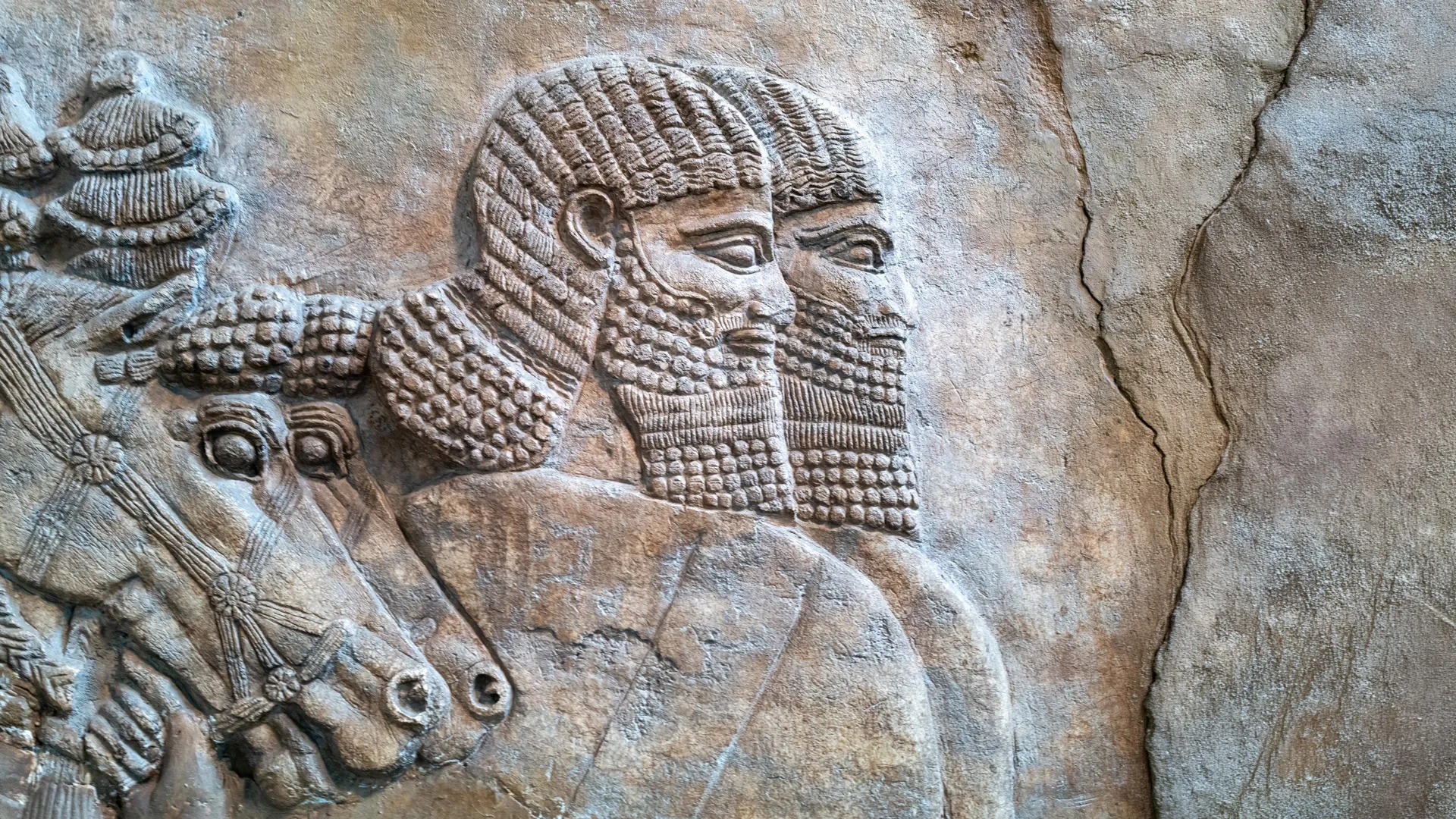
For over a century, the Assyrian King List (AKL) has stood as the definitive chronicle for understanding the succession and chronology of rulers within the formidable Assyrian Empire, particularly during its later, more influential phases. This foundational document has long been regarded as an authoritative, comprehensive, and objective record, guiding generations of scholars through the complex tapestry of ancient Mesopotamian political history. However, recent groundbreaking research challenges this entrenched perspective, proposing the existence of three previously unrecognized monarchs whose integration into the historical narrative could fundamentally alter our comprehension of early Neo-Assyrian political dynamics and the very nature of ancient historiography.
The Enduring Authority of the Assyrian King List
The Assyrian King List is an unparalleled artifact of ancient record-keeping, a sequential compilation of Assyrian rulers from the earliest mythical figures to later historical kings, often including the length of their reigns. Its discovery and subsequent study provided a crucial framework for reconstructing the chronology of one of the ancient world’s most powerful and enduring empires. Historians and archaeologists have relied on the AKL as an anchor, cross-referencing its entries with other textual evidence, archaeological findings, and astronomical observations to build a robust timeline for Assyrian history. The list’s perceived meticulousness and consistency fostered a belief in its inherent impartiality and completeness, establishing it as the primary lens through which the continuity and legitimacy of Assyrian kingship were understood.
This reliance stemmed from the AKL’s apparent precision and its function in linking the reigning monarch to a long, unbroken lineage, thereby legitimizing their rule. It presented a narrative of stable succession, projecting an image of an orderly and divinely sanctioned empire. Deviations or gaps in this official record were rarely contemplated, as the document itself seemed to embody the state’s desired historical memory. Its perceived integrity was such that any evidence seemingly contradicting it was often interpreted as an anomaly or misattribution, rather than a fundamental flaw in the list itself.
Challenging the Canon: New Interpretations of Assyrian Royalty
The recent study, however, meticulously re-examines existing textual and archaeological evidence through a fresh analytical framework, arguing that the AKL may have functioned less as a purely factual chronicle and more as a curated canon designed to reinforce specific political agendas. This new perspective posits that the list might have intentionally omitted rulers whose reigns were deemed illegitimate, too brief, or disruptive to the established order, effectively sanitizing the official history. By identifying three rulers absent from the AKL but whose existence can be reconstructed from other contemporary sources, researchers Alexander Johannes Edmonds and Eckart Frahm introduce a compelling argument for a far more complex and often tumultuous early Neo-Assyrian political landscape than previously imagined. Their findings suggest that the path to imperial dominance was paved with more internal strife, rival claims, and deliberate historical erasures than the streamlined AKL conveys.
Case Study 1: The Eclipse and the Usurper Tiglath-pileser
The first of these overlooked monarchs emerges from a period of significant political instability during the mid-8th century BCE, a time marked by a profound celestial event: a solar eclipse. In ancient Mesopotamia, astronomical phenomena, particularly eclipses, were imbued with immense religious and political significance. They were often interpreted as omens, harbingers of divine displeasure or impending doom, capable of triggering widespread anxiety and legitimizing challenges to existing authority. It is within this volatile context that a rival king, also named Tiglath-pileser, is believed to have asserted his rule.
This Tiglath-pileser, distinct from the later, more famous Tiglath-pileser III, appears to have capitalized on the widespread apprehension following a solar eclipse in 763 BCE. He was a nephew of the officially recognized monarch, Aššur-dān III, indicating a struggle within the royal family itself. The claim to power by this rival Tiglath-pileser was not merely symbolic; tangible evidence of his administration survives on a clay tablet now housed in the British Museum. This cuneiform tablet records a royal grant, a formal decree issued under the authority of a reigning king, which definitively attributes the action to this overlooked Tiglath-pileser. The inscription suggests his effective rule, albeit brief, likely spanning from approximately 763 to 762 BCE, before he was ultimately deposed.
The existence of this rival king fundamentally challenges the AKL’s portrayal of a singular, unchallenged succession during this period. It reveals a political environment where internal dissent, succession disputes, and the exploitation of perceived omens could lead to parallel reigns or short-lived usurpations that were subsequently expunged from the official record. Such an omission from the AKL suggests a deliberate act of historical revisionism, aimed at maintaining an image of seamless authority and suppressing the memory of disruptive power struggles.
Case Study 2: The Enigma of the Tell ‘Abta Stela and Shalmaneser
The second missing ruler comes to light through the re-interpretation of an enigmatic stela discovered in 1894 at Tell ‘Abta, Iraq. For decades, this monument has presented a perplexing puzzle to Assyriologists: the name of the original Assyrian king inscribed on the stela was deliberately overwritten with that of Tiglath-pileser III, one of Assyria’s most influential rulers, who reigned from 745 to 727 BCE. This act of overwriting, known as palimpsest, strongly suggested an intentional alteration of historical attribution, but the precise reasons remained a subject of extensive scholarly debate.
Edmonds and Frahm propose a compelling resolution to this long-standing mystery: the existence of a king named Shalmaneser who ruled immediately prior to Tiglath-pileser III’s ascension. According to their hypothesis, this Shalmaneser was the original monarch commemorated on the stela. His subsequent erasure and replacement with Tiglath-pileser III’s name would then be understood as a political maneuver by the incoming ruler to consolidate his legitimacy and perhaps delegitimize or erase the memory of his predecessor.
The period preceding Tiglath-pileser III’s reign was another time of internal weakness and political upheaval for the Assyrian Empire. Tiglath-pileser III himself came to power through a coup, initiating a period of significant imperial expansion and reform. The proposed existence of a short-lived Shalmaneser, whose reign was subsequently obscured, provides critical context for understanding Tiglath-pileser III’s aggressive consolidation of power and his potential desire to control the historical narrative. If the AKL omits this Shalmaneser, it further supports the idea that the list served to present a curated, idealized version of succession, particularly when powerful new dynasties or usurpers sought to legitimize their rule by discrediting or ignoring their immediate predecessors.
Case Study 3: The Restorer Aššur-uballiṭ and the Royal Lineage
The third compelling case for a forgotten monarch centers on a ruler named Aššur-uballiṭ, whose existence bridges a chronological gap in the AKL between two prominent kings: Tukultī-Ninurta I (c. 1243-1207 BCE) and Tukultī-Ninurta II (c. 890-884 BCE). A crucial piece of evidence is a cuneiform text attributed to King Tukultī-Ninurta II. This text makes specific reference to a libation vessel originally crafted by Tukultī-Ninurta I, which was later restored by an Aššur-uballiṭ. The critical anomaly here is that the official AKL contains no king by the name of Aššur-uballiṭ reigning in the intervening centuries between these two monarchs.
Edmonds and Frahm meticulously argue that this textual reference is not a mere scribal error or an anachronism. Instead, it points to a previously unrecognized Aššur-uballiṭ who likely ruled around 913-912 BCE. The act of restoring a sacred object from an earlier, revered monarch like Tukultī-Ninurta I would have been a significant act, intended to demonstrate continuity, piety, and legitimate royal authority. The reference within Tukultī-Ninurta II’s text, therefore, acts as an undeniable, albeit brief, testament to this king’s existence and his place in the royal line.
Furthermore, the proposed existence of this Aššur-uballiṭ could also resolve another long-standing archaeological enigma: the identity of a royal figure depicted in a heavily damaged statue discovered at the ancient city of Aššur. The statue, missing its head, arms, and royal insignia, has defied definitive identification. If an Aššur-uballiṭ reigned during the period suggested, it is plausible that this statue represents him, offering a material link to this forgotten monarch. This dual corroboration—a specific textual reference and a plausible archaeological connection—strengthens the argument for his inclusion in the Assyrian royal sequence, thereby filling a significant lacuna in the AKL.
Rethinking Historical Methodology: The AKL as a Political Instrument
The potential existence of these three previously unrecognized rulers necessitates a fundamental re-evaluation of the Assyrian King List itself and, by extension, ancient historiography. Rather than serving as an "impartial chronographic work," as it has traditionally been perceived, the research compellingly suggests that the AKL may have functioned more as a "legitimizing canon of kings," a selective compilation periodically updated or revised to suit prevailing political ideologies. This paradigm shift implies that the AKL was not merely a passive record of the past but an active instrument in shaping historical memory and reinforcing the legitimacy of reigning dynasties.
This perspective opens up a wealth of analytical possibilities. It encourages scholars to consider the political motivations behind the inclusion or exclusion of certain rulers. Was the removal of short-lived or parallel rulers from the list a form of damnatio memoriae—a deliberate attempt to erase their memory and delegitimize their rule? Or was it a pragmatic decision to streamline a complex and often messy reality into a more coherent, authoritative narrative of divine mandate? The questions raised by Edmonds and Frahm are profound: What criteria determined a king’s "canonicity" in the official record? How did this interact with broader Assyrian cultural memory and evolving notions of kingship? Was the AKL’s primary function practical, in terms of administrative record-keeping, or was it predominantly ceremonial, serving as a powerful symbol of continuous, legitimate authority?
Broader Implications for Assyrian Studies and Ancient Historiography
The implications of these findings extend far beyond the specific reigns of these three monarchs. They necessitate a nuanced approach to all ancient king lists and official chronicles, prompting scholars to consider the inherent biases and political agendas embedded within seemingly objective historical documents. For Assyrian studies specifically, understanding that early Neo-Assyrian political history was "much messier, but also more interesting," offers a richer, more dynamic narrative of imperial formation and consolidation. It allows for a deeper appreciation of the internal struggles, dynastic rivalries, and strategic acts of historical revision that underpinned the rise and maintenance of one of the ancient world’s most formidable empires.
This research also underscores the enduring vitality of cuneiform studies and archaeological inquiry. Even after centuries of study, new interpretations of existing texts and artifacts can yield revolutionary insights, transforming long-held historical paradigms. It highlights the dynamic interplay between textual evidence, archaeological context, and rigorous analytical methods in reconstructing the past.
Future Outlook
The discovery of these "new" kings is likely to catalyze further investigation into other potential gaps or inconsistencies within the AKL. Scholars may now scrutinize other periods of apparent political stability or rapid succession with renewed skepticism, searching for subtle textual clues or archaeological anomalies that could indicate additional forgotten rulers. This fresh perspective encourages a more critical reading of all official ancient histories, acknowledging that the victors, or those who maintained power, often controlled the narrative.
Ultimately, by exposing possible lacunae in Assyria’s official record, this research enriches our understanding not only of Assyrian political history but also of the complex processes through which political legitimacy and historical memory were constructed and manipulated in the ancient world. The Assyrian King List, once seen as an immutable foundation, has itself become a vibrant subject of ongoing investigation, revealing that the story of the world’s first empire is still being written, one forgotten king at a time. This paradigm shift invites a more nuanced, sophisticated, and ultimately more compelling interpretation of a civilization whose legacy continues to resonate across millennia.




 Lisa Mariana
 Aura Kasih
 Safa Marwah