Safa Marwah
The United States Cybersecurity and Infrastructure Security Agency (CISA) has issued an urgent directive compelling all federal civilian executive branch (FCEB) agencies to apply a critical security update for a actively exploited flaw within the Zimbra Collaboration Suite (ZCS) within a stringent three-day timeframe, underscoring the severe and immediate threat posed by the vulnerability. This imperative action highlights the escalating risks associated with widely used enterprise communication platforms, particularly when security vulnerabilities are leveraged by malicious actors in ongoing campaigns. The specific flaw, identified as CVE-2026-73570, represents a command injection vulnerability that, if left unpatched, could grant unauthenticated attackers the ability to execute arbitrary code remotely, thereby compromising critical systems and potentially sensitive government data.
The vulnerability’s disclosure and subsequent addition to CISA’s Known Exploited Vulnerabilities (KEV) Catalog signal a significant elevation in its threat level. The KEV Catalog serves as a definitive list of security flaws that are actively being leveraged in cyberattacks, requiring federal agencies to remediate them promptly as part of CISA’s Binding Operational Directive 22-01. This directive is a crucial mechanism for ensuring a baseline level of cybersecurity across federal networks, mandating that agencies address identified vulnerabilities within specified deadlines to mitigate risks to national security and critical infrastructure. The three-day window, expiring on August 24, emphasizes the severe nature of the risk and the perceived likelihood of widespread exploitation.
At its core, CVE-2026-73570 is a command injection vulnerability residing within the Simple Network Management Protocol (SNMP) monitoring component of the Zimbra Collaboration Suite. SNMP is a widely used protocol for managing and monitoring network devices. In this specific context, the vulnerability arises when SNMP notifications are enabled on a targeted Zimbra system. Attackers can exploit an improper sanitization of untrusted input during the processing of these SNMP notifications. By crafting specially designed SMTP (Simple Mail Transfer Protocol) requests, an unauthenticated adversary can inject and execute arbitrary operating system commands, effectively gaining control over the compromised system with the privileges of the Zimbra user account. The consequence of successful exploitation is remote code execution (RCE), which is one of the most severe types of vulnerabilities, often serving as a gateway for full system compromise, data exfiltration, or further lateral movement within a network.

The initial alarm regarding the active exploitation of this flaw was raised by CERT Polska, the Polish Computer Emergency Response Team, earlier last week. Their findings provided the critical intelligence that prompted CISA’s swift response. The confirmation of in-the-wild attacks immediately elevates a vulnerability from a theoretical risk to an imminent threat, necessitating an accelerated response from organizations globally. The Zimbra security team had already released a patch for CVE-2026-73570 on July 20, integrated into ZCS version 10.1.20. However, the interval between the patch release and the widespread awareness of active exploitation often creates a window of opportunity for threat actors to target unpatched systems. This highlights the perennial challenge of patch management, where the speed of deployment often lags behind the urgency of known threats.
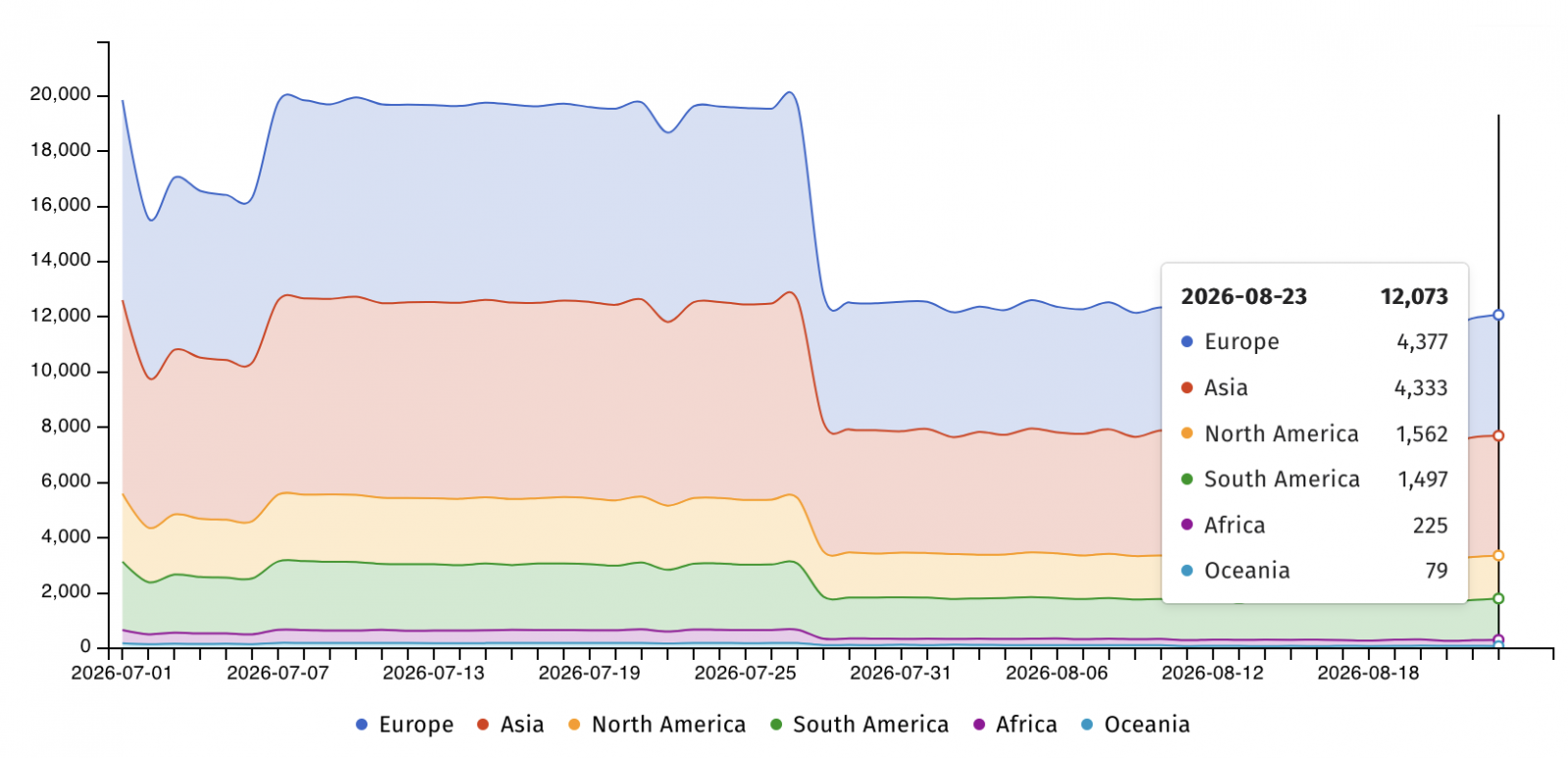
Global threat intelligence providers have been actively monitoring the situation. Shadowserver, a non-profit organization dedicated to internet security, reported observing over 12,000 Zimbra servers publicly exposed on the internet. While this figure represents the total number of detectable Zimbra instances, it does not differentiate between those that have been adequately secured, those acting as honeypots for research, or those that remain vulnerable. More concerningly, Shadowserver subsequently identified over 270 compromised Zimbra Collaboration Suite instances where forensic artifacts indicative of CVE-2026-73570 exploitation were detected. This distinction between "exposed" and "compromised" is critical, confirming that the threat is not merely theoretical but has manifested in actual breaches across a significant number of installations. The presence of these exploitation artifacts underscores the necessity for organizations to not only patch but also conduct thorough forensic analysis to determine if their systems have already been compromised.
Zimbra Collaboration Suite is a highly popular and widely deployed email and collaboration platform, utilized by hundreds of millions of individuals and organizations across the globe. Its user base includes numerous government agencies, thousands of businesses, and educational institutions, making it a lucrative target for various threat actors, ranging from financially motivated cybercriminals to sophisticated state-sponsored groups. The centralized nature of email and collaboration platforms, which often house vast repositories of sensitive communications, proprietary data, and user credentials, makes them particularly attractive targets for espionage, intellectual property theft, and disruptive attacks.

The current incident is not an isolated event but rather fits into a recurring pattern of Zimbra security vulnerabilities being actively exploited in the wild. Over recent years, Zimbra installations have frequently been targeted by advanced persistent threat (APT) groups seeking to exfiltrate sensitive data and maintain persistent access to victim networks. For instance, in March of this year, researchers detailed how APT28, a state-sponsored threat group widely associated with Russia’s military intelligence service (GRU), was exploiting a stored cross-site scripting (XSS) vulnerability in attacks directed against Ukrainian government ZCS servers. Such attacks typically aim to gain access to email accounts, steal credentials, and gather intelligence.
Furthermore, in October 2024, cybersecurity agencies from the U.S. and the UK issued a joint alert concerning APT29, also known as Midnight Blizzard or Cozy Bear, a group linked to Russia’s Foreign Intelligence Service (SVR). This group was observed targeting Zimbra servers by exploiting a different flaw, one previously known for its use in stealing email account credentials. The consistent targeting by these highly capable state-sponsored groups underscores the strategic value of compromising collaboration platforms like Zimbra for geopolitical objectives and intelligence gathering. Another notable campaign involved the Russian cyber espionage group Winter Vivern, which exploited a reflected Cross-Site Scripting (XSS) vulnerability to illicitly access emails belonging to individuals and organizations aligned with NATO via vulnerable Zimbra webmail portals. This historical context illustrates that Zimbra’s widespread adoption and the critical data it handles have made it a persistent target for sophisticated adversaries.
Given the confirmed active exploitation, CISA’s directive is not merely a recommendation but a binding order for federal agencies. Beyond immediate patching, organizations using Zimbra Collaboration Suite, regardless of their sector, must undertake proactive measures. CERT Polska’s initial advisory offered crucial forensic guidance: security teams should meticulously review system logs for any anomalous activity, particularly unexpected restarts of the Zimbra service. Furthermore, a thorough examination of specific directories—/opt/zimbra/jetty/webapps/, /opt/zimbra/jetty_base/webapps/, and /tmp/—for any newly created or modified files by the ‘zimbra’ user within the last 30 days is strongly advised. These locations are common staging grounds for attacker payloads or webshells post-exploitation.
The imperative to patch is just one layer of a comprehensive defense strategy. Organizations must also consider network segmentation to limit the lateral movement of attackers, deploy robust intrusion detection and prevention systems (IDS/IPS) to identify and block malicious traffic, and implement strong access controls based on the principle of least privilege. Regular vulnerability scanning and penetration testing are essential to proactively identify and address weaknesses before adversaries can exploit them. For the SNMP component specifically, if its notification features are not critical for operational needs, disabling them or restricting access to trusted networks and users can significantly reduce the attack surface. Furthermore, enhancing employee security awareness training can help prevent social engineering tactics often used as an initial vector for more complex attacks.
The broader implications of this incident extend beyond the immediate threat to Zimbra users. It serves as a stark reminder of the challenges organizations face in securing complex, interconnected software ecosystems. The "patch or perish" reality is increasingly evident, where delays in applying security updates can have catastrophic consequences. The incident also highlights the critical role of national cybersecurity agencies like CISA in aggregating threat intelligence, issuing timely alerts, and mandating remediation actions to protect critical infrastructure. As cyber warfare capabilities continue to advance, the continuous monitoring, rapid response, and collaborative intelligence sharing among government bodies, vendors, and security researchers become paramount in safeguarding digital assets against an ever-evolving threat landscape.
In conclusion, the urgent CISA directive regarding the actively exploited Zimbra vulnerability underscores a pressing cybersecurity challenge. The confluence of a critical RCE flaw, confirmed in-the-wild exploitation, and Zimbra’s pervasive deployment across sensitive sectors creates an elevated risk environment. While immediate patching is non-negotiable for federal agencies and highly recommended for all other organizations, a multi-faceted approach encompassing forensic analysis, robust security controls, and a proactive posture against known and emerging threats is essential. The enduring appeal of collaboration suites as high-value targets ensures that the vigilance required to defend against sophisticated adversaries will remain a permanent feature of modern cybersecurity operations.




 Lisa Mariana
 Aura Kasih
 Ayu Aulia