Aura Kasih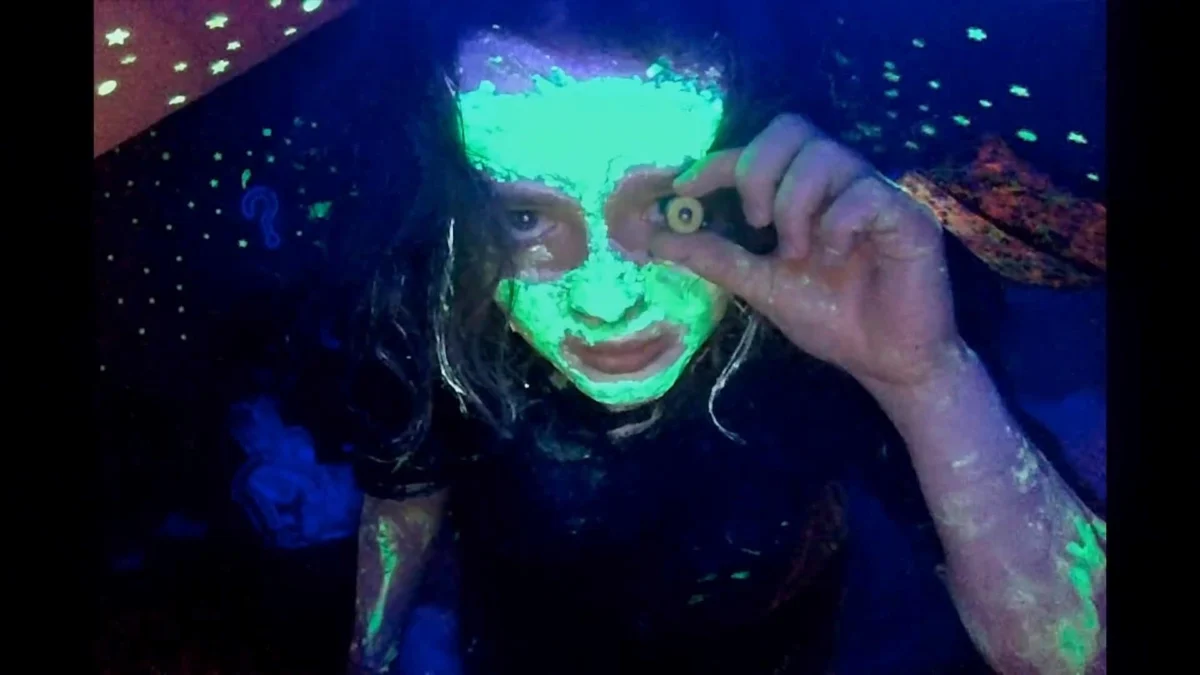
Jane Schoenbrun’s debut feature film, "We’re All Going to the World’s Fair," emerges as a profound exploration of adolescent alienation and the siren call of digital communities, masterfully weaving together elements of psychological horror and a poignant coming-of-age narrative. Released in 2021, the film, which garnered significant attention following its premiere at the Sundance Film Festival, offers a prescient examination of how the internet can serve as both a refuge and a breeding ground for obsession, particularly for those navigating the treacherous waters of their formative years.
The film centers on Casey, a solitary teenager whose existence is largely confined to the sterile anonymity of her bedroom. Her only tangible engagement with the outside world, and indeed with any form of ritualistic participation, is the titular "World’s Fair Challenge." This online phenomenon, depicted as a disturbing amalgam of urban legend, online scavenger hunt, and visceral self-inflicted ritual, immediately thrusts the viewer into a disquieting reality. The initial sequence, wherein Casey undertakes the challenge, is a meticulously crafted immersion into the film’s unsettling tone. The act of pricking her finger to draw blood, a stark physical manifestation of her commitment to this digital rite, is rendered with an unflinching intimacy that elicits a visceral reaction. This opening gambit, laden with familiar horror tropes – a cryptic incantation, a symbolic act of bodily alteration, and the creation of a mysterious digital artifact – is delivered through the unblinking gaze of a young girl staring directly into her webcam, creating an atmosphere of profound unease and immediate psychological discomfort.
The underlying premise of the World’s Fair Challenge is the promise of transformation. Participants, after completing the ritual, are encouraged to document and share any perceived changes, however bizarre or inexplicable. These reported metamorphoses range from the unsettlingly surreal, such as a gradual ossification into a plasticine form, to the grotesquely abstract, where bodily functions are re-imagined as the geometric formations of a video game. This fantastical element, while seemingly outlandish, serves as a potent metaphor for the profound internal shifts and identity exploration characteristic of adolescence. The challenge, in essence, becomes a catalyst for Casey’s desperate search for self, a quest for validation and connection within the boundless, yet often isolating, expanse of the internet.
At its core, "We’re All Going to the World’s Fair" is a deeply resonant coming-of-age story, yet it subverts many conventional expectations. Casey’s isolation is palpable; she is depicted as existing entirely outside the realm of peer interaction, her interactions with other adolescents nonexistent. Her familial environment is equally fractured, with her father’s presence marked only by his disembodied, often agitated, vocalizations, offering no tangible support or guidance. Her desperate attempts to bridge this chasm of loneliness manifest in her meticulously crafted video diary, where she chronicles the purported effects of the World’s Fair Challenge. These uploads are not merely passive documentation; they are her lifeline, her plea for recognition and belonging in a world that feels increasingly distant and indifferent.
Crucially, the film distinguishes itself from many contemporary coming-of-age narratives by deliberately sidestepping any exploration of sexual awakening or the sexualization of its protagonist. Instead, Schoenbrun meticulously focuses on Casey’s yearning for connection and her search for a sense of belonging within the hyper-connected yet profoundly isolating digital landscape. This deliberate thematic redirection underscores the film’s commitment to portraying a more nuanced and less sensationalized journey of self-discovery, one that prioritizes psychological and existential needs over conventional narrative arcs.
The film introduces another significant character, JLB, a middle-aged man who emerges as a spectral presence in Casey’s digital life. His interventions, framed as warnings about Casey’s safety and the perilous nature of the challenge, inject a palpable layer of disquiet into their burgeoning online relationship. The dynamic between Casey and JLB is imbued with a pervasive sense of unease, amplifying the film’s already potent atmosphere of voyeurism and vulnerability. While never explicitly stated, the subtext strongly suggests JLB’s potential predatory intentions, his engagement with Casey hinting at a disturbing attempt to exploit her youthful naiveté and profound loneliness. This insidious undercurrent adds a critical dimension to the film’s exploration of online safety and the inherent dangers faced by vulnerable individuals in the digital sphere.
"We’re All Going to the World’s Fair" thrives in its deliberate embrace of ambiguity. Schoenbrun masterfully cultivates an environment of uncertainty, allowing the audience to grapple with the unsettling implications of Casey’s journey. While the film may not reach the overtly surreal or overtly campy heights of Schoenbrun’s later work, such as "I Saw the TV Glow" or "Teenage Sex and Death at Camp Miasma," it stands as a testament to the power of original independent cinema. The film’s innovative application of body horror tropes, employed not for gratuitous shock value but as visceral metaphors for psychological distress and the fragmentation of self, solidifies its position as a significant and thought-provoking cinematic achievement.
The film’s narrative arc, eschewing conventional resolutions, forces viewers to confront the pervasive anxieties of modern existence, particularly the intricate interplay between our online personas and our offline realities. Casey’s immersion in the World’s Fair Challenge can be interpreted as a desperate attempt to externalize internal turmoil, to find tangible evidence of change in a world that often feels intangible and overwhelming. The challenge itself becomes a performance, a curated identity designed to elicit a specific response from an unseen audience, mirroring the broader dynamics of social media engagement.
The visual language of the film further amplifies its thematic concerns. The claustrophobic framing, the use of lo-fi digital aesthetics, and the deliberate sparseness of the physical environment all serve to underscore Casey’s isolation and her increasingly blurred perception of reality. The webcam becomes her primary lens, transforming her bedroom into a stage and her personal experiences into digital content. This visual strategy not only immerses the audience in Casey’s subjective experience but also prompts critical reflection on the nature of authenticity and performance in the digital age.
Furthermore, the film’s exploration of isolation resonates deeply with contemporary societal trends. As digital connectivity becomes increasingly pervasive, paradoxically, many individuals report feeling more disconnected than ever. "We’re All Going to the World’s Fair" taps into this collective anxiety, illustrating how the allure of online communities, while offering a semblance of belonging, can also exacerbate feelings of loneliness and alienation if not navigated with caution and self-awareness. Casey’s story serves as a cautionary tale, highlighting the potential pitfalls of seeking validation and identity solely through digital means.
The character of JLB, while a source of dread, also functions as a complex representation of the adult world’s often intrusive and misguided engagement with youth. His attempts to "help" Casey, while potentially stemming from a place of concern, are tinged with an unsettling paternalism and a voyeuristic fascination that blurs the lines between protection and exploitation. This dynamic forces the audience to question the motivations of those who seek to engage with vulnerable individuals online and the ethical considerations surrounding such interactions.
"We’re All Going to the World’s Fair" is a film that lingers long after the credits roll, prompting introspection about the nature of identity, the search for connection, and the profound impact of the digital realm on our psychological well-being. It is a testament to Schoenbrun’s distinctive directorial voice, showcasing a remarkable ability to craft intimate and unsettling narratives that resonate with contemporary anxieties. The film’s power lies in its refusal to offer easy answers, instead inviting viewers to engage with its complexities and to contemplate the evolving landscape of human connection in an increasingly digitized world. Its enduring relevance is a testament to its prescient exploration of themes that continue to shape our collective experience.




 Lisa Mariana
 Safa Marwah
 Ayu Aulia