Lisa Mariana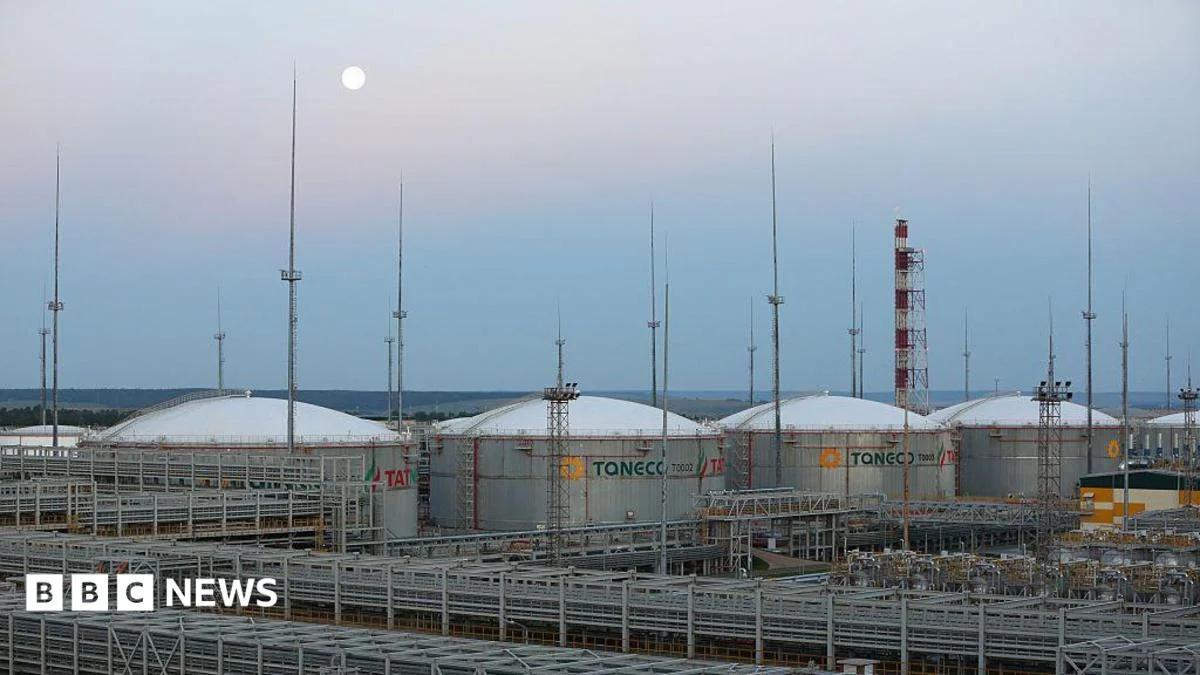
An aerial assault, attributed to Ukrainian forces, has penetrated deep into Russian territory, striking the republic of Tatarstan and resulting in a substantial loss of life and extensive injuries, underscoring the escalating reach and impact of Kyiv’s evolving drone capabilities against Moscow’s vital industrial infrastructure. This incident, which unfolded over several hours, marks one of the most severe single attacks on Russian soil since the full-scale invasion commenced, drawing sharp international attention to the expanding geographical scope of the conflict.
The attack, centered on the city of Nizhnekamsk, a key industrial hub, claimed the lives of at least thirteen individuals, among whom was a minor, according to official statements from Russian authorities. Additionally, seventy-five people sustained injuries of varying degrees, necessitating widespread medical attention and emergency response efforts. The sheer scale of casualties distinguishes this strike as particularly devastating within the context of cross-border engagements, bringing the stark realities of the conflict closer to Russia’s interior regions.
Nizhnekamsk is situated over 1,100 kilometers (approximately 680 miles) from the internationally recognized Ukrainian border, a distance that highlights the advanced range and operational sophistication of the unmanned aerial vehicles (UAVs) deployed in the operation. While Ukrainian officials have maintained a public silence regarding direct responsibility for the specific assault, the Ukrainian Armed Forces acknowledged that the Tanevo oil refinery in Nizhnekamsk had been successfully targeted. Furthermore, FirePoint, a Ukrainian defense technology firm, publicly stated that its FP-1 drones were utilized in the precision strike, offering a glimpse into the indigenous technological advancements underpinning these long-range operations.
Eyewitness accounts and unverified visual media circulating on social platforms depicted dramatic scenes of the aftermath, including towering plumes of smoke and intense flames erupting from industrial facilities, set against a backdrop of wailing air raid sirens. The protracted nature of the assault, which reportedly spanned from late night into the early morning hours, suggests a coordinated and sustained effort designed to maximize disruption and impact. Such imagery, even if unverified by independent sources, contributes significantly to public perception and underscores the severity of the incident.
Tatarstan, a strategically important and economically robust republic within the Russian Federation, serves as a critical nexus for oil refining, petrochemical production, and other heavy industries. Its considerable distance from the front lines has historically shielded it from direct conflict, making it a "deep rear" target whose vulnerability sends a potent message about the evolving nature of the conflict. The region’s economic output, particularly its contributions to Russia’s energy sector, provides substantial revenue that directly or indirectly supports Moscow’s war efforts, making such facilities attractive strategic targets for Kyiv.
The broader strategy behind these deep-strike operations by Ukraine appears to be multifaceted. Firstly, they aim to degrade Russia’s military-industrial complex and economic capacity by targeting energy infrastructure, logistics hubs, and defense-related production sites. By disrupting the flow of refined petroleum products, for instance, Ukraine seeks to impact Russia’s ability to fuel its military machinery, from tanks and aircraft to logistical transport. Secondly, such attacks carry a significant psychological dimension, demonstrating Kyiv’s capability to project power deep into Russian territory, thereby challenging the Kremlin’s narrative of maintaining control and security over its sovereign lands. This can erode public morale within Russia and potentially strain internal political stability by showcasing the war’s tangible costs to ordinary citizens. Thirdly, these strikes force Russia to divert valuable air defense assets from the front lines to protect its vast hinterland, potentially creating vulnerabilities that Ukrainian forces could exploit elsewhere.
Russian authorities confirmed that the strike targeted both industrial facilities and residential areas. The Russian Investigative Committee emphasized that "civilian individuals who were not involved in any military operations were present," a statement that highlights the tragic human cost and raises complex questions regarding adherence to international humanitarian law. While industrial facilities are legitimate military targets if they contribute to the war effort, the proximity of residential areas and the resulting civilian casualties are always a matter of grave concern under the principles of distinction and proportionality in armed conflict. The BBC, which reported on the initial details, did not independently verify Russia’s claims regarding civilian presence, reflecting the inherent challenges of immediate, independent verification in active conflict zones.
In the immediate aftermath, Rustam Minnikhanov, the head of Tatarstan, acknowledged the attack and extended condolences to the families of those who perished. Radmir Belayev, the mayor of Nizhnekamsk, articulated the profound grief felt locally, stating, "This is a tremendous pain for all of us." A period of official mourning has been declared across Tatarstan, underscoring the severity of the emotional and social impact on the region’s populace. This public display of grief and official recognition of the casualties stands in contrast to previous instances where Russian authorities have been less transparent about the impact of Ukrainian cross-border attacks.
This recent assault is not an isolated incident in Nizhnekamsk; Ukrainian defense forces had previously targeted oil refineries in the city on June 12, indicating a pattern of sustained strategic targeting of the region’s energy infrastructure. The repetition of strikes against such a distant and crucial target underscores both Ukraine’s persistent intent and its developing capabilities to overcome Russian air defenses. Moscow, for its part, asserted that its air defense systems intercepted more than 450 Ukrainian drones across various regions overnight, a claim that, if accurate, points to the sheer volume of aerial assaults being launched by Kyiv but also highlights the inherent difficulty in achieving a 100% interception rate against massed drone attacks, especially over vast distances.
The evolution of Ukraine’s drone warfare capabilities has been a notable feature of the conflict. Initially reliant on repurposed commercial drones and limited military UAVs, Kyiv has rapidly developed and deployed a range of indigenous long-range strike drones. These platforms, often designed for kamikaze missions, are relatively inexpensive to produce compared to missiles, yet capable of delivering significant payloads over vast distances. This asymmetric approach allows Ukraine to impose costs on Russia’s war machine and challenge its perceived invulnerability, even when facing a numerically and technologically superior adversary in conventional terms. The strategic choice to target energy infrastructure aligns with a broader objective of undermining Russia’s economic stability and its capacity to sustain prolonged military operations.
The international implications of these deep strikes are significant. They highlight the escalating nature of the conflict and the increasing risk of unintended escalation. While Western allies generally support Ukraine’s right to self-defense, there remains a nuanced debate about supplying Kyiv with weapons that could be used for direct strikes deep into Russian territory, largely out of concern for potential retaliatory measures from Moscow. However, Ukraine’s indigenous drone development circumvents some of these concerns, enabling it to execute such operations independently.
For Russia, the continued penetration of its airspace by Ukrainian drones, particularly in regions considered safe havens, presents a significant challenge to its internal security and public confidence. It necessitates a costly reallocation of resources to enhance air defense capabilities across its vast territory, potentially drawing assets away from the front lines or from other strategic areas. The economic impact on its energy sector, while perhaps not immediately catastrophic, contributes to a cumulative strain on its war economy, which is already contending with international sanctions and the direct costs of military operations.
Looking ahead, it is highly probable that Ukraine will continue to pursue its strategy of long-range drone strikes against Russian military-industrial and energy targets. As Kyiv’s drone technology continues to advance and its operational experience grows, the frequency and precision of these attacks are likely to increase. Russia, in turn, will likely intensify its efforts to bolster its air defense networks, develop counter-drone technologies, and potentially launch retaliatory strikes against Ukrainian drone production facilities or command centers. This ongoing aerial contest represents a critical dimension of the conflict, with significant implications for the balance of power, the economic resilience of both nations, and the overall trajectory of the war. The tragic civilian casualties in Tatarstan serve as a stark reminder of the expanding human cost of a conflict that continues to defy easy resolution.



 Aura Kasih
 Safa Marwah
 Ayu Aulia