
 Ayu Aulia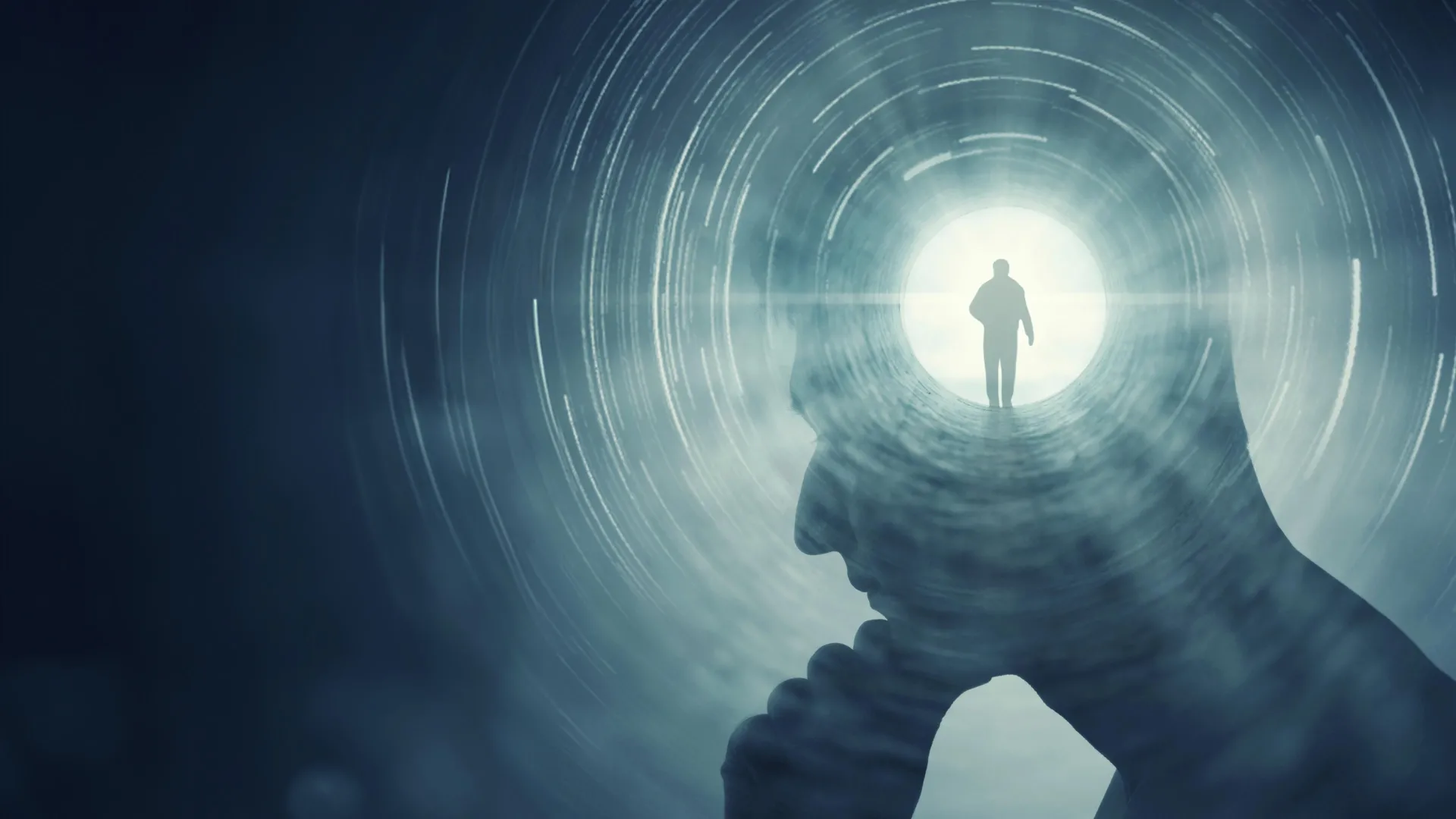
The fundamental inquiry into whether human consciousness is an emergent property of complex brain activity or a more intrinsic element of existence represents one of science’s most profound frontiers. Dr. Christof Koch, a preeminent neuroscientist recognized for his pioneering work in the field, recently underscored this pivotal debate during the 15th "Behind and Beyond the Brain" Symposium, challenging prevailing scientific paradigms and urging a deeper exploration into the very nature of awareness.
The intricate mechanisms by which the brain processes information are increasingly understood, yet the transition from neural computation to subjective experience remains an intractable puzzle. While advanced neuroimaging techniques can precisely map regions of cerebral activity correlating with specific actions, sensations, or cognitive functions—such as recognizing a face, experiencing pain, recalling a memory, or making a choice—they have yet to illuminate why these electrochemical events are accompanied by an internal, felt reality. Researchers can meticulously document the brain’s operational blueprint, but the genesis of the subjective sensation of "being" from this physical substrate continues to elude comprehensive explanation.
The Intractable "Hard Problem"
At the heart of Koch’s discourse was a critical examination of materialism, the predominant scientific worldview positing that all phenomena, including mental states, can ultimately be reduced to and explained by physical matter, energy, and their governing laws. Neuroscience has undeniably achieved monumental strides in identifying neural correlates of consciousness, pinpointing specific brain regions and intricate networks that light up during conscious states. However, it has demonstrably fallen short of resolving what philosophers term the "hard problem" of consciousness—a concept articulated by David Chalmers. This problem refers to the profound difficulty in explaining how the objective, measurable electrical and chemical processes within the brain give rise to subjective, qualitative experiences, known as qualia. These include the unique sensory quality of seeing the color red, the emotional valence of joy or sorrow, the cognitive content of a thought, and the overarching, personal sensation of being a conscious entity.
A detailed functional magnetic resonance imaging (fMRI) scan, for instance, can illustrate the precise cascade of neuronal firing and metabolic changes occurring when an individual observes the color red. Yet, no amount of detailed physiological data can explain why that specific neural activity results in the subjective feeling of redness, or indeed, any feeling whatsoever. This gap between objective physical description and subjective inner experience is the crux of the hard problem, posing a significant challenge to purely reductionist explanations.
Anomalous Experiences and the Limits of Reductionism
Koch’s future research agenda proposes a focused inquiry into three critical domains where current materialist models appear to encounter significant limitations. The first involves the inherent challenge of fully reducing the richness and complexity of conscious experience to purely physical processes within the brain. This touches upon the philosophical debate regarding emergent properties—whether consciousness is an entirely new property that arises from complex organization but is not reducible to its parts, or something more fundamental.
The second area of uncertainty stems from contemporary physics, which increasingly questions our fundamental understanding of reality itself. Concepts emerging from quantum mechanics and theoretical cosmology suggest a universe far more enigmatic than classical physics once proposed, potentially opening avenues for considering consciousness in non-traditional ways. If the very fabric of reality is stranger and more interconnected than previously conceived, then the role and origin of consciousness might also require a radical re-evaluation.
The third, and perhaps most provocative, area of investigation concerns unusual human experiences that defy easy categorization or explanation within conventional scientific frameworks. These include widely reported phenomena such as near-death experiences (NDEs), profound mystical states, and the intriguing occurrence of terminal lucidity. Terminal lucidity refers to the unexpected and often transient return of mental clarity, memory, and communicative ability in individuals shortly before death, particularly those who have suffered from severe neurological degenerative conditions like advanced dementia, which had previously rendered them profoundly impaired and unable to interact meaningfully with their environment.
While such experiences do not unequivocally provide irrefutable evidence that consciousness can exist independently of the brain, Koch contends that they warrant rigorous and unbiased scientific investigation. He argues that these phenomena, precisely because they are anomalous, may serve as critical indicators of significant lacunae or limitations in our current understanding of brain function and the nature of consciousness. Ignoring them would be to overlook potential empirical data points that could guide future theoretical developments.
Reconsidering Philosophical Foundations: Idealism and Panpsychism
In light of these persistent challenges, Koch suggests that researchers may need to broaden their conceptual toolkit, re-engaging with long-standing philosophical concepts such as idealism and panpsychism, while simultaneously maintaining the rigorous empirical methodology characteristic of modern science.
Idealism, in its broadest interpretation, posits that consciousness or mind is the primary constituent of reality, suggesting that the physical world we perceive is ultimately dependent on or even a manifestation of consciousness. This stands in stark contrast to materialism, which typically views consciousness as a byproduct of physical matter. Panpsychism, on the other hand, proposes that consciousness, or proto-conscious properties, is not an exclusive attribute of highly evolved biological brains but rather a fundamental, pervasive property found throughout nature, existing in varying degrees of complexity and integration. It suggests that even elementary particles or fundamental physical systems possess some rudimentary form of consciousness or experiential quality.
From these perspectives, consciousness would not simply materialize once a biological system, like a brain, achieves a certain threshold of complexity. Instead, it would be an inherent, underlying feature of reality itself, potentially present in the very fabric of the cosmos. The brain, in this view, might not create consciousness, but rather act as a filter, a receiver, or an organizer of a more universal consciousness, allowing for its specific manifestation in human experience.
Integrated Information Theory: A Mathematical Approach to Awareness
Dr. Koch is a leading proponent and developer of Integrated Information Theory (IIT), a sophisticated framework that endeavors to provide a mathematical and axiomatic description of consciousness. IIT postulates that subjective experience arises in physical systems that possess two key properties: a high degree of information (the system must have a vast repertoire of possible states, and its current state must reduce uncertainty about its past and future states) and a high degree of integration (the system’s parts must be causally interdependent, forming a unified whole that cannot be decomposed into independent components without losing its identity).
According to IIT, consciousness, or "phi" (Φ), is a measure of the extent to which a system can combine a large amount of information into a single, irreducible whole. A system with a high Φ value would therefore possess some form of subjective experience. This theory suggests that consciousness is not merely about the quantity of information a system contains, but crucially, about how profoundly interconnected and causally unified its components are. A simple collection of independent components, even if they process a lot of information, would not generate high Φ.
IIT has been characterized as a scientific rendition of panpsychism because its framework allows for the possibility that consciousness could exist in systems beyond the human brain, provided they meet the criteria of high information integration. This could potentially extend to complex computational systems, and in some interpretations, even to very basic physical systems, albeit at vastly different levels of complexity and experiential richness than human consciousness. The theory provides a quantifiable metric that could, in principle, be applied to various systems to assess their potential for generating subjective experience, moving the discussion from purely philosophical speculation to empirically testable hypotheses.
Practical Applications and Future Trajectories
Beyond his theoretical contributions, Dr. Koch has held influential positions as a researcher at the Allen Institute for Brain Science and previously as a distinguished professor at institutions such as MIT and Caltech. His impactful career has been instrumental in shaping the modern scientific investigation of consciousness, bridging neuroscience with computational and philosophical inquiries.
A significant aspect of his practical work has involved the development of novel methodologies for detecting potential signs of awareness in patients who appear clinically unresponsive. These individuals, often suffering from severe brain injuries or disorders of consciousness, may be unable to move, speak, or otherwise communicate, leading to a diagnosis of a vegetative state or minimally conscious state. Koch’s research, leveraging advanced neuroimaging and neurophysiological techniques, aims to identify residual conscious brain activity in such patients, which can have profound implications. Reliable detection methods are crucial for accurate diagnosis, guiding appropriate treatment strategies, and informing critical decisions about medical care and end-of-life planning, offering a glimmer of hope for communication and connection with those seemingly lost to us.
By systematically challenging the limits of reductionist materialism, confronting the unresolved questions of contemporary neuroscience, and advocating for the rigorous investigation of experiences that defy conventional explanations, Dr. Koch is pushing the scientific community to ponder a question of ultimate significance: Does the brain merely produce consciousness, or is it, perhaps, a sophisticated instrument that connects us to a more fundamental, pervasive aspect of reality itself? The answer to this profound inquiry promises to reshape not only our understanding of the human mind but also our place within the cosmos. The interdisciplinary quest for this answer continues, promising to be one of the most transformative scientific endeavors of the 21st century.



 Lisa Mariana
 Aura Kasih


 Safa Marwah