Ayu Aulia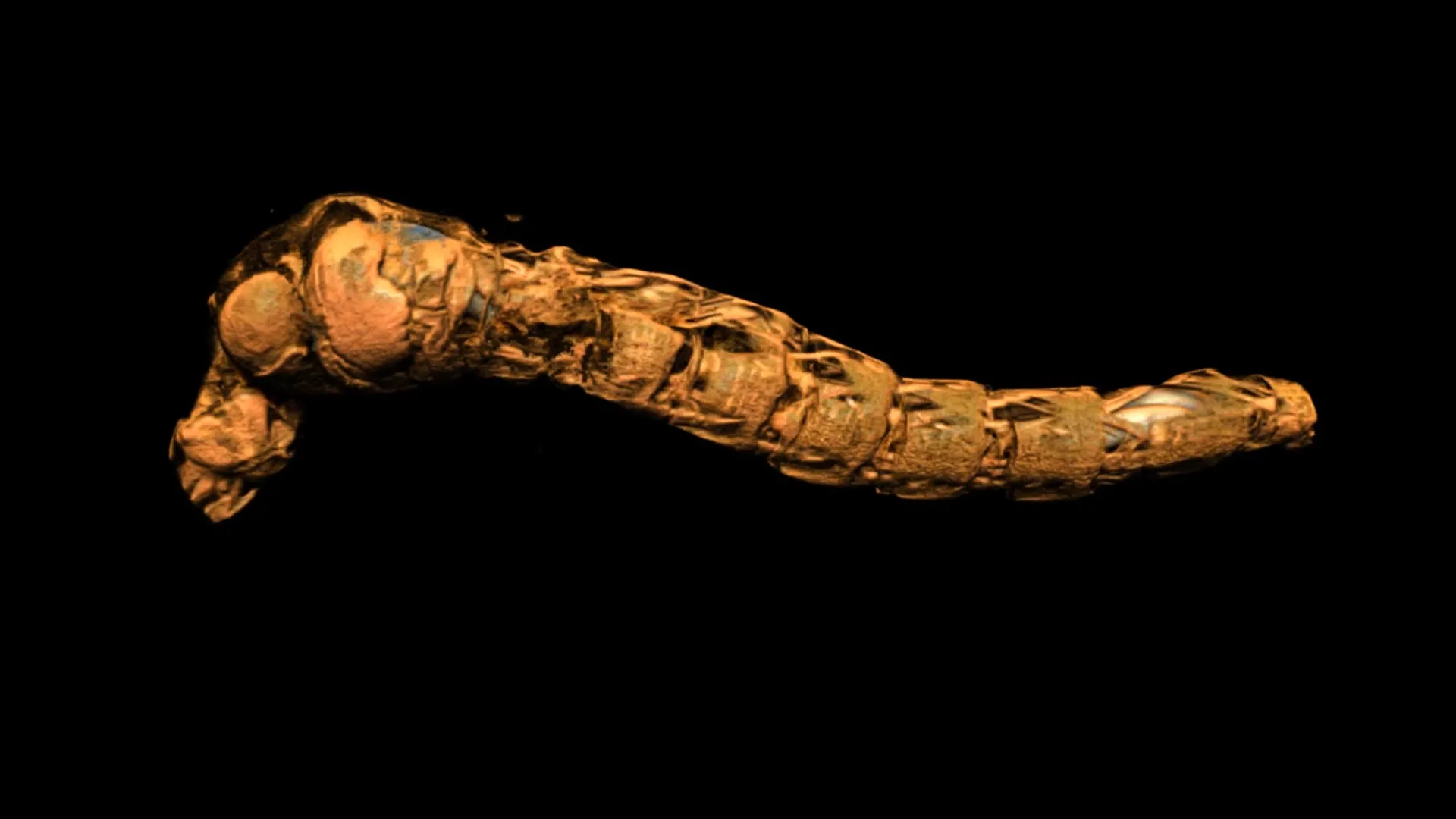
A recent scientific inquiry into the extreme adaptations of insect larvae residing in an East African lake is compelling researchers to critically re-evaluate long-held theories concerning the pervasive absence of insects from the world’s open oceans. The focal point of this re-evaluation is a sophisticated and remarkably resilient system of internal air sacs, which these aquatic insects employ for buoyancy control and have demonstrated an astonishing capacity to withstand hydrostatic pressures far exceeding prior scientific expectations. This discovery not only provides a unique window into the evolutionary potential of insect physiology but also carries significant implications for our understanding of life in extreme environments and the development of next-generation biomaterials.
For millennia, the vast expanse of Earth’s oceans has remained largely untouched by the myriad forms of insect life that dominate terrestrial and freshwater ecosystems. This ecological anomaly has long intrigued biologists, prompting various hypotheses to explain the near-total exclusion of a phylum that represents over 80% of all known animal species. While insects thrive in virtually every other habitat, from arid deserts to polar ice caps, their presence in marine environments is conspicuously sparse, primarily limited to the intertidal zone or the immediate surface. The deep ocean, in particular, has been considered an insurmountable barrier, largely due to the profound hydrostatic pressures that increase by approximately one atmosphere for every ten meters of depth, posing an existential threat to organisms reliant on gas-filled structures. The findings from Lake Malawi, however, introduce a compelling counter-narrative, suggesting that the prevailing "pressure hypothesis" may require considerable refinement.
Within the deep, stratified waters of Lake Malawi, a colossal freshwater expanse known for its extraordinary biodiversity and geological significance, lives a truly exceptional creature: the larva of the lake fly, Chaoborus edulis. These unassuming invertebrates engage in one of the planet’s most spectacular and synchronized daily migrations, a vertical journey of epic proportions. As daylight bathes the lake’s surface, billions of these larvae undertake a profound descent, plunging more than 200 meters into the lake’s aphotic depths. This abyssal region is characterized by an acute scarcity of dissolved oxygen, creating an environment often termed a "dead zone" or oxygen minimum zone (OMZ). While seemingly hostile, this hypoxic sanctuary offers an invaluable refuge from the myriad visually-oriented predators, primarily fish, that patrol the oxygen-rich surface waters. Conversely, under the cloak of darkness, the larvae meticulously reverse their migration, ascending towards the surface to forage for sustenance, navigating the perilous gauntlet of hungry fish awaiting their return.
To meticulously chart this immense, synchronized movement, a team of researchers from the University of British Columbia, Drs. Philip Matthews and Evan McKenzie, deployed advanced sonar technology directly onto the lakebed. This innovative approach allowed them to precisely track the gargantuan aggregations of larvae as they navigated the water column, providing unprecedented insights into the scale and precision of their daily vertical exodus. The sheer biomass involved in this migration represents a significant component of the lake’s ecosystem, influencing nutrient cycling and providing a crucial trophic link between the deep and shallow zones. The ability to monitor such a vast collective movement offered critical preliminary data that hinted at an exceptionally sophisticated mechanism for depth control, prompting further physiological investigation.
The subsequent microscopic examination of the Chaoborus edulis larvae revealed the physiological underpinnings of their remarkable aquatic prowess. The researchers discovered that these insects had ingeniously co-opted and modified elements of their respiratory system, transforming them into a pair of highly specialized air sacs. These structures, numbering two pairs, function with striking similarity to the ballast tanks integral to the operation of a submarine. By dynamically modulating the volume of these internal gas-filled chambers, the larvae possess an exquisite degree of control over their buoyancy. An increase in sac volume reduces overall density, enabling them to ascend effortlessly, while a decrease in volume increases density, facilitating their descent into the protective depths. This active buoyancy control stands in stark contrast to passive sinking or swimming, allowing for precise positioning within the water column with minimal energy expenditure.
Central to the structural integrity and dynamic functionality of these extraordinary air sacs is a biomaterial known as resilin. This protein-based elastomer is renowned for its exceptional elasticity and resilience, earning it the moniker of "biological rubber." Resilin is widely distributed throughout the insect kingdom, often found in structures requiring repeated, high-strain deformation, such as wing hinges, jumping mechanisms, and specialized tendons, where it prevents fatigue and ensures durability over millions of cycles. In the Chaoborus larvae, resilin forms a crucial component of the air sac walls, providing both the strength to withstand pressure and the flexibility to undergo rapid volume changes.
The mechanism by which the larvae manipulate the air sac volume is equally ingenious. They achieve this through a precise biochemical control over the pH within the immediate vicinity of the sac walls. Changes in pH trigger a conformational shift in the resilin molecules, causing them to either expand or contract. This pH-responsive swelling and deswelling directly translates into an alteration of the air sac’s internal volume. The ability to finely tune this internal chemical environment provides the larvae with an unparalleled level of hydrostatic control, allowing them to adjust their position with remarkable precision, adapting instantly to changes in water density or physiological demands. This sophisticated bio-mechanical system represents a pinnacle of natural engineering, optimizing both efficiency and control for their demanding daily migrations.
To quantify the true limits of this biological innovation, the research team conducted a series of controlled experiments, subjecting the Chaoborus larvae to progressively increasing pressures within custom-designed miniature pressure chambers. The results of these tests were profoundly illuminating and, to a significant degree, defied prior expectations. The resilin-reinforced air sacs demonstrated an astonishing capacity to endure pressures equivalent to those found at depths exceeding 400 meters. This figure is more than double the depth these larvae typically navigate during their daily vertical journeys. The discovery of such an extensive safety margin in their pressure tolerance suggests either a legacy from ancestral forms that might have ventured deeper, or an evolutionary over-engineering to cope with sudden pressure fluctuations or the added stress of predation attempts.
This remarkable resilience directly challenges one of the most prevalent and enduring explanations for the near-total absence of insects from the open ocean: the hypothesis that the crushing pressures of deep water would inevitably collapse their air-filled respiratory systems and internal organs. While this "pressure hypothesis" has historically been a cornerstone of marine insect ecology, the Chaoborus larvae provide compelling evidence that insects can evolve highly robust, pressure-resistant gas exchange and buoyancy control mechanisms. Their existence suggests that pressure alone may not be the sole or even primary factor limiting insect proliferation in marine environments.
The implication of this finding is profound, prompting a re-evaluation of other potential ecological, physiological, and evolutionary barriers. For instance, the challenges of osmoregulation in a hyper-saline environment pose a significant hurdle for many freshwater or terrestrial organisms. The competitive landscape of the ocean, dominated by highly adapted crustacean and fish faunas, might also present an insurmountable barrier for colonizing insects. Furthermore, unique developmental strategies, such as complex metamorphosis, or specific dietary requirements might not be easily accommodated within the marine food webs. The Chaoborus discovery underscores the necessity of adopting a multi-factorial perspective, acknowledging that a complex interplay of environmental, physiological, and historical contingencies likely accounts for the distinctive biogeography of insects.
Beyond its ecological and evolutionary implications, the study of the Chaoborus larvae’s buoyancy system offers exciting prospects for biomimicry and the development of advanced materials. As previously noted, resilin has long captivated materials scientists due to its near-perfect elastic properties, surpassing many synthetic rubbers in terms of fatigue resistance and energy efficiency. Research has focused on understanding its molecular structure and replicating its properties for various applications, from medical implants to aerospace components.
The newly elucidated pH-responsive buoyancy system, however, introduces a novel dimension to resilin’s potential. The ability of the material to undergo precise, reversible volume changes triggered by a simple chemical signal (pH alteration) opens pathways for designing "smart materials" with unprecedented functionality. Imagine artificial muscles that can contract and expand in response to subtle chemical gradients, offering new paradigms for soft robotics, prosthetic devices, and micro-electromechanical systems (MEMS). Such pH-responsive polymers could lead to the creation of autonomous underwater vehicles with highly efficient and silent buoyancy control, or even intelligent drug delivery systems that release their payload in response to specific physiological pH changes within the body. The Chaoborus larvae, in their silent, deep-water migrations, are not merely biological curiosities; they are living blueprints for a new generation of materials and technologies, inspiring engineers and scientists to push the boundaries of innovation by emulating nature’s most durable and dynamic designs.
This groundbreaking project, partially supported by vital grants from institutions such as the Natural Sciences and Engineering Research Council of Canada, represents a significant stride in fundamental biology. It not only illuminates the extraordinary adaptive capabilities of life in extreme environments but also serves as a potent reminder that the natural world continues to hold profound secrets, challenging our assumptions and providing endless inspiration for scientific inquiry and technological advancement. The humble lake fly larva, with its resilient air sacs, compels us to rethink what is truly possible at the intersection of biology, physics, and engineering.


 Aura Kasih
 Safa Marwah