Ayu Aulia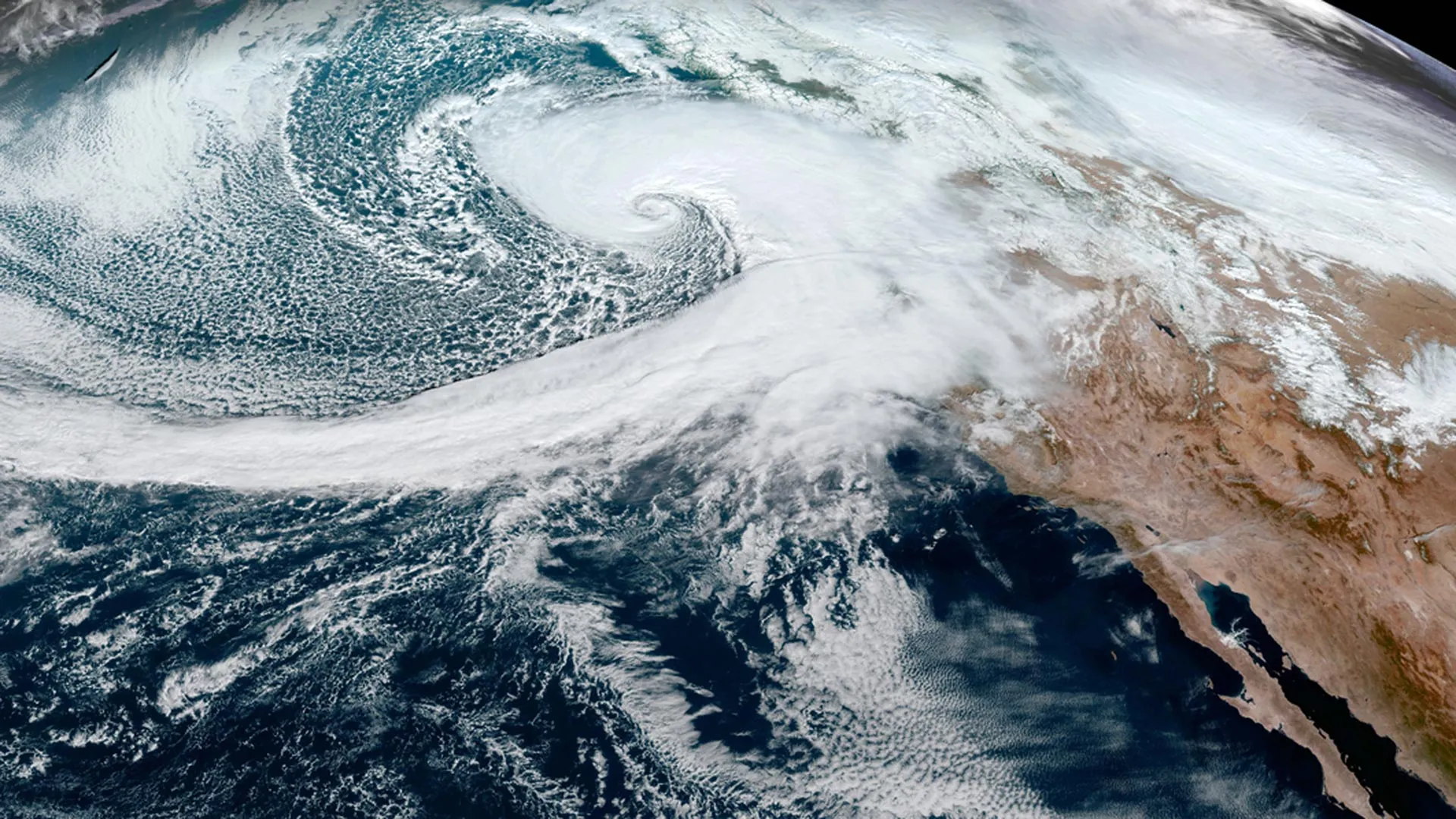
A monumental oceanic current system in the Atlantic is exhibiting a pronounced deceleration, a phenomenon poised to generate significant climatic reverberations extending far beyond its immediate basin. Emerging scientific investigations indicate that this shift could lead to a substantial increase in the severity of potent storm systems impacting the California coastline, concurrently reducing crucial snowfall accumulation across the Greenland ice sheet. This intricate interplay underscores the profound interconnectedness of Earth’s climate mechanisms, where regional alterations can trigger cascading effects across continents.
At the heart of this global climatic nexus lies the Atlantic Meridional Overturning Circulation (AMOC), an immense network of deep and surface ocean currents. Functioning as a planetary thermohaline conveyor, the AMOC plays an indispensable role in global heat distribution. It transports voluminous quantities of warm, saline tropical waters northward, moderating the climates of regions such as Western Europe and the Arctic by releasing latent heat into the atmosphere. As these waters progress poleward, they gradually cool and increase in density, eventually sinking into the abyssal depths of the North Atlantic. From there, they commence their southward journey as a deep ocean current, completing the vast circulatory loop. The integrity and vigor of this system are fundamental to the stability of regional and global weather patterns.
Scientific observations over recent decades, supported by paleoclimate data, have provided compelling evidence that the AMOC is currently undergoing a significant weakening trend, potentially reaching its weakest state in over a millennium. This decline is principally attributed to the effects of anthropogenic climate change. Rising global temperatures contribute to the thermal expansion of seawater, reducing its density. Simultaneously, the accelerating melt of the Greenland ice sheet and other Arctic glaciers introduces vast quantities of freshwater into the North Atlantic. This influx of less dense freshwater inhibits the sinking process of the northward-flowing warm currents, thereby attenuating the overall strength of the AMOC. The implications of such a fundamental alteration to Earth’s oceanic engine are far-reaching and complex, prompting intensive research into its potential consequences.
While the immediate effects of an AMOC slowdown are often discussed in the context of North Atlantic and European climate, a recent groundbreaking study has illuminated its potential to induce significant atmospheric moisture and storm pattern shifts in distant, non-Atlantic regions. Prior to this research, the precise teleconnections between the AMOC’s vigor and storm systems outside its immediate domain remained less understood. This novel analysis, employing advanced climate modeling simulations, demonstrates a critical link: a continued weakening of the AMOC could intensify storm activity across specific parts of North America, particularly along the California coast, by the close of the current century. Conversely, it projects a reduction in storm frequency and intensity over Greenland and parts of the Arctic.
The mechanism behind these predicted changes is multifaceted. A diminished AMOC fundamentally alters global ocean temperature distributions, which in turn influences the capacity of the atmosphere to carry moisture. Warmer sea surface temperatures in specific regions, for instance, can enhance evaporation, making more water vapor available for storm systems. Crucially, a weaker AMOC is also projected to strengthen upper-atmospheric winds, including the critical steering currents that guide storm tracks across the Northern Hemisphere. These amplified winds would act as a more efficient conduit, transporting greater volumes of atmospheric moisture towards the western seaboard of North America, thereby increasing the intensity of what are known as atmospheric rivers.
Atmospheric rivers (ARs) represent elongated, concentrated corridors of water vapor that originate in tropical or subtropical regions and transport substantial amounts of moisture towards higher latitudes. For California, these phenomena are profoundly significant. They are responsible for delivering a substantial portion, often 30-50%, of the state’s annual precipitation, replenishing reservoirs and vital groundwater reserves. However, ARs also possess an inherent duality: their immense capacity to transport moisture means that intensified events can unleash catastrophic rainfall, leading to severe flooding, widespread landslides, and extensive damage to infrastructure and ecosystems. The prospect of "stronger" atmospheric rivers implies an increased frequency of extreme precipitation events, exacerbating the risks associated with California’s already volatile hydroclimate. The state, which frequently oscillates between periods of prolonged drought and intense deluge, would face heightened challenges in managing its water resources and safeguarding its population from weather-related hazards.
The climate modeling conducted for this research further indicates that the ramifications of an AMOC slowdown extend beyond California. Similar increases in atmospheric river activity are projected along the eastern coast of South America and around the Antarctic continent. Concurrently, the reduction in storm frequency and snowfall over Greenland is particularly concerning. Less snowfall contributes to a negative mass balance for the Greenland ice sheet, accelerating its melt and contributing to global sea level rise. This diminished snowfall, combined with increased surface melting from rising temperatures, creates a dangerous feedback loop that further destabilizes the ice sheet. These projected global shifts are derived from high greenhouse gas emissions scenarios, which posit a continued and significant weakening of the AMOC throughout the 21st century.
The observed and projected decline of the AMOC is intrinsically linked to anthropogenic climate change. The primary drivers of elevated greenhouse gas concentrations in the atmosphere are the combustion of fossil fuels (coal, oil, and natural gas) for energy production, industrial processes, and transportation. Additional significant contributors include methane emissions from agricultural activities (particularly livestock), deforestation, and waste decomposition in landfills. Scientific consensus is unequivocal: without substantial reductions in these emissions, the AMOC’s weakening trend is highly likely to persist, intensifying its influence on global precipitation patterns and extreme weather events.
Addressing the potential impacts of a weakening AMOC necessitates a dual approach of mitigation and adaptation. On the mitigation front, aggressive and immediate reductions in global greenhouse gas emissions are paramount. Decarbonizing energy systems, transitioning to renewable energy sources, enhancing energy efficiency, improving sustainable land management practices, and developing carbon capture technologies are all critical components of a comprehensive strategy. Limiting global warming is the most effective way to slow, and potentially stabilize, the AMOC.
Concurrently, societies must develop robust adaptation strategies to cope with the inevitable changes already set in motion. For regions like California, this includes significant investments in enhanced flood protection infrastructure, such as improved levees, stormwater management systems, and strategically managed floodplains. Crucially, there is also an opportunity within the increased intensity of atmospheric rivers: if communities can improve their forecasting capabilities and expand their water storage infrastructure (including surface reservoirs and groundwater recharge systems), stronger ARs could paradoxically offer enhanced opportunities for water capture, helping to mitigate drought risks. This requires sophisticated hydrologic planning and significant infrastructural upgrades.
This research powerfully underscores the intricate, interconnected nature of Earth’s climate system. A fundamental alteration in a major ocean current in one hemisphere can propagate its effects across vast distances, profoundly altering rainfall distribution, storm intensity, and extreme weather events thousands of miles away. Such teleconnections have far-reaching implications for global ecosystems, agricultural productivity, freshwater availability, critical infrastructure, and human communities across multiple continents. Understanding these complex interdependencies is not merely an academic exercise; it is an urgent imperative that informs climate policy, disaster preparedness, and resource management strategies for the coming decades. The capacity to anticipate and prepare for these evolving climatic shifts will be a defining challenge of the 21st century.




 Aura Kasih
 Safa Marwah