Ayu Aulia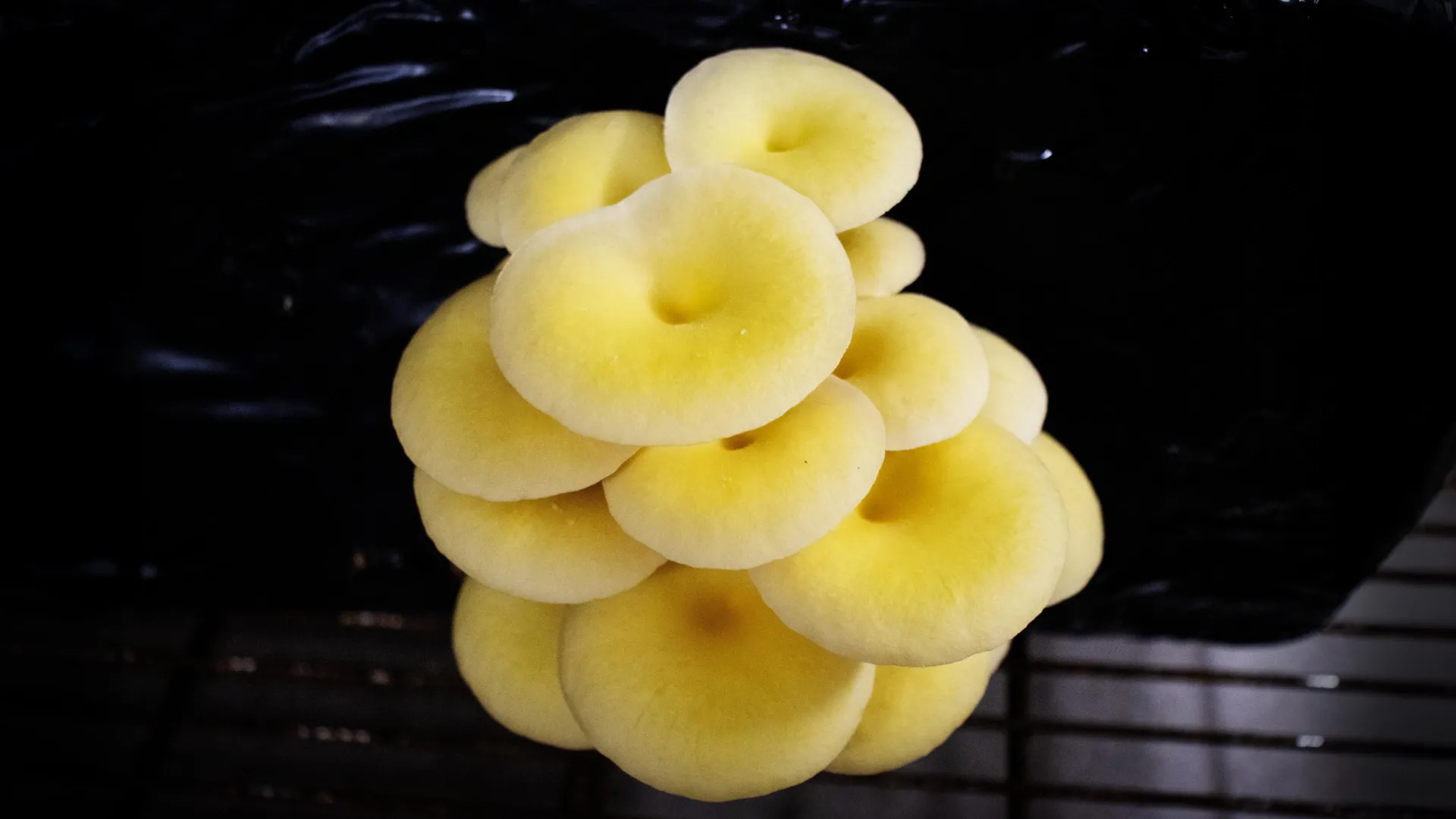
The burgeoning popularity of the golden oyster mushroom (Pleurotus citrinopileatus) as a culinary delight and home cultivation staple belies a growing ecological concern. Originally cherished for its vibrant appearance and palatable qualities, this species is now being identified as an aggressive invasive organism, increasingly establishing itself in the natural ecosystems of Florida and beyond, with potentially profound consequences for native biodiversity and critical forest functions. Scientific observations indicate a concerning pattern where a species valued for human consumption is inadvertently becoming an ecological disruptor, prompting calls for increased vigilance and revised cultivation practices.
The golden oyster mushroom, distinguished by its striking yellow, fan-shaped caps and rapid growth, has become a fixture in gourmet kitchens and a popular choice for amateur mycologists. Its widespread availability in grow-your-own kits, alongside its presence in grocery stores, farmers’ markets, and specialty food outlets, underscores its economic and culinary appeal. However, a growing body of research, spearheaded by experts like Michelle Jusino, an assistant professor of forest pathology at the University of Florida’s Institute of Food and Agricultural Sciences (UF/IFAS), suggests that the ease of cultivation and distribution of P. citrinopileatus presents an underappreciated ecological risk. This fungus is not merely a benign addition to the culinary landscape; it is demonstrating a potent capacity for environmental colonization, rapidly spreading from controlled cultivation environments into wild forest ecosystems, where its competitive prowess is altering natural fungal communities.
The Unintended Consequences of Cultivation
Professor Jusino emphasizes that the cultivation of popular species such as the golden oyster mushroom carries significant ecological responsibilities. While its attributes are highly valued in gastronomic applications, its biological characteristics suggest it is ill-suited to remain confined once introduced into outdoor environments. "The golden oyster mushroom may appear innocuous on a decaying log, yet it has proven to be an exceptionally strong competitor within forest ecosystems," Jusino states. "Its proliferation is consistently associated with discernible shifts in the fungal community structure, leading to a reduction in native fungal biodiversity and potentially impacting essential ecological processes such as the decomposition of woody material and the broader cycling of carbon." This statement highlights the critical transition from a desired cultivated product to an unwelcome ecological agent.
The inherent biological traits of P. citrinopileatus, a saprophytic fungus, contribute to its invasive potential. Saprophytes thrive by decomposing dead organic matter, particularly wood. This ecological niche is already occupied by a diverse array of native fungal species, which play indispensable roles in forest health. The golden oyster mushroom’s rapid growth rate, efficient spore production, and ability to quickly colonize substrates give it a significant competitive advantage over many indigenous fungi, allowing it to outcompete and displace them.
Human Activity as a Vector for Fungal Dispersal
The scientific community’s heightened concern is partly informed by a recently published field study conducted in Wisconsin, a project that Professor Jusino helped conceptualize and design during her tenure with the U.S. Forest Service. This research illuminated the critical role of routine human activities in the unintentional introduction and dispersal of invasive species into novel environments. The spectrum of these activities is broad, encompassing the commercial purchasing of mushrooms, their cultivation in domestic or commercial settings, and the subsequent transportation of both fresh produce and spent cultivation substrates. Each of these interactions presents opportunities for spores or mycelial fragments of P. citrinopileatus to escape into the ambient environment, subsequently establishing new colonies.
To systematically monitor and map the geographical expansion of this species, researchers leveraged the power of community science platforms. Digital repositories such as iNaturalist and Mushroom Observer, which rely on submissions from citizen scientists, proved invaluable. These crowd-sourced observations provided a detailed spatial and temporal record of golden oyster mushroom sightings across the North American continent. Analysis of this data revealed an alarming trend: within approximately a decade, P. citrinopileatus had expanded its range to encompass more than 25 U.S. states. This expansion includes diverse ecological zones, from Texas and the District of Columbia to Virginia, North Carolina, Alabama, and Louisiana, demonstrating its adaptability to various climatic conditions. Earlier investigative work, notably by Andrea Bruce, suggested that the first documented instances of this mushroom establishing itself in the wild in the United States occurred in the early 2010s, marking the onset of its invasive trajectory.
Professor Jusino articulates the severity of this observed proliferation: "It is systematically advancing southward, a phenomenon that is profoundly disquieting." She elaborates on the exponential acceleration of its spread, noting that "in 2016, the mushroom was documented growing in natural environments in merely five states, all geographically confined to the Midwest and Northeast regions. Today, I estimate that fewer than ten states situated east of the Mississippi River remain without documented records of the golden oyster mushroom in the wild." This rapid territorial gain underscores the urgency of addressing this fungal invasion before it reaches a point of irreversible ecological saturation.
Quantifying Ecological Disruption: Impact on Native Forest Fungi
To meticulously ascertain the ecological ramifications of P. citrinopileatus on native forest ecosystems, Professor Jusino and her research collaborators undertook a detailed comparative study. Their methodology involved examining dead elm trees, selecting specimens that had been colonized by golden oyster mushrooms alongside control trees that had not. From these selected trees, wood samples were systematically collected at varying heights, ensuring a representative cross-section of fungal activity. The collected samples then underwent sophisticated DNA-based analyses, a technique that allowed for the precise identification of the entire fungal community present within each wood specimen.
The findings from this rigorous investigation yielded unambiguous results, demonstrating stark differences between the two groups of trees. Trees that had been colonized by golden oyster mushrooms consistently exhibited a significantly reduced number of distinct fungal species. Furthermore, the overall composition and diversity of the fungal assemblage within these colonized trees were profoundly altered when compared to the unaffected control trees. The study specifically identified a decline in several native fungal species, including those recognized for their crucial ecological roles or their potential medicinal value. Conversely, only a limited number of indigenous fungal species appeared to possess the capacity to coexist effectively with the invasive golden oyster mushroom, indicating a clear competitive exclusion effect.
These empirical observations serve as a critical reminder to cultivators and consumers alike regarding the potential for non-native cultivated fungi to escape their intended confines. "We wish to reiterate to growers that not all fungi cultivated by humans remain localized," Professor Jusino emphasizes. "Once released into the outdoor environment, even inadvertently, the golden oyster mushroom exhibits the capacity to spread with remarkable speed and to aggressively outcompete indigenous fungal species, thereby disrupting established ecological balances."
The Imperative of Fungal Biodiversity
The scientific community unequivocally underscores the profound importance of preserving fungal biodiversity. Researchers stress that mitigating the further spread of P. citrinopileatus necessitates a multi-pronged approach, integrating heightened public awareness, systematic ecological monitoring, and a deliberate preference for cultivating and utilizing native mushroom species. Professor Jusino’s ongoing research endeavors are also focused on developing innovative methodologies to more comprehensively understand and effectively manage this emerging ecological challenge.
As the documented instances of golden oyster mushrooms establishing themselves in natural environments continue to escalate, scientists are increasingly highlighting a fundamental ecological principle: even fungi that are edible and aesthetically pleasing can exert wide-ranging and significant ecological effects. The protection of native fungal biodiversity is not merely an academic concern; it is a critical prerequisite for maintaining the robust health and resilience of forest ecosystems. Furthermore, preserving this genetic diversity within fungal populations is essential for enabling natural systems to adapt and respond to the escalating pressures of climate change and other environmental stressors.
The case of the golden oyster mushroom serves as a compelling illustration of how a seemingly attractive and economically valuable species, originating from East Asia, has demonstrated an undeniable capacity to escape human cultivation. Once established in wild environments, its inherent biological traits empower it to outcompete and displace native fungal communities, initiating a cascade of ecological disruptions.
The Underestimated Threat of Invasive Microbes
Professor Jusino’s work transcends the specific issue of P. citrinopileatus, drawing attention to a broader and often overlooked ecological challenge: microbial invasions. Invasions by microscopic organisms, including fungi and bacteria, frequently receive considerably less public and scientific scrutiny compared to the more conspicuous invasions by plants, insects, or vertebrate animals. Yet, despite their diminutive size and often cryptic nature, these microbial invaders possess the profound capacity to fundamentally alter entire ecosystems. Fungi and bacteria, due to their microscopic scale and pervasive presence, can spread surreptitiously, reshaping the delicate balance of life within forests and other natural habitats without immediate detection.
The relative invisibility of microbial invasions presents a unique challenge for conservation and ecological management. Unlike larger invasive species that can be visually identified and physically removed, fungi and bacteria operate at a scale that necessitates specialized scientific techniques for detection and monitoring. This inherent difficulty often leads to delayed recognition of their invasive status and the associated ecological damage.
"Invasive fungi constitute an integral, yet often underappreciated, component of the global biodiversity crisis," Professor Jusino asserts. "They may be microscopic in scale, but their collective impact can be monumental. Directing our attention to these threats now provides us with a critical window of opportunity to safeguard native ecosystems before the ecological balance is irrevocably altered." This call to action underscores the urgency of integrating microbial ecology into mainstream conservation efforts. The continued expansion of the golden oyster mushroom into Florida’s natural environments serves as a potent exemplar of how human activities, even those seemingly innocuous, can have far-reaching and unintended ecological consequences, necessitating a reevaluation of our relationship with cultivated species and the ecosystems they may inadvertently impact. The protection of unseen biodiversity beneath our feet is as vital as the preservation of charismatic megafauna, forming the very foundation of planetary health.




 Aura Kasih
 Safa Marwah
 Lisa Mariana