Ayu Aulia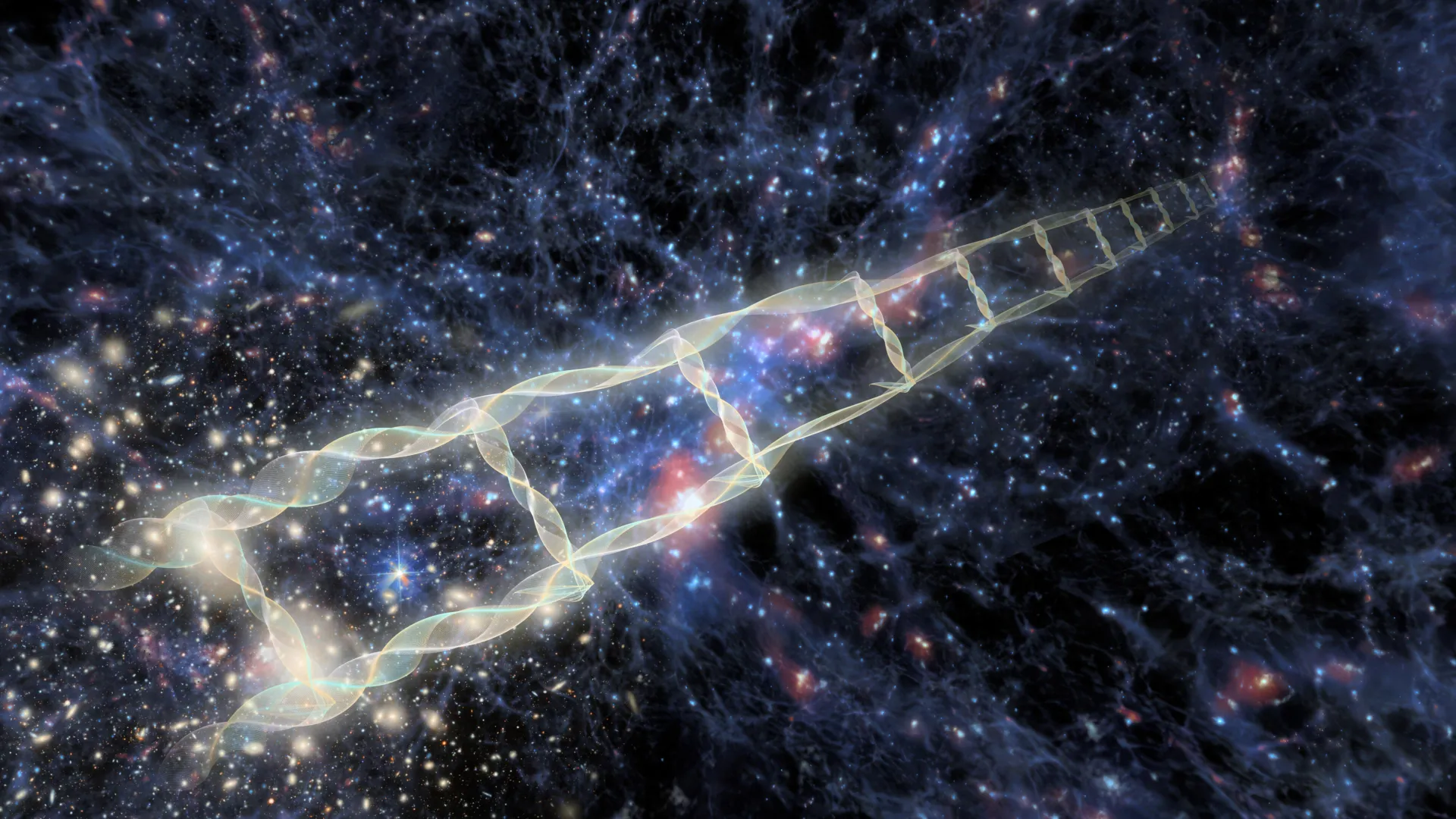
An unprecedentedly precise measurement of the Universe’s contemporary expansion rate has not only affirmed a long-standing cosmological discrepancy but also intensified the mystery surrounding its origins. Far from providing resolution, this latest scientific endeavor underscores a fundamental paradox in our understanding of the cosmos, challenging the prevailing model of universal evolution.
For decades, astrophysicists have grappled with the perplexing "Hubble tension," a significant disagreement between two primary methods used to determine the rate at which the Universe is expanding. This critical cosmological parameter, known as the Hubble constant (H0), is a cornerstone of modern astronomy, dictating the age, size, and ultimate fate of the cosmos. The two dominant approaches to its measurement, while seemingly robust within their individual frameworks, consistently yield disparate results, leading to a profound theoretical impasse.
One methodological pillar relies on observations of the nearby, "local" Universe. This approach meticulously measures distances to celestial objects, such as specific types of stars and galaxies, and then calculates how rapidly they are receding from us. It is akin to building a cosmic distance ladder, where each rung extends further into space, allowing astronomers to gauge the expansion rate directly from observable phenomena. This direct measurement strategy often points to a faster rate of expansion in the present epoch.
The second, equally sophisticated strategy delves into the Universe’s earliest moments. By analyzing the cosmic microwave background (CMB)—the faint afterglow of the Big Bang—scientists can infer the initial conditions of the Universe. Based on the standard cosmological model, known as Lambda-CDM (Lambda-Cold Dark Matter), these primordial observations are then extrapolated forward in time to predict what the expansion rate should be today. This indirect method, rooted in theoretical predictions from the early Universe, consistently suggests a slower expansion rate.
In an ideal, perfectly understood Universe, both methods should converge upon a single, coherent value for the Hubble constant. However, observational reality paints a different picture. Local measurements consistently indicate an expansion rate around 73 kilometers per second per megaparsec (km/s/Mpc), meaning that for every megaparsec (approximately 3.26 million light-years) an object is from Earth, it appears to be receding 73 kilometers per second faster. Conversely, predictions derived from the early Universe, based on the Lambda-CDM model and CMB data, hover around 67 or 68 km/s/Mpc. While this difference might appear numerically small, the statistical precision of both sets of measurements renders this gap far too significant to be dismissed as mere observational error or statistical fluctuation. This persistent divergence is the essence of the Hubble tension, a discrepancy that has only deepened with each successive, more precise study.
A Unified Framework for Unprecedented Precision
In a concerted effort to enhance the accuracy and robustness of local expansion rate measurements, an international consortium of researchers, known as the H0 Distance Network (H0DN) Collaboration, embarked on an ambitious project. Their objective was to integrate decades of independent observations into a single, cohesive analytical framework. This meticulous undertaking culminated in the most precise direct measurement of the local Universe’s expansion rate to date, achieving a remarkable precision slightly better than one percent.
The H0DN Collaboration’s findings, published in the esteemed journal Astronomy & Astrophysics, established the Hubble constant at 73.50 ± 0.81 km/s/Mpc. This achievement represents not merely an updated numerical value but a paradigm shift in methodology. The study, titled "The Local Distance Network: a community consensus report on the measurement of the Hubble constant at ≈1% precision," emerged from a large-scale collaborative initiative launched during the International Space Science Institute (ISSI) Breakthrough Workshop, "What’s under the H0od?", held in Bern, Switzerland.
The collaboration underscored the significance of their approach, stating, "This isn’t just a new value of the Hubble constant; it’s a community-built framework that brings decades of independent distance measurements together, transparently and accessibly." This statement highlights the collaborative and transparent nature of their work, aiming to build a consensus through comprehensive data integration.
The Cosmic Distance Ladder: A Network of Interconnected Methods
The success of the H0DN Collaboration’s measurement stems from its innovative "distance network" approach, which eschews reliance on any single observational technique. Instead, it weaves together several overlapping methods for gauging cosmic distances, creating a self-consistent and extensively cross-checked system. This intricate network leverages multiple "standard candles" and "standard rulers"—celestial objects or phenomena with known intrinsic brightness or size—to triangulate distances across vast cosmic scales.
Key components of this distance network include:
- Cepheid Variable Stars: These pulsating stars exhibit a predictable relationship between their pulsation period and their intrinsic luminosity. By observing their apparent brightness and measuring their pulsation period, astronomers can accurately determine their distance, making them crucial "rungs" on the cosmic distance ladder for relatively nearby galaxies.
- Red Giant Branch Tip (TRGB) Stars: As low-mass stars evolve, they eventually reach a stage where they become red giants. The brightest of these, known as the Tip of the Red Giant Branch, have a consistent intrinsic luminosity. This allows them to serve as reliable standard candles, particularly useful for measuring distances to older stellar populations in galaxies.
- Type Ia Supernovae: These cataclysmic explosions of white dwarf stars are exceptionally bright and possess a remarkably uniform peak luminosity. Their extreme brilliance allows them to be observed across billions of light-years, making them invaluable for measuring distances to the farthest reaches of the observable Universe and probing its expansion history.
- Certain Galaxy Types: While more complex, some specific types of galaxies, through their rotation or other intrinsic properties, can also serve as distance indicators, further augmenting the network.
This multi-faceted approach allows researchers to rigorously validate their results. The inherent redundancy and overlap within the network mean that the impact of any potential systematic flaw in a single method can be isolated and assessed. Crucially, the H0DN team found that even when individual techniques were excluded from the analysis, the overall result for the Hubble constant remained largely unchanged. This remarkable consistency across diverse methodologies significantly bolsters confidence in the measured expansion rate and robustly rules out explanations of the Hubble tension that might attribute it to a singular, overlooked error in local distance measurements.
Implications: A Crack in the Standard Model?
The profound implications of this confirmed tension extend far beyond mere measurement techniques. The slower expansion rate derived from the early Universe is inextricably linked to the Lambda-CDM model, the standard cosmological model that describes the Universe’s evolution from the Big Bang to the present day. This model, which posits the existence of dark energy (represented by Lambda) and cold dark matter (CDM), has been remarkably successful in explaining a vast array of cosmological observations, from the large-scale structure of the Universe to the anisotropies in the cosmic microwave background.
However, if the Hubble tension is indeed real and not a consequence of systematic errors—a scenario increasingly supported by evidence—it suggests that the Lambda-CDM model might be incomplete or fundamentally flawed. The model’s predictions for the Universe’s present-day expansion rate rely on a precise set of parameters and assumptions about the nature of dark energy, dark matter, and the fundamental forces governing the cosmos. If any of these assumptions are incorrect, or if the model is missing crucial components, its extrapolation from the early Universe to today could be inaccurate.
In this context, the Hubble tension ceases to be a simple discrepancy in numerical values and transforms into a potential harbinger of "new physics" beyond our current understanding. Scientists are actively exploring various theoretical avenues that could bridge this gap:
- Early Dark Energy (EDE): This hypothesis suggests a fleeting burst of dark energy in the very early Universe, which could have altered its expansion history in a way that reconciles the tension without conflicting with CMB data.
- Modified Gravity: Perhaps gravity itself behaves differently on cosmic scales than predicted by Einstein’s General Relativity, or there are additional gravitational components yet undiscovered.
- Interactions between Dark Matter and Dark Energy: A more complex interplay between these mysterious components could influence the Universe’s expansion in ways not accounted for by the standard model.
- Sterile Neutrinos or Other Exotic Particles: The existence of new, undetected subatomic particles could have contributed to the early Universe’s energy density, impacting its expansion rate and thus altering the predictions derived from the CMB.
- Variations in Fundamental Constants: Some theories propose that fundamental physical constants, assumed to be immutable, might have varied slightly over cosmic time, subtly influencing the Universe’s evolution.
The persistent nature of the Hubble tension, reinforced by increasingly precise measurements like those from the H0DN Collaboration, strongly suggests that it may signal a deeper, more fundamental issue with our cosmological framework. It could be a powerful clue, indicating that scientists must revise their understanding of the very fabric of the Universe, potentially leading to a transformative paradigm shift in cosmology.
The Path Forward: Illuminating the Cosmic Mystery
The newly established distance network developed by the H0DN Collaboration serves as more than just a measurement; it provides a robust, transparent framework for future cosmological investigations. By making their methods and data publicly accessible, the team has established a standardized system that can be continually refined and expanded as new observational data becomes available.
The coming era of astronomy promises even more precise measurements, driven by a new generation of sophisticated observatories. Telescopes such as the James Webb Space Telescope (JWST) are already providing unprecedented views of distant stars and galaxies, enabling more accurate calibrations of the cosmic distance ladder. Upcoming missions like the European Space Agency’s Euclid mission and NASA’s Nancy Grace Roman Space Telescope are specifically designed to map the Universe’s large-scale structure and probe the nature of dark energy with exquisite detail. Ground-based facilities, including the Extremely Large Telescopes (ELTs) currently under construction, will further refine measurements of local objects.
These future observations will be crucial in determining whether the Hubble tension will eventually be resolved through further refinement of existing measurements or if it will continue to point unequivocally towards the necessity of new physics. The resolution of this cosmic conundrum holds the potential to either solidify our current understanding of the Universe or to usher in a new era of cosmological discovery, fundamentally reshaping our perception of the cosmos and our place within it. The Universe’s expansion rate remains one of the most compelling and challenging mysteries in modern science, a testament to the ongoing quest to unravel the fundamental laws governing our existence.




 Lisa Mariana
 Safa Marwah

 Aura Kasih