Safa Marwah
In a significant evolution for personal digital identity management, Google has initiated the rollout of a long-anticipated capability, granting users in the United States the unprecedented flexibility to alter the primary username associated with their @gmail.com accounts. This strategic enhancement moves beyond previous limitations, enabling individuals to redefine their foundational online identifier across the extensive suite of Google services, marking a pivotal moment in user-centric account management.
For years, the @gmail.com address assigned upon account creation served as an immutable anchor for one’s digital presence within the Google ecosystem. While users possessed the ability to integrate alternative email addresses as aliases or forwarding destinations, the core identifier preceding "@gmail.com" remained fixed. This constraint often presented challenges for individuals whose initial choices no longer reflected their personal or professional identities, necessitating cumbersome workarounds such as creating entirely new accounts and migrating data, or maintaining outdated usernames. The introduction of this new functionality represents a fundamental shift in Google’s approach to user identity, empowering individuals with greater agency over their digital persona.
Historical Context and Evolving Digital Identity
The internet’s early days often saw email addresses chosen impulsively, reflecting fleeting interests, inside jokes, or temporary life stages. As digital identities matured and intertwined with professional careers, personal branding, and critical communications, these legacy addresses frequently became anachronistic or even detrimental. For many, a primary email address is not merely a login credential; it is a public-facing identifier that appears on résumés, business cards, and correspondence. The inability to change this core element on a platform as ubiquitous as Gmail forced users into a dichotomy: either tolerate an outdated identity or undertake the arduous process of establishing a new account, transferring contacts, reconfiguring subscriptions, and updating countless third-party services.
Google’s previous stance on immutable usernames was rooted in several factors, including the technical complexities of propagating such a fundamental change across a global infrastructure supporting billions of users and an array of interconnected services (Gmail, Drive, Photos, Calendar, YouTube, etc.). Furthermore, security considerations, such as preventing account impersonation or mitigating the risks associated with rapid, unverified identity shifts, likely played a role. The system was designed for stability and clear identification, viewing the username as a fixed, unique identifier throughout the account’s lifecycle. However, as user expectations for digital flexibility have grown, and as Google’s infrastructure has advanced, the pressure for a more adaptable identity management system has intensified.
The Strategic Imperative: Why Now?
The decision to enable @gmail.com username changes signals Google’s recognition of evolving user needs and a broader industry trend toward more flexible digital identity solutions. While initial observations of this feature surfaced as early as late 2025 in select international regions, its official rollout in the United States now solidifies its global intent. Several strategic imperatives likely influenced this development:
- Enhanced User Experience and Retention: Offering this flexibility directly addresses a long-standing pain point for millions of users. By making it easier for individuals to maintain a relevant and professional digital identity within the Google ecosystem, the company enhances user satisfaction and reduces the incentive for users to migrate to competing email providers that might offer similar flexibility or force them into managing fragmented identities.
- Competitive Alignment: While not universally available, some other email service providers have historically offered more flexibility in username changes or easier alias management. Google’s move helps it remain competitive in an increasingly sophisticated digital landscape.
- Modernizing Account Management: This feature aligns with a broader industry shift towards more dynamic and user-centric control over personal data and digital presence. It reflects an understanding that digital identity is not static but evolves alongside an individual’s life.
- Infrastructure Maturity: The successful implementation of such a complex feature underscores significant advancements in Google’s underlying infrastructure, demonstrating its capacity to handle large-scale, fundamental identity modifications without service disruption. This capability is crucial for future innovations in identity management.
Operationalizing the Change: A Seamless Transition
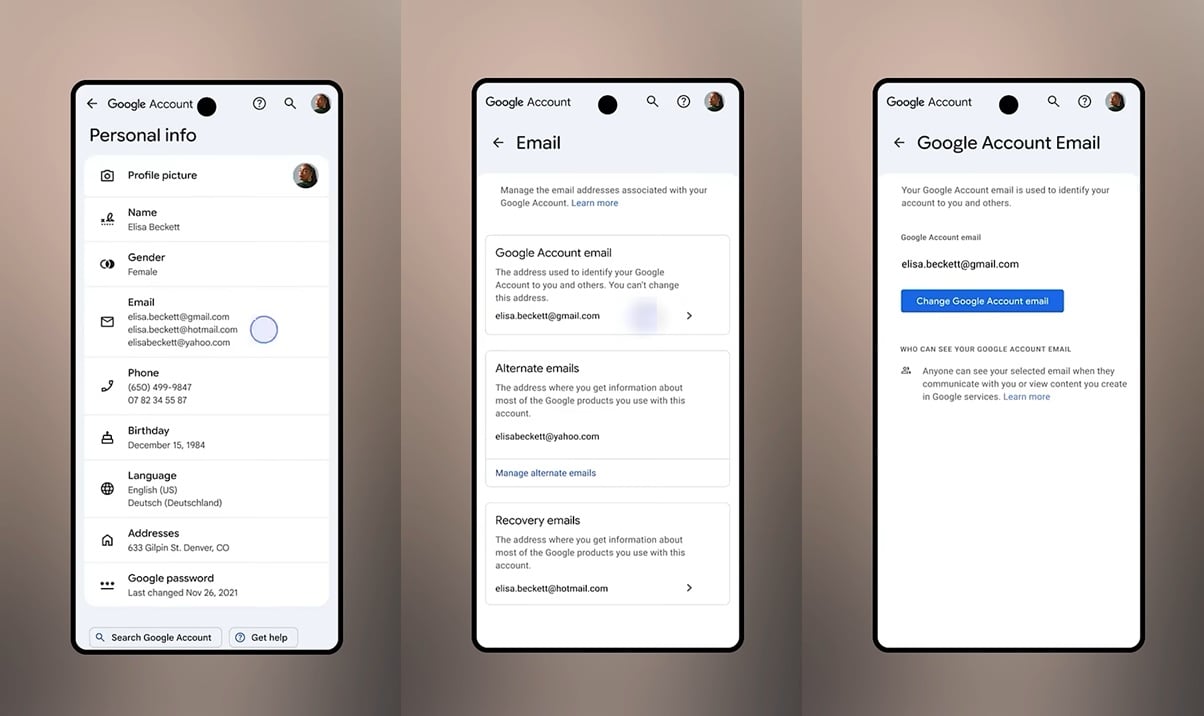
The process for initiating an @gmail.com username change is designed to be straightforward, accessible through the Google Account settings interface. Users navigate to the section designated for managing their Google email address, where they are presented with the option to modify their existing @gmail.com identifier. A critical prerequisite is the selection of a unique username that is not already in use by another Google account. The system incorporates real-time checks to validate availability, guiding the user through the selection process. Once a new username is chosen and confirmed, the system initiates the update.
A key aspect of this implementation is the immediate and pervasive propagation of the new username across all integrated Google services. This means that applications such as Gmail, Google Photos, Google Drive, Google Calendar, YouTube, and any other service linked to the Google Account will automatically reflect the updated identifier. This seamless transition prevents fragmentation of identity within the Google ecosystem, ensuring that the user’s digital presence remains cohesive and functional without manual reconfigurations across multiple platforms. The efficiency of this propagation is a testament to the robust architectural design underpinning Google’s service suite.
Implications for Users: Empowerment and Considerations
The ability to change a core @gmail.com address offers profound benefits for users:
- Professional Alignment: Individuals can now update their email addresses to reflect new career paths, professional branding, or simply a more mature and formal identifier. This eliminates the awkwardness of presenting an outdated or informal email in professional contexts.
- Personal Branding and Privacy: Users can shed usernames tied to past personal stages (e.g., college nicknames, fandoms, or old relationships) that no longer represent them, enhancing personal privacy and allowing for a refreshed digital persona.
- Consolidation and Simplification: For those who previously maintained multiple Google accounts to circumvent the immutable username, this feature provides an opportunity to consolidate their digital life under a single, current, and preferred identity.
- Addressing Data Exposure: While not a primary security feature, changing an email address can be beneficial if an old, rarely used address has been exposed in a data breach unrelated to Google. A new, unique address might offer a minor layer of insulation against targeted phishing attempts leveraging old credentials.
However, users must also be mindful of several important considerations:
- Communication with Contacts: The most critical step post-change is to inform all relevant contacts of the new email address. While Google services will update internally, external correspondents will continue to send emails to the old address until notified. This requires a proactive communication strategy to avoid missed messages.
- Third-Party Services: Crucially, the change only affects the Google Account and its integrated services. Any third-party websites, applications, or subscriptions registered with the old @gmail.com address will not automatically update. Users will need to manually log into these services and change their registered email address to the new @gmail.com identifier. Failure to do so could result in lost access, missed notifications, or complications with password recovery. This process can be extensive, depending on the number of services an individual uses.
- Account Recovery: While the primary email changes, Google’s robust account recovery mechanisms remain in place, often relying on secondary email addresses, phone numbers, or security questions. Users should ensure these recovery options are also current.
- Old Username Persistence: Significantly, Google has clarified that the old username will not be deleted or reallocated to new accounts. Instead, it remains linked to the original account. This decision serves multiple purposes: it prevents potential impersonation where a new user might claim an old, well-known address; it helps maintain data integrity by preserving the historical identifier associated with an account; and it might facilitate certain legacy system functionalities. The precise technical implications of this "linking" are complex, but it ensures that the previous identity is not entirely erased from Google’s internal records.
The Future of Digital Identity Management
The introduction of this feature is more than just a convenience; it is an indicator of Google’s evolving philosophy toward digital identity. It suggests a future where users have even greater, more granular control over how they present themselves online and how their data is managed. This move could pave the way for further innovations in identity flexibility, such as more sophisticated alias management, enhanced privacy controls over public-facing identifiers, or even tighter integration with decentralized identity solutions.
While the initial rollout is focused on the United States, the phased introduction observed in other regions suggests a broader global deployment is imminent. The factors influencing the pace of this global expansion could include regional regulatory requirements, infrastructure readiness in diverse geographical locations, and user feedback from the initial deployments. This strategic enhancement solidifies Google’s position as a leader in digital service provision, demonstrating a commitment to adapting its core offerings to meet the dynamic demands of its vast user base. The ability to reshape one’s primary digital address is a powerful tool, reflecting a deeper understanding of the personal and professional significance of online identity in the modern era.




 Lisa Mariana
 Aura Kasih