Ayu Aulia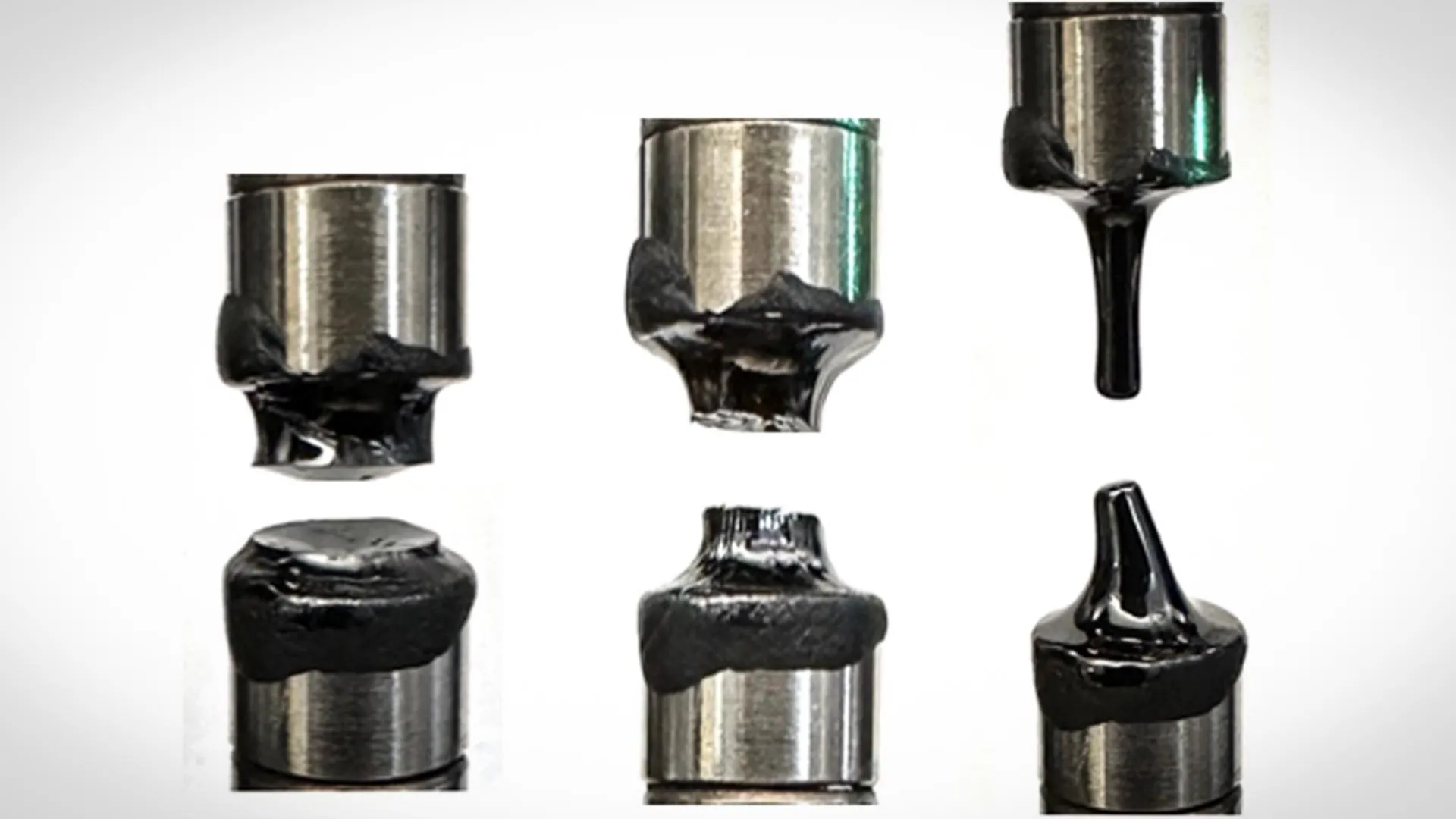
A groundbreaking scientific investigation has unveiled a previously unrecognized mechanical property of simple liquids: their capacity to undergo brittle fracture, akin to solid materials, when subjected to intense tensile forces. This unexpected revelation, detailed in a recent publication, challenges long-held principles in fluid dynamics and promises to reshape fundamental understanding across numerous scientific and engineering disciplines.
For centuries, the distinction between liquids and solids has been a cornerstone of material science and physics. Solids are characterized by their ability to maintain a fixed shape and resist deformation, often exhibiting elasticity and the propensity to fracture abruptly when their structural integrity is overcome. Liquids, conversely, are defined by their fluidity, their capacity to conform to the shape of their container, and their continuous deformation under applied stress. This fundamental dichotomy has underpinned countless models and theories, from the flow of rivers to the lubrication of machinery. The notion that a simple liquid, one that flows readily at ambient temperatures, could abruptly "snap" rather than stretch indefinitely has been considered beyond the realm of possibility, until now.
Researchers at Drexel University, in collaboration with industry partners, stumbled upon this startling phenomenon during routine rheological testing of viscous fluids. Extensional rheology, a specialized technique for measuring a fluid’s response to stretching forces, typically observes liquids thinning and elongating, much like honey or molten glass. However, in a series of meticulously observed experiments, certain tar-like hydrocarbon blends exhibited an entirely different behavior: instead of a gradual yielding, the liquids reached a critical point of stress and then fractured with an audible snap, reminiscent of a solid material breaking.
This serendipitous discovery immediately prompted a comprehensive re-evaluation of the experimental setup and the fundamental assumptions guiding the research. Nicolas Alvarez, a professor leading the research, noted the initial disbelief within the team, necessitating repeated experiments to validate the unprecedented observation. Once confirmed, the focus of the investigation pivoted dramatically, transforming into a quest to understand the underlying mechanics of this solid-like fracture in a liquid state. The team leveraged high-speed cameras to capture the transient event, revealing a fracture mechanism that mirrored the brittle failure observed in solids – a rapid propagation of a crack through the material once a critical stress threshold is surpassed. This type of fracture had never been documented for a simple liquid, marking a significant departure from established fluid mechanics.
The implications of this finding are profound, particularly regarding the role of viscosity. Viscosity, a measure of a fluid’s resistance to flow, has traditionally been understood as a dissipative property, influencing how quickly a liquid deforms under shear or tensile stress. This new research suggests that viscosity plays a far more active and critical role in defining a liquid’s mechanical limits, especially under extreme tensile loading. Thamires Lima, an assistant research professor involved in the study, articulated the paradigm shift: "Our findings show that if pulled apart with enough force per area, a simple liquid… will reach what we call a point of ‘critical stress,’ when it will actually fracture like a solid. And this is likely true for all simple liquids, including common examples, such as water and oil. This fundamentally changes our understanding of fluid dynamics."
The initial liquids exhibiting this behavior were viscous hydrocarbon blends, which fractured consistently at a critical stress of approximately 2 megaPascals (MPa). To put this into perspective, 2 MPa is a substantial force, roughly equivalent to the pressure exerted by a heavily loaded laundry bag snagging on a fingernail. This quantitative measurement provided a crucial benchmark for further investigation. To ascertain whether this behavior was unique to the initial hydrocarbon samples or a more general property of simple liquids, the team then tested styrene oligomer, another simple liquid with a comparable viscosity. Strikingly, it fractured under identical stretching conditions and at the same 2 MPa critical stress, strongly indicating that viscosity is a key determinant in this solid-like breaking behavior and suggesting a common breaking point for many simple liquids.
Further experiments involved manipulating the liquids’ viscosity by altering temperature. As temperature changes, so does a liquid’s viscosity. At each adjusted viscosity level, the researchers identified a specific stretching rate that induced fracture, consistently aligning with the 2 MPa critical stress. This robust correlation underscored the central role of viscosity and the existence of a universal critical stress threshold for fracture. Interestingly, at significantly lower viscosities, the experimental apparatus reached its limits; it could not stretch the liquids fast enough to reach the critical stress point before they simply flowed and thinned, demonstrating the interplay between stretching rate, viscosity, and the onset of fracture.
This discovery fundamentally challenges long-held assumptions regarding the nature of material failure. Traditionally, fracture has been inexorably linked to elasticity—a material’s capacity to store and release mechanical energy, allowing it to deform and then return to its original shape. Simple liquids, by their very definition, do not typically exhibit significant elasticity; they dissipate energy through flow rather than storing it. The conventional understanding posits that elasticity becomes a dominant factor only when a liquid is cooled below its "glass transition" temperature, at which point it begins to behave more like an amorphous solid, capable of elastic deformation and brittle fracture. The observation of fracture in liquids that are unequivocally in their fluid state, well above their glass transition, definitively decouples the phenomenon of brittle fracture from elasticity in these specific conditions.
This distinction is crucial when considering other complex fluids. Viscoelastic and polymer liquids, such as "Oobleck" (a cornstarch and water mixture) or various forms of homemade slime, are known to exhibit solid-like fracture behavior. However, these materials possess inherent elastic components due to their complex molecular structures, allowing them to store stress and deform elastically to some degree. Simple liquids, characterized by their lack of long-range molecular order and minimal elastic response, were thought to exhibit continuous deformation without fracture above their glass transition. Lima emphasized the significance of this distinction: "Showing that viscous effects are enough to promote solid-like fracture behavior opens a world of new questions to explore in this area of scientific inquiry."
To further investigate the role of elasticity, the team conducted a comparative study between a simple liquid (oligomer styrene) and a related polymer liquid, which possesses a distinct elastic component. Both liquids fractured at the same critical stress point. This finding provides compelling evidence that elasticity is not the primary driver of the observed fracture behavior in simple liquids under these conditions. The consistency across different liquid types and the independence from elastic properties suggest a broader, more universal phenomenon. Lima further speculated that this indicates many other elastic liquids might also share a similar critical stress point for fracture, implying a mechanism that is relatively independent of specific chemical composition and potentially generalizable across a wide spectrum of liquids.
While the "what" of this discovery is now established, the "why" remains an active area of investigation. Preliminary hypotheses point towards cavitation as a potential mechanism. Cavitation is a process where rapid changes in pressure within a liquid lead to the formation of small vapor-filled bubbles, which then quickly collapse, generating shockwaves. In the context of extreme tensile stretching, the formation and collapse of these micro-cavities could potentially initiate and propagate cracks, leading to the observed brittle fracture. This theory aligns with observations in other high-stress fluid phenomena and offers a promising avenue for future theoretical and experimental exploration.
The ramifications of this breakthrough extend far beyond theoretical fluid mechanics. In industrial applications, where precise control over liquid behavior is paramount, this understanding could lead to significant advancements. Fields such as hydraulics, lubrication, and 3D printing often deal with liquids under varying degrees of stress and flow rates. For instance, in 3D printing, controlling the precise deposition and solidification of liquid polymers or resins is critical. Understanding the fracture limits of these liquids could lead to the development of new printing techniques that avoid material failure or, conversely, exploit it for novel material structures. Fiber spinning, a process that relies on stretching viscous liquids into thin filaments, could also benefit immensely from this knowledge, allowing for optimization of process parameters to prevent breakage or to engineer fibers with enhanced properties.
In the realm of biological and medical science, the implications are equally compelling. Blood, a complex biological fluid, navigates intricate vascular networks under dynamic pressure and flow conditions. Understanding how blood and other bodily fluids respond to extreme tensile stresses, particularly in micro-capillaries or during rapid movements, could offer new insights into conditions like aneurysm formation, blood clot initiation, or the mechanics of drug delivery systems. The discovery could inform the design of microfluidic devices and artificial organs, ensuring that synthetic systems accurately mimic the complex mechanical environment of biological fluids.
Looking ahead, the research team is focused on comprehensively unraveling the fundamental physics behind this unanticipated behavior. This includes developing robust theoretical models that can predict the fracture behavior across different liquids and under various conditions, as well as conducting more extensive experimental validation across a broader range of simple and complex fluids. The potential for this discovery to spawn entirely new fields of study and technological applications is immense. By challenging the very definition of a liquid, this research opens up a fertile ground for innovation, promising to redefine our understanding of matter and its mechanical properties at a fundamental level.



 Lisa Mariana
 Aura Kasih
 Safa Marwah