Ayu Aulia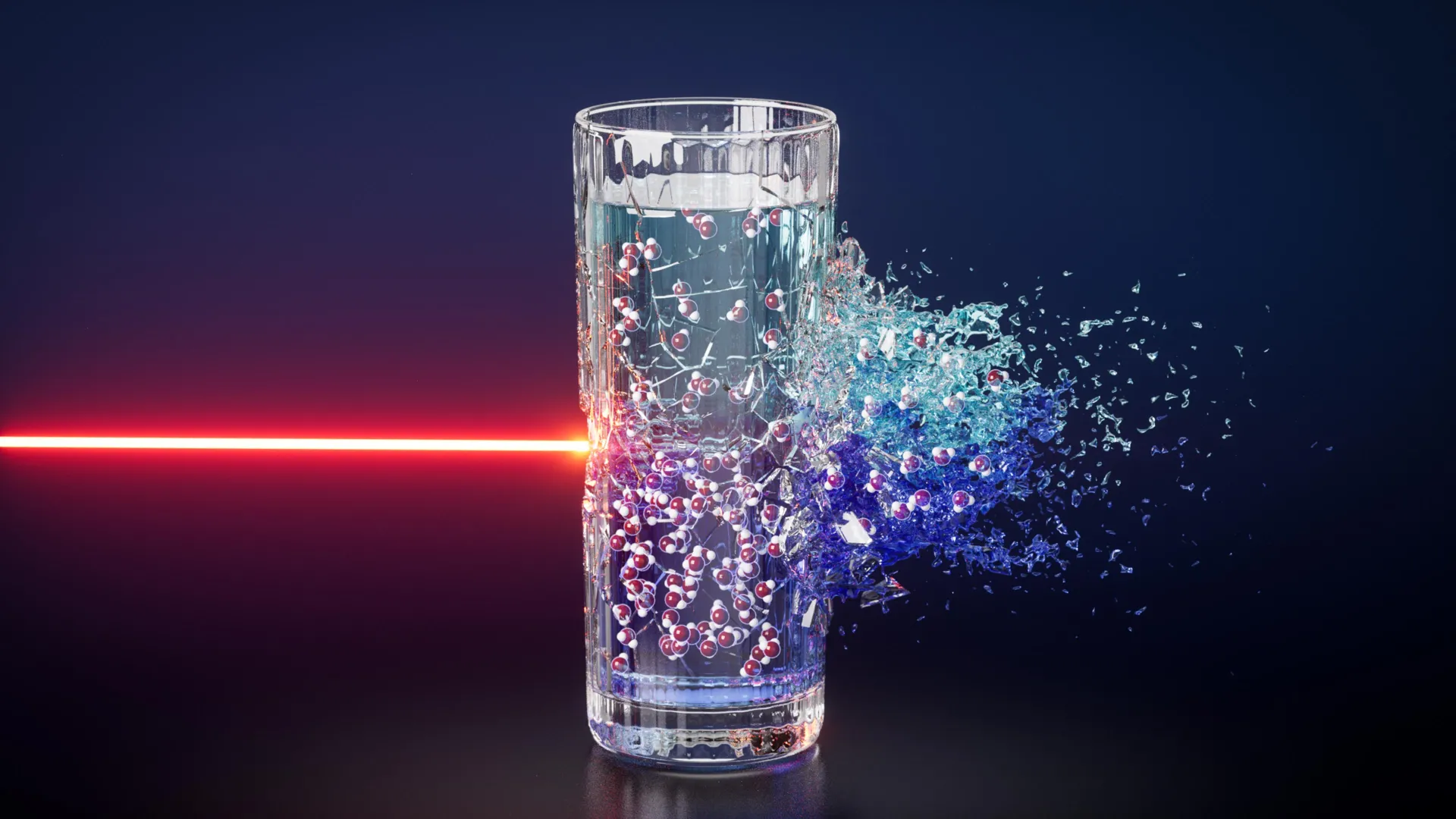
A groundbreaking scientific revelation has unveiled a long-theorized critical point within deeply supercooled water, offering a profound new understanding of the substance’s enigmatic properties and potentially clarifying its indispensable role in sustaining life across the cosmos. Researchers at Stockholm University, leveraging sophisticated X-ray laser technology, pinpointed this elusive transition at approximately -63 degrees Celsius and 1000 atmospheres, demonstrating that even under ordinary conditions, this hidden state exerts a pervasive influence on water’s distinctive behaviors.
Water, an ubiquitous compound and the fundamental solvent for all known life, defies many conventional physical laws governing liquids. Its atypical characteristics – including density, heat capacity, viscosity, and compressibility – respond to changes in temperature and pressure in ways that are often inverted compared to most other substances. This anomaly has puzzled scientists for centuries, prompting extensive debate and numerous theoretical models seeking to reconcile water’s unique nature with broader principles of physics and chemistry.
One of water’s most famous deviations is its density anomaly. While most materials contract and become denser upon cooling, water behaves differently. It reaches its maximum density at approximately 4 degrees Celsius. Below this temperature, it begins to expand again, a phenomenon that accelerates as it approaches its freezing point. This property is crucial for aquatic ecosystems, as it ensures that ice forms on the surface of lakes and oceans, insulating the deeper, warmer water below and allowing marine life to survive through cold periods. If water behaved like other liquids, freezing from the bottom up, many aquatic habitats would become uninhabitable.
Furthermore, when pure water is carefully cooled below its freezing point of 0 degrees Celsius without crystallizing (a state known as supercooling), its expansion continues and even intensifies. Other thermodynamic properties, such as its capacity to store heat (heat capacity) and its resistance to compression (compressibility), also exhibit increasingly unusual trends as the temperature plummets. These peculiar responses are not merely academic curiosities; they are foundational to water’s function as a biological solvent, facilitating intricate biochemical reactions and maintaining cellular integrity.
The challenge in studying these extreme supercooled states lies in water’s inherent tendency to rapidly crystallize into ice. Observing liquid water at temperatures far below zero degrees Celsius requires immensely fast experimental techniques that can capture its transient existence before freezing occurs. This is where cutting-edge X-ray laser technology has proven revolutionary. Scientists employed ultra-fast X-ray pulses generated by powerful accelerators, such as those in South Korea, to snapshot water’s molecular arrangements in milliseconds, effectively outpacing the freezing process.
Professor Anders Nilsson, a leading figure in chemical physics at Stockholm University, highlighted the critical role of these advanced instruments. "The unprecedented speed of the X-ray measurements allowed us to penetrate the veil of crystallization and observe the dynamics of water in a deeply supercooled state, revealing a liquid-liquid transition that culminates in a new critical state," he explained. For decades, the existence of such a critical point had been a theoretical cornerstone in explaining water’s anomalies, yet empirical evidence remained elusive. This new research provides definitive experimental confirmation, shifting the paradigm of water physics.
The discovery hinges on the concept that, under specific conditions of low temperature and high pressure, water can exist not just as one liquid, but as two distinct liquid phases. These phases possess different molecular structures, primarily characterized by variations in their hydrogen bonding networks. One phase is thought to be a high-density liquid with a more disordered, collapsed hydrogen bond network, while the other is a low-density liquid with a more open, tetrahedral, ice-like structure. As temperature and pressure conditions change, these two distinct liquid forms eventually merge into a single, indistinguishable phase at what is termed a critical point.
Near this critical point, the system becomes exceptionally unstable and highly susceptible to fluctuations. Water molecules rapidly oscillate between configurations characteristic of the two distinct liquid states, or mixtures thereof. These microscopic fluctuations are not confined solely to the immediate vicinity of the critical point; their influence extends across a broad spectrum of temperatures and pressures, reaching even ambient environmental conditions. It is these constant, dynamic shifts between transient structural motifs that scientists now believe are responsible for imbuing water with its array of unusual characteristics, making it such a unique and versatile substance. Beyond the critical point, water enters a supercritical state, and intriguingly, under everyday conditions on Earth, water already exists within this dynamically fluctuating regime.
Further insights from the research revealed a dramatic deceleration in molecular motion as water approaches this critical point. Robin Tyburski, a researcher in chemical physics at Stockholm University, analogized this phenomenon to a "Black Hole-like" effect. This implies that once water’s dynamics are influenced by the critical point, its molecules become exceptionally sluggish, trapped in a state of reduced mobility, with relaxation times dramatically increasing. Such a profound slowing of molecular activity underscores the fundamental shift in water’s behavior at this critical juncture.
This monumental breakthrough represents the culmination of decades of theoretical postulation and experimental endeavor. Aigerim Karina, a postdoctoral researcher involved in the study, reflected on the serendipitous path to discovery. "It’s remarkable how our investigations into amorphous ice, a deeply studied state of water, unexpectedly provided the gateway to understanding this critical region," she noted, emphasizing the boundless potential for novel discoveries even within seemingly well-explored scientific domains. Iason Andronis, a PhD student on the team, echoed this sentiment, describing the realization of measuring water in such profoundly cold liquid states without freezing as a "dream come true," made possible only by the recent advancements in X-ray laser technology.
The profound implications of this discovery resonate across multiple scientific disciplines, particularly concerning the origins and sustenance of life. Fivos Perakis, an associate professor in chemical physics at Stockholm University, posed a compelling question: "Water is the only supercritical liquid at ambient conditions where life exists. Is this mere coincidence, or does it hold essential knowledge for our future understanding of life itself?" The title of this article directly addresses this query, suggesting that water’s newly confirmed hidden state and the resulting anomalous properties are not just happenstance but are intrinsically linked to the emergence and perpetuation of biological systems.
The unique properties of water, now better understood through the lens of this critical point, are absolutely fundamental for life. Its high heat capacity helps regulate cellular temperatures and global climates. Its density anomaly prevents oceans from freezing solid. Its solvent power, stemming from its polar nature and dynamic hydrogen bond network, allows it to dissolve a vast array of compounds, facilitating nutrient transport and biochemical reactions. Proteins fold into their specific three-dimensional structures in an aqueous environment, and biological membranes maintain their integrity due to water’s interactions. The dynamic fluctuations near the critical point might provide the necessary molecular flexibility and responsiveness for complex biological processes to occur efficiently.
This discovery brings a century-old debate closer to resolution. "For over a hundred years, since the pioneering work of Wolfgang Röntgen, the scientific community has intensely debated the origins of water’s strange properties," Professor Nilsson remarked. "Researchers in water physics can now coalesce around a model that definitively includes a critical point in the supercooled regime." This consensus provides a robust theoretical framework for future investigations. The immediate next phase of research will involve exploring the far-reaching implications of these findings across diverse fields:
- Physical Chemistry: Understanding reaction kinetics in aqueous solutions, solvent effects on molecular stability, and phase transitions.
- Biological Sciences: Elucidating the role of water in protein folding, enzyme activity, DNA stability, and membrane dynamics. The subtle fluctuations of water molecules could be integral to the delicate balance required for biological function.
- Geological Sciences: Investigating water’s behavior under extreme pressures and temperatures found in deep earth processes, hydrothermal vents, and subduction zones.
- Climate Science: Enhancing models of atmospheric processes, cloud formation, ocean currents, and the cryosphere, where water’s phase transitions play critical roles in global energy budgets.
The collaborative nature of this breakthrough, involving institutions from Stockholm University, POSTECH University and PAL-XFEL in South Korea, the Max Planck Society, Johannes Gutenberg University in Germany, and St. Francis Xavier University in Canada, underscores the global effort required to unravel such fundamental scientific mysteries. Researchers like Aigerim Karina, Robin Tyburski, Iason Andronis, and Fivos Perakis, along with their colleagues, have not only pushed the boundaries of our understanding of water but have also opened new avenues for interdisciplinary research.
The confirmation of water’s critical point in the supercooled regime represents more than just a scientific curiosity; it is a foundational shift in our comprehension of the most vital substance on Earth. By providing a unified explanation for water’s many anomalies, this discovery illuminates why water is uniquely suited to facilitate life, from the molecular scale of cellular functions to the global scale of planetary climate. The implications are profound, promising to reshape our understanding of chemistry, biology, geology, and climate science, and perhaps even guiding our search for extraterrestrial life, which is intrinsically linked to the presence of liquid water. The coming years will undoubtedly see an intensive effort to fully map out the consequences of this hidden state, a quest that holds the potential to unlock deeper secrets of existence itself.




 Lisa Mariana
 Aura Kasih
 Safa Marwah