Lisa Mariana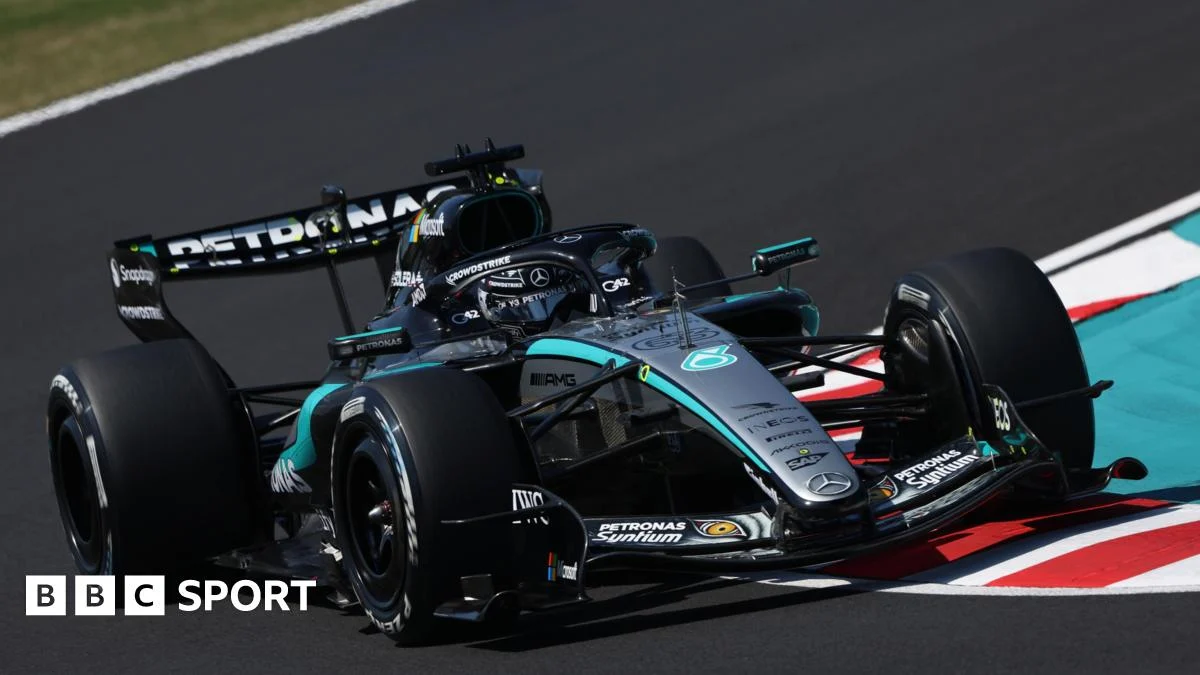
The initial practice session at the iconic Suzuka Circuit for the Japanese Grand Prix concluded with a notable performance from George Russell, who set the fastest lap time, closely followed by Kimi Antonelli, signaling a potentially competitive weekend for Mercedes amidst varied fortunes for other prominent constructors. This early demonstration of speed from the Silver Arrows offered a compelling narrative, especially given the significant aerodynamic and powertrain developments introduced across the grid as teams strive to optimize their packages for the demanding circuit.
Russell’s command of the Suzuka track, particularly impressive in a session often characterized by cautious initial runs and setup experimentation, positions Mercedes as a team to watch. His ability to extract maximum performance from the W15 chassis in the challenging high-speed corners and intricate esses of Suzuka suggests a positive trajectory for the team, contrasting with their more inconsistent performances earlier in the season. Antonelli, undertaking a crucial young driver evaluation, mirroring Russell’s pace closely, underscored the inherent speed of the Mercedes package and highlighted his own emerging talent. His rapid adaptation to the complexities of Suzuka, a circuit notorious for punishing even minor errors, speaks volumes about his potential and the efficacy of Mercedes’ development program for young drivers. The close proximity of their lap times suggests that Mercedes has found a strong baseline setup, which could be critical for the demanding qualifying session and the race itself.
Conversely, the session presented a mixed picture for the reigning champions, Red Bull Racing. Max Verstappen, piloting a car equipped with a comprehensive aerodynamic upgrade package featuring redesigned side pods, a revised floor, and a new engine cover, recorded the seventh fastest time, trailing the leading pace by a considerable 0.791 seconds. This margin, while potentially indicative of Red Bull’s traditional practice of not revealing their full performance in early practice, also warrants scrutiny. The introduction of such a significant upgrade package typically requires extensive validation and fine-tuning, and early sessions are often dedicated to data correlation rather than outright lap times. However, Verstappen, along with McLaren’s Lando Norris, encountered difficulties at the notoriously fast Spoon corner, where a persistent tailwind on entry disrupted the cars’ aerodynamic balance, leading to several wide excursions. This specific challenge suggests that Red Bull, despite their new components, are still grappling with the optimal setup in certain high-speed sections, or perhaps are pushing the limits of their new aero philosophy. The true efficacy of their upgrade package will only become apparent as the weekend progresses, particularly in the later practice sessions and qualifying.
Further down the timing sheets, the Racing Bulls team, competing on home soil for their engine partner Honda, showcased a promising start. Liam Lawson secured the eighth position, while Arvid Lindblad, also participating in a young driver allocation, rounded out the top ten. Their strong showing, sandwiching the Haas of Esteban Ocon in ninth, is particularly significant for the Honda-powered team. Such performances provide valuable data and a morale boost, especially as Honda aims to demonstrate improvements following a challenging start to the season marked by reliability concerns and performance deficits. Lawson’s consistent pace and Lindblad’s solid debut underscore the potential of the VCARB 01 chassis when operating within its optimal window, hinting at a competitive weekend for the Faenza-based squad.
However, the session was not without its dramatic incidents, most notably for Williams’ Alex Albon, who endured a particularly challenging outing. His session was marred by two significant events, beginning with an off-track excursion that culminated in a collision with the wall at Degner Two, one of Suzuka’s most demanding and unforgiving corners. This incident, occurring midway through the session, inflicted damage on his FW46 and necessitated repairs, highlighting the fine margins and high consequences inherent in pushing the limits at Suzuka. Degner Two, a fast, double-apex right-hander, demands pinpoint precision and unwavering commitment, and even a slight misjudgment can lead to significant repercussions. Later in the session, Albon was involved in a collision with Sergio Perez at the chicane. Perez, seemingly unaware of Albon’s presence on the inside as the British-Thai driver attempted to make a move, turned in, resulting in contact and a subsequent spin for Albon. These incidents not only compromised Albon’s ability to gather crucial setup data but also placed an additional burden on the Williams team, requiring extensive repairs and potentially impacting their preparations for the remainder of the weekend. The loss of track time for Albon could prove costly in a session where every lap is vital for understanding tire degradation, fuel loads, and aerodynamic performance.
In stark contrast to the promising starts by Mercedes and Racing Bulls, the two Aston Martins found themselves at the very tail end of the field, a deeply concerning outcome for the team and their engine partner Honda. This weekend holds particular significance for Honda, who are under immense pressure to showcase tangible improvements on their home track after a dire start to the season. The AMR24s finished 21st and 22nd, with American reserve driver Jak Crawford, fulfilling one of the team’s mandatory young driver days in Fernando Alonso’s car, approximately a second slower than Lance Stroll. Such a significant performance deficit, especially at a circuit where Honda traditionally hopes to shine, raises serious questions about the effectiveness of their recent developments.
A key factor contributing to Aston Martin’s struggles has been the persistent engine-vibration issues originating from their Honda power units. These vibrations have not only compromised reliability, leading to potential component failures, but have also caused significant discomfort for the drivers, impacting their ability to extract consistent performance. Honda has reportedly introduced specific changes aimed at mitigating these issues, hoping to restore both reliability and driver confidence. However, the initial practice session suggests that these modifications have yet to translate into a discernible performance uplift.
Adding another layer of complexity, Aston Martin also introduced their own aerodynamic upgrade package for Japan, featuring a new engine cover design and revisions to the front-of-floor furniture. Typically, such upgrades are expected to yield immediate, albeit marginal, performance gains. The fact that the team remained at the bottom of the timing sheets despite these aero revisions, coupled with the ongoing powertrain challenges, indicates a deeper-rooted issue that extends beyond single component improvements. The correlation between simulator data, wind tunnel results, and real-world track performance will be under intense scrutiny, as the team seeks to understand why their latest developments are not delivering the anticipated results. The pressure on Aston Martin, a team with high aspirations and significant investment, will intensify if these performance deficits persist throughout the weekend. The gap to the midfield, let alone the front-runners, is substantial, and a concerted effort across both the chassis and powertrain departments will be required to rectify their current trajectory.
In conclusion, the opening practice session at the Japanese Grand Prix offered a fascinating glimpse into the evolving competitive landscape. Mercedes’ unexpected pace, particularly from Russell and Antonelli, positions them as potential dark horses. Red Bull’s measured approach with new upgrades, coupled with specific track challenges, leaves their true performance ambiguous. Meanwhile, the Racing Bulls demonstrated promising local form, while Williams faced a challenging start. Most notably, Aston Martin’s profound underperformance, despite new aero parts and Honda’s efforts to address engine issues, presents a significant concern. The intricate demands of Suzuka, coupled with the varied fortunes of the teams, promise a weekend of intense strategic battles and compelling on-track action as teams continue to fine-tune their packages and drivers push the limits of precision and speed. The implications of these early results will shape the narratives for qualifying and the race, with many questions yet to be answered regarding true competitive hierarchies and the effectiveness of crucial development paths.




 Aura Kasih
 Safa Marwah
 Ayu Aulia