Ayu Aulia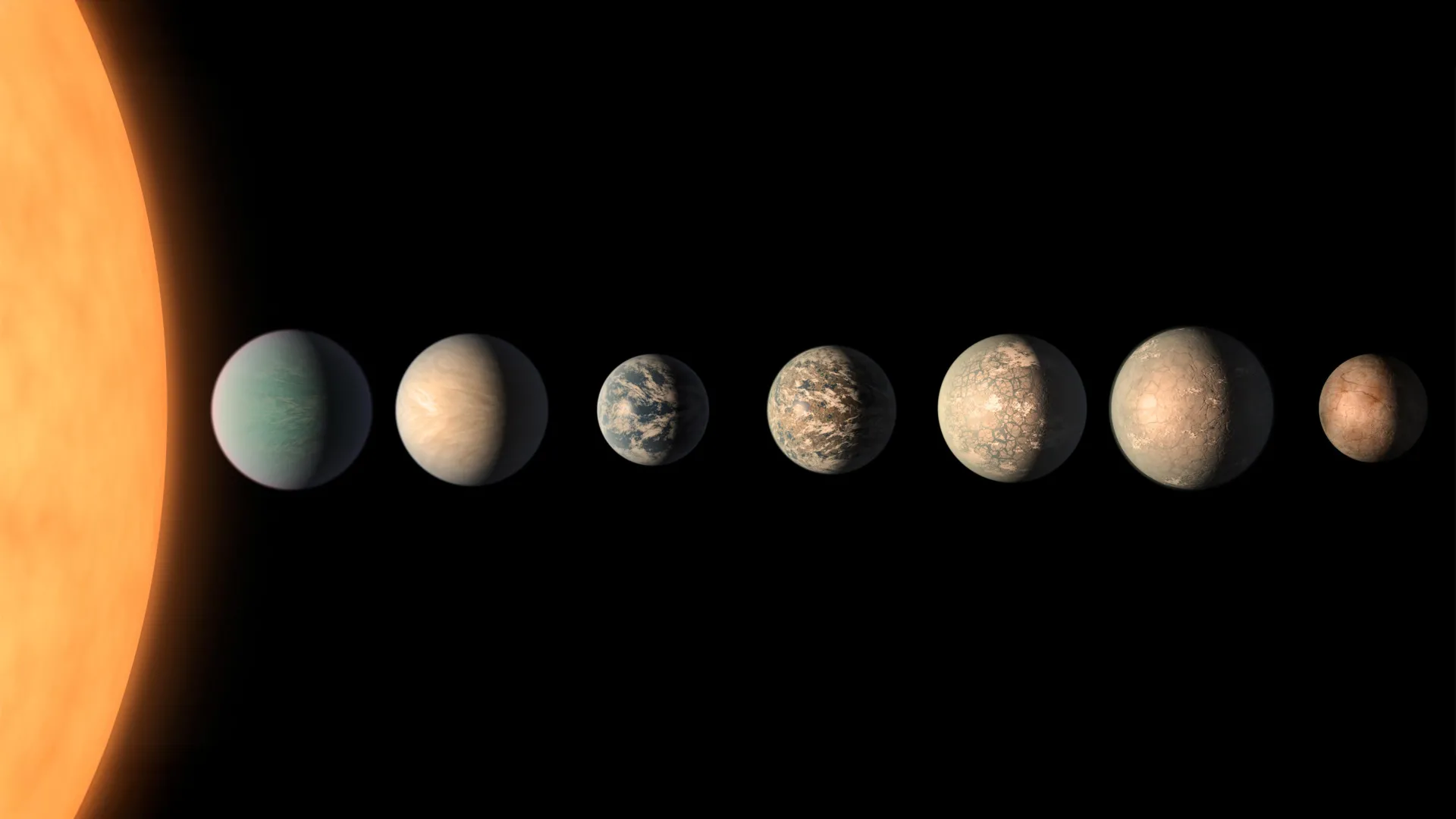
An ambitious astronomical study has converged on a remarkable conclusion, identifying approximately 45 rocky exoplanets as the most promising cosmic laboratories for extraterrestrial life, dramatically refining the search parameters from a universe teeming with thousands of known worlds. This meticulous research, furnishing a crucial catalog for forthcoming observational campaigns, represents a significant stride in humanity’s enduring quest to discern the tell-tale signs of biological activity beyond our home planet.
For centuries, the concept of life beyond Earth remained largely within the realm of philosophy and science fiction. However, with the exponential growth in exoplanet discoveries over the past three decades, this abstract notion has transformed into a tangible scientific pursuit. From the initial confirmation of a planet orbiting a sun-like star in 1995, the count of confirmed exoplanets has swelled to over 6,000. Yet, the sheer volume of these distant worlds necessitates a strategic focus to maximize the efficiency and potential yield of dedicated astrobiological investigations.
The recent findings, meticulously detailed in Monthly Notices of the Royal Astronomical Society, provide precisely such a strategic framework. This research echoes the compelling narrative of speculative fiction, where humanity ventures across vast interstellar distances in pursuit of salvation or discovery. Much like the premise of a celebrated fictional mission, where a lone astronaut confronts the mysteries of alien biology, this scientific endeavor provides a tangible map for potential future explorations, whether theoretical or eventual. The lead investigator of this study aptly articulated that while life’s adaptability might far exceed current human comprehension, identifying the most probable abodes for extraterrestrial organisms—from complex beings to novel microbial forms—becomes an imperative step, not solely for cinematic drama but for profound scientific understanding.
Pinpointing Potential: The Habitable Zone and Liquid Water
At the core of this investigation is the concept of the "habitable zone," a region around a star where conditions are theoretically conducive for liquid water to persist on a planet’s surface. Liquid water is universally recognized as an indispensable solvent and medium for all known forms of life, making its potential presence the primary criterion for habitability. Professor Lisa Kaltenegger, who directs the Carl Sagan Institute at Cornell University, spearheaded this significant research. Her team, notably including a cohort of undergraduate students, meticulously analyzed vast datasets gleaned from the European Space Agency’s Gaia mission and the comprehensive NASA Exoplanet Archive.
These combined datasets provided critical information on exoplanet characteristics, including their orbital parameters, estimated sizes, and host star properties. By cross-referencing these attributes, the researchers were able to precisely delineate which planets reside within their respective stars’ habitable zones – areas neither too scorching hot to vaporize water nor too frigid to freeze it solid. The study, formally titled ‘Probing the limits of habitability: a catalogue of rocky exoplanets in the habitable zone,’ did not merely identify planets within this broad region but further refined the selection by prioritizing those receiving levels of stellar energy analogous to Earth’s own insolation. This nuanced approach helps to filter out worlds that might be technically in the habitable zone but receive vastly different energy inputs, which could lead to divergent atmospheric and surface conditions.
A Curated Catalog: 45 Prime Rocky Worlds
From the initial pool of over 6,000 confirmed exoplanets, the team successfully distilled the list to 45 rocky worlds deemed to possess the strongest potential for sustaining life. Furthermore, a more stringent set of 24 planets was identified within a "3D habitable zone," a more narrowly defined region based on tighter theoretical assumptions regarding a planet’s thermal tolerance limits. This layered approach allows for both a broader exploration of habitability and a focus on the most ideal candidates.
Among the prominent candidates on this list are several exoplanets that have already garnered significant scientific attention, such as Proxima Centauri b, located within the habitable zone of our closest stellar neighbor; TRAPPIST-1f, one of several potentially habitable worlds in a remarkable multi-planet system; and Kepler-186f, an early discovery of an Earth-sized planet in its star’s habitable zone. The research also brought to light lesser-known but equally compelling targets, including TOI-715 b, highlighting the continuous expansion of our exoplanet catalog.
Particular intrigue surrounds the TRAPPIST-1 system, a mere 40 light-years distant, which hosts multiple planets – specifically TRAPPIST-1 d, e, f, and g – all situated within the habitable zone of their ultra-cool dwarf star. Another compelling target, LHS 1140 b, lies 48 light-years away. The ultimate capacity of these worlds to maintain liquid water hinges critically on their ability to sustain stable atmospheres, a factor that profoundly influences surface pressure, temperature regulation, and protection from harmful stellar radiation.
Earth-Analogues and Edge Cases: Expanding the Definition of Life
The study also highlighted several planets that receive stellar energy levels remarkably similar to those experienced by Earth. These include transiting planets such as TRAPPIST-1 e, TOI-715 b, Kepler-1652 b, Kepler-442 b, and Kepler-1544 b, whose atmospheric compositions can be probed during their passages in front of their host stars. Additionally, planets like Proxima Centauri b, GJ 1061 d, GJ 1002 b, and Wolf 1069 b, detected through the gravitational wobble they induce in their stars, also exhibit Earth-like insolation.
A crucial aspect of this research involved selecting planets situated near the inner and outer boundaries of the habitable zone. This deliberate choice allows scientists to rigorously test and potentially redefine the conventional understanding of habitability. While the theoretical framework for the habitable zone has been in development since the 1970s, new observational data continues to challenge and refine these models. Professor Kaltenegger emphasized that future observations could fundamentally reshape our current theories, pushing the boundaries of what is considered conducive to life.
For instance, some exoplanets follow highly elliptical orbits, resulting in significant fluctuations in the amount of stellar heat they receive throughout their orbital period. Investigating these worlds could provide crucial insights into whether continuous residence within the habitable zone is an absolute prerequisite for life, or if periodic excursions into less hospitable regions might still permit the persistence of habitable conditions and surface liquid water. Planets like K2-239 d, TOI-700e, K2-3d, Wolf 1061c, and GJ 1061c offer prime opportunities to study the inner boundary of habitability, revealing the thresholds beyond which a planet becomes too hot. Conversely, TRAPPIST-1g, Kepler-441b, and GJ 102 provide invaluable targets for understanding the colder, outer edge of the habitable zone.
Gillis Lowry, a key researcher on the project and now a graduate student at San Francisco State University, underscored the practical utility of this work: "While it is challenging to quantify precisely what makes a planet more likely to harbor life, identifying the optimal locations for investigation constitutes the foundational first step. Our project’s primary objective was to furnish a definitive list of the best targets for observation." Fellow researcher Lucas Lawrence, currently a graduate student at the University of Padua, added, "We aimed to develop a resource that would empower other scientists to conduct effective searches, and through this process, we consistently uncovered novel aspects of these worlds that warrant deeper investigation."
Our Solar System as a Benchmark: The Case of Venus and Mars
Co-author Abigail Bohl of Cornell University highlighted the critical role our own solar system plays as a comparative laboratory. "Earth unequivocally supports life, whereas Venus and Mars, despite their proximity, do not. This fundamental distinction allows us to establish a reference for exoplanets that receive stellar energy inputs falling between those of Venus and Mars," Bohl explained. "By observing these particular exoplanets, we can gain invaluable insights into the mechanisms by which habitability is lost, the upper limits of sustainable stellar energy, and which planets manage to retain or, perhaps, never possessed, habitable conditions."
This comparative approach extends to planets with eccentric orbits. Bohl posed a fundamental question: "How much orbital eccentricity can a planet endure while still retaining its surface water and maintaining habitable conditions?" The study deliberately identified planets at both the extreme inner and outer edges of the habitable zone, as well as those exhibiting the highest eccentricities, to directly challenge and refine our theoretical models of planetary habitability. Furthermore, the team meticulously cross-referenced these targets with the observational capabilities of existing and forthcoming instruments, identifying those most amenable to study with the James Webb Space Telescope (JWST) and other advanced observatories. The strategic matching of planets to optimal observation methods significantly enhances the prospects of detecting biosignatures.
The Future of Discovery: Telescopes as Windows to Other Worlds
This meticulously curated list serves as an indispensable guide for astronomers employing both current cutting-edge observatories and the next generation of powerful instruments. The James Webb Space Telescope (JWST), with its unparalleled infrared capabilities, is already at the forefront of exoplanet atmospheric characterization. Looking ahead, the Nancy Grace Roman Space Telescope, slated for launch in 2027, will offer wide-field imaging capabilities crucial for discovering and characterizing new exoplanets. The Extremely Large Telescope (ELT), expected to achieve first light in 2029, will boast a mirror nearly 40 meters in diameter, providing unprecedented resolution and light-gathering power for direct imaging and spectroscopy. Further in the future, the Habitable Worlds Observatory (HWO), anticipated in the 2040s, and the proposed Large Interferometer For Exoplanets (LIFE) project promise to revolutionize the search for life by directly imaging Earth-sized exoplanets and analyzing their atmospheres for definitive biosignatures.
Lowry emphasized that direct observation of these small, rocky planets is paramount for determining the presence and composition of their atmospheres, which in turn allows for the refinement of habitability models. Early analyses of the ten planets receiving Earth-like radiation have already yielded two particularly strong candidates for near-term, intensive study: TRAPPIST-1 e and TOI-715 b. The TRAPPIST-1 system remains a focal point for JWST observations, with a dedicated program led by Cornell astronomer Nikole Lewis. Both TRAPPIST-1 and TOI-715 b orbit smaller, cooler red dwarf stars, a characteristic that simplifies the detection and detailed study of their Earth-sized planets due to the larger relative transit depth and more favorable star-to-planet contrast.
The identification of these 45 potentially habitable exoplanets marks a pivotal moment in astrobiology. It transforms a broad scientific aspiration into a targeted, actionable research agenda. By focusing observational resources on these most promising worlds, scientists are systematically dismantling the cosmic distance, moving humanity closer than ever to answering one of its most profound questions: Are we alone in the universe?




 Lisa Mariana
 Aura Kasih
 Safa Marwah