Ayu Aulia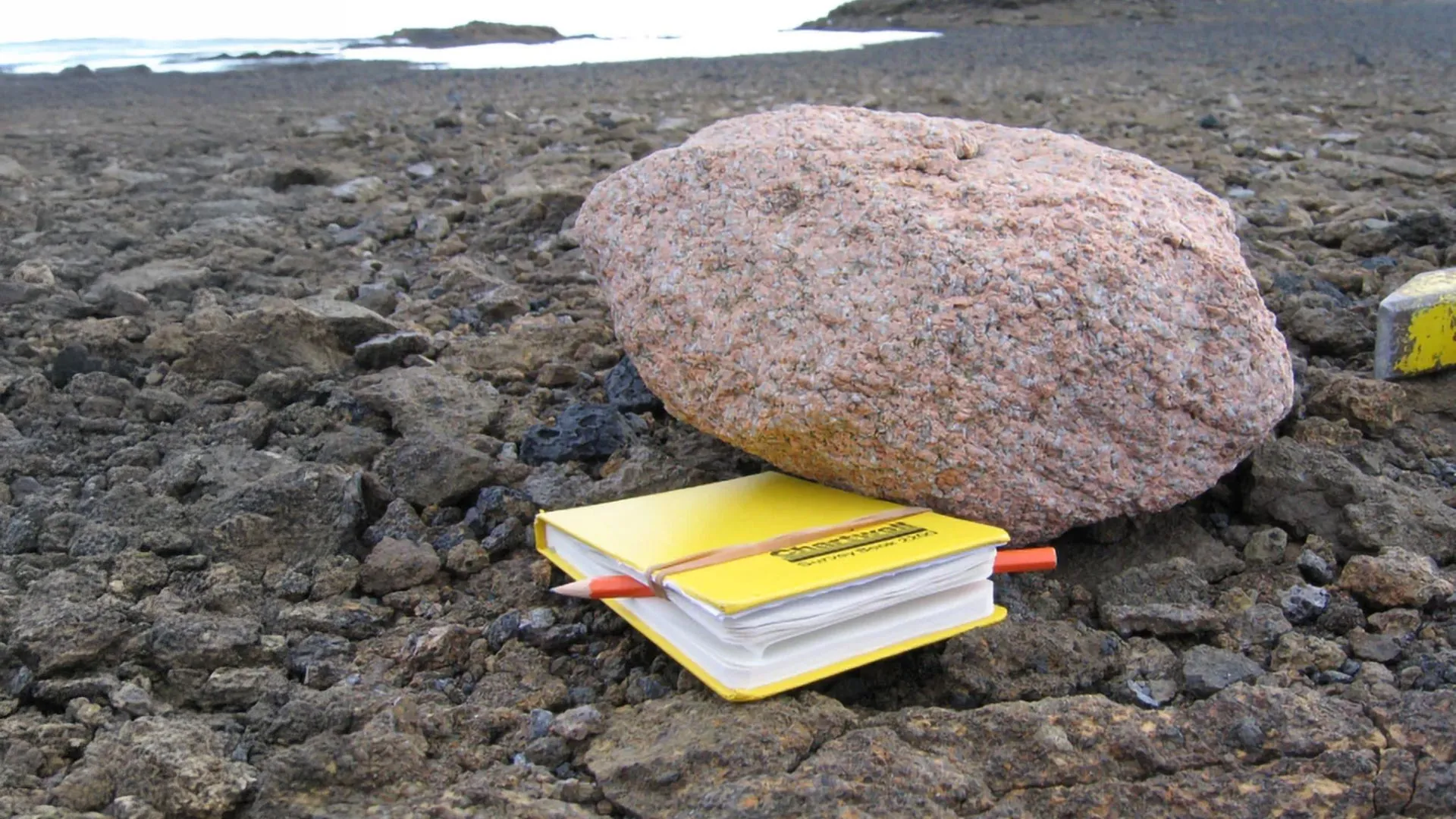
A groundbreaking interdisciplinary investigation, initiated by the enigmatic presence of distinct pink granite formations across the rugged volcanic terrain of West Antarctica’s Hudson Mountains, has culminated in the detection of an immense, previously unknown granite massif, roughly 100 kilometers in width and 7 kilometers in depth, concealed beneath the rapidly retreating Pine Island Glacier, a discovery poised to significantly refine our understanding of continental glaciation and global sea-level projections. For decades, the peculiar occurrence of these vibrant, crystalline rocks, perched anomalously on elevated volcanic ridges, presented a persistent geological puzzle, challenging conventional theories regarding their provenance and the mechanisms by which they reached such improbable locations within this remote polar environment. The resolution of this long-standing enigma not only illuminates a colossal subglacial geological feature but also provides critical insights into the past behavior of one of Antarctica’s most dynamic ice streams and its potential trajectory in a warming climate.
The initial observation of these strikingly colored boulders, starkly contrasting with the predominantly dark, igneous rocks characteristic of the region, immediately captured the attention of geological expeditions. Their incongruous composition and elevated positions suggested a complex transport history, indicative of powerful geological forces operating over vast timescales. Conventional wisdom struggled to explain their presence, prompting speculation about deep-seated crustal movements or unusual erosional processes. The logistical challenges inherent in conducting detailed geological surveys in West Antarctica, a region characterized by extreme weather, extensive ice cover, and remote access, further compounded the difficulty of unraveling this mystery. However, the persistent curiosity surrounding these geological outliers underscored their potential as silent witnesses to Antarctica’s profound geological and glaciological evolution.
Geochronological Revelation: Tracing Origins to the Jurassic Period
The first critical step in deciphering the riddle of the pink granite involved precise geochronological analysis. A specialized research consortium embarked on a meticulous examination of samples collected from these surface boulders. Employing advanced radiometric dating techniques, specifically focusing on the radioactive decay chains of elements meticulously trapped within microscopic mineral crystals – such as uranium-lead (U-Pb) dating in zircons – scientists were able to determine the exact age of these ancient formations. The analysis unequivocally revealed that these granites crystallized approximately 175 million years ago, a period corresponding to the Middle Jurassic. This geological epoch was a transformative era in Earth’s history, marked by the ongoing fragmentation of the supercontinent Gondwana, a colossal landmass that once encompassed present-day Antarctica, Africa, South America, Australia, and India.
The Jurassic age of the granite immediately provided a crucial temporal anchor, linking the rocks to the wider tectonic narrative of the Southern Hemisphere. During this period, intense magmatic activity was prevalent along the nascent rift zones as Gondwana began to disaggregate. The formation of large granitic batholiths, often associated with continental crustal thickening and magmatic intrusions, is a common feature in such extensional tectonic settings. However, knowing the age only partly resolved the mystery; the fundamental question of how these deep-seated rocks, formed hundreds of millions of years ago, came to be exposed on modern-day mountain peaks remained elusive, awaiting further evidence from a different scientific discipline.
Unveiling the Subglacial Colossus: The Role of Airborne Geophysics
The missing piece of this complex geological puzzle emerged from sophisticated airborne geophysical surveys conducted across the West Antarctic Ice Sheet. Utilizing specially equipped research aircraft, such as the British Antarctic Survey’s Twin Otter, scientists deployed highly sensitive gravity meters to map subtle variations in the Earth’s gravitational field beneath the vast expanse of ice. Gravimetry operates on the principle that denser materials exert a stronger gravitational pull than less dense materials. By precisely measuring these minute fluctuations, researchers can infer the distribution of different rock types and geological structures hidden deep beneath the surface.
In this instance, the airborne gravity data revealed a distinct and anomalous signal originating from beneath the Pine Island Glacier. The observed gravitational signature was consistent with the presence of an enormous, low-density geological body, precisely what would be expected from a massive granite intrusion. Granite, being generally less dense than the surrounding mantle rock or many common metamorphic and volcanic rock types, creates a measurable gravitational ‘low’. This geophysical detection provided the definitive link, connecting the isolated surface boulders to their immense, concealed source. The confluence of the geological dating of the surface samples and the geophysical detection of the buried mass conclusively demonstrated that the "out-of-place" pink granite boulders were not exotic imports but rather direct fragments of a colossal, subglacial granite batholith. This geological revelation instantly transformed the understanding of the bedrock topography and composition beneath one of the most critical ice streams on the planet.
Reconstructing Paleoglacial Dynamics: A Glimpse into Antarctica’s Past
The identification of this colossal subglacial granite body has profound implications for reconstructing the past behavior of the Pine Island Glacier. The fact that fragments of this deep-seated formation were found perched on high mountain ridges indicates a dramatically different glacial landscape in the geological past. This phenomenon implies that during earlier periods, particularly during the Last Glacial Maximum (LGM) approximately 20,000 years ago, the West Antarctic Ice Sheet was considerably thicker and more extensive than it is today.
When an ice sheet reaches immense thicknesses, its basal processes intensify. The immense pressure exerted by the overlying ice can lead to pressure melting at the glacier’s base, creating a lubricating layer of meltwater. This, combined with the sheer erosive power of a vast, moving ice mass, enables glaciers to pluck and entrain large blocks of bedrock from their bed. The subsequent transport of these bedrock fragments, sometimes over considerable distances and even uphill, is a well-established mechanism of glacial erosion and deposition. The presence of granite boulders on the Hudson Mountains thus suggests that the ancestral Pine Island Glacier was capable of eroding material from the newly discovered granite massif at its base and subsequently carrying these fragments upward as the ice flowed across the landscape. As the ice sheet retreated and thinned over millennia, these bedrock fragments were left exposed on the highest points, providing an invaluable geomorphological record of a past, much more vigorous glacial regime. This geological evidence offers a unique "paleo-ice-stream barometer," providing quantitative constraints on the maximum extent and thickness of the West Antarctic Ice Sheet during past glacial cycles.
The Contemporary Relevance: Ice Sheet Stability and Sea Level Rise
Beyond its historical significance, the discovery of this subglacial granite massif holds critical implications for understanding the present-day dynamics and future stability of the Pine Island Glacier. This region of West Antarctica is currently experiencing some of the most rapid ice loss on the continent, contributing significantly to global sea-level rise. The interaction between the overlying ice and the underlying bedrock geology is a fundamental control on glacier flow, basal friction, and the pathways of subglacial meltwater.
Granite, being a relatively hard and crystalline igneous rock, possesses distinct mechanical properties compared to softer sedimentary rocks or unconsolidated till. A bedrock composed of granite typically offers a more rigid, less deformable substrate. This rigidity influences the basal friction experienced by the ice, potentially creating zones where the ice can slide more easily if lubricated by meltwater, or where it can be pinned more effectively if the bedrock topography is rugged. The presence of a vast granite body could significantly impact the distribution of subglacial meltwater, influencing the efficiency of basal lubrication and thus the speed of ice flow. Furthermore, the topography of this granite massif, which is currently obscured by kilometers of ice, could include significant subglacial valleys and ridges that steer ice flow or act as pinning points, influencing the glacier’s vulnerability to marine ice sheet instability (MISI).
Understanding these subtle, yet profound, interactions between ice and bedrock is paramount for improving the predictive capabilities of sophisticated ice sheet models. Current models often rely on generalized assumptions about subglacial geology due to a lack of direct observational data. By incorporating the precise location, extent, and likely characteristics of this granite massif, scientists can refine parameters related to basal friction, heat flow, and meltwater dynamics. This enhanced geological context allows for more accurate simulations of how the Pine Island Glacier might respond to ongoing climate change, including oceanic warming at its ice front and atmospheric warming over its surface. More precise predictions of ice loss from the West Antarctic Ice Sheet are crucial for communities worldwide, especially those in low-lying coastal regions facing the escalating threat of sea-level rise.
Broader Scientific Significance and Future Outlook
This interdisciplinary triumph, bridging geological fieldwork with cutting-edge airborne geophysics, exemplifies the power of combining diverse scientific methodologies to unravel the secrets of Earth’s most inaccessible regions. The discovery underscores the immense amount of fundamental geological information that remains hidden beneath the Antarctic ice sheet, knowledge that is vital for a comprehensive understanding of global climate systems. Antarctica is not merely a passive repository of ice; its geological foundation actively influences the behavior of its glaciers and ice sheets, which in turn regulate global sea levels and ocean circulation.
The findings open new avenues for future research. Detailed seismic surveys could be employed to map the internal structure and precise topography of the granite massif, providing an even clearer picture of its influence on ice flow. Advanced remote sensing techniques could further refine our understanding of the subglacial hydrological system in the vicinity of this geological feature. Ultimately, this research contributes to a broader understanding of Antarctica’s role in Earth’s deep past, its dynamic present, and its critical future within the global climate system. It serves as a powerful reminder that the seemingly inert rocks of our planet hold a profound record of its transformations, offering invaluable clues to navigate the environmental challenges of the Anthropocene.



 Safa Marwah
 Lisa Mariana

 Aura Kasih