Ayu Aulia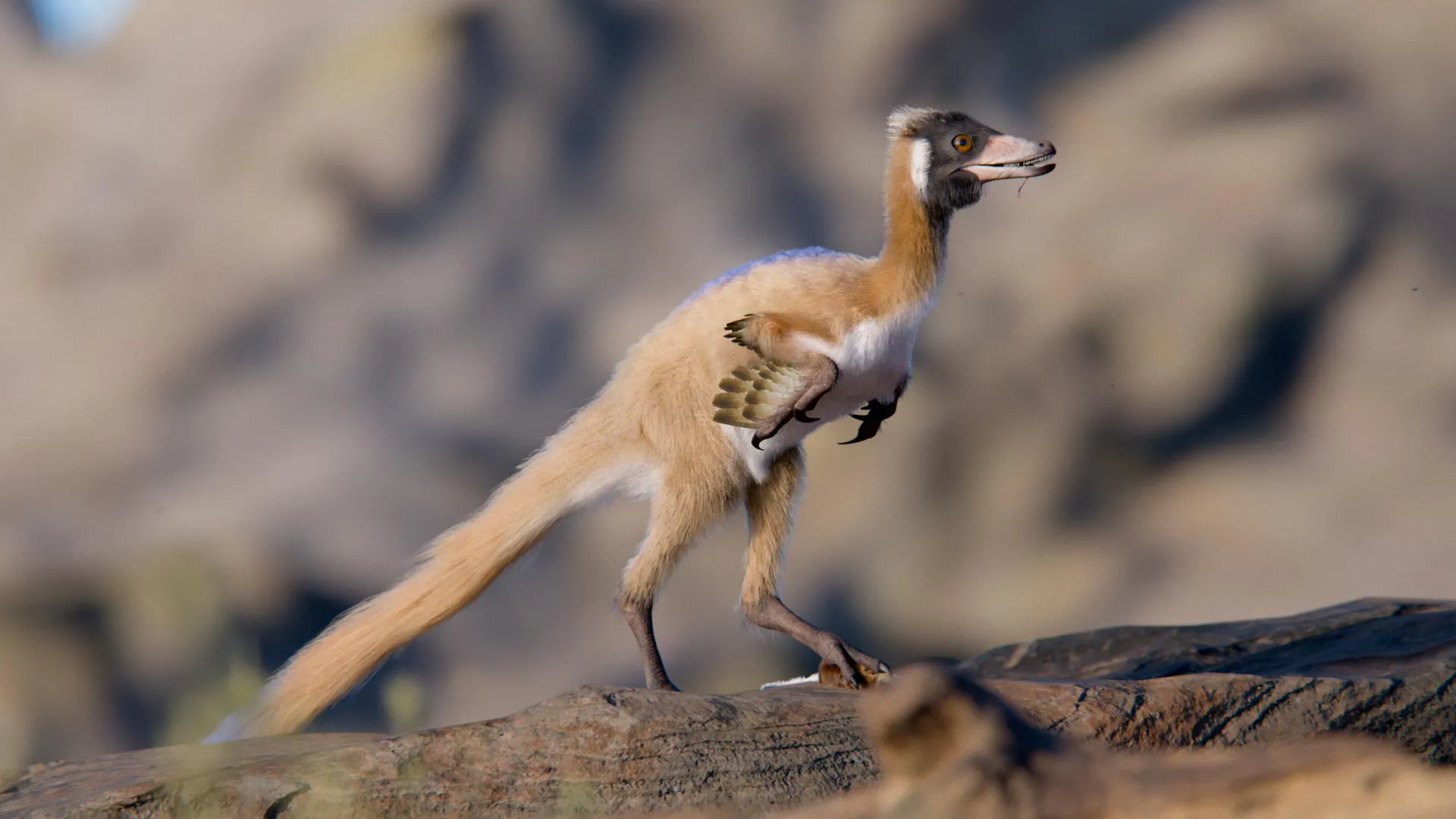
A groundbreaking paleontological discovery in Argentina has provided an unprecedented window into the evolutionary trajectory of a peculiar group of bird-like dinosaurs, fundamentally altering long-held scientific hypotheses regarding their development and ancient geographical spread. Researchers, led by Peter Makovicky from the University of Minnesota Twin Cities and Sebastian Apesteguía, an Argentine paleontologist, have meticulously analyzed a 90-million-year-old fossil, presenting a nearly complete skeleton of Alnashetri cerropoliciensis that serves as a crucial "Rosetta Stone" for this enigmatic lineage known as alvarezsaurs.
The Enduring Enigma of the Alvarezsaurs
Alvarezsaurs represent one of the most distinctive and puzzling branches within the theropod dinosaur family tree, the group that includes formidable predators like Tyrannosaurus rex and modern birds. Unlike their larger, more fearsome cousins, alvarezsaurs are characterized by their unusually small stature, often weighing no more than a few pounds, and a suite of highly specialized anatomical features. Their most striking characteristics include diminutive, peg-like teeth, remarkably short forelimbs, and a single, hypertrophied claw on each hand, which stood in stark contrast to the multi-fingered appendages typical of most theropods. For decades, the precise evolutionary pathway and ecological role of these dinosaurs remained largely obscure to paleontologists. The primary impediment to understanding stemmed from the fragmented nature of most alvarezsaur fossil records, particularly those unearthed outside of Asia. While more complete specimens had been recovered from Asian localities, the scarcity of well-preserved remains from other continents, notably South America, created significant gaps in their phylogenetic and biogeographical narrative, leading to a fragmented understanding of their origins and diversification.
Patagonia’s ‘Rosetta Stone’: Unveiling Alnashetri cerropoliciensis
The recent publication in the esteemed journal Nature details the discovery and analysis of an almost complete skeleton of Alnashetri cerropoliciensis, unearthed in 2014 in the fossil-rich northern Patagonian region of Argentina. This area, specifically the La Buitrera fossil area, is celebrated for its exceptional preservation of Cretaceous-era fauna. Although Alnashetri had been nominally identified years prior based on highly fragmentary evidence, the newly discovered articulated skeleton offers an unparalleled resolution into the animal’s unique morphology and evolutionary stage. The meticulous process of preparing this delicate specimen consumed a full decade, with researchers painstakingly cleaning and assembling the minute bones to safeguard the integrity of the small, fragile fossil. This protracted and careful work underscores the dedication required in paleontological research, where the preservation of even the smallest details can unlock profound scientific insights.
Peter Makovicky, the lead author of the study and a distinguished professor in the University of Minnesota’s Department of Earth and Environmental Sciences, emphasized the transformative impact of this discovery: "Transitioning from interpreting fragmentary skeletons to possessing a nearly complete and articulated animal is akin to unearthing a paleontological Rosetta Stone. We now possess a definitive reference point, enabling us to accurately identify more ambiguous finds and precisely chart evolutionary transitions in both anatomy and overall body size within this lineage." This sentiment highlights the critical role of comprehensive fossil evidence in resolving long-standing ambiguities in evolutionary biology. The Alnashetri fossil, by providing a detailed snapshot of an early alvarezsaur, is now serving as a foundational reference for interpreting the myriad of incomplete specimens housed in museum collections worldwide, thereby illuminating the broader evolutionary history of these diminutive dinosaurs.
Reconstructing an Ancient Past: The La Buitrera Formation
The significance of the Alnashetri discovery is inextricably linked to its provenance: the La Buitrera fossil area. This geological formation in northern Patagonia has consistently yielded a trove of scientifically important discoveries, providing an exceptionally detailed glimpse into the terrestrial ecosystems of the Late Cretaceous period in South America. The unique taphonomic conditions at La Buitrera, likely involving rapid burial in fine-grained sediments within an arid or semi-arid environment, contributed to the remarkable preservation quality of its fossils. Such conditions minimize scavenging and decomposition, allowing for the fossilization of delicate structures and even articulated skeletons. Previous finds from this remarkable site include some of the earliest known snakes, providing insights into the evolution of limbless reptiles, and diminutive saber-toothed mammals, which challenge conventional notions of mammalian evolution during the Mesozoic Era.
Sebastian Apesteguía, a researcher at Universidad Maimónides in Buenos Aires, Argentina, articulated the profound impact of the site: "After more than two decades of dedicated fieldwork, the La Buitrera fossil area has furnished us with an unparalleled insight into the small dinosaurs and other vertebrates that is unmatched by any other locality in South America." The consistent output of high-quality, articulated specimens from La Buitrera makes it an invaluable natural laboratory for understanding the biodiversity and ecological dynamics of ancient Patagonian landscapes, offering a crucial baseline for comparative studies across other Gondwanan landmasses.
Evolutionary Crossroads: Insights from Alnashetri‘s Anatomy
The meticulous analysis of the Alnashetri skeleton has revealed critical differences from its later alvarezsaur relatives, offering a clearer picture of the evolutionary sequence within this group. Notably, Alnashetri possessed comparatively longer forelimbs and more substantial teeth than the highly specialized, short-armed, and tiny-toothed alvarezsaurs that appear later in the fossil record. This morphological distinction indicates that the trend towards extreme miniaturization and the development of highly specialized features, such as the single hypertrophied thumb claw and reduced dentition, occurred progressively over evolutionary time. Rather than emerging simultaneously, Alnashetri suggests a mosaic pattern of evolution, where initial reductions in body size preceded the full manifestation of the highly derived features associated with later alvarezsaurs.
The dietary implications of these anatomical variations are profound. While later alvarezsaurs are strongly hypothesized to have been myrmecophagous, or specialized ant-eaters, using their robust single claw for digging into insect nests, Alnashetri‘s larger teeth suggest a more generalized diet. This could have included small invertebrates, larvae, or even plant matter, indicating that the shift towards a highly specialized insectivorous diet was a subsequent evolutionary adaptation. The detailed microscopic examination of Alnashetri‘s bone structure further revealed that the individual fossilized was fully grown and at least four years of age at the time of its death. This provides critical data on their ontogeny, demonstrating that these dinosaurs attained their adult, diminutive size relatively quickly and remained small throughout their lifespan. Weighing less than 2 pounds, Alnashetri stands as one of the smallest non-avian dinosaurs ever discovered in South America, underscoring the remarkable evolutionary plasticity within the theropod lineage.
Miniaturization and Ancient Biogeography: A Global Perspective
The study extends beyond the individual specimen, incorporating a comprehensive review of additional alvarezsaur fossils housed in museum collections across North America and Europe. This broader comparative analysis led to the unexpected finding that alvarezsaurs likely emerged significantly earlier than previously hypothesized. This earlier origin, combined with their widespread distribution across ancient landmasses, suggests a compelling biogeographical narrative. The team posits that the initial dispersal of alvarezsaurs occurred when the Earth’s continents were still amalgamated into the supercontinent Pangaea, or during the early stages of its breakup into Gondwana and Laurasia. This scenario provides a parsimonious explanation for their presence on widely separated continents like South America and Asia without requiring improbable transoceanic migrations. The subsequent fragmentation of Earth’s landmasses into the continents we recognize today would have naturally scattered these populations, leading to their divergent evolutionary paths in different geographical isolation. This discovery strongly reinforces the critical role of plate tectonics and continental drift in shaping the global distribution and evolutionary trajectories of prehistoric life. It offers tangible paleontological evidence supporting the geological models of ancient supercontinents and their dismemberment.
Methodological Rigor and Collaborative Endeavor
The success of the Alnashetri study underscores the rigorous methodological approaches inherent in modern paleontology. Beyond the meticulous excavation and decadal-long preparation of the specimen, the research involved advanced analytical techniques, including microscopic examination of bone histology to determine growth stages and age, as well as extensive comparative anatomical studies with other alvarezsaur specimens globally. This interdisciplinary approach, combining fieldwork, laboratory analysis, and comparative morphology, is essential for piecing together complex evolutionary narratives. Furthermore, the project exemplifies the indispensable nature of international scientific collaboration. The research team comprised a diverse array of scientists from multiple institutions and countries, including Jonathan S. Mitchell from Coe College in Iowa; Jorge G. Meso and Ignacio Cerda from Instituto de Investigación, Universidad Nacional de Río Negro and Museo Provincial; and Federico A. Gianechini from Instituto Multidisciplinario de Investigaciones Biológicas de San Luis. This broad collaboration, supported by significant funding from organizations such as the National Scientific and Technical Research Council (CONICET), The Field Museum, National Geographic, the University of Minnesota, the United States National Science Foundation, and the Fulbright U.S. Scholar program, highlights the collective effort required to advance fundamental scientific understanding.
The Continuing Narrative: Future Discoveries and Unanswered Questions
The discovery of Alnashetri is not merely an endpoint but a pivotal moment in an ongoing scientific endeavor. The La Buitrera fossil area continues to be an active site of research, holding the promise of further revelations about ancient Patagonian ecosystems and the evolutionary saga of alvarezsaurs. As Apesteguía affirmed, "We have already unearthed the subsequent chapter of the alvarezsaurid narrative there, and it is presently undergoing preparation in the laboratory." This tantalizing statement suggests that future discoveries from this extraordinary site will continue to refine our understanding of these unique dinosaurs, potentially unveiling even earlier forms or more complete transitional species that could further elaborate on their dietary specialization, social behaviors, or reproductive strategies. The ongoing work at La Buitrera and the continuous analysis of newly discovered fossils are poised to further enrich the scientific narrative surrounding the miniaturization, specialization, and global dispersal of these remarkable, tiny dinosaurs.
Ultimately, the 2-pound Alnashetri stands as a monumental discovery, demonstrating that even the smallest fragments of ancient life can yield insights that dramatically reconfigure our understanding of macroevolutionary trends. It reaffirms the dynamic and often surprising nature of evolution, where diverse forms emerge from common ancestors, adapting to myriad ecological niches and leaving behind a rich fossil legacy for future generations of scientists to decipher.



 Lisa Mariana
 Aura Kasih
 Safa Marwah