Safa Marwah
Microsoft is poised to introduce a pivotal enhancement to its Microsoft 365 Backup service, enabling administrators to execute highly precise file and folder-level restorations. This strategic advancement signifies a profound shift in data recovery capabilities, promising significantly expedited recovery times and a more robust defense against a spectrum of data loss scenarios for organizations globally. The update moves beyond previous site or drive-level recovery limitations, offering a nuanced approach to data integrity and operational continuity within the expansive Microsoft 365 ecosystem.
In the contemporary digital landscape, the integrity and availability of organizational data are paramount. Enterprises increasingly rely on cloud-based productivity suites like Microsoft 365 for critical operations, collaboration, and data storage. This reliance, however, brings with it an elevated risk profile, encompassing sophisticated ransomware attacks, inadvertent user deletions, and various forms of data corruption. Historically, recovering from such incidents within large-scale cloud environments presented significant challenges, often necessitating extensive, time-consuming restoration processes that could impact entire sites or drives, even when only a single file was compromised.
Microsoft 365 Backup, since its inception, has served as a critical safeguard for SharePoint, OneDrive, and Exchange data, designed to protect against these prevalent threats. Its foundational utility lies in providing a safety net, ensuring business continuity and data governance. However, the architecture of its recovery mechanism, until now, operated predominantly at a macroscopic level. A scenario involving a single corrupted spreadsheet or an accidentally deleted folder within a vast SharePoint site would typically trigger a comprehensive site or drive-level restoration. This process, while effective, consumed considerable time and resources, potentially leading to prolonged downtime and data exposure, thereby elevating the Recovery Time Objective (RTO) beyond optimal thresholds for many organizations.
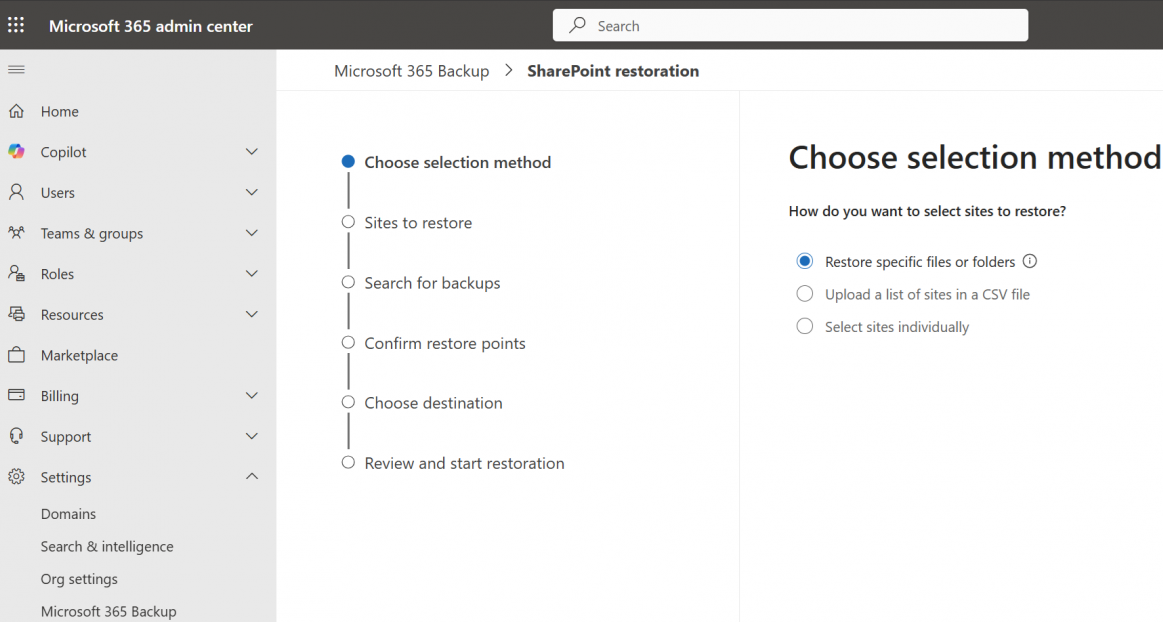
The forthcoming granular restore capability represents a paradigm shift in this operational dynamic. It empowers administrators to navigate, search, and precisely identify specific files or folders within existing restore points for protected SharePoint sites and OneDrive accounts. This precision allows for the isolation and recovery of only the necessary data fragments, circumventing the need for full-scale restorations. The immediate and most profound benefit is the drastic reduction in RTO, as IT teams can now target recovery efforts with surgical accuracy. Instead of hours or days spent recovering an entire data repository, critical files can be restored in minutes, minimizing operational disruption and financial impact.

From a technical standpoint, this enhancement introduces a sophisticated indexing and search mechanism atop the existing backup infrastructure. While the underlying data storage methods remain consistent, the access layer is significantly augmented. Administrators, designated with the SharePoint Backup Administrator role, will gain access to an intuitive interface that facilitates browsing and searching through historical restore points. This capability transforms the recovery process from a broad-brush operation into a finely tuned instrument, essential for modern data management. The change is entirely transparent to end-users, as all recovery operations are initiated and managed by authorized administrators, preserving the user experience while bolstering back-end resilience.
The implications of this granular recovery extend far beyond mere speed. It significantly enhances an organization’s ability to meet stringent compliance and regulatory requirements. In sectors such as healthcare, finance, and legal, precise data recovery is not just a best practice but often a legal mandate. Regulations like GDPR, HIPAA, and various industry-specific data protection acts often require organizations to demonstrate the ability to recover specific pieces of data, potentially including personal identifiable information (PII), without impacting unrelated datasets. The file-level restore capability provides the precise control necessary to fulfill such obligations, enabling targeted recovery, correction, or remediation of data without broad system interventions. This precision is invaluable for data governance and audit trails, ensuring that recovery actions are both effective and compliant.
Moreover, the operational efficiency gains for IT departments are substantial. Previously, a full site restore could entail significant network bandwidth consumption, processing overhead, and potential conflicts with ongoing user activity. By allowing the recovery of individual items, these resource demands are drastically reduced. IT administrators can allocate their time and expertise more effectively, focusing on strategic initiatives rather than protracted recovery efforts. This also contributes to a healthier Recovery Point Objective (RPO) by making frequent, smaller recoveries more feasible, ensuring that the time between the last backup and the point of recovery is minimized. The ability to quickly revert a single file to a previous version offers an immediate solution to accidental overwrites or corruptions, preventing minor issues from escalating into major incidents.
The rollout of this feature is structured in phases, beginning with a public preview in early March 2026, with general availability projected worldwide between late April and early May 2026. This staggered deployment allows organizations to prepare and adapt their internal processes. Microsoft has advised customers to proactively review their existing Microsoft 365 Backup coverage for SharePoint and OneDrive, ensuring comprehensive protection. Furthermore, it emphasizes the importance of familiarizing backup administrators with the new granular restore workflow and updating internal recovery runbooks to integrate these enhanced file- and folder-level recovery scenarios. This preparatory guidance underscores the strategic importance of the update, urging organizations to optimize their disaster recovery postures in anticipation of the new capabilities.
This development also aligns with Microsoft’s broader strategy to enhance data protection across its enterprise offerings. Just prior to this announcement, Microsoft expanded Windows Backup for Organizations, an enterprise-grade tool designed to simplify backups and enable enterprise users to restore personal settings and Microsoft Store applications from previous Windows 11 devices. This consistent focus on granular, user-centric, and administrator-empowering backup solutions highlights a concerted effort to build a more resilient and manageable digital ecosystem for businesses. By providing both system-level and now cloud-service level granular recovery, Microsoft is addressing a fundamental requirement for modern enterprises: the ability to quickly and precisely recover any data, anywhere, at any time.
The future trajectory of cloud backup solutions will likely see further integration with advanced security analytics and artificial intelligence. Predictive capabilities that identify potential data loss events before they occur, or AI-driven anomaly detection that flags malicious activity, could further refine recovery strategies. As organizations continue their migration to cloud-native environments, the demand for sophisticated, yet easy-to-manage, data protection mechanisms will only intensify. Microsoft’s move to introduce file-level restore for Microsoft 365 Backup is not merely an incremental update; it is a foundational step towards a more secure, efficient, and resilient cloud experience, significantly elevating the standard for data protection within enterprise productivity suites. This enhancement positions Microsoft 365 Backup as an even more indispensable component of an organization’s overall cybersecurity and business continuity strategy, ensuring critical data remains accessible and recoverable with unprecedented precision.




 Lisa Mariana
 Aura Kasih
 Ayu Aulia