Ayu Aulia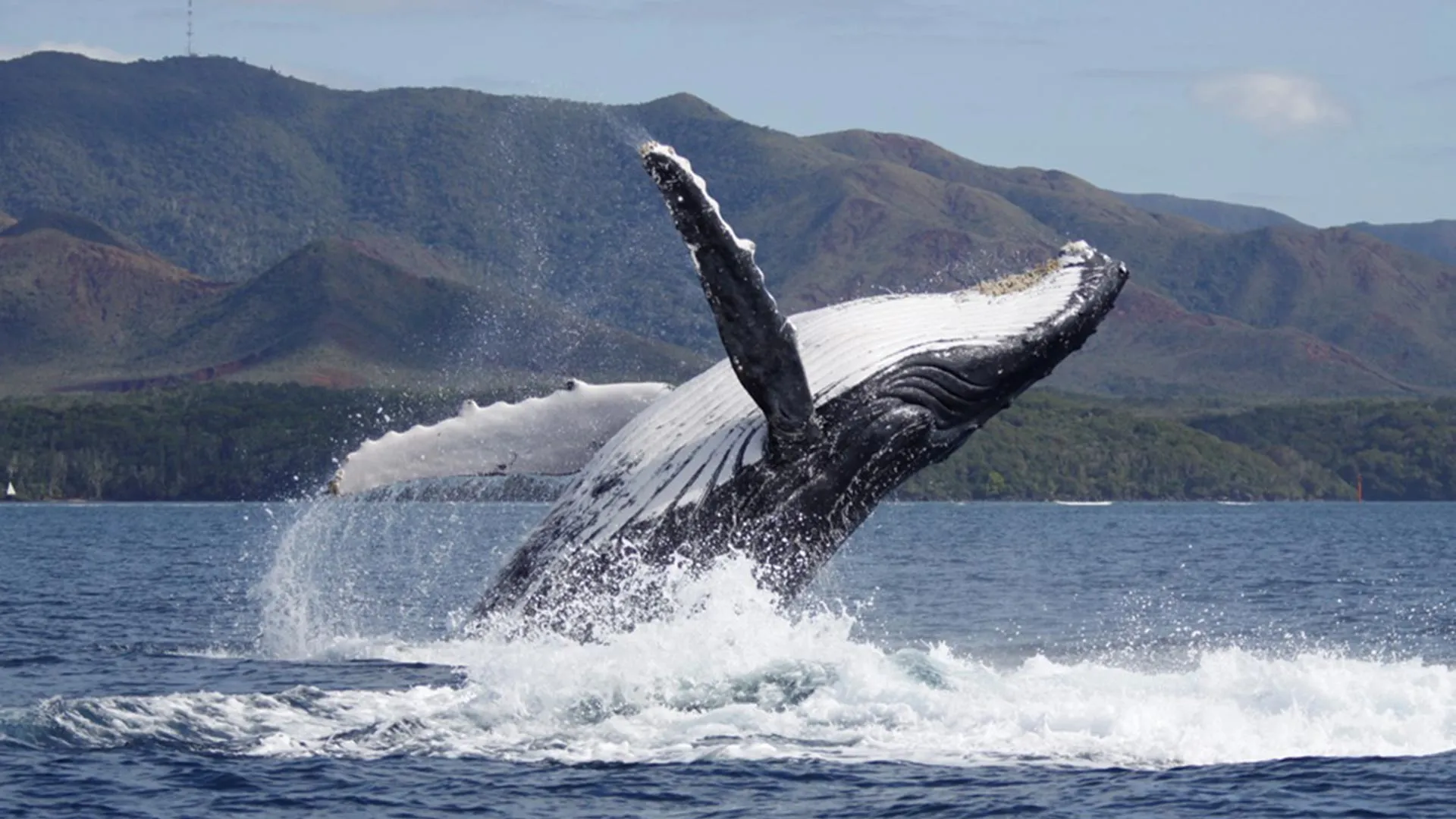
A groundbreaking investigation reveals a significant evolution in the reproductive strategies of male humpback whales, where the influence of age on paternity success has fundamentally transformed as populations rebound from the brink of extinction. This shift, observed in long-term studies, indicates that the ecological scars of historical commercial whaling continue to manifest not only in population numbers but also in the intricate social and reproductive behaviors of these magnificent marine mammals.
For centuries, the global oceans bore witness to an era of relentless commercial whaling, an industrial pursuit that decimated countless populations of large cetaceans. Humpback whales ( Megaptera novaeangliae ), celebrated for their acrobatic breaches and complex vocalizations, were among the primary targets, their numbers plummeting to critically low levels across their vast migratory routes. While an international moratorium on whaling largely halted this exploitation decades ago, the profound ecological and demographic vacuum it created continues to exert a lasting influence. The repercussions extend far beyond mere numerical recovery, subtly reshaping the competitive landscapes and reproductive opportunities within these slowly regenerating communities. Understanding these nuanced, ongoing transformations is paramount for accurately assessing the health and resilience of marine ecosystems.
Unraveling Two Decades of Oceanic Paternity
To comprehend the intricate changes underway, researchers embarked on an ambitious, two-decade-long study focusing on a robust population of humpback whales that congregates annually in the breeding grounds surrounding New Caledonia in the South Pacific. This extensive dataset, meticulously gathered through the dedicated efforts of the non-governmental organization Opération Cétacés, provided an unparalleled window into the lives of these whales. Scientists systematically analyzed how the demographic composition, specifically the age structure of the population, correlated with male social behaviors and, crucially, patterns of paternity over time.
During the initial phases of population recovery, the breeding aggregations were predominantly characterized by a younger cohort of males. With fewer individuals overall, and a disproportionate loss of older, experienced whales due to whaling, the ecological niche for reproduction was largely filled by younger, often less experienced males who matured rapidly into an environment with reduced competition. However, as the overall whale population steadily increased, a more balanced demographic structure began to emerge. The gradual re-establishment of a wider age range meant that older, more seasoned individuals became increasingly prevalent. This demographic shift precipitated a corresponding change in reproductive success: older males, once a rarity, progressively gained a significant advantage in fathering calves compared to their younger counterparts. This observation suggests a return to a more natural, age-stratified reproductive hierarchy, a pattern likely suppressed during the immediate post-whaling recovery period.
Innovative Genetic Tools Illuminate Hidden Reproductive Realities
One of the most enduring mysteries in cetacean biology has been the precise identification of paternity. Unlike many terrestrial mammals, humpback whales have never been directly observed mating in the wild, rendering traditional observational methods for tracking reproductive success virtually impossible. This long-standing enigma meant that the paternal lineage of calves remained largely unknown, obscuring fundamental aspects of their reproductive ecology.
To pierce this veil of secrecy, an international research consortium, spearheaded by the Sea Mammal Research Unit at the University of St Andrews, deployed advanced genetic and epigenetic methodologies. Researchers utilized sophisticated genetic testing techniques to definitively assign paternity, a process involving the analysis of specific genetic markers from both calves and potential fathers. Complementing this, they employed an innovative ‘epigenetic molecular clock.’ This cutting-edge technique leverages the predictable changes in DNA methylation patterns—molecular modifications to DNA that accumulate over an individual’s lifetime—to accurately estimate the age of individual whales. Both critical pieces of information, paternity and age, could be non-invasively obtained from minute skin samples collected from the free-ranging animals, representing a significant technological leap in marine mammal research. The ability to precisely link age to reproductive success without intrusive methods has opened new avenues for understanding life history strategies in these elusive creatures.
The Intricate Tapestry of Male Humpback Courtship and Competition
Male humpback whales are renowned for one of the animal kingdom’s most elaborate and enigmatic displays: their complex, haunting songs. These powerful, multi-themed vocalizations can travel immense distances across the ocean, acting as potent signals during the breeding season. While their precise function remains a subject of ongoing scientific inquiry, these acoustic performances are widely believed to play a crucial role in attracting receptive females and potentially in mediating interactions between rival males. Beyond their melodic prowess, males engage in a suite of other behaviors to secure mating opportunities. These can include closely escorting females for extended periods, a strategy likely aimed at guarding potential mates and deterring competitors, as well as engaging in intense physical contests with rival males. These competitive encounters, often involving dramatic chases, forceful pushes, and even ramming, underscore the high stakes involved in reproductive success.
Dr. Ellen Garland, a senior author affiliated with the Sea Mammal Research Unit, elucidated the dynamic interplay between demographic shifts and reproductive outcomes. She noted, "The nature of mating behavior, and critically, who ultimately succeeded in mating, demonstrably changed in tandem with these shifts in age structure. As the population underwent its recovery, we observed a significantly higher proportion of older males actively singing, escorting females, and ultimately, successfully fathering calves when compared to their younger counterparts." This observation strongly suggests that the capacity for effective courtship and competitive prowess is not an innate attribute but rather a skill that is honed and perfected over many years.
The empirical evidence strongly implies that male humpback whales likely require extensive periods to develop and refine the intricate nuances of their elaborate songs and to master the strategic intricacies of competitive encounters. This accumulation of experience, whether through repeated song performances, participation in escalating rivalries, or a deeper understanding of breeding ground dynamics, appears to confer a distinct advantage upon older whales in the intense arena of mate acquisition. Furthermore, as whale populations continue to expand and competition intensifies, it is plausible that females may become increasingly discerning in their mate selection. This enhanced selectivity could further favor males who exhibit the most compelling displays, possess superior competitive abilities, or embody other desirable traits indicative of genetic fitness and experience. The re-emergence of older, experienced males thus has profound implications for the selective pressures shaping the evolution of these complex behaviors.
The Enduring Legacy of Whaling: A Shifting Baseline in Behavioral Ecology
These compelling findings underscore the critical importance of sustained, long-term research initiatives focused on recovering whale populations. Such longitudinal studies are indispensable for scientists to fully comprehend the pervasive and long-lasting ways in which historical exploitation continues to influence not only the demographic structure of populations but also the subtle yet fundamental aspects of competition, social dynamics, and reproductive success. Without this continued vigilance, our understanding of true ecological recovery remains incomplete.
The research also brings into sharp focus a more fundamental epistemological challenge within whale science: the concept of the "shifting baseline syndrome." For much of the modern era, scientific understanding of whale behavior has been predicated upon observations of populations that had already been severely impacted by centuries of commercial whaling. Consequently, researchers have, perhaps unknowingly, been working from a skewed reference point—a baseline defined by depleted, disturbed populations—rather than observing truly undisturbed, ecologically complete systems. This means that many historical descriptions of whale behavior, while accurate for the populations studied at the time, may not represent the species’ natural, pre-exploitation repertoire.
Dr. Franca Eichenberger, the lead author of the study from the Sea Mammal Research Unit, articulated this crucial point: "It is only now, as whale populations make significant strides in recovery and as novel analytical tools become available, that we are truly beginning to grasp the profound and far-reaching consequences of whaling. These impacts extend well beyond the immediate reduction in population size; they fundamentally reshape behavior, competition, and ultimately, the very fabric of reproduction." She emphasized that virtually all whale populations globally have been altered by whaling, and their recovery is an ongoing, dynamic process of change.
Dr. Eichenberger further elaborated, "Our work unequivocally demonstrates that these populations continue to evolve as they recover. This dynamic underscores precisely why the sustained, long-term monitoring of previously exploited whale populations is not merely beneficial but absolutely essential. Humpback whales have showcased a truly remarkable comeback in recent decades, a testament to conservation efforts. This current period of recovery presents an unparalleled opportunity for us to deepen our understanding of their complex behavior, life history strategies, and ecological roles. We simply need to commit to continued observation and scientific inquiry." The journey towards full ecological restoration, therefore, demands an unwavering commitment to unraveling the intricate legacies of past human impacts and to understanding the dynamic processes of natural resilience and adaptation.
Future Trajectories: Towards a Holistic Understanding of Whale Recovery
The implications of this study extend beyond humpback whales, offering critical insights for the conservation and management of other long-lived, recovering species that have faced similar historical pressures. As populations rebuild, the re-establishment of complex social structures and age-based reproductive hierarchies is likely a common, though often unobserved, aspect of true ecological recovery. Future research will undoubtedly delve deeper into the specific mechanisms of female choice, the genetic consequences of shifting paternity patterns on population diversity, and the potential interactions between these demographic and behavioral shifts with emerging environmental challenges such as climate change, ocean noise pollution, and changes in prey distribution.
Understanding the "shifting baseline" is not merely an academic exercise; it is a fundamental shift in perspective for conservation science. It challenges us to look beyond simple numerical resurgence and to strive for a more holistic understanding of what constitutes a healthy, ecologically functional population, one where natural behaviors, social structures, and evolutionary processes are fully re-established. The story of the humpback whale’s recovery is thus not just a tale of survival, but a dynamic narrative of re-evolution, continually shaped by both their inherent resilience and the lingering echoes of human history.




 Lisa Mariana
 Aura Kasih
 Safa Marwah